
Dopp Kit vs Toiletry Bag: Which Fits Your Trip
The most common advice about dopp kit vs toiletry bag is to choose the leather case for style and the organizer for practicality. That's too simple. A handsome leather case can be the practical choice for a small grooming load, while a pocket-heavy organizer can waste suitcase space if your shaver doesn't fit its compartments.
Choose around what you pack, where you unpack, and how you travel. The name matters less than whether the case opens properly inside your luggage, works beside the destination's sink, and contains the consequences of a loose bottle cap.
Table of Contents
- What the Two Names Actually Mean
- Dopp Kit vs Toiletry Bag Side by Side
- How Shape Changes Access and Spills
- Packing Liquids for Airport Screening
- Matching the Bag to the Trip
- When a Leather Dopp Kit Is Worth It
- Caring for the Lining After a Spill
What the Two Names Actually Mean
Both names describe a container for grooming essentials: razors, shaving products, toothbrushes, and medicines. The distinction is primarily historical and cultural, not a separate function.
Dopp kit takes its name from Charles Doppelt, a German leatherworker who settled in Chicago; World Wide Words traces the case's origins to the early twentieth century and discusses an account placing the patent in 1919. Accounts differ on the precise development timeline, so the origin is more useful than treating a particular date as a construction standard.
In American retail, the term usually suggests a compact, traditionally masculine case, often leather, with a structured profile. Toiletry bag is the broader, gender-neutral description and includes pouches, hanging organizers, roll-up kits, and rigid cases.
A dopp kit is a type of toiletry bag, not a competing category.
On a product page, “dopp kit” communicates heritage and classic travel styling. “Toiletry bag” describes the job more directly and makes a useful search term when shopping internationally. Neither label guarantees a particular lining, opening, or pocket layout. Compare the construction rather than relying on the name.
Dopp Kit vs Toiletry Bag Side by Side
| Feature | Dopp kit | Broader toiletry bag |
|---|---|---|
| Typical shape | Rectangular, often with a flat base | Soft pouch, hanging organizer, roll-up, or multi-pocket case |
| Interior | One principal compartment | Several pockets, mesh, elastic, or wet and dry zones |
| Common materials | Leather or heavy canvas | Nylon, polyester, clear plastic, or leather |
| Packing habit | Drop irregular items in and zip | Assign each item a fixed slot |
| Item visibility | Lower, because everything shares one cavity | Higher when mesh or clear panels are used |
| Spill behavior | One failed cap can wet the whole compartment | Separated, liquid-resistant zones can limit how far a leak spreads |
| Luggage behavior | Compact rectangle uses suitcase corners efficiently | Hanging kits can bulk up once folded into a bag |
| Best default user | Short trip or a small grooming set | Frequent travel with many bottles and tools |
Use this table as your buying checklist. The comparison is between a traditional dopp format and more organized alternatives, not a promise that every product carrying either name has these features.
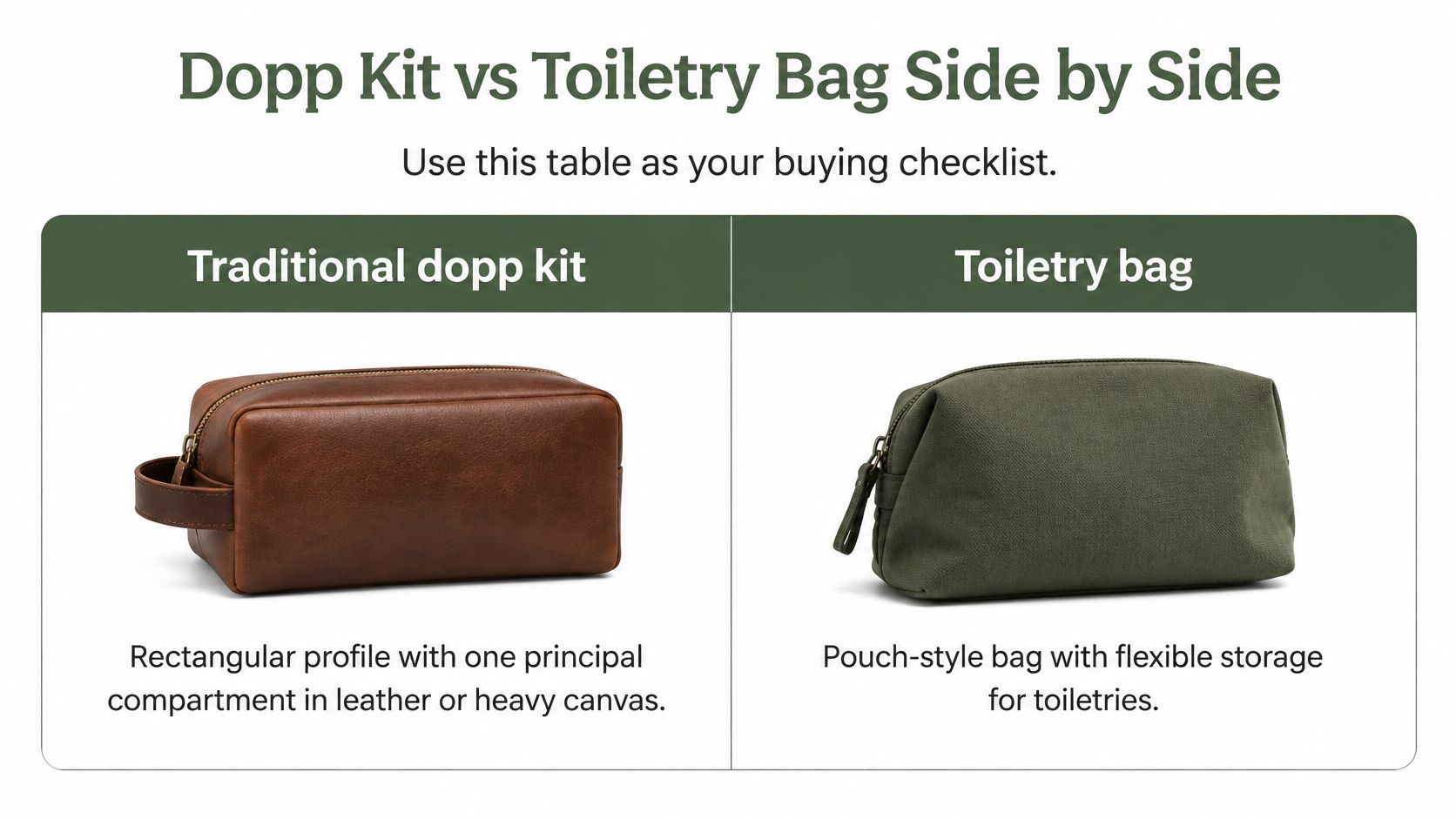
Read the construction, not just the pocket count
A rectangular cavity accommodates awkward objects without requiring them to match a prescribed slot. That's useful for a rounded electric shaver, a broad deodorant stick, or a comb that would otherwise stretch an organizer pocket. You can rearrange the load rather than work around sewn-in divisions.
Organization earns its space when you need to identify items without unloading the bag. Mesh panels, wide openings, retainers, and hanging hardware are features to inspect in product photographs, alongside the water-resistant materials emphasized in CNN Underscored's toiletry-bag guidance. Count usable compartments, not decorative seams.
A pocket isn't automatically a spill barrier. Mesh improves visibility but won't contain shampoo, and an open-topped divider won't stop liquid moving when the bag tips sideways. For actual isolation, inspect whether the compartment has a liquid-resistant lining and a closure.
The real choice is whether a refined single cavity outweighs inspection speed and compartment control.
Buy useful capacity
For a small grooming load, compactness and uncomplicated packing can justify the traditional case. If your routine includes skincare, several tools, and assorted containers, a multi-compartment design is usually easier to inspect and repack.
Don't judge capacity from an empty product photograph alone. Look for a loaded view showing whether the zipper closes without bowing, whether filled pockets intrude into the central compartment, and whether bottles must lie across the opening. A bag that closes only under pressure leaves little room for changes to your routine.
Water-resistant lining and wipe-clean surfaces are performance specifications, not luxury extras. Leather thickness may help a case retain its shape, but it tells you little about how easily you can remove toothpaste from an interior corner. The outer material and the lining deserve separate buying decisions.
How Shape Changes Access and Spills
Say your business-trip kit contains a safety razor, a bulky electric foil shaver, a toothbrush, a comb, a small medication bottle, solid cologne, and several travel bottles. This is a hypothetical packing test, not a suggested airport-approved inventory. Check the screening requirements for the particular razor and any blades separately before flying.
In an open dopp kit, the foil shaver can sit diagonally beside the bottles. Different bottle diameters don't leave unusable elastic slots, and the comb can run along a side wall. The packing is forgiving, especially if you replace a familiar product with a differently shaped container.
Follow the toothbrush to the sink
The inconvenience appears when you need something underneath the shaver. If the toothbrush lies at the bottom, you'll move other items onto the counter to retrieve it. A deep opening can look generous while still making the bottom corners difficult to reach.
A multi-pocket organizer gives the razor and toothbrush visible positions. A separate wet compartment can keep a damp grooming tool away from medication, provided that compartment is designed to contain moisture. However, a wide shaver may refuse to fit a fixed loop, leaving you with both unused retainers and an overcrowded central space.
Practical rule: Choose flexible space for awkward objects and visible compartments for items you need to identify immediately.
The same reasoning applies to smaller pouches inside the case. Our guide to choosing bag organizers can help you decide where removable organization is more useful than permanent divisions. Avoid filling a simple case with so many nested pouches that reaching the toothbrush becomes another unpacking task.
Test the base and the opening together
On a dry hotel counter, a flat-bottom case should stay upright while you remove the shaver. Its zipper opening should remain accessible without your spare hand holding the sides apart. An attractive rectangular outline is less useful if the loaded case rolls toward its heavier side.
Beside a narrow shelf or a wet shared basin, the same case may have nowhere sensible to stand. A hanging organizer changes the working arrangement: you retrieve items vertically instead of spreading them around the sink. Check that the hook and suspension point remain accessible when the organizer is packed.
For liquid-heavy skincare, prioritize genuine separation. For a modest load of sturdy bottles and irregular tools, the open cavity is easier to arrange. Before buying, inspect opening width, accessible lining corners, and a base that stands unsupported, ideally in photographs showing the bag loaded rather than stuffed with display paper.
Packing Liquids for Airport Screening
For standard U.S. carry-on screening, the TSA liquids rule limits each liquid, gel, aerosol, cream, or paste container to 3.4 fl oz (100 mL) and requires those containers to fit in one clear, quart-size, zip-top bag per passenger, subject to applicable exceptions. An opaque leather dopp kit doesn't replace that screening bag. Treat it as the protective outer case.
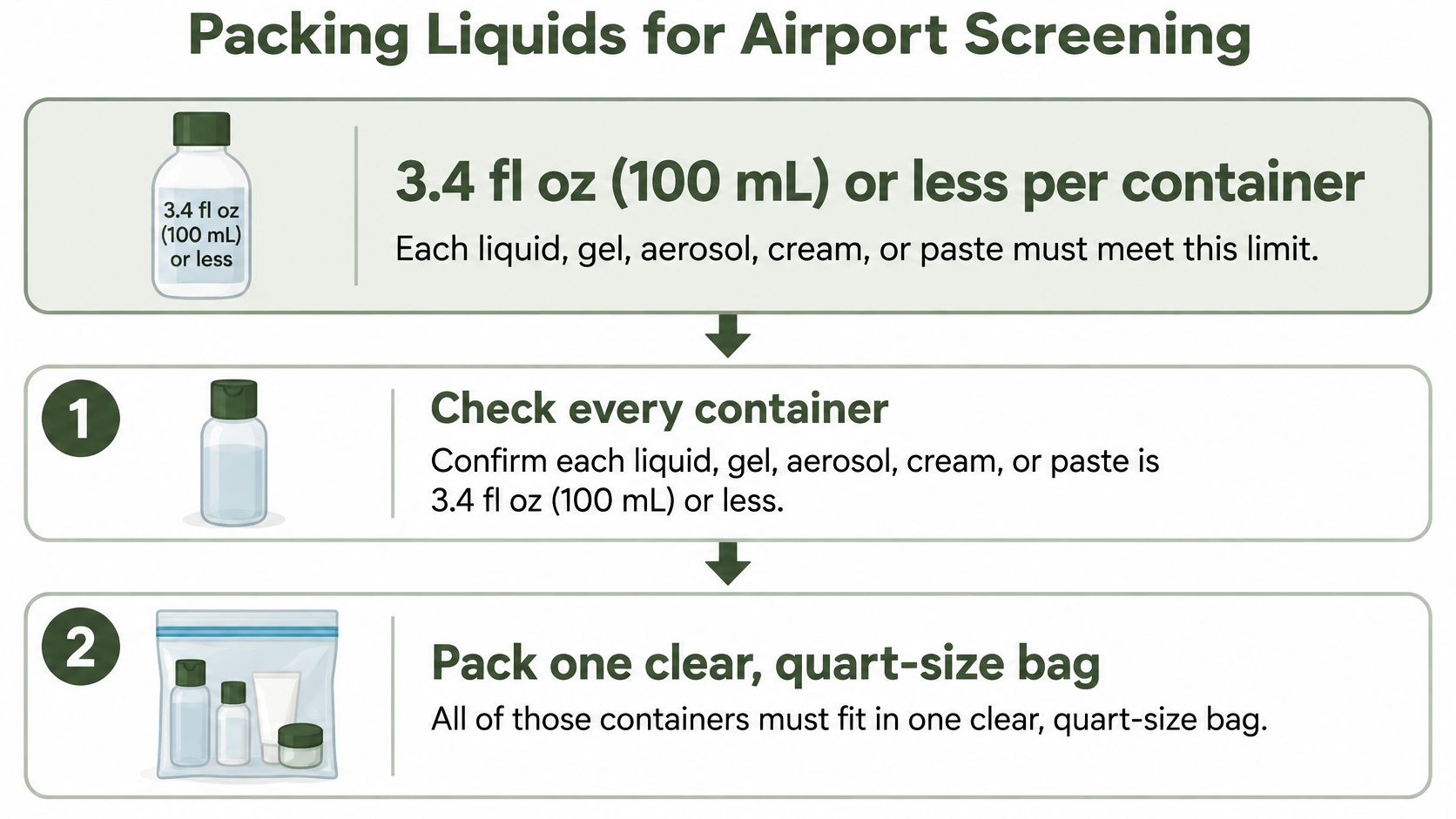
Pack for removal, not just storage
Build your ordinary toiletries around travel containers rather than buying a case large enough for the bathroom shelf. Start with the clear pouch already filled, then check whether the outer case can accept it without folding its zipper into a corner. A pouch that technically fits but requires force to remove isn't convenient at screening.
Use this packing routine:
- Choose compliant containers. Decant suitable products into clearly sized travel bottles that meet the limit. A partly filled oversized container isn't a substitute for the correct container size.
- Put ordinary liquids, gels, aerosols, creams, and pastes together in the clear pouch. Don't fill its remaining space with a comb or charging cable.
- Separate dry equipment. Keep your toothbrush, solid grooming products, and permitted tools elsewhere in the outer case. Handle medicines according to their specific screening requirements rather than assuming every medication follows the ordinary toiletries routine.
- Position the clear pouch immediately inside the opening so you can remove it without emptying the case.
- After screening, return it without pressing bottle caps against hard tools.
For a flight followed by a cruise, Nordmoose's guide to choosing refillable tubes for cruising is useful when considering dispensing formats. Choose a container that suits the product's consistency and test its closure at home before putting it beside clothing.
Measure the packed pouch
The most useful capacity check is whether your filled liquids pouch passes through the opening. Compare that practical requirement with the exterior dimensions when assessing a large men's toiletry bag. Extra length won't help if a narrow zipper throat catches the pouch every time.
Leave enough room to grip the pouch without pulling on its closure. Don't wedge a rigid shaver directly against a soft refillable tube, and avoid arranging the kit so the case zipper compresses a flip-top cap.
For international travel, check the rules at your departure and connecting airports. A removable transparent pouch inside a durable outer case remains an adaptable packing system, but it doesn't guarantee compliance everywhere. Follow the instructions given at the screening point rather than assuming every airport handles liquids identically.
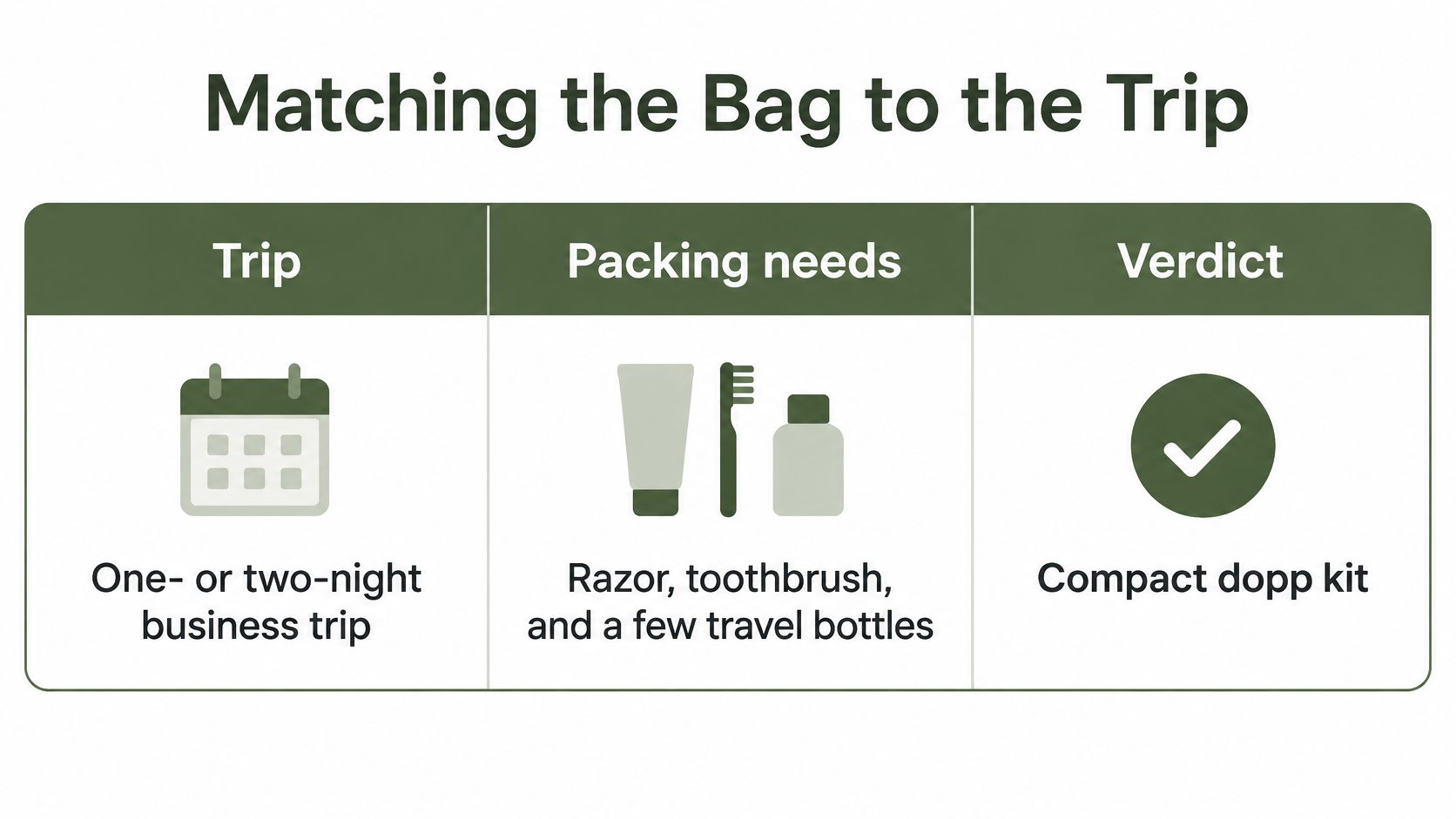
Matching the Bag to the Trip
| Trip or bathroom | Better format | Why it wins |
|---|---|---|
| One- or two-night business trip | Structured dopp kit | Fast access and a small rectangular footprint |
| Carry-on only | Either, plus a clear quart pouch | The outer case cannot replace the screening bag |
| Shared family luggage | Multi-compartment toiletry bag | Separates people's items and leak-prone bottles |
| Outdoor or wet travel | Hanging or wipe-clean technical bag | Untreated leather isn't suitable storage for damp gear and mud |
| Hotel with no counter | Hanging organizer | A hook replaces missing sink space |
| Week-long stay with skincare | Multi-pocket toiletry bag | More containers need visibility and isolation |
| Minimal daily grooming set | Compact leather dopp kit | One cavity is enough without unused dividers |
Treat these as scenario-based recommendations, not rules about trip duration. A brief trip with an elaborate skincare routine can require more organization than an extended stay with a minimal load.
Travelpro's explanation of dopp kits provides useful context for the compact grooming-case format. The buying decision still depends on your destination: a well-made case doesn't become the right bathroom tool just because it looks appropriate beside a business suitcase.
Make the decision from your itinerary
A premium structured leather case can be excellent for a professional trip and inconvenient for a beach changing room. Durability doesn't mean indifference to standing water, and a compact footprint doesn't help when there's no surface to put it on.
Use this sequence before choosing:
- Name the actual trip. Decide whether you're packing for a business stay, carry-on flight, shared family holiday, outdoor destination, or extended stay.
- Lay out the leak-prone containers. Distinguish a modest group of secure bottles from a collection of droppers, pumps, and loosely capped jars.
- Check the bathroom arrangement. Hotel photographs can reveal whether you'll have a usable counter, a narrow basin, or somewhere suitable to hang an organizer.
- Choose a standing leather dopp kit when the load is modest and the environment is dry.
- Choose a hanging or multi-compartment technical bag when the destination is wet, counter space is missing, or the routine needs separate storage.
Optional extras should earn their space too. If you're considering a hotel-bathroom comfort item, Cleverfy Beauty's guide to travel-friendly shower steamer tablets explains that option; keep such products dry and separately wrapped rather than loose against grooming tools.
Test the complete luggage system
Put the loaded toiletry case inside the actual bag you'll carry. A rectangular kit may fit neatly beside folded clothing, but the useful position is one you can reach without unloading everything. When comparing canvas travel bags, consider the luggage opening and the toiletry case together.
Finish with a retrieval test: remove the liquids pouch without snagging it, then retrieve the razor and toothbrush without tipping out the contents. Finally, consider where liquid would collect if a cap opened. If it would soak an absorbent lining or reach medication, change the packing arrangement before departure.
When a Leather Dopp Kit Is Worth It
Leather is worth paying for when its structure and appearance suit the way you travel. It isn't a practical upgrade because the product uses the dopp name. For a restrained grooming routine and a dry countertop, a leather case can combine useful shape with a finish that belongs alongside professional luggage.
Full-grain leather retains the hide's grain surface. With appropriate care, it can develop visible wear and patina rather than depending on an applied decorative surface alone. That doesn't make it immune to stains, abrasion, or damage from unsuitable cleaners.
Judge the whole case
Inspect more than the leather description. Our guide to leather bag quality is a useful starting point for evaluating construction. Pay particular attention to zipper attachment, handle anchoring, edge finishing, and whether the lining can be reached for cleaning.
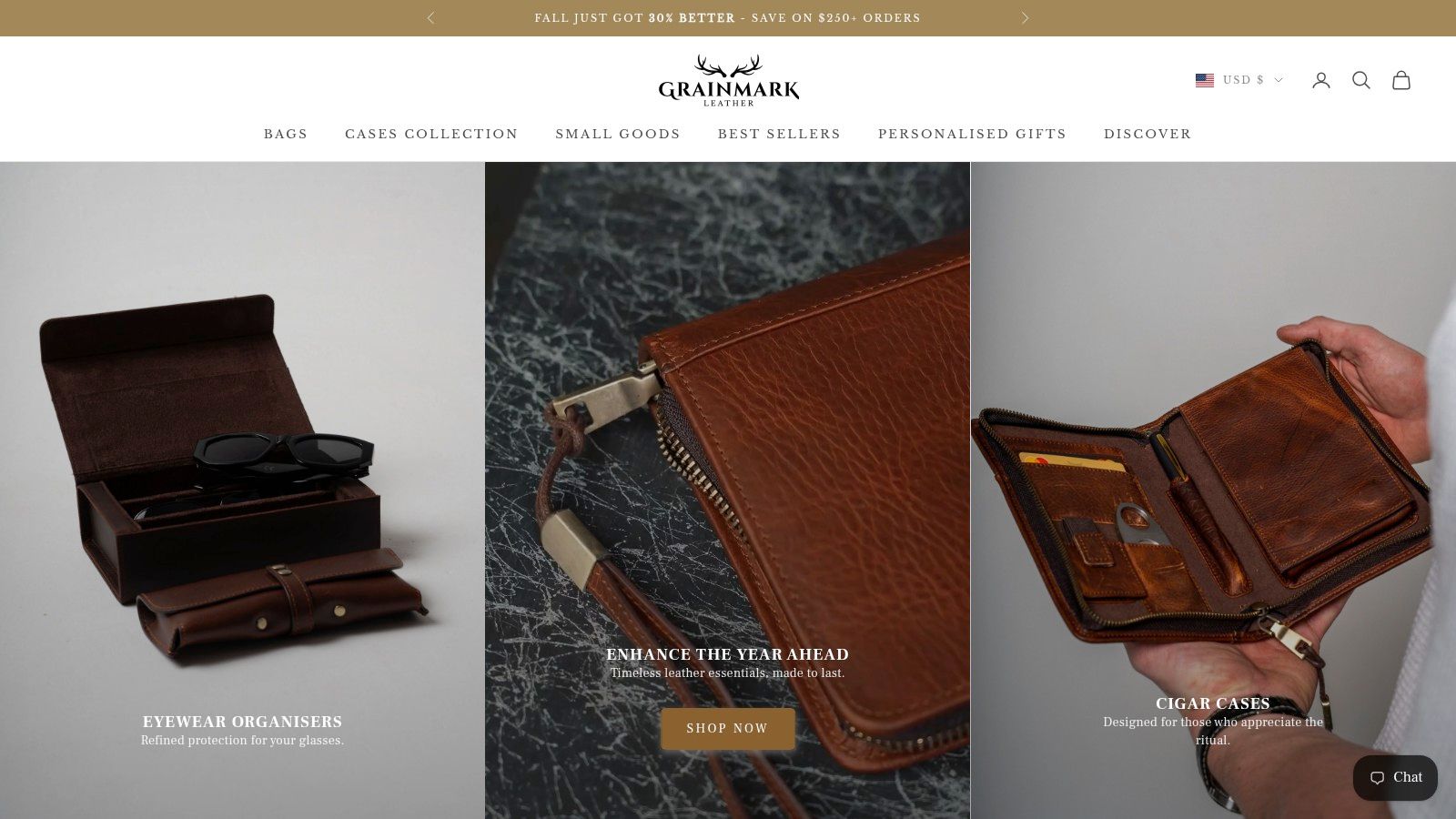
At Grainmark Leather, our products use heavy-duty stitching to support durability. Our Leather Toiletry Bag, The Dopp, is sold for €93,56. Our bags range also includes briefcases, backpacks, duffle bags, portfolios, wheeled bags, and toiletry bags, so the grooming case is part of a wider work-and-travel assortment.
The buying question isn't whether leather deserves its price in the abstract. It's whether you'll use the features that matter in a structured case:
- A manageable grooming load. You can retrieve your daily essentials without spreading them across the sink.
- A suitable resting place. The destination gives you a dry surface where a standing case makes sense.
- Construction you value. You want durable stitching, a considered finish, and a case that coordinates with other leather luggage.
Who should choose something else
For a shared family kit, beach or trail travel, or a large assortment of leak-prone serums, I'd choose a technical organizer first. Those uses place more importance on separation, drying, and hanging access than on the appearance of the exterior.
Don't assume the inside performs like a waterproof wash basin, even if it's leather-lined. Check the lining material and care instructions before purchasing, and keep leak-prone products independently contained.
Buy a leather dopp kit because it fits your actual load and destination. Heritage can make the object more enjoyable, but it can't make an unsuitable layout easier to use.
Caring for the Lining After a Spill
Empty the case promptly, blot pooled product, and remove the liquids pouch before cleaning. Lift out dry items separately so you don't spread residue over their handles or packaging. Don't leave a wet case zipped shut.
Clean according to the lining
For a wipe-clean synthetic lining, use a barely damp microfiber cloth, adding a mild soap solution only if the care instructions permit it. Test cleaners in a hidden area first, avoid saturating seams, and remove soap residue with a clean damp cloth. Leather and canvas need material-specific treatment; our guide to removing stains from leather helps distinguish surface cleaning from treatments that could alter the finish.
Leave the case open to air-dry away from radiators, hair dryers, and direct heat. Don't repack until the lining and seams feel dry.
- Store it empty and open. Avoid trapping leftover moisture.
- Tighten caps and contain liquids in a sealed pouch.
- Inspect after every trip. Check corners, stitching, and the base.
- If residue or odor persists, consider professional lining repair or change formats.
For liquid-heavy travel, choose a washable technical bag if the existing lining can't be cleaned reliably. Mesh can help items dry, but it isn't a spill barrier.
Grainmark Leather offers leather toiletry bags alongside work and travel bags for a coordinated carry setup. Visit Grainmark Leather to compare the toiletry range against your packed grooming load, paying attention to the opening, lining, and how you'll use the case at your destination.