How Do You Get Stains Out of Leather Without Discoloring It?
When customers ask us how to remove stains from leather without causing discoloration, we start with a simple principle: quality leather responds best to gentle care.
Scrubbing a stain or using harsh chemicals often damages the finish more than the stain itself.
At Grainmark Leather we work with full grain hides built to last for decades, so our approach to cleaning focuses on protecting the natural oils and structure of the material.
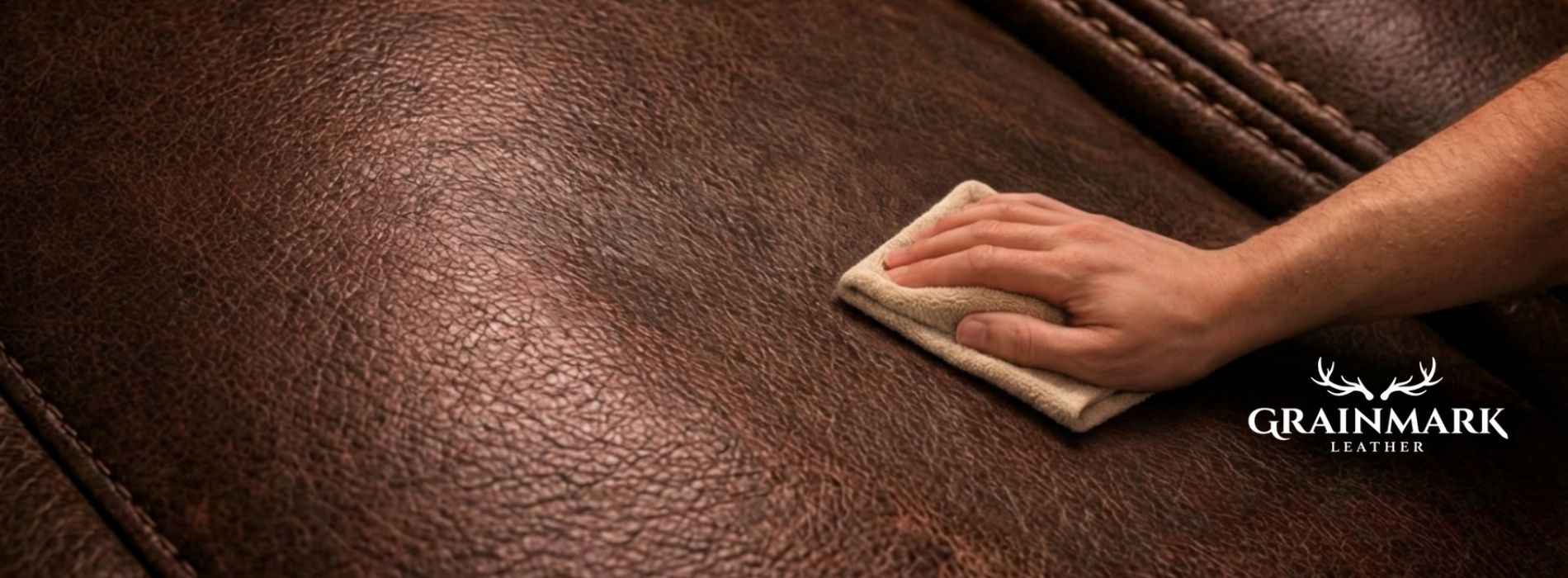
The safest method is simple. Blot the stain with a clean, dry microfiber cloth instead of rubbing it. If residue remains, lightly wipe the area with a small amount of pH-neutral leather cleaner or mild soap such as diluted Castile soap, always testing on a hidden spot first.
Oil stains can often be treated with absorbent powders like cornstarch, while certain surface marks may lift with a diluted vinegar solution or a specialized leather cleaner.
After cleaning, allow the leather to dry naturally away from heat or sunlight, then apply a small amount of neutral conditioner if needed.
It is also important to remember that not every mark is a stain. As we note on our materials page, real leather develops a natural patina over time.
Changes in tone or surface character are often part of the normal aging process rather than dirt that needs to be removed.
Our Go‑To Method: Step‑by‑Step
Our go-to method for removing stains from leather without discoloration is to blot the stain gently, clean it with a small amount of mild leather cleaner if needed, allow the leather to air dry naturally, and condition it afterward to restore its natural oils.
1. Identify the type and the stain

Check whether you’re working with Crazy Horse, top‑grain, suede, nubuck or aniline. Then ask yourself if you’re dealing with genuine dirt or simply the evolving patina that makes leather beautiful,our waxed leathers, in particular, develop a lived‑in character that shouldn’t be confused with dirt.
2. Blot, don’t rub

Use a soft, dry microfiber cloth to blot liquids or lift solids gently. Rubbing spreads the stain and can disturb the finish. This first blot often removes most of the problem; resist the urge to scrub.
3. Clean minimally

If blotting leaves residue, make a mild solution of cool water and a pH‑neutral leather cleaner (or a drop of baby/Castile soap) and lightly wipe the area. Always test in an inconspicuous spot first to ensure the cleaner doesn’t darken the leather.
On our Crazy Horse pieces we prefer a single pass with minimal moisture; repeated scrubbing can create shiny or lighter patches.
4. Let it air dry naturally

Leather needs time to dry evenly. Lay the item flat or hang it away from direct heat. Avoid hairdryers, radiators or heaters, which can draw out oils and make the leather brittle or discolored. Even for water stains, patience is key,allowing the leather to dry gradually helps the finish level out.
5. Condition to restore balance

Once dry, feel the area. If it’s drier than the surrounding surface, gently apply an uncoloured leather cream to replenish oils. Conditioning works like moisturizer: it keeps the hide supple, restores sheen, and adds a layer of protection.
We recommend conditioning our leather bags and small goods every six months, or more often if they see heavy use.
6. Embrace patina

Remember that stained leather is not always damaged leather. Our Crazy Horse hides develop marks and sheen as part of their story. Treat only what doesn’t belong,dust, food residue, ink, or grease,while allowing natural wear to accumulate.
Each scuff adds to the character that makes our backpacks and wallets unique heirlooms.

Handling Common Stains
No two stains behave the same on leather, so each type needs a slightly different approach to avoid spreading the mark or damaging the finish. The key is to identify the substance first, then treat it with the appropriate gentle method while keeping moisture and friction to a minimum.
Everyday dirt and surface grime
Dust and light grime are part of daily life for our backpacks, briefcases and wallets. A simple wipe with a dry microfiber cloth lifts most dirt before it embeds in the pores. If the leather looks dull or chalky, a diluted leather cleaner followed by a light conditioning keeps it supple and bright.
Avoid household cleaners, vinegar, baking soda, or dish soap can strip natural oils and lead to cracking.

Water spots
Water is deceptively tricky; it seems harmless, yet uneven drying can leave rings or dark patches.
We follow the advice of leather experts: blot excess moisture, then let the leather dry naturally away from heat. If a ring forms on a large panel,say, the flap of a messenger bag,we gently wipe the entire panel with a damp cloth to even out the moisture.
Patience is key; rushing with a hairdryer can stiffen the hide and distort its color.
Food and drink
Coffee, juice or a stray dollop of sauce can leave marks if they dry on the surface. We act quickly: wipe away solids, blot liquids, then lightly clean with a leather cleaner if needed.
Always work from the outside of the stain inward, and stop as soon as the mark begins to lift.
For our Crazy Horse duffle bags, we prefer a gentle approach over an over‑cleaned patch,the leather’s natural patina is part of its charm.

Grease and oil
Grease penetrates deeper than water or juice. After blotting with a dry cloth, sprinkle cornstarch or baby powder over the stain, at least a quarter inch thick, and let it sit for several hours (overnight is better).
The powder draws oil out of the leather; vacuum it away and repeat if necessary. Resist the urge to wash with water or soap, which can smear the oil and darken the hide.
For our wallets or toiletry bags, we’ve found this method reduces the mark without creating a larger patch.

Ink and dye
Ink is one of the toughest stains on leather. If the piece is high‑value or the mark is prominent, professional cleaning may be the safest path.
When we do attempt removal, we test rubbing alcohol on an inconspicuous spot. If no color transfers, we dip a cotton swab in alcohol and dab from the outside in, changing swabs as the ink lifts.
Once the mark is gone, we condition the area to restore suppleness. Avoid bleach, acetone or strong solvents; they can remove the leather’s dye entirely.
Conditioning & Long‑Term Protection

Cleaning is only half of the process. Without conditioning, leather can dry out and crack. After any cleaning session (and routinely every six months), apply an uncoloured cream or wax to your leather goods.
Work a small amount in with a lint‑free cloth using circular motions, let it absorb for at least an hour, and buff off any excess. Conditioning restores natural oils, brings back a subtle sheen, and adds a layer of protection against future stains.
For our Crazy Horse products, a light cream accentuates the leather’s patina rather than covering it.
Protecting leather also means storing it properly. Avoid placing them near radiators or heaters, and allow air circulation so the hide can breathe.
When not in use, stuff larger items (like duffle bags) with paper to maintain their shape. Avoid plastic bags, which trap moisture and can encourage mold.
For more detailed steps, read our guide on how to condition leather.
Mistakes to Avoid
Even well‑intentioned attempts can harm leather. Here are common pitfalls and why we recommend steering clear:
| Mistake | Why it’s a problem |
|---|---|
| Soaking the leather or washing it in a machine | Water can saturate the hide and strip oils; washing machines and dryers expose leather to excessive agitation and heat, leading to cracking. |
| Rubbing or scrubbing vigorously | Rubbing spreads stains and can abrade the finish. Leather should be blotted and gently wiped. |
| Using household cleaners (bleach, vinegar, baking soda, dish soap) | These substances can strip natural oils, dull the finish, and cause discoloration. |
| Drying with direct heat | Hairdryers, radiators, or direct sunlight accelerate moisture loss and leave leather stiff and brittle. |
| Skipping the patch test | Even good leather cleaners can darken or change the color on certain hides. Testing prevents surprises. |
| Over-conditioning or using silicone/petroleum products | Too much oil can darken the leather and clog its pores; conditioners with silicone or petroleum trap moisture and may accelerate drying. |
FAQ
Can Water Permanently Stain Leather?▾
Water itself does not usually damage leather, but it can leave visible rings if it dries unevenly. This happens because moisture temporarily darkens the fibers. When the leather dries in patches, the color difference becomes visible. In most cases the mark fades over time, but lightly wiping the surrounding area with a slightly damp cloth can help the surface dry more evenly.
How Long Should I Wait Before Trying to Clean a Leather Stain?▾
Ideally, stains should be treated immediately. The longer a liquid or substance remains on leather, the more likely it is to absorb into the pores. Fresh stains are usually much easier to remove with simple blotting. Once oils, dyes, or pigments penetrate deeper into the material, they become harder to lift without professional treatment.
Do Leather Protectors or Sprays Help Prevent Stains?▾
Yes, protective leather sprays can create a light barrier that slows the absorption of liquids and oils. This does not make leather completely stain-proof, but it gives you more time to wipe away spills before they penetrate the surface. Protective treatments are especially useful for items that see regular use, such as bags, wallets, and shoes.
Why do Some Stains Appear Darker After Cleaning?▾
Leather temporarily darkens when it becomes damp. If a cleaning cloth contains too much moisture, the treated area may appear darker until it fully dries. This usually resolves on its own once the leather returns to its normal moisture balance. Conditioning afterward can also help restore an even tone.
Can Old Stains Still be Removed From Leather?▾
Older stains are more difficult to remove because they have already bonded with the leather fibers. Light marks may still improve with careful cleaning and conditioning, but deep oil, dye, or ink stains sometimes become part of the leather’s patina. In those cases, professional leather cleaning services may offer better results.
Does Leather Color Affect How Stains Appear?▾
Yes. Light colored leather tends to show stains more clearly because there is less pigment masking the mark. Dark leather may hide minor stains but can still show oil spots or moisture rings under certain lighting conditions. Regardless of color, the same gentle cleaning principles should always be followed.
Is it Safe To Use Household Cleaning Products on Leather?▾
Most household cleaners are too harsh for leather. Products containing bleach, ammonia, strong detergents, or alcohol can strip oils from the material and damage the finish. Leather is best cleaned with products specifically designed for it or with very mild solutions such as diluted Castile soap.
Why Does Leather Sometimes Look Better after a Stain?▾
Certain leathers, especially full grain and waxed varieties, develop character through use. Small marks can redistribute natural waxes or oils across the surface, creating subtle variations in tone. This is part of what gives high quality leather its distinctive patina and visual depth over time.
How Often Should Leather be Cleaned Even if It is Not Stained?▾
Routine maintenance is usually enough. Wiping leather with a dry cloth every few weeks removes surface dust before it builds up in the pores. Conditioning every six to twelve months helps maintain flexibility and prevents dryness, especially for items that are used frequently.
Final Thoughts
At Grainmark Leather we build pieces meant to be passed down. The same respect we put into crafting a backpack or wallet should guide the care you give it at home.
When asked how do you remove stains from leather, our answer centers on gentle actions,blot, clean sparingly, dry naturally, and condition appropriately.
We also remind customers to embrace patina: the surface tone will deepen, waxed areas will shift, and small marks will become part of the story. Clean what doesn’t belong, but let the leather live.