Leather Bag Quality: A Practical Guide for 2026
You're standing at a leather shop counter with two nearly identical totes in front of you. One feels smooth, even, and immediately comfortable. The other has faint hide marks, slight color variation, and a firmer hand. The labels tell you less than you'd like, and the price alone doesn't settle the question.
That's the problem with judging leather bag quality from a first impression. Softness, shine, smell, and a polished display can all be useful clues, but none tells you how the bag will handle shoulder load, body oils, rain, abrasion, and repeated opening. A sound assessment looks at the hide, tanning, construction, hardware, care requirements, and the maker's willingness to support the bag after purchase.
A quality bag should make sense not only on the day you buy it, but after months of carrying it and years of maintaining it. The sections below focus on that longer performance arc.
Table of Contents
- What Leather Bag Quality Actually Means in Daily Carry
- How to Read Leather Grades Without the Jargon
- Tanning Methods and Why They Change How a Bag Ages
- A Practical Inspection Checklist for Stitching and Hardware
- Patina, Wear, and How Quality Shows Up Over Time
- Care and Maintenance That Actually Extends Bag Life
- Quality Signals Most Shoppers Overlook
What Leather Bag Quality Actually Means in Daily Carry
The cheaper tote on the counter may feel more luxurious at first. A soft, heavily finished surface can feel smooth because the leather has been coated or mechanically refined. That doesn't automatically make it poor, just as a firmer, visibly marked hide isn't automatically superior. The useful question is what happens after the surface meets real life.
A work bag flexes at the same points every day. Its handles take concentrated load, its corners rub against clothing and floors, and its top edge gets touched constantly. The leather also meets hand oils, changing weather, dust, and the occasional spill. Leather bag quality is the bag's ability to keep its structure and age in a way you can live with, not its ability to win a two-minute touch test.
The four parts that decide performance
At the bench, I separate the assessment into four connected parts:
- Hide selection: Dense, intact fibers give the maker a stronger foundation. Natural markings may indicate that the surface hasn't been aggressively disguised.
- Tanning and finishing: Tanning determines how the fibers respond to moisture, oils, dye, and flexing. Finishing determines what you see and feel on top.
- Construction: Stitching, folded seams, reinforcement, handle attachments, and edge treatment decide how the leather carries force.
- Hardware and serviceability: A sound clasp is useful only if it remains aligned, and a strong strap is more valuable when the attachment can be repaired.
A full-grain bag is commonly described as a long-life product because it retains the natural grain layer and its dense fiber structure resists moisture, tearing, and daily wear. Independent leather guidance estimates that a well-cared-for full-grain bag may last about 20 to 30 years, while top-grain leather is often placed around 5 to 15 years and lower-grade genuine leather products around 2 to 5 years. Those are broad estimates, not a promise for every bag, and construction still matters. (independent leather guidance on choosing a leather bag)
Workshop rule: Judge the bag by the failure it's designed to prevent. A shoulder strap should resist pull, a corner should tolerate abrasion, and a finish should age without hiding structural weakness.
A bag that looks slightly irregular may improve with use if its surface remains intact and develops patina. A perfectly uniform bag may show wear once its coating or corrected surface begins to fail. Price can reflect better leather and labor, but it can also reflect branding, retail overhead, or decorative complexity. Before comparing price tags, learn what material and construction each one represents.
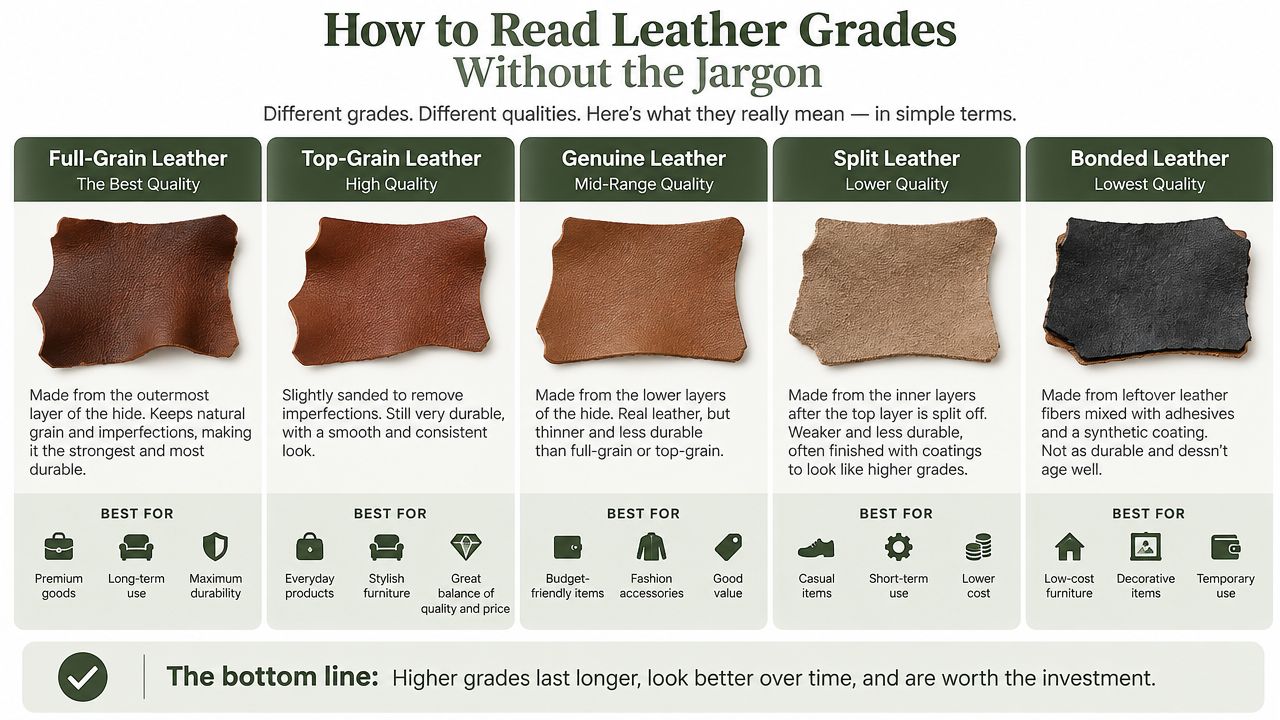
How to Read Leather Grades Without the Jargon
Start with the grain layer. It's the upper portion of the hide, where the fibers are generally denser and the natural skin structure is most intact. Every grade becomes easier to understand once you ask one question: how much of that layer remains, and what has been done to its surface?
Full-grain leather
Full-grain leather keeps the complete grain surface. You may see scars, small insect marks, pores, or variations in color. The hand can range from firm to supple, depending on the hide and tanning method.
In use, full-grain leather tends to show handling rather than disguise it. Oils and friction can deepen the color, while small scratches may blend into the developing patina. It's common in structured briefcases, totes, travel bags, and goods designed for repeated carry. The grade gives the leather strong aging potential, but it doesn't excuse weak stitching or poor handle design.
Top-grain leather
Top-grain leather retains much of the grain layer, but the surface is lightly sanded to reduce visible imperfections. Manufacturers often finish it to create a more consistent color and hand.
That treatment can make the bag look cleaner and feel more predictable at purchase. It may also reduce the depth of natural surface development compared with an untouched grain. Top-grain leather can be a sensible compromise when you want a refined appearance without moving to lower layers, but inspect the coating and construction rather than assuming the grade settles the matter.
Corrected-grain leather
Corrected-grain leather has undergone heavier surface refinement. The maker may sand away more of the natural texture and emboss a replacement pattern, then apply finish for an even appearance.
The result is often uniform, smooth, and easy to merchandise. Aging depends heavily on the quality and thickness of that finish. Once the surface scuffs, the mark can look more obvious because the printed texture doesn't respond like natural grain.
Genuine and bonded leather
“Genuine leather” is a broad commercial term, not a guarantee of premium performance. It can refer to leather from lower layers that has been finished to look attractive. Bonded leather uses leather fibers or scraps combined with a binder and a surface coating.
These materials can work for lightly used accessories or budget products, but they generally offer less room for graceful aging. Peeling, cracking, and loss of surface integrity are different failure modes from the darkening and burnishing associated with good full-grain leather. For a clearer grade comparison, consult this guide to different grades of leather.
Small leather goods can also make grade and finish easier to study because you can handle a compact surface closely. If you're exploring personalized accessories, these laser engraved leather keychain ideas offer useful examples of how surface treatment and customization interact with the leather beneath.
| Grade | What you may see | Likely aging pattern | Common bag use |
|---|---|---|---|
| Full-grain | Natural markings and pores | Patina, burnishing, character | Briefcases, totes, travel bags |
| Top-grain | More even surface and color | Gradual wear with less visible grain change | Structured everyday bags |
| Corrected-grain | Embossed, highly uniform texture | Scuffing or finish wear | Fashion and commercial bags |
| Genuine leather | Finished lower-layer leather | Variable, often more surface-dependent | Budget accessories |
| Bonded leather | Very consistent coated surface | Peeling or cracking risk | Low-cost products |
Grade is a starting point, not a complete verdict. A well-constructed top-grain bag can outperform a poorly assembled full-grain one, while a thoughtfully tanned full-grain hide can become more useful and attractive as it settles into your routine.
Tanning Methods and Why They Change How a Bag Ages
Two bags can share the same grade and still behave differently because tanning changes the fiber structure, color response, firmness, and surface character. Think of the grade as the part of the hide retained, and tanning as the process that prepares that material for use.
Vegetable-tanned leather usually starts firmer and paler. It absorbs oils and responds visibly to light and handling, so natural colors can darken and develop patina. That makes it appealing for owners who want the bag to record its use, but it also means water marks and scratches may become part of the story. A rigid vegetable-tanned briefcase can soften with handling, though it may never feel like a soft, collapsed chrome-tanned tote.
Chrome-tanned leather commonly arrives softer, more uniform, and vividly dyed. It's often a practical choice for a bag that needs a relaxed hand and consistent appearance. Instead of burnishing into a deep, transparent patina, it may show abrasion, creasing, or changes in the finish. A good chrome-tanned hide can still be durable, especially when matched with appropriate construction.
Chrome-free leather uses alternatives such as aldehyde or synthetic-vegetable systems. Its behavior sits between the other two categories, depending on the specific tannery and finish. It may offer a softer hand with some potential for visible aging, while avoiding certain concerns associated with chrome processing. Ask the maker what “chrome-free” means in that particular product rather than treating the label as a complete specification.
| Tanning method | Initial feel | Aging behavior | Best fit for |
|---|---|---|---|
| Vegetable-tanned | Firm, structured, often paler | Darkens and develops visible patina | Owners who welcome change |
| Chrome-tanned | Soft, even, flexible | Wears through handling and abrasion | Relaxed daily carry |
| Chrome-free | Variable, often balanced | Can combine softness with patina | Buyers seeking an alternative process |
Tanning doesn't rescue a weak grain structure. A corrected surface remains corrected, and a strong full-grain hide still needs sound construction. For a closer look at the specific character of this method, see this guide to vegetable-tanned leather.
The process also affects care. A finished chrome-tanned bag may need little conditioning, while an absorbent vegetable-tanned surface can darken dramatically when you apply the wrong product. Buy the leather behavior you're prepared to maintain, not only the feel you want at checkout.
A Practical Inspection Checklist for Stitching and Hardware
Put the bag on a counter with the grain side facing up and inspect it in the same order every time. A repeatable sequence prevents the attractive front panel from distracting you from weak corners, loose lining, or overloaded hardware.
Start with the stress points
Look first at the handles, strap tabs, base corners, zipper ends, and closure points. These areas concentrate force, so the maker should reinforce them with folded leather, additional layers, secure back-tacking, or carefully placed rivets.
Stitches should sit evenly without wandering into the edge. Dense stitching can support a seam, but excessive perforation can weaken thin leather, so spacing must suit the material. A lockstitch generally holds each stitch independently enough that a local break doesn't unravel an entire seam as readily as a chain stitch can. You don't need to identify the exact machine, but you should notice whether the seam looks controlled and appropriate for the bag's load.
If you sew or repair leather yourself, these aspects to consider for leather sewing explain why needle choice, thread, presser-foot control, and machine setup affect the finished seam.
Test the hardware without forcing it
Open and close every zipper, clasp, buckle, and snap. The movement should be deliberate and smooth, not gritty or crooked. A heavy D-ring or buckle can suggest substantial metal, but weight alone doesn't prove quality. Plated hardware may look excellent until abrasion exposes the base metal, while solid hardware usually offers better repair prospects.
Check whether the strap tab is stitched through a stable section of leather or merely attached to a thin folded edge. Pull gently in the direction the bag will be loaded. You're testing alignment and movement, not trying to break the sample.
Inspect inside, underneath, and around the edges
A lining should lie flat, with seams finished cleanly and pockets anchored at their upper corners. Reach inside the pocket and feel for reinforcement. A beautiful exterior paired with a flimsy lining can still make daily use frustrating.
Edges reveal finishing discipline. Burnished edges should feel smooth and compact. Edge paint should be even, without thick ridges, bubbles, or early separation. Look at the bottom corners from several angles, because that's where a bag often receives floor contact and repeated flexing.
Bench test: Don't just squeeze the center panel. Flex the handle attachment, inspect the underside, and operate the closure. Quality shows up where the bag carries force.
Patina, Wear, and How Quality Shows Up Over Time
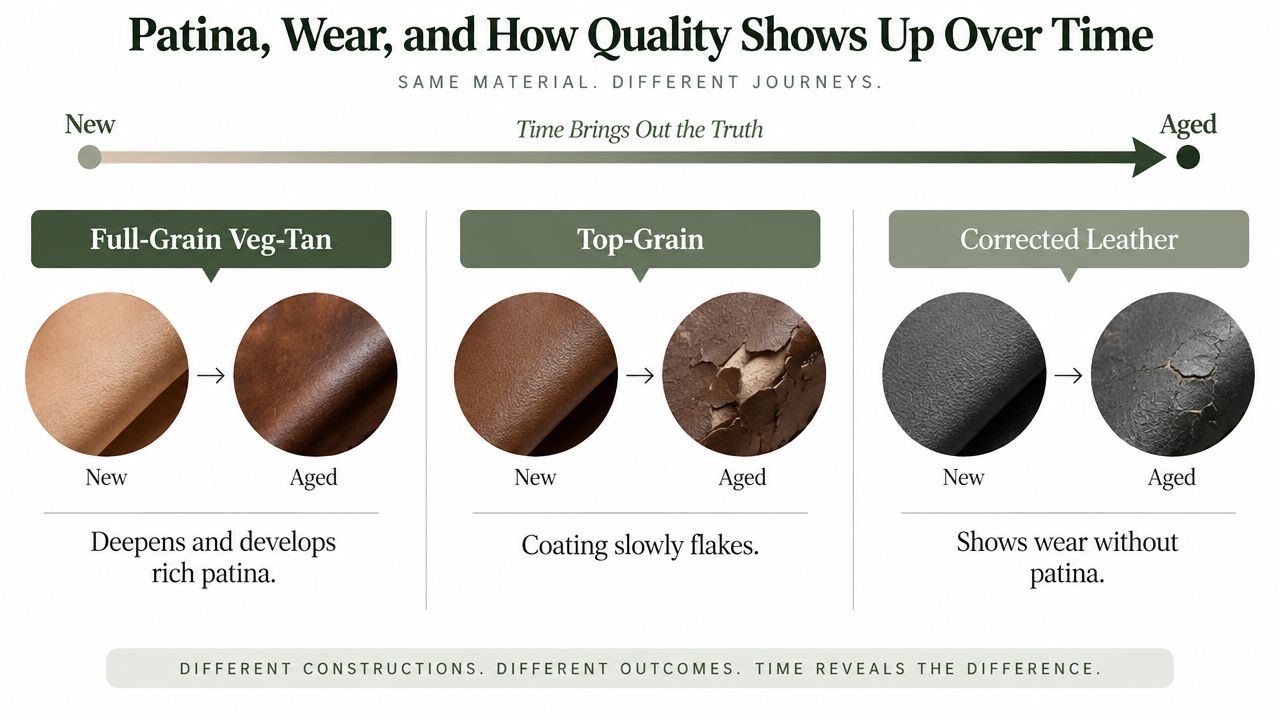
Patina is not a synonym for “old.” It describes a change in the leather surface caused by handling, light, oils, and friction while the material remains structurally sound. The effect depends on the grain layer, tanning, dye, and finish.
A full-grain vegetable-tanned bag can deepen in color as the surface absorbs contact and light. A top-grain bag may show a subtler change because finishing separates the outside appearance from the grain beneath. Corrected leather often displays scuffs and loss of finish rather than a layered, natural change. The important distinction is whether the surface becomes more individual or begins to fail.
Match aging behavior to the way you carry
A commuter briefcase receives concentrated wear at the handles, corners, and shoulder contact points. A full-grain hide with a supportive structure can show darker touch zones and softened edges while retaining its shape. A weekend tote may age more slowly if it spends much of its time stored, but occasional heavy loading can still stress the handles and base.
A bag that develops character won't necessarily stay pristine. Small scratches may remain visible, and a pale vegetable-tanned surface can show water marks. That's acceptable only if you like the way those changes accumulate. Someone who needs a consistent color may prefer a more finished chrome-tanned leather and accept a different wear pattern.
The practical test is not whether a bag looks unchanged. It's whether the material still feels connected, the seams remain secure, the corners remain usable, and the finish changes without peeling away in sheets. Guidance on expected durability and the role of patina is available in this discussion of full-grain leather lifespan.
A useful bag doesn't have to look new after years of use. It has to look honestly used without becoming weak, sticky, cracked, or misshapen.
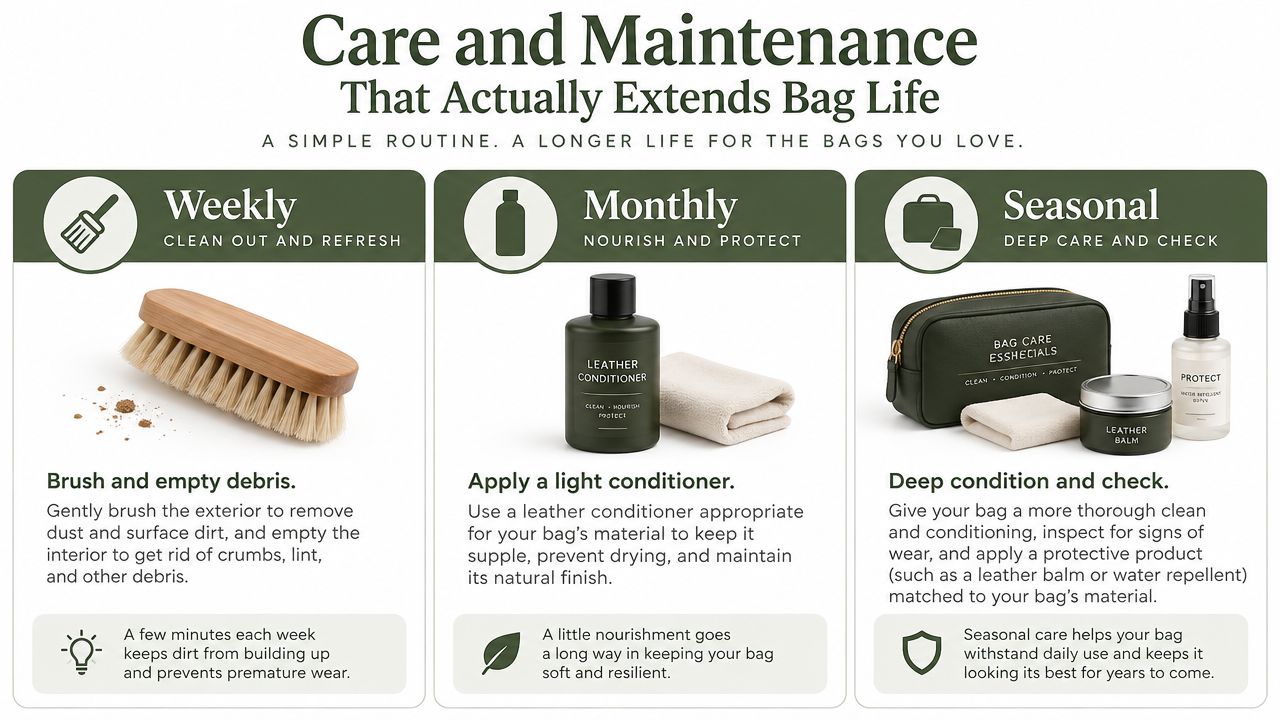
Care and Maintenance That Actually Extends Bag Life
Care should respond to the leather, not to a rigid calendar. A dry, absorbent vegetable-tanned surface may need attention sooner than a finished chrome-tanned one, while over-conditioning can soften structure and attract dirt.
Use a simple care rhythm
Weekly: Empty the bag and brush away grit from seams, folds, and corners. Debris acts like abrasive paste when it moves repeatedly against the leather. Check the base and handle attachments while the bag is empty.
Monthly: Condition only when the surface feels dry or looks dull in a way that indicates lost moisture balance. Use a small amount of a product intended for the specific finish, and test it on a hidden area first. A light application is safer than flooding the hide.
Seasonally: Clean more, review edge paint and hardware, and address scratches or loose stitching before they become structural problems. A repair professional can identify whether a mark is superficial or has reached the fiber layer.
For product-selection guidance, this resource on how to condition leather is useful because the right treatment depends on finish and leather type.
Avoid common care mistakes
- Skip aggressive oils on pale leather: Neatsfoot oil can darken light-colored bags and alter the hand more than expected.
- Don't use saddle soap automatically: Finished leather may react poorly to heavy cleaning or residue.
- Avoid heat drying: Blot water gently and let the bag dry naturally away from radiators and hair dryers.
- Store it with support: Keep the bag lightly filled so it holds its intended shape, but don't overstuff it.
- Protect the surface from transfer: Dark denim, wet clothing, and rough surfaces can mark lighter leather.
- Treat water spots patiently: Blot rather than rub, allow the area to dry evenly, and don't apply heat to chase the mark away.
Household scratch-care advice can be useful for understanding how repair products are positioned, but leather still needs a leather-specific test and cautious application. Evo Dyne Products care solutions provide one example of the broader care category, not a substitute for checking compatibility.
Ink, dye transfer, and salt marks deserve restraint. Don't scrub aggressively or layer multiple cleaners over an unknown finish. Blot fresh contamination, isolate the bag from the source, and contact a leather repairer when the mark is extensive or the leather has absorbed it.
Quality Signals Most Shoppers Overlook
A high price can pay for better hide, careful labor, or a recognizable label. It can also pay for design, distribution, and presentation. Price is evidence of what the maker is charging, not proof of how the bag will perform.
Ask where the leather was tanned and whether the maker can identify the tannery or processing standard. The Leather Working Group was formed in 2005 to create a standardized tannery auditing protocol, later using tiered certification levels such as Gold, Silver, and Bronze. Its importance lies in moving sustainability claims toward auditable controls involving water, energy, chemicals, and waste, while processing quality can also affect durability, color consistency, and aging. (overview of international leather standards)
Country-of-origin statements need careful reading. The country where a bag was assembled may not be the country where its leather was tanned, and a brand label won't fill that gap. A transparent maker should be able to explain the material's origin, finish, and limitations without hiding behind vague terms.
Look for evidence that the bag can be serviced
Repairability is one of the strongest long-term signals because a serviceable bag isn't treated as disposable. Check whether the lining can be replaced, whether hardware is accessible, whether handles can be rebuilt, and whether the maker offers spare parts or repair support.
Strap attachment tells you how the designer thought about load. A wide, well-seated tab distributes pull more intelligently than a narrow strip anchored only through a fragile edge. Hand-finished edges can show deliberate smoothing and sealing, while sprayed edges may appear even but become brittle or separate when repeatedly flexed.
A lining with uneven seams doesn't guarantee failure, but it gives you information about inspection standards. If the maker rushes the inside where customers rarely look, examine the stress points outside with extra care. This guide to spotting real leather can help you distinguish material clues from marketing language.
| Signal shoppers overlook | What it reveals | Price cue shoppers trust | Why price alone misleads |
|---|---|---|---|
| Named tannery or audit information | Supply-chain clarity and processing control | Brand reputation | Branding doesn't identify the actual hide |
| Replaceable lining and hardware | Repair potential | Premium packaging | Presentation doesn't extend service life |
| Reinforced strap attachments | Load planning | Heavy-looking leather | Thickness can add weight without sound engineering |
| Clean pocket and lining seams | Internal workmanship | Smooth exterior finish | The surface may conceal rushed assembly |
| Burnished or carefully finished edges | Flex and abrasion preparation | Decorative details | Ornament doesn't protect vulnerable edges |
Recent consumer guidance increasingly treats traceability, tanning method, warranty, repair support, and craftsmanship as part of responsible quality rather than optional extras. (leather craftsmanship and sustainability guidance for 2026) A bag that ages well but cannot be repaired may offer less long-term value than one with slightly less dramatic leather and a clear service path.
Choose according to your use. If you carry a laptop and documents daily, prioritize load-bearing attachments, stable structure, and a lining you can maintain. If you want a travel companion that will acquire visible character, prioritize a sound full-grain hide, compatible tanning, and a maker willing to explain how the bag should be cared for.
Grainmark Leather offers full-grain leather briefcases, backpacks, travel bags, portfolios, and specialist cases for watches, pens, cigars, and eyewear, with personalization available on select products. Visit Grainmark Leather to compare bags by use case and choose a durable carry or storage piece with the material and construction details in mind.