How Long Does Full Grain Leather Really Last?
Full-grain leather can last for decades, and a well-made piece may serve for a lifetime with proper care.
The longevity depends on three things: the quality of the hide, the construction of the product, and the way the leather is cleaned, stored, and used.
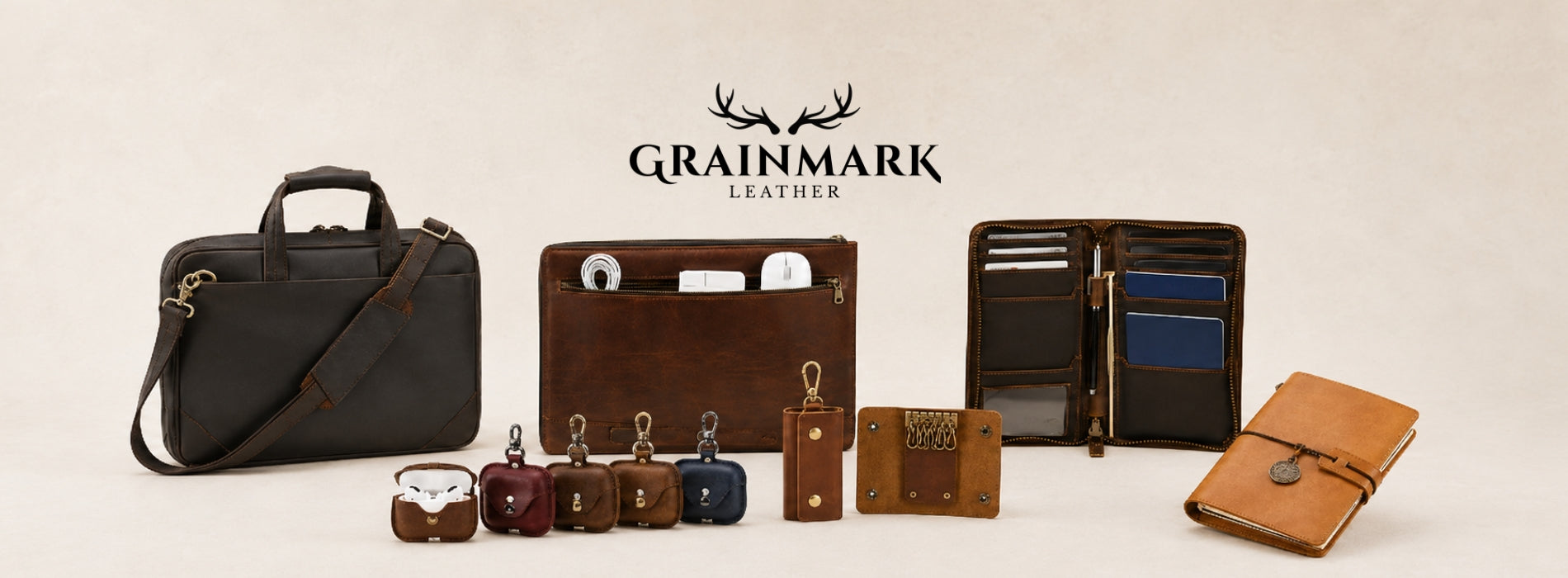
Grainmark Leather builds around that idea, using full-grain leather and traditional craftsmanship for goods that are meant to age slowly rather than be replaced quickly.
Leather Naturally describes leather as hard-wearing, long-lasting, repairable, and capable of lasting a lifetime when well-made and cared for.
What Makes Full Grain Leather Last So Long?

Full-grain leather is prized because it keeps the outermost grain layer of the hide.
That surface contains the strongest fibres, which is why full-grain leather is widely regarded as the most durable leather type used in premium bags, briefcases, wallets, and travel goods.
Unlike corrected-grain leather, it is not sanded down to erase natural marks, so the leather keeps more of its original structure.
The visible marks on full-grain leather are not defects in the usual sense. Small scars, wrinkles, grain variation, and tonal changes are part of the hide’s natural record.
Over time, that surface develops patina, a richer colour and softer sheen created by handling, light exposure, movement, and natural oils. No two pieces of full-grain leather look exactly alike.
A lower-grade leather can look flawless on day one because its surface has been corrected, coated, or embossed. Full-grain leather often looks more honest from the start.
Its value appears gradually, through depth of colour, softened edges, polished touchpoints, and small marks that make the item personal.
The Realistic Lifespan of Full Grain Leather
A full-grain leather wallet used every day may look heavily broken in after five years yet remain structurally sound.
A briefcase that is carried to the office and stored well can often last 10 to 20 years or more.
A travel bag exposed to rain, aircraft holds, car boots, and daily abrasion may age faster, but good leather and strong stitching can still keep it useful for many years.
| Product type | Realistic lifespan with care | What usually wears first |
|---|---|---|
| Wallet or cardholder | 5 to 15 years | Corners, fold lines, stitching |
| Briefcase | 10 to 25 years | Handles, zipper pulls, strap hardware |
| Backpack | 8 to 20 years | Shoulder straps, base corners, zippers |
| Duffle bag | 10 to 30 years | Handles, base panels, hardware |
| Watch or cigar case | 15 years or more | Interior lining, closure, stitching |
Material matters, but construction often decides whether a leather product becomes an heirloom or just an expensive mistake.
The benefits of leather include repairability, maintainability, and long service life, all of which help explain why good leather goods can outlast many synthetic alternatives.
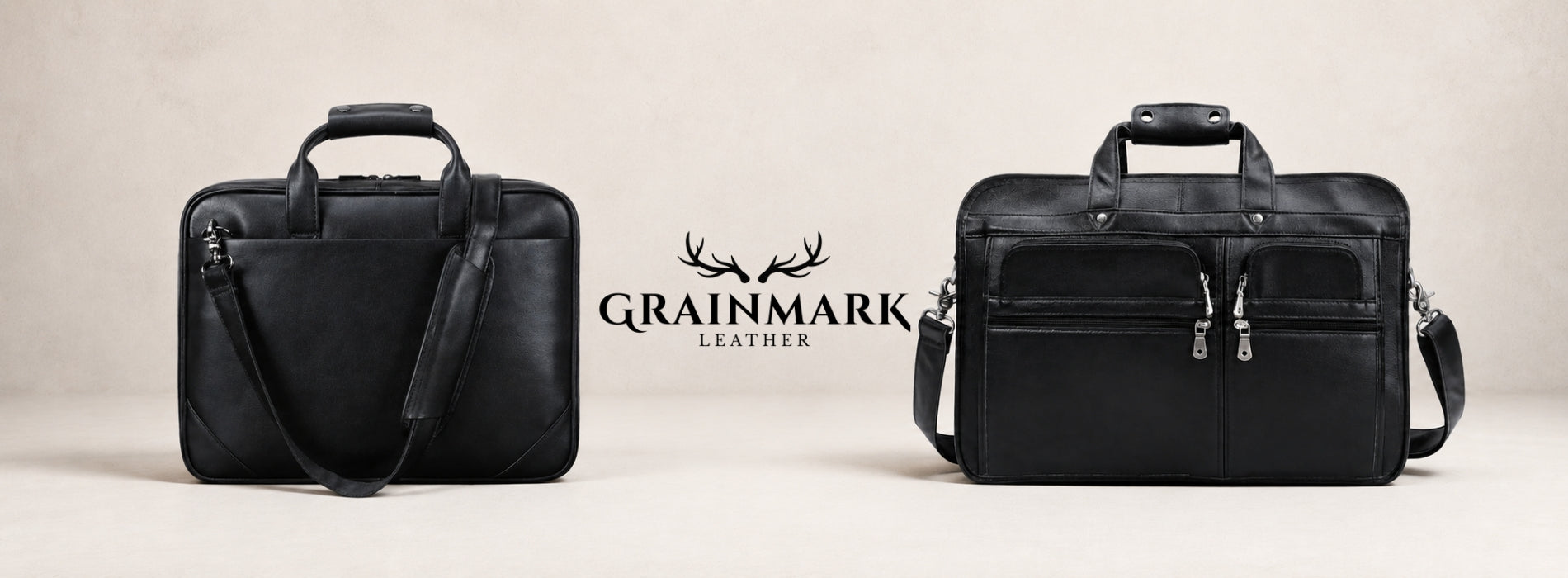
Example of High-End Full Grain Leather Briefcase - The Den

The Den fits naturally into a conversation about leather lifespan because a briefcase is one of the clearest tests of daily durability.
The Den has a 15.6-inch laptop compartment, multiple pockets, YKK zippers, an adjustable strap, precision stitching, and a soft-touch leather exterior, all details that matter when a bag is expected to work for years rather than seasons.
Its 5L capacity, 1 kg weight, and compact dimensions make it more of a refined daily work piece than an oversized travel case.
That kind of use is where full-grain leather often excels: steady handling, regular movement, polished contact points, and gradual patina rather than sudden wear.
Why Construction Matters as Much as Leather Quality

A beautiful hide cannot save poor craftsmanship. Long-lasting leather goods need strong seams, thoughtful stress-point reinforcement, quality zippers, stable hardware, and linings that suit the intended use.
Handles and straps deserve special attention because they carry the full weight of the bag again and again.
Heavy-duty stitching is used so bags can withstand modern life and continue lasting for years.
Good construction also makes repair easier. A restitchable seam, replaceable strap, or serviceable zipper gives a bag a second life.
Cheap bonded materials and plastic-coated surfaces often fail differently: they peel, crack, or separate in ways that are difficult to repair cleanly.
Example of High-End Full Grain Leather Backpack - The 
The Timberhorn is a stronger fit for readers who want to know how full-grain leather performs under heavier daily carry.
The Timberhorn comes with a side-entry 15.6-inch laptop compartment, spacious main storage, dual front pockets, padded shoulder straps, YKK zippers, and reinforced stitching.
At 23L, with dimensions of 44 cm by 32 cm by 16.5 cm and a 2 kg weight, the Timberhorn is built for more demanding routines: commuting, short travel, documents, clothing, and daily tech.
What Shortens the Life of Full Grain Leather?

Full-grain leather is strong, but it is still a natural material. Poor storage, harsh cleaning, and repeated environmental stress can shorten its life dramatically.
The Canadian conservation guidance identifies physical stress, poor support, large environmental fluctuations, water damage, pest activity, abrasion, and wear as causes of weakened leather and skin objects.
Museum guidance is more cautious than everyday bag care, but the principle applies: leather lasts longer when it is supported, kept reasonably dry, and protected from extremes.
Heat is especially damaging. Leather can dry and crack without proper care, and high heat can make it brittle.
That is why a leather bag should never be dried against a radiator, blasted with a hairdryer, or left in harsh direct sun for long periods.
Water is another common problem. A little rain is not usually a disaster, especially for a treated bag, but soaking leather can cause stains, stiffness, distortion, and slow drying problems.
The safest response is to wipe away excess moisture with a clean, dry cloth and allow the leather to dry naturally.
Patina or Damage: How to Tell the Difference

Patina is often mistaken for dirt, especially by people buying full-grain leather for the first time. A good patina looks integrated with the leather.
It deepens the colour, softens the shine and appears most strongly where the item is touched often: handles, corners, flap edges and strap contact points.
Damage looks different. Cracking, peeling, powdery texture, deep water stains, loose stitching, broken zippers, and warped panels are warning signs.
Full-grain leather may scratch, darken, and crease, but it should not flake like a plastic-coated imitation.
The changed colour is part of the appeal of full-grain leather when it develops gradually and evenly.
A polished handle, darkened corner, or softened fold can make a premium leather piece feel more personal, more lived-in, and more refined with age.
How to Make Full Grain Leather Last Longer
The best care routine is simple and restrained. Brush away dust with a soft cloth. Wipe small marks gently.
Let the moisture dry naturally. Condition only when the leather begins to feel dry, not every week out of habit.
A Vogue leather-care guide recommends testing cleaning products on a hidden area first, using only a slightly damp cloth for gentle cleaning, conditioning to restore oils, and avoiding harsh household cleaners such as bleach, ammonia, alcohol, or acetone.
A practical routine looks like this:
| Situation | Best response |
|---|---|
| Dust after daily use | Wipe with a soft dry cloth |
| Light rain | Blot, reshape, and air dry |
| Surface dirt | Use a light leather cleaner sparingly |
| Dry feel | Apply a small amount of neutral leather cream |
| Deep stain | Avoid aggressive scrubbing and ask a specialist |
| Long storage | Keep in breathable storage, away from heat and damp |
Less care is often better than too much care. Over-conditioning can darken leather, soften structure, and attract grime.
Full-grain leather benefits from attention, but it does not need to be fussed over.
Is Full Grain Leather Worth It for Longevity?

For buyers who want a flawless showroom surface forever, full-grain leather may not be the best emotional fit. It changes. It records use. It becomes more individual with time.
For buyers who value longevity, repairability, and graceful ageing, full-grain leather is one of the strongest choices. The important phrase is “well made.”
Full-grain leather alone is not a guarantee. A lasting piece also needs clean pattern cutting, strong thread, reliable hardware, secure zippers, and sensible proportions.
That is why a daily briefcase like The Den and a larger carry piece like The Timberhorn fit well in a lifespan discussion.
Both pairs of full-grain leather with practical structure, storage, and reinforced details which is exactly where long-term value begins.
Questions to Ask Before Buying
How often will the item be used? ▾
Daily use creates faster surface ageing but also a richer patina. A full-grain briefcase carried five days a week may look mature after a few years, which is not a failure if the structure remains sound.
Will it carry heavy items? ▾
Choose reinforced straps, strong zippers, and a stable base for laptops, documents, chargers, and travel gear. Leather quality matters, but stress points decide long-term performance.
Does the leather feel natural? ▾
Full-grain leather should show some life in the grain. A perfectly plastic-like surface may point to heavy correction or coating.
Can it be maintained? ▾
A good leather product should allow basic cleaning, careful conditioning and repair. Repairability is one of the reasons leather can remain in use for so long.
Final Thoughts
Full-grain leather really lasts as long as the hide, craftsmanship, and care allow. In practical terms, expect many years from a heavily used item and decades from a well-made piece that is cleaned gently, stored properly, and repaired when needed.
A full-grain leather bag should not look frozen in time. It should soften, darken, crease, and polish in the places where life touches it most.
That is the quiet appeal of the material. It does not promise perfection. It promises character, endurance, and a slower relationship with the things we choose to carry.