Crazy Horse Leather Care: A Practical Owner's Guide
Dust regularly, spot-clean with a dry or barely damp microfiber cloth, and condition sparingly once or twice a year. That covers the full routine for most Crazy Horse leather goods. The waxed, full-grain cowhide finish is self-healing and water-resistant, but aggressive cleaning strips the wax layer that creates both the pull-up effect and the patina. Always patch-test any new product on a hidden panel first.
Key Takeaways
Proper crazy horse leather care comes down to one principle: preserve the wax layer, condition sparingly, and let the patina develop naturally through use.
| Point | Details |
|---|---|
| Dust and buff daily | A soft brush or dry microfiber cloth after each use prevents buildup without touching the wax finish. |
| Condition sparingly, only when the leather feels dry or stiff | Use a wax-based salve only when the leather feels dry or stiff; over-conditioning darkens the finish permanently. |
| Patch-test every new product | Apply to a hidden panel and wait 24 hours before treating any visible surface. |
| Blot water, never rub | Blot wet areas immediately, stuff to hold shape, and air-dry at room temperature away from heat. |
| Grainmarkleather’s routine | Each piece ships wax-finished; repeat a light salve application yearly and browse the full collection for care-ready goods. |
Table of Contents
- What should you do and avoid for day-to-day crazy horse leather care?
- What is Crazy Horse leather and why does the finish matter?
- How to clean Crazy Horse leather step by step
- Does Crazy Horse leather need conditioning, and how often?
- Mink oil, saddle soap, and other common products: what works and what doesn’t
- How to treat scratches and encourage a good patina
- What to do when Crazy Horse leather gets wet
- How to remove common stains safely
- Storage and long-term care for Crazy Horse leather goods
- Grainmarkleather’s recommended care routine
- Scratches are part of what makes this leather worth owning
- Grainmarkleather’s Crazy Horse leather goods
- Sources
What should you do and avoid for day-to-day crazy horse leather care?
Do:
- Dust with a soft horsehair brush or microfiber cloth after each use
- Buff small surface marks with a clean thumb or dry cloth
- Spot-clean only when necessary, using a barely damp cloth
- Condition sparingly, only when the leather feels dry or stiff
- Patch-test every new product on an inside seam or hidden panel
Avoid:
- Soaking or submerging the item in water
- Alcohol-based cleaners, acetone, or harsh detergents
- Silicone or heavy petroleum-based polishes
- Aggressive scrubbing, which removes surface wax unevenly
- Applying conditioner more than twice a year on lightly used pieces
Pro Tip: Run your patch test on the inside of a strap loop or the back corner of a panel. Wait 24 hours and check for unexpected darkening, tackiness, or a change in sheen before treating any visible surface.
What is Crazy Horse leather and why does the finish matter?
Crazy Horse leather is full-grain cowhide treated with oils and natural waxes, not horsehide. The name refers to the finish, not the animal. According to Leather Advice, the wax-and-oil treatment produces the pull-up effect: when the leather flexes or is scratched, the surface wax shifts and the color lightens at the stress point, then gradually darkens again as the wax redistributes.
The manufacturing method behind this is called hot-stuffing. As Hoplo Leather explains, tanneries infuse full-grain cowhide with wax and oil under heat and pressure, saturating the hide deeply. The result is:
- Water resistance from the hydrophobic wax layer (resistant, not waterproof)
- Self-healing pull-up behavior when scratched or flexed
- Developing patina that deepens with handling and age
- Sensitivity to solvents that dissolve or strip the wax
That last point drives every care decision. Products that remove wax alter both the appearance and the water-resistant performance of the leather. See Grainmarkleather’s material notes for more on why the brand uses this finish across its goods.
How to clean Crazy Horse leather step by step
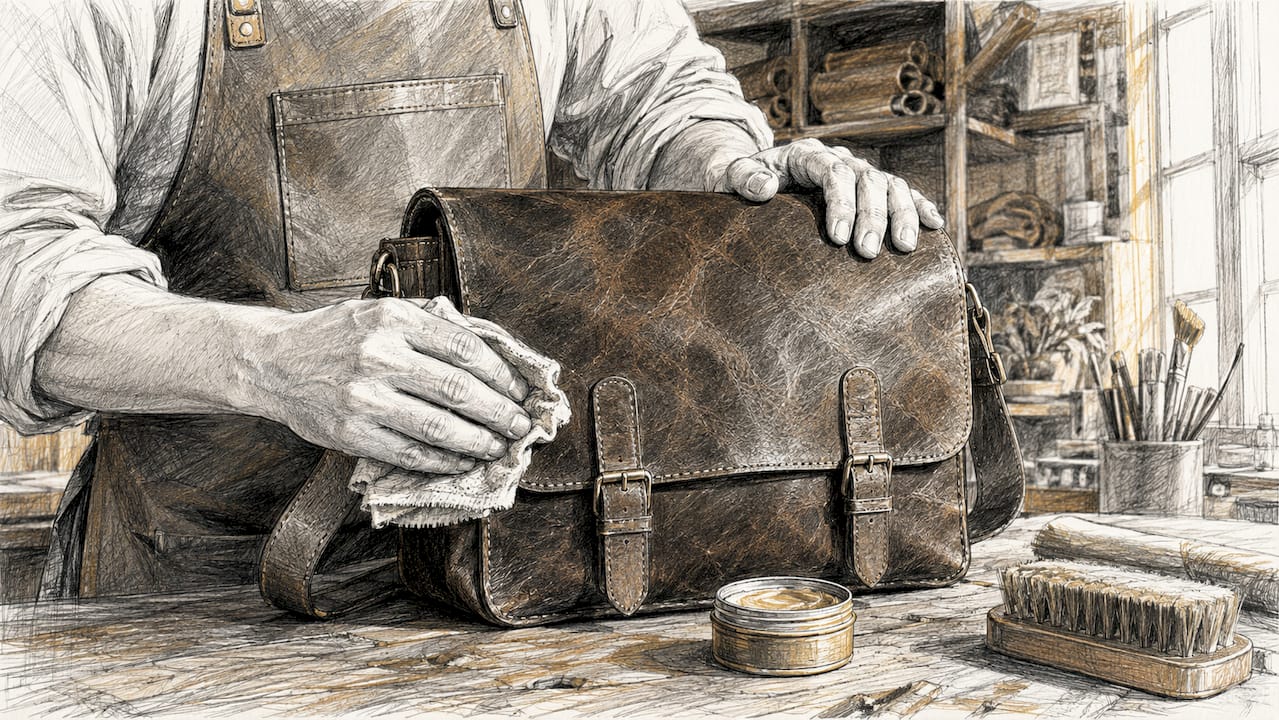
Thread and Maple’s step-by-step guide recommends a conservative sequence: dry-brush first, then use a barely damp cloth only if needed, and avoid any harsh chemicals that could strip the waxed finish. The routine below follows that approach.
Tools you need: soft horsehair brush, clean microfiber cloths, distilled water, blotting paper or plain white paper towels.
- Empty the item. Remove all contents so the leather can flex freely and you can access every panel.
- Dry-brush or dust. Use a soft horsehair brush in short, light strokes to lift surface dust and debris. A dry microfiber cloth works for smooth panels.
- Patch-test before any damp cleaning. Dampen a corner of your cloth with distilled water, press it to a hidden panel, and wait 10 minutes. If the color shifts more than expected or the surface feels tacky, stop and let it dry before proceeding.
- Spot-clean with a barely damp cloth. Wring the cloth until almost dry. Wipe the soiled area in one direction rather than scrubbing in circles. Less moisture is always better.
- Blot wet stains immediately. Press blotting paper or a dry cloth firmly onto the stain. Do not rub — rubbing pushes the stain deeper and spreads it.
- Air-dry fully before storing or conditioning.
Pro Tip: Distilled water reduces the risk of mineral deposits that tap water can leave on waxed leather. Keep a small bottle near your care kit.
For leather watch straps and small accessories, the same sequence applies — the scale is just smaller, so use a cotton swab instead of a full cloth for tight seams.
Does Crazy Horse leather need conditioning, and how often?
Condition sparingly. The wax-and-oil saturation from hot-stuffing means most Crazy Horse pieces carry enough internal moisture to stay supple for months without intervention. Conditioning too often, or with the wrong product, can permanently darken the leather and reduce the pull-up contrast that defines the finish.
When to condition:
- The leather feels stiff or dry to the touch
- The surface looks dull and no longer responds to thumb-buffing
- After the item has been wet and dried
Recommended product types:
- Wax-based leather salves (beeswax formulations work well)
- Oiled-leather creams without silicone or petroleum distillates
- Neutral shoe creams designed for full-grain leather
How to apply:
- Warm a pea-sized amount between your fingertips
- Work it into the leather with a soft cloth in small circular motions
- Let it absorb for 15–20 minutes
- Buff with a clean dry cloth to remove any excess
Frequency by use:
| Item type | Recommended frequency |
|---|---|
| Wallets and cardholders (daily handling) | 1–2 times per year |
| Bags and duffels (regular use) | Once per year |
| Items stored for 6+ months | Condition before storage |
| Items after significant water exposure | Once, after full air-drying |
Pro Tip: Less product produces better results on pull-up leathers. A thin, even coat that absorbs fully is more effective than a heavy application that sits on the surface and blocks the wax layer.
Grainmarkleather treats each piece with a wax-based finish before shipping. At home, repeating a light salve application once a year maintains that baseline. For detailed guidance on common conditioning errors, see how to condition leather.
Mink oil, saddle soap, and other common products: what works and what doesn’t
Mink oil: Compatible with Crazy Horse leather, but use with caution. Cowmono’s leather blog explains that mink oil blends with surface waxes and restores suppleness, but it darkens the leather noticeably and can temporarily increase surface tackiness. Patch-test first, apply sparingly, and accept that the color will shift.
Saddle soap: Use with caution. Saddle soap is mildly alkaline and can strip wax if applied too generously or left on the surface. If you use it at all, apply a tiny amount on a damp cloth, wipe quickly, and follow immediately with a light conditioner.
Products to avoid entirely:
- Harsh dish soap or laundry detergent
- Alcohol-based cleaners or hand sanitizer
- Acetone or nail polish remover
- Silicone-based polishes (they seal the surface and prevent the leather from breathing)
- Petroleum-heavy products like WD-40
A note on waterproofing sprays: Many spray-on waterproofers contain silicone or fluoropolymers that can alter the pull-up behavior and change the surface texture. The wax content in Crazy Horse leather already provides meaningful water resistance. Adding a spray-on protectant is rarely necessary and carries real risk of changing the finish.
For any product you have not used before, the rule is the same: test on a hidden panel, wait 24 hours, and evaluate color, sheen, and surface feel before treating visible areas.
How to treat scratches and encourage a good patina
Most light scratches on Crazy Horse leather are not damage. They are the pull-up effect in action. LoveLeatherCare notes that small scratches commonly fade when rubbed with a fingertip because friction warms the surface wax and redistributes it back into the mark. The same principle applies to a soft cloth.
For light surface scratches:
- Rub the scratch firmly with a clean thumb for 20–30 seconds
- The warmth redistributes the wax and the mark typically blends in
- Follow with a dry cloth buff if any residue remains
For deeper scuffs:
- Apply a very small amount of wax-based balm directly to the mark
- Work it in with a fingertip using circular pressure
- Let it absorb, then buff with a dry cloth
- Repeat once if the mark is still visible after drying
Deeper gouges that cut through the surface wax into the hide itself may need professional attention. A leather restorer or cobbler can fill and re-dye the area without the risk of spreading the damage.
Encouraging patina over time: Oiled and waxed full-grain leathers develop contrasty patina at stress points — folds, handles, and seams darken faster than flat panels. This is normal and, for most owners, the point. Regular handling accelerates it. Occasional light conditioning keeps the process even. Over-polishing or applying too much product flattens the contrast and can darken the whole piece permanently.
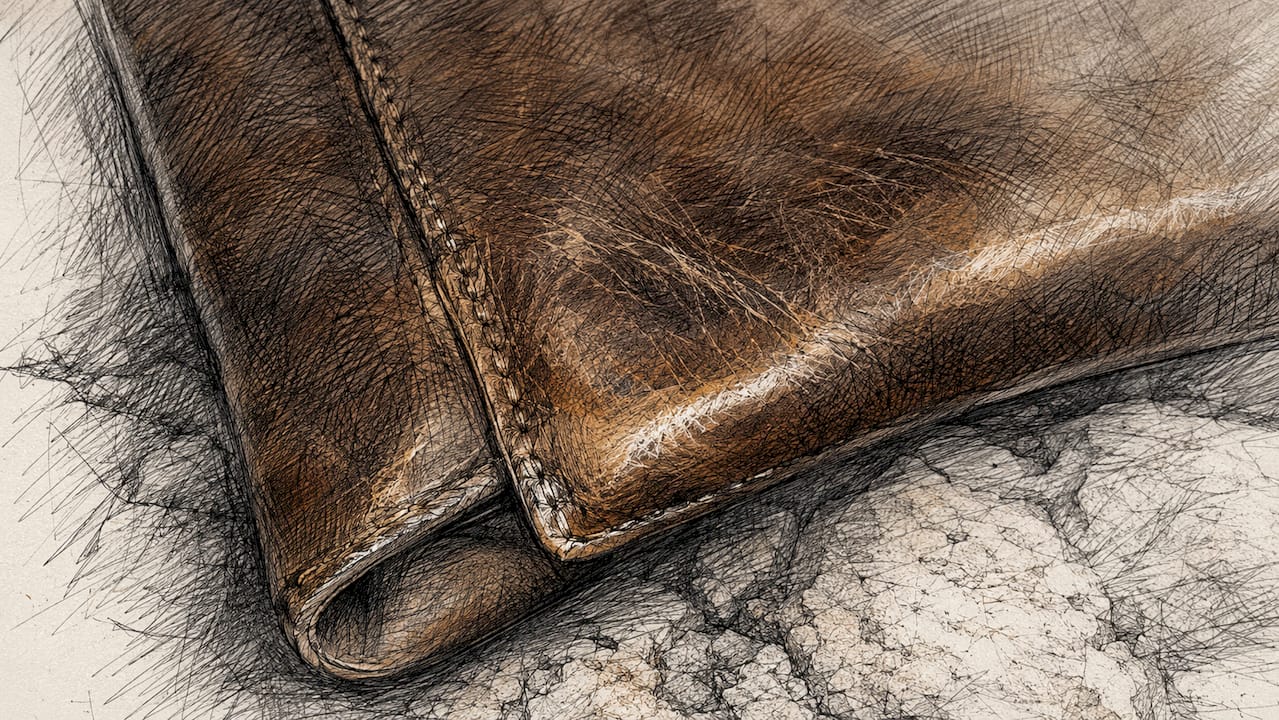
Pro Tip: If one panel has darkened unevenly, rehydrate the entire panel with a light, even conditioner application rather than trying to darken the lighter spots to match. Spot-darkening creates a patchy result; treating the whole panel lets the leather blend naturally as it dries.
What to do when Crazy Horse leather gets wet
Crazy Horse leather is water-resistant, not waterproof. Light rain and brief splashes bead off the wax surface. Prolonged exposure, submersion, or heavy soaking will push water through the wax layer and can leave tide lines as the leather dries unevenly.
- Blot immediately. Press a dry cloth or paper towel firmly onto the wet surface. Do not rub.
- Stuff the item with plain paper (not newspaper — the ink transfers) to hold its shape as it dries.
- Air-dry at room temperature. Keep the item away from radiators, direct sunlight, and forced-air vents. Natural airflow is enough.
- Check for dryness before assessing the result. Leather often looks darker and blotchy when wet; most of that evens out as it dries.
- Condition lightly if the leather feels stiff or dry after drying fully.
If a water ring or tide line forms: dampen the entire panel evenly with a barely damp cloth, then let the whole panel dry together. Rehydrating the whole surface, rather than trying to remove the ring locally, allows the leather to dry at a uniform rate and blends the tide line naturally.
Direct heat — a hair dryer on high, a radiator, or an oven — will shrink the leather, crack the surface, and drive out the oils that give Crazy Horse its suppleness. Low, controlled warmth (a hair dryer on the cool or low setting held at a distance) can help redistribute wax after drying if needed, but air-drying is always the safer first choice. For guidance on water resistance in leather accessories, the same principles apply across full-grain goods.
How to remove common stains safely
Start with the least aggressive method and escalate only if it fails. Aggressive solvents applied early can set a stain permanently or strip the wax finish in ways that are difficult to reverse.
- Blot and dry first. For any fresh stain, blot with a dry cloth immediately. Let the area dry completely before doing anything else.
- Dry-brush. Once dry, a soft horsehair brush removes surface residue without adding moisture.
- Barely damp cloth. If dry methods leave residue, use a cloth dampened with distilled water. Wipe once, blot, and let dry.
Oil and grease: Cover the stain with talcum powder or cornstarch and leave it for several hours to absorb the oil. Brush away the powder gently. Do not use water — it pushes oil deeper into the hide. Repeat if needed.
Ink: Test a small amount of rubbing alcohol on a hidden panel first. If the leather tolerates it without significant color change, apply a tiny amount to a cotton swab and dab the ink mark without spreading it. Persistent ink stains are a case for a professional leather restorer.
Mud: Let it dry completely, then brush away the dried mud. Attempting to clean wet mud spreads it. After brushing, a barely damp cloth handles any remaining residue.
Salt (from roads or sweat): Brush away dry salt crystals first. Then wipe with a cloth barely dampened with distilled water. Salt draws moisture out of leather, so condition the area lightly after cleaning.
Pro Tip: For any stain you are unsure about, do nothing beyond blotting and drying until you can test a solvent on a hidden panel. A stain that is stable is easier for a professional to treat than one that has been spread by an aggressive home attempt.
When to seek professional help: large soaked areas, set ink, mold growth, torn stitching, or any situation where patch-testing shows adverse effects. Eiken Shop’s care notes confirm that home methods risk making these conditions permanent.
Storage and long-term care for Crazy Horse leather goods
Store in a cool, dry, ventilated space away from direct sunlight and heat sources. Sunlight fades the surface wax unevenly and can bleach the hide. Plastic bags trap moisture and promote mold; breathable cotton dust bags are the right choice.
Before long-term storage:
- Clean the item using the dry-brush method
- Condition lightly if the leather feels dry
- Stuff bags and duffels with acid-free tissue paper to hold their shape
- Store wallets flat or in a dust bag without heavy items stacked on top
What to expect as the leather ages:
- First few weeks: the pull-up effect is most visible; the leather feels slightly waxy
- First year: patina begins at stress points (handles, fold lines, corners)
- Over years: the piece darkens overall and develops a rich, contrasty surface that reflects its use
This aging pattern is the point of the material. A full-grain leather lifespan article from Grainmarkleather covers realistic expectations in more detail.
Grainmarkleather backs its craftsmanship with a one-year warranty. Durability claims in this guide are consistent with that coverage; aging and patina development are normal material behavior, not defects.
Grainmarkleather’s recommended care routine
This is the routine Grainmarkleather advises for its Crazy Horse goods, based on how each piece is finished before shipping.
Weekly (or after each use):
- Brush or wipe with a dry microfiber cloth to remove dust and surface debris
- Buff any light marks with a clean thumb or dry cloth
Monthly (for frequently handled items):
- Inspect for dry spots, stiffness, or uneven patina
- If the leather feels dry, apply a pea-sized amount of wax-based salve with a warm cloth
- Let absorb for 15 minutes, then buff with a clean dry cloth
Yearly:
- Clean the full surface with a barely damp cloth (patch-test first)
- Apply a thin, even coat of wax-based salve or oiled-leather cream
- Let the piece rest for 24 hours before returning it to regular use
Before shipping, Grainmarkleather applies a wax-based finish to each piece. At home, repeating a light salve application once a year maintains that baseline. The key principle from founder Jevgeni: small quantities, warm cloth absorption, and patience. Pull-up leathers respond better to less product applied more evenly than to heavy applications.
Pro Tip: Warm the salve between your palms before applying it. The heat helps the product penetrate the wax layer rather than sitting on top of it.
Patch-test any new product before use, even if you have used a similar product before. Formulations vary, and Crazy Horse leather responds differently depending on its current wax saturation.
Browse Grainmarkleather’s Crazy Horse goods — from the Vintage Leather Bifold Wallet with Zipper and RFID Protection to the Cowhide Leather Duffel Bag — each ships with this finish applied.
Scratches are part of what makes this leather worth owning
The conventional advice on leather care tends toward anxiety: protect it, seal it, keep it pristine. Crazy Horse leather works differently. A scratch is not a failure of the material. It is the pull-up effect doing exactly what it was designed to do, and in most cases, a minute of friction with a clean thumb is all the repair needed.
The marks that accumulate over months of use — the darkened fold on a wallet, the worn corner of a bag — are not signs of neglect. They are a record of the object being used. The material is designed to age this way, and the patina that develops on a well-used piece is more interesting than a surface that has been kept artificially uniform.
That said, there is a real difference between patina and damage. Torn stitching, deep gouges, and set stains benefit from professional attention. The goal of a care routine is not to prevent aging but to keep the leather supple enough that it ages well rather than drying out and cracking.
Grainmarkleather’s Crazy Horse leather goods
Grainmarkleather makes handcrafted full-grain Crazy Horse leather goods built to age well with minimal maintenance. The range covers everyday carry and travel: the Leather Saddle Bag, the Leather Toiletry Bag – The Retro, the Classic Vintage Leather Bifold Wallet, the Personalized Full Grain Leather Laptop Sleeve, and the Personalized Full Grain Leather Luggage Tag, among others.
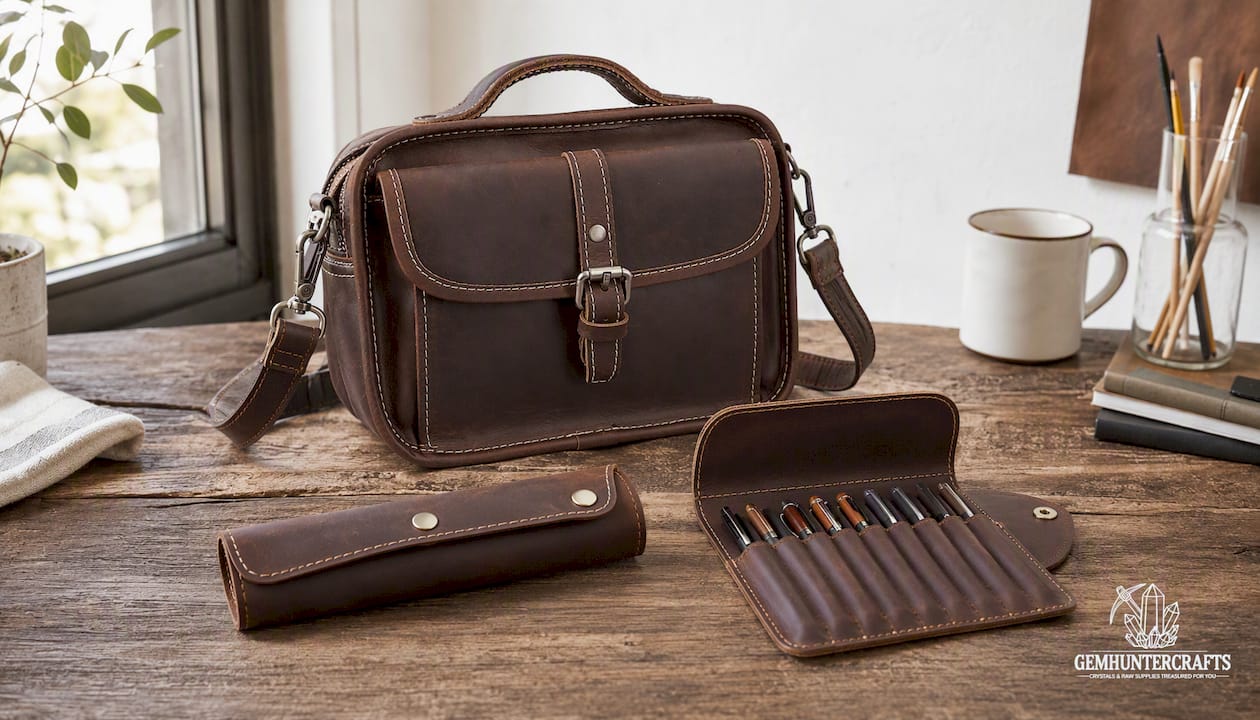
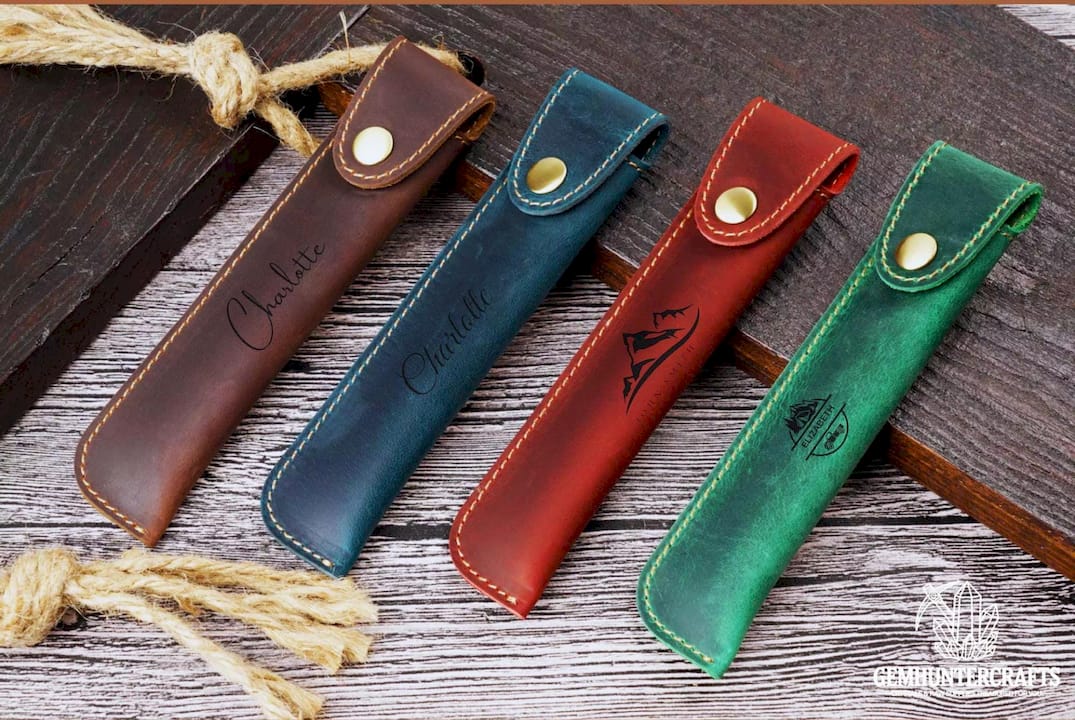
Every piece ships with a wax finish applied and carries a one-year warranty on craftsmanship. The Crazy Horse Leather Watch and Sunglasses Case is a good starting point for smaller goods. For bags and travel pieces, the full leather bags collection covers the full range. Visit the product pages to see current options and personalization choices.
Sources
- Crazy Horse Leather Explained: The Rugged, Vintage Material Everyone Loves | Leather Advice
- What Is Crazy Horse Leather? Durability & Aging Guide
- How to Care for Crazy Horse Leather (Step-by-Step Guide) – Thread and Maple
- Crazy Horse Leather - LoveLeatherCare