RFID Wallet Pros and Cons: Do You Really Need One?
For most people in the United States, an RFID-blocking wallet is not strictly necessary. Real-world skimming attacks on contactless cards are rare, and payment networks already use tokenization to limit what a thief could capture. That said, the feature costs little when built into a well-made wallet, and specific profiles — frequent international travelers, people carrying e-passports, or employees with older access badges — have a reasonable case for it. AARP reports that experts, including the Identity Theft Resource Center, describe the threat as largely theoretical.
- Verdict for most buyers: Optional, not urgent.
- Verdict for travelers and high-risk carriers: Worth including, especially when the wallet is good on its own merits.
- Grainmarkleather’s RFID wallets carry a one-year warranty and use dedicated shielding layers, not leather alone.
Key Takeaways
RFID-blocking wallets are worth buying for travelers and high-risk carriers; for most everyday users, mobile wallets and account monitoring provide stronger, broader fraud protection at no added cost.
| Point | Details |
|---|---|
| Real-world risk is low | Experts at AARP and the ITRC describe contactless skimming as largely theoretical, not a documented mass threat. |
| Tokenization is the main defense | Contactless cards transmit one-time tokens, not raw card numbers, limiting what any intercepted data could do. |
| Shielding works in tests | Lab demonstrations confirm blocking is effective; the practical question is whether the threat justifies the purchase for your profile. |
| Travelers and badge carriers benefit most | E-passport holders and employees with older access cards have the clearest case for dedicated RFID shielding. |
| Grainmarkleather offers three shielded options | The Bifold, Travel Passport Wallet, and The Voyager each use dedicated shielding layers with a one-year warranty. |
Table of Contents
- How contactless cards actually work
- How RFID-blocking wallets and sleeves actually work
- Pros: the real benefits of RFID-blocking wallets
- Cons: the limitations and downsides worth knowing
- What experts and lab tests actually show
- How to decide before you buy
- Alternatives that protect you more effectively
- Who should buy and who can skip it
- Grainmarkleather’s RFID wallet options
- A note from the founder
- Sources
How contactless cards actually work
Contactless payment cards and e-passports use Near Field Communication (NFC), a subset of RFID operating at 13.56 MHz. To complete a transaction, the card must come within very close range of a reader. That short range is a deliberate design constraint, not an accident.
When you tap a card, the terminal does not receive your raw card number. It receives a one-time transaction token generated for that specific tap. Even if someone intercepted that token, it would be useless for a second transaction. This is why tokenization makes contactless fraud materially harder than copying a magnetic stripe.
What is transmitted during a tap:
- A one-time cryptographic token, not the permanent card number
- Transaction amount and timestamp
- No CVV, no billing address, no PIN
What the 13.56 MHz frequency means for buyers:
- Most modern credit and debit cards operate at this frequency.
- E-passports issued after 2007 also use it.
- Older building access badges sometimes use lower frequencies (125 kHz), which require different shielding materials.
- A wallet rated for 13.56 MHz may not cover legacy access cards — check both.
How RFID-blocking wallets and sleeves actually work
The shielding in an RFID wallet is not magic. It is a conductive layer — metal foil, woven metal mesh, or a metal card chamber — that forms a Faraday cage around your cards. Electromagnetic waves cannot pass through a complete conductive enclosure, so a reader’s signal never reaches the card inside.
Leather alone does not reliably block RFID signals. Full-grain leather is a natural material with no conductive properties. A wallet must include a dedicated shielding layer or metal chamber to make any credible blocking claim.
Common shielding formats and their tradeoffs:
- Full wallet lining: Conductive fabric or foil bonded to the interior. Covers all card slots simultaneously. Adds minimal bulk when done well.
- Individual sleeves: Thin metal-foil pouches for single cards. Inexpensive and portable, but require you to sleeve each card separately.
- Metal card cases: Rigid aluminum or stainless-steel cases. Excellent shielding, but heavier and less flexible than leather wallets.
Construction quality matters as much as materials. A shielding layer with gaps at the seams or around card slot openings leaves cards partially exposed. TechYorker recommends looking for wallets that document the specific frequency blocked and show full-slot coverage, not just a general “RFID blocking” label.
Pro Tip: If you only need to protect one or two cards — a transit card or an e-passport — a quality sleeve costs less than a full wallet replacement and adds no bulk to your existing carry.
Pros: the real benefits of RFID-blocking wallets
The case for RFID blocking is not primarily about stopping a crime wave. It is about specific, practical situations where the feature adds genuine value.
-
Peace of mind in crowded spaces. Airports, subway platforms, and stadium lines put strangers within inches of your pocket. The threat may be low-probability, but the discomfort of proximity is real. A shielded wallet removes that variable entirely.
-
E-passport protection. U.S. e-passports issued since 2007 contain RFID chips. Dedicated passport wallets with shielding prevent passive reads of the chip data while the passport is in your bag.
-
Prevention of accidental double-reads. Carrying multiple contactless cards in one wallet can cause unintended charges when one card activates near a reader meant for another. Shielded slots prevent that.
-
Useful for older access badges. Some corporate and government ID cards use older RFID standards without tokenization. Shielding these cards is a more defensible use case than shielding modern payment cards.
-
No-cost upgrade when built into a quality wallet. When a well-constructed full-grain leather wallet includes shielding as part of its design, the buyer pays for the wallet and gets the protection without a separate purchase.
- The feature is most valuable when it comes standard in a wallet you would buy anyway.
- Travelers carrying e-passports and transit cards in the same holder benefit most from full-slot coverage.
- Older adults who prefer simple physical solutions over app-based security may find a shielded wallet a lower-friction option than managing digital wallet settings.
Cons: the limitations and downsides worth knowing
The RFID wallet market has a marketing problem. Fear sells, and some products lean heavily on scenarios that security experts describe as unlikely.
- Real-world skimming is rare. Documented field cases of criminals using portable readers to steal contactless card data in public are scarce. The attack requires close physical proximity, specialized equipment, and a target whose card lacks tokenization — a narrow set of conditions.
- It does nothing for the most common fraud. Phishing emails, data breaches, ATM skimmers on magnetic stripes, and card-not-present fraud online account for the vast majority of payment fraud. An RFID wallet addresses none of these.
- False sense of security. Buyers who invest in shielding and then neglect account monitoring or weak passwords may be less protected overall, not more.
- Possible interference with contactless use. Some wallets with aggressive shielding require you to remove the card before tapping. That defeats the convenience of contactless payment.
- Bulk and access tradeoffs. Sleeves add thickness. Metal chambers add weight. A wallet that is harder to use daily is a wallet people leave at home or carry open.
- Vague marketing claims. Products labeled “RFID blocking” without specifying the frequency or construction method may not cover the cards you actually carry.
HowToGeek notes that shielding works in lab conditions but that documented field incidents remain rare — framing the purchase as a peace-of-mind decision rather than a fraud-prevention necessity.
What experts and lab tests actually show
The technical demonstration that raised public awareness of RFID skimming dates to a 2012 Android-based proof-of-concept, where researchers showed a phone could read a contactless card at short range. The demonstration was real. What followed in the media was a wave of concern that outpaced the actual criminal adoption of the technique.
Key points from the available evidence:
- Lab tests confirm shielding works. A properly constructed wallet blocks reads in controlled conditions.
- Verified field cases of mass contactless skimming in the U.S. are not documented in public fraud data.
- Tokenization is the primary reason: even a successful read yields a one-time token, not a reusable card number.
- HowToGeek’s analysis frames the practical question as attacker incentive, not technical possibility — criminals have easier, higher-yield methods available.
The honest summary: shielding works as advertised in tests. The question is whether the threat it addresses is common enough to justify the purchase on security grounds alone.
How to decide before you buy
A short checklist covers most buyer situations.
Buy if you answer yes to any of these:
- You travel internationally and carry an e-passport.
- You use a transit card and a payment card in the same holder.
- Your employer issued you an older access badge without tokenization.
- You frequently move through very crowded transit hubs or international airports.
- You want a quality leather wallet and the shielding is included at no meaningful premium.
Product criteria to verify:
- Documented shielding frequency (look for 13.56 MHz coverage explicitly stated).
- Full-slot coverage, not just a partial lining near one side of the wallet.
- Construction details: what material forms the shield, how seams are finished.
- A clear warranty — one year minimum is a reasonable baseline.
- Return policy in case the fit or card access does not work for your carry style.
Red flags to avoid:
- “Blocks all signals” with no frequency specification.
- No mention of shielding materials or construction method.
- Designs so thick or rigid that card access requires two hands.
- Price points that suggest the shielding is a marketing label, not a material layer.
Pro Tip: Ask the seller which specific frequency the wallet is rated for and whether the shielding covers every card slot. A seller who cannot answer that question is selling a label, not a tested product.
Alternatives that protect you more effectively
The most impactful fraud protections available to U.S. consumers have nothing to do with a physical wallet.
- Mobile wallets (Apple Pay, Google Pay): These use device-level tokenization and biometric authentication. SlashGear identifies mobile wallets as a materially stronger protection than physical shielding for everyday payment cards.
- Account alerts: Enable real-time transaction notifications from your card issuer. A fraudulent charge surfaces within seconds.
- Credit monitoring: Pull your free annual reports from Annualcreditreport to catch identity theft early.
- Two-factor authentication: Secure your banking and email accounts. Most payment fraud originates online, not from a pocket reader.
- Carry fewer cards: A slim front-pocket carry with one payment card and one ID reduces exposure across every threat vector, not just RFID.
Pro Tip: For specific cards that genuinely warrant shielding — an e-passport, an older access badge — a single quality sleeve costs under $10 and adds no bulk to your existing wallet. Reserve a full RFID wallet for when you are replacing the wallet anyway.
Who should buy and who can skip it
The decision maps cleanly to a few common profiles.
- International traveler: Buy. An e-passport wallet with documented 13.56 MHz shielding is a practical purchase. The Vintage Leather Travel Passport Wallet with RFID and Coin Pocket covers this use case directly.
- Daily commuter with transit card: Optional. If your transit card and payment card share a holder, shielding prevents accidental reads. Otherwise, the benefit is marginal.
- Everyday carrier, no travel: Skip the dedicated purchase. Use mobile wallets and account alerts instead. If you are replacing your wallet anyway, choose one with shielding built in.
- Employee with older access badge: Buy a sleeve for that specific card. A full wallet conversion is not necessary.
The best RFID wallets are good wallets first. Usability, build quality, and card capacity matter more than the shielding spec for most daily use. Issuer protections and digital wallets already reduce risk for the majority of U.S. consumers.
Grainmarkleather’s RFID wallet options
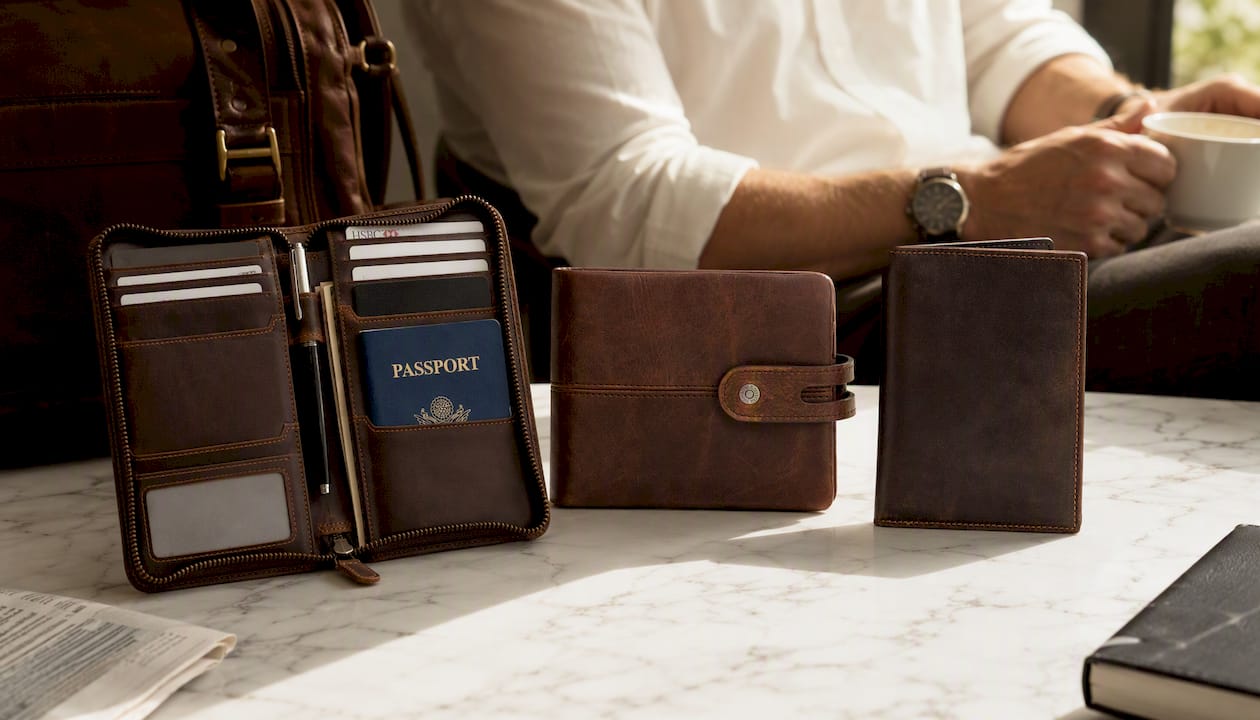
Grainmarkleather makes three RFID-shielded options worth considering, each built from full-grain leather with heavy-duty stitching and covered by a one-year warranty.
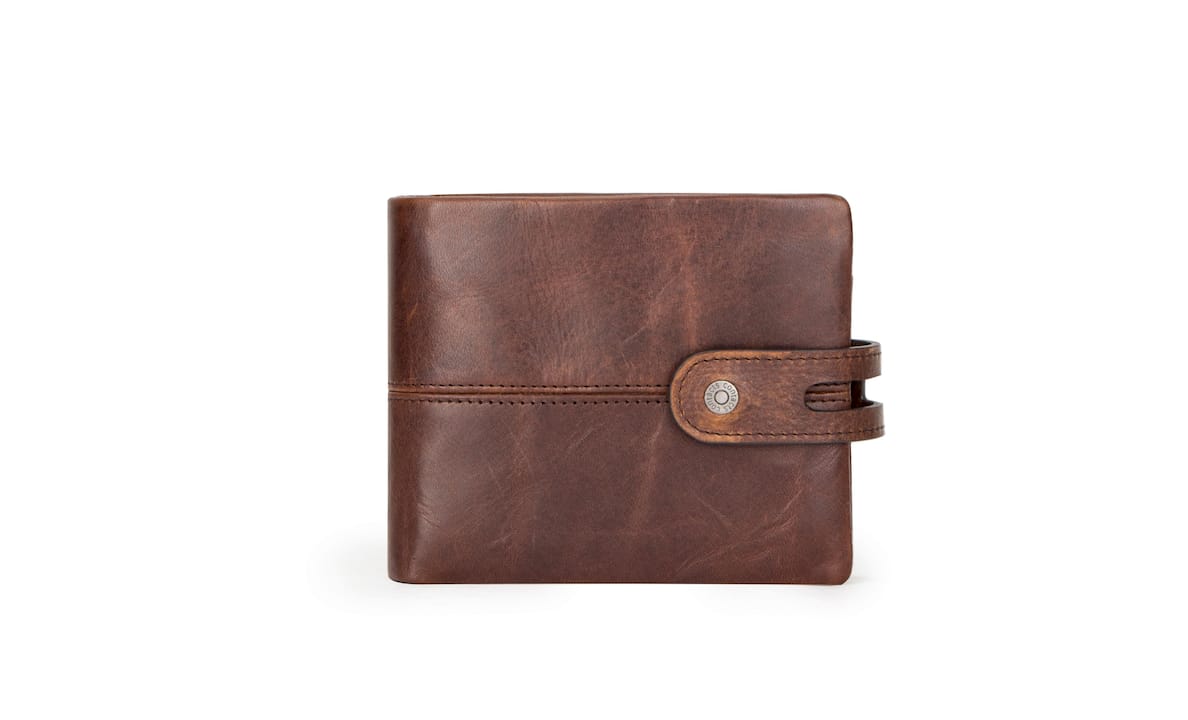
The Vintage Leather Bifold Wallet with RFID and Coin Pocket is the everyday carry option. It combines a coin pocket with card slots and a dedicated shielding layer, making it a practical choice for commuters and daily carriers who want shielding without changing their carry habits.
The Vintage Leather Travel Passport Wallet with RFID and Coin Pocket is built for international travel. It holds a passport, cards, and coins in a single shielded holder, with a zipper coin pocket that keeps currency organized across borders.
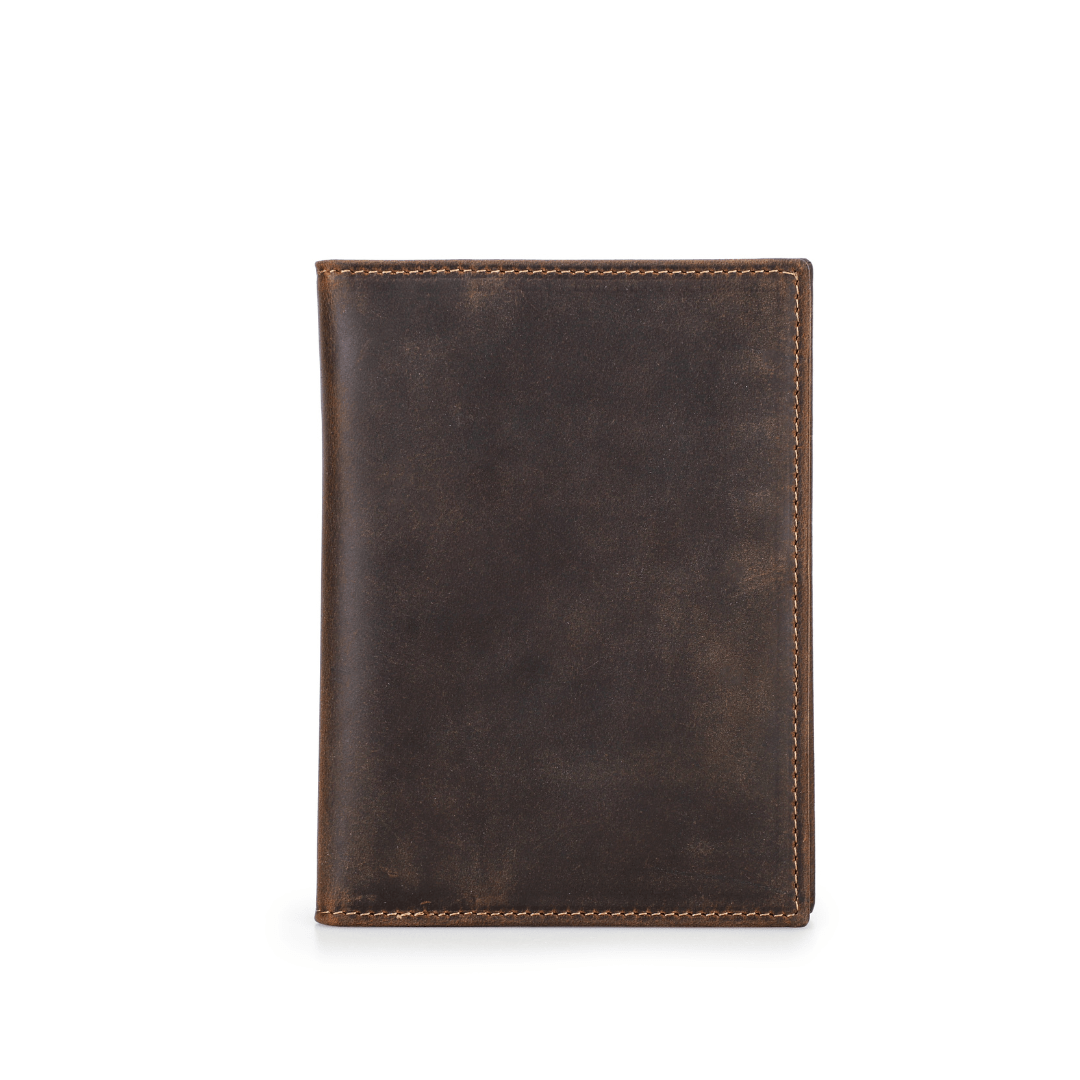
The Passport Wallet — The Voyager is a compact travel wallet with a pen slot, designed for travelers who carry documents and need a slim profile. All three products use dedicated shielding layers, not leather alone — consistent with what the Grainmarkleather blog explains about why full-grain leather by itself is not a shield.
Browse the full range of RFID wallets and cardholders to compare fit, capacity, and style before purchasing. Check card and ID dimensions against product specs, and contact support with sizing questions before ordering.
Considering when fashion affordability factors into accessory decisions, a wallet that combines genuine shielding with full-grain leather construction and a one-year warranty represents a defensible spend — particularly for travelers replacing a worn passport holder anyway.
A note from the founder
The question of whether an RFID wallet is necessary comes up often, and the honest answer is: it depends on what you carry and where you go. At Grainmarkleather, the approach has always been to build wallets that hold up to daily use first, and to add shielding where the construction genuinely supports it — not as a marketing label, but as a material layer.
If you have questions about which wallet fits your cards, passport, or carry style, contact the support team before ordering. The product pages for the Bifold, Travel Passport Wallet, and The Voyager include dimensions and capacity details. Every piece ships with a one-year warranty.
Sources
- Do RFID-Blocking Wallets and Purses Work? (AARP)
- Are RFID-Blocking Wallets Worth It? (HowToGeek)
- Are RFID-Blocking Wallets Still Needed Or Useful In 2026? (SlashGear)
- What Is an RFID-Blocking Wallet? (TechYorker)