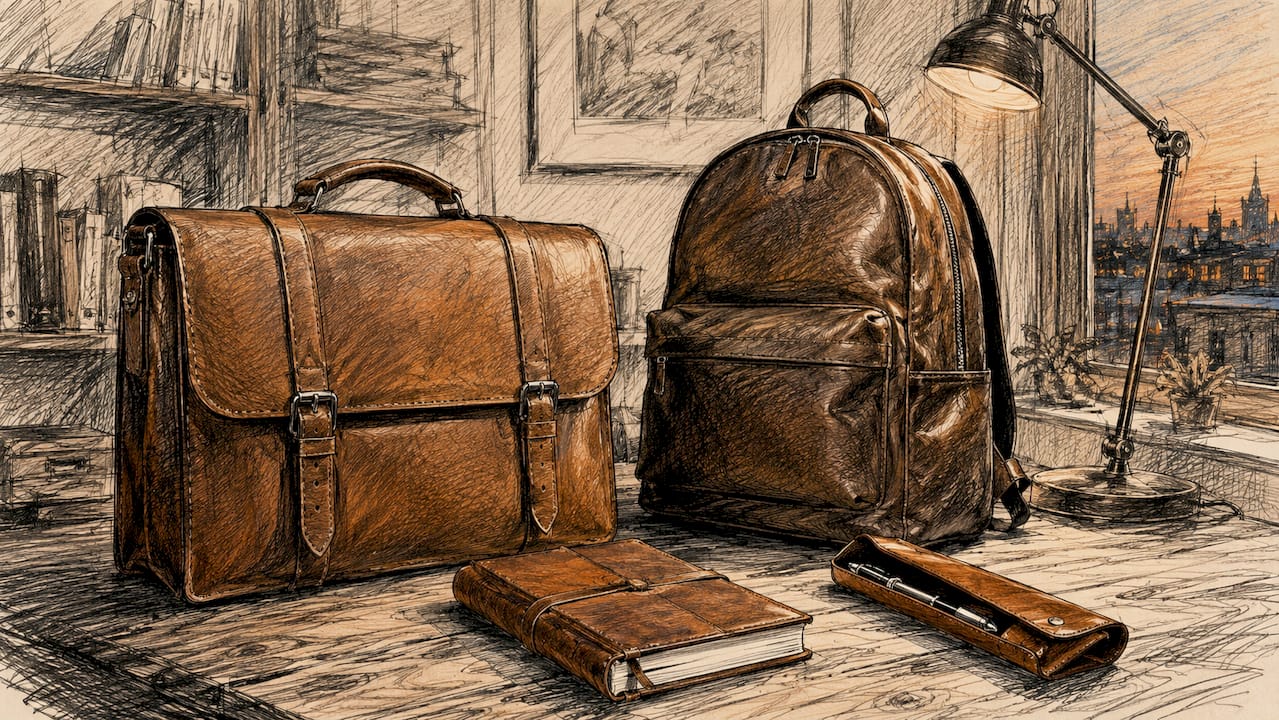
Briefcase vs. Backpack: Which One Works for You?
If you carry only a laptop and documents, a briefcase is the cleaner choice. If you carry gym gear, lunch, or heavy tech, a backpack distributes that load better and fits more. Esquire notes that briefcases preserve suit lines and allow faster access to essentials in city commutes. Grainmarkleather backs every handcrafted bag with a one-year warranty and heavy-duty stitching.
- Briefcase: structured carry, faster access to documents, better formality
- Backpack: higher usable volume, two-strap ergonomics, more versatile for mixed loads
Key Takeaways
The right choice between a briefcase and a backpack comes down to load, commute length, and the formality your office requires.
| Point | Details |
|---|---|
| Briefcase suits formal, light loads | Choose a briefcase for suit commutes, short walks, and fast document access in meetings. |
| Backpack suits heavier, longer commutes | Two-strap distribution reduces fatigue when carrying 10+ pounds over 15+ minutes of walking. |
| Material signals formality | Full-grain leather reads as formal in most offices; nylon reads as casual regardless of design. |
| Maintenance affects longevity | Condition full-grain leather every 2–4 months; the Grainmarkleather one-year warranty covers stitching and hardware defects. |
| Grainmarkleather leather options | The leather bags collection includes briefcases for formal commuters and backpacks for style-conscious heavier-load carriers. |
Table of Contents
- How do briefcases and backpacks compare at a glance?
- What are the real trade-offs for daily professional use?
- Which bag fits your specific commute routine?
- How do materials affect durability and maintenance?
- What does Grainmarkleather offer for each commute type?
- What should you check before buying a briefcase or backpack?
- How well does each bag protect your laptop?
- Does bag weight affect how tired you feel by end of day?
- A founder’s perspective on the briefcase vs. backpack choice
- Full-grain leather bags and accessories from Grainmarkleather
- Sources
How do briefcases and backpacks compare at a glance?
Carryology’s hands-on comparison found that briefcases and backpacks can share nearly identical nominal volume, yet feel completely different to use. Layout and orientation determine how much you can effectively carry, not the number on the spec sheet.
Briefcase pros and cons
- Faster access to phone, keys, and documents (top-open or front-panel design)
- Cleaner profile under a suit jacket or overcoat
- Easier to set down and pick up in meetings or transit
- Single-handle or shoulder-strap carry concentrates weight on one side
- Limited volume for anything beyond laptop, documents, and a few accessories
Backpack pros and cons
- Two-strap load distribution reduces shoulder fatigue on longer commutes
- Greater usable volume for gym gear, lunch, a change of clothes, or bulky tech
- Less formal in conservative office environments
- Slower access to items buried in the main compartment
- Can distort jacket shoulders when worn over tailored clothing
Pro Tip: If your routine shifts between formal client meetings and heavy-load days, a convertible bag that functions as both a briefcase and a backpack is worth considering. Designs like the TOM BIHN Trinity (21L) show how a single bag can handle both carry modes without sacrificing structure.
What are the real trade-offs for daily professional use?
The briefcase vs. backpack decision comes down to six practical dimensions. Each one maps to a specific part of your routine.
Space and usable volume
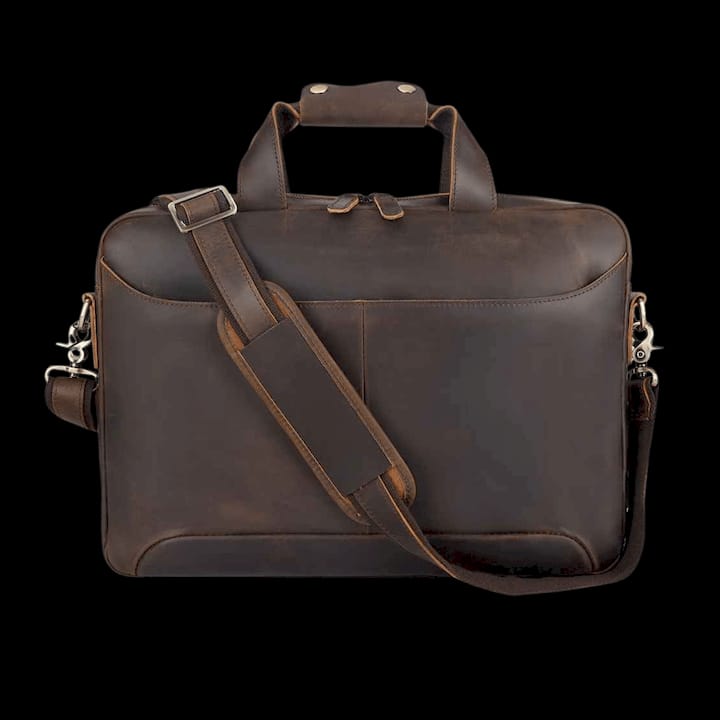
Listed capacity figures rarely tell the full story. A 20L briefcase with a wide, flat main compartment fits a 15-inch laptop, a legal pad, and a charger comfortably, but struggles with a lunch container or gym shoes. A 20L backpack with the same nominal volume fits all of those because its depth allows vertical stacking. Carryology’s comparison makes this point directly: layout and orientation determine usable space, not the volume number alone.
Device protection
Briefcases with a rigid or semi-rigid shell protect a laptop from side impacts, which matters on crowded subway cars. Backpacks with a suspended, padded sleeve protect against drops and compression from above. Neither is categorically safer. The deciding factor is the specific compartment construction, not the bag style.
A padded laptop sleeve inside either bag adds a meaningful layer of protection. A full-grain leather laptop sleeve fits a 13–15 inch machine and works inside a briefcase or backpack, keeping the device isolated from chargers and hard-edged accessories.
Comfort, ergonomics, and suit compatibility
A single-strap briefcase or shoulder bag places the full load on one side. Over a 30-minute subway commute with a 15-pound load, that asymmetry adds up. Backpacks distribute weight across both shoulders and the hip belt when one is present, which reduces fatigue on longer routes. The trade-off: wearing a backpack over a tailored suit jacket stretches the fabric across the shoulders and can distort the fit. Esquire’s feature specifically flags this as a reason suit-wearing commuters tend to prefer a briefcase.
Formality and office impression
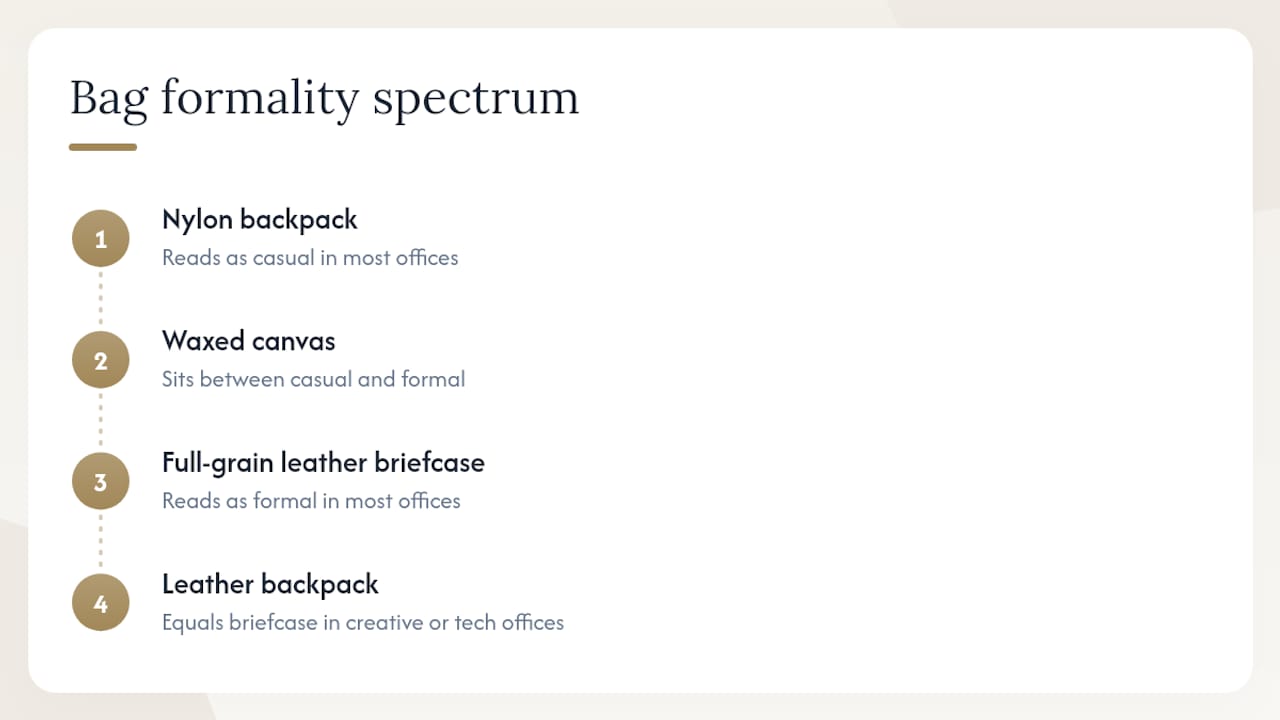
Material and silhouette signal formality before you open the bag. A structured full-grain leather briefcase reads as formal in almost any office context. A nylon backpack reads as casual, even when the design is clean. Waxed canvas sits in the middle. In creative or tech offices, a well-made leather backpack carries as much authority as a briefcase. In law firms or financial services, the briefcase still dominates. For a broader look at how bag style maps to professional context, the leather briefcase vs. messenger bag guide covers adjacent comparisons worth reading.
Accessibility and organization
Briefcases open at the top or front panel, which means you reach your phone, keys, or a document without digging. Backpacks require you to set the bag down or swing it around to access the main compartment. For commuters who pass through security checkpoints or need to pull documents quickly in a meeting, that difference in access speed matters.
Travel suitability and security
Both bag types now commonly include a trolley sleeve for sliding over rolling luggage handles. Backpacks tend to have more external pockets, which increases convenience but also pickpocket exposure. Briefcases with a top-zip closure and a lockable clasp offer better security in crowded transit. Slash-resistant materials appear in some nylon backpacks designed for travel, though they are rare in leather options. For frequent domestic flyers, a leather bag built for travel covers the specific features worth prioritizing.
Which bag fits your specific commute routine?
These one-line rules apply to the most common professional routines.
- Subway commuter, suit required: Choose a briefcase. It preserves jacket lines and allows fast access at turnstiles and in meetings.
- Subway commuter with gym after work: Choose a backpack. The volume for shoes and a change of clothes simply does not fit a standard briefcase.
- Short walk to office, business casual: Either works. A leather backpack with a clean profile is as appropriate as a slim briefcase in most business-casual environments.
- Frequent domestic flyer: Choose a backpack with a trolley sleeve. Overhead bin access is faster, and the two-strap carry reduces fatigue across long terminal walks.
- Field worker carrying tools or equipment: Choose a backpack. The two-strap load distribution and higher volume are the only practical option.
- Client-facing formal meetings, minimal carry: Choose a briefcase or a slim portfolio. The structured silhouette signals preparation and professionalism without excess.
When your week includes both formal client days and heavy-load days, a convertible design handles both without requiring two separate bags. The trade-off is that convertibles are rarely as polished as a dedicated briefcase or as comfortable as a purpose-built backpack.
Pro Tip: Pack the bag as you would for a real commute before you commit to a style. A briefcase that fits your laptop and charger in the store may not close cleanly once you add a water bottle and a lunch container.
How do materials affect durability and maintenance?
Material choice affects weight, structure, weather resistance, and how the bag ages. These are not cosmetic differences.
Full-grain leather is the densest and most durable natural option. It resists abrasion, develops a patina over time, and holds its structure across years of daily use. It is also the heaviest option and requires conditioning two to four times per year to prevent drying and cracking. Full-grain leather is not waterproof, though it resists light rain well. Grainmarkleather uses full-grain leather with heavy-duty stitching across its bag range, backed by a one-year warranty.
Waxed canvas is lighter than leather, more water-resistant, and develops its own character with use. It suits casual and business-casual environments but reads as less formal than leather in conservative offices. Re-waxing once or twice a year maintains water resistance.
Nylon is the lightest option, highly water-resistant, and the easiest to clean. It does not develop patina and tends to look worn rather than aged after heavy use. Nylon suits high-volume commuters and frequent travelers who prioritize function over formality.
Care checklist:
- Condition full-grain leather every 2–4 months with a dedicated leather conditioner
- Wipe nylon clean with a damp cloth; avoid submerging
- Re-wax canvas seasonally or when water no longer beads on the surface
- Store leather bags stuffed with paper to hold shape when not in use
- Keep leather away from prolonged direct sunlight to prevent fading
Pro Tip: For full-grain leather bags, a light application of conditioner after the first use sets the surface and slows moisture absorption from the start. It takes five minutes and extends the useful life noticeably.
What does Grainmarkleather offer for each commute type?
- Formal suit commuters: The leather briefcases collection includes slim, structured options that hold a 15-inch laptop, documents, and daily essentials without bulk.
- Style-conscious commuters with heavier loads: The leather backpacks collection offers full-grain options with padded laptop compartments and clean profiles suitable for business-casual environments.
- Device protection: The Personalized Full Grain Leather Laptop Sleeve fits inside either a briefcase or backpack and isolates the laptop from hard accessories.
- Travel organization: The small leather goods collection includes tech organizers, watch and sunglasses cases, and luggage tags that pair with any bag choice.
Every piece is customizable and ships globally. The one-year warranty covers manufacturing defects in stitching and hardware.
Pro Tip: A personalized luggage tag on a leather briefcase or backpack makes identification at baggage claim or in a coat room immediate, and it ages alongside the bag.
What should you check before buying a briefcase or backpack?
A bag that looks right in a product photo can fail on the first real commute. These checklists reduce that risk.
In-store checklist:
- Put on your jacket and then put on the bag. Check whether the shoulder strap or backpack straps distort the jacket shoulders.
- Load the bag with your actual daily items (or approximate weights) and carry it for five minutes. Shoulder fatigue shows up quickly.
- Open the main compartment with one hand while standing. If it takes two hands or requires setting the bag down, that will frustrate you daily.
- Slide your laptop in and out of its sleeve. Confirm the fit is snug but not tight.
- Check zipper quality by running it slowly. Cheap zippers bind or skip on the first pull.
- Hold a briefcase by its handle and check the balance. A bag that tips forward when held is poorly weighted.
Online checklist:
- Confirm internal dimensions, not just volume. A “fits 15-inch laptop” claim means nothing without the sleeve dimensions.
- Check whether the laptop compartment is suspended (padded on all sides) or just lined.
- Read the return policy before ordering. A 30-day return window is standard; shorter is a risk.
- Note the product weight. A leather briefcase can weigh 3–4 pounds empty. Add a laptop and accessories and the total load matters.
- Confirm trolley-sleeve presence if you travel with rolling luggage.
Pro Tip: Pack the bag exactly as you would for your commute before the return window closes. A bag that works empty often fails with a full load.
How well does each bag protect your laptop?
Laptop protection depends on compartment construction, not bag style. A briefcase with a rigid frame protects against lateral impacts, which are common in crowded transit. A backpack with a suspended, padded sleeve protects against vertical drops and compression from items stacked on top. The weakest point in either style is a soft-sided main compartment with no dedicated sleeve, where the laptop sits loose against chargers and hard-edged accessories.
For either bag type, a dedicated full-grain leather laptop sleeve adds a second layer of protection and keeps the device isolated regardless of what else is in the bag. Crazy Horse leather, used in Grainmarkleather’s sleeve, is a treated full-grain hide that resists surface scratches and moisture better than untreated leather.
Does bag weight affect how tired you feel by end of day?
It does, and the effect compounds over a full week. A full-grain leather briefcase typically weighs a few pounds empty. A nylon backpack of comparable volume weighs 1–2 pounds. Add a 15-inch laptop (4–5 pounds), a charger, water bottle, and lunch, and the total load reaches 10–14 pounds. Carried on one shoulder in a briefcase, that load creates asymmetric strain on the neck, shoulder, and upper back. Distributed across two straps in a backpack, the same load is manageable for most commuters over 30–45 minutes of walking or standing transit.
The practical implication: if your commute involves more than 15 minutes of walking or standing, a backpack reduces cumulative fatigue. If your commute is a short walk or a seated car ride, the weight difference matters less and the formality advantage of a briefcase becomes the deciding factor. For commuters who want styling guidance on casual bag choices alongside work bags, this everyday bag guide covers the broader carry context.
A founder’s perspective on the briefcase vs. backpack choice
The briefcase vs. backpack debate tends to get framed as a style question. It is actually a logistics question. The bag you carry every day needs to fit your actual load, your actual commute, and the actual impression you want to make in your specific office. Style follows from those constraints, not the other way around.
What I see consistently in customer feedback is that professionals who switch from a backpack to a leather briefcase do so because they want faster access and a cleaner silhouette, not because they carry less. And professionals who move the other direction do so because their load grew, not because they stopped caring about how the bag looks. A well-made leather backpack in full-grain hide carries as much authority as a briefcase in most modern offices. The material does the work that the silhouette used to do alone.
The one-year warranty on every Grainmarkleather piece reflects a straightforward position: if the stitching or hardware fails under normal use, that is a manufacturing problem, not a wear problem, and it should be fixed.
Full-grain leather bags and accessories from Grainmarkleather
Grainmarkleather’s leather bags collection covers both briefcases and backpacks in full-grain hide, with options for formal commuters and style-conscious professionals who carry more volume. Every bag ships with a one-year warranty on stitching and hardware.
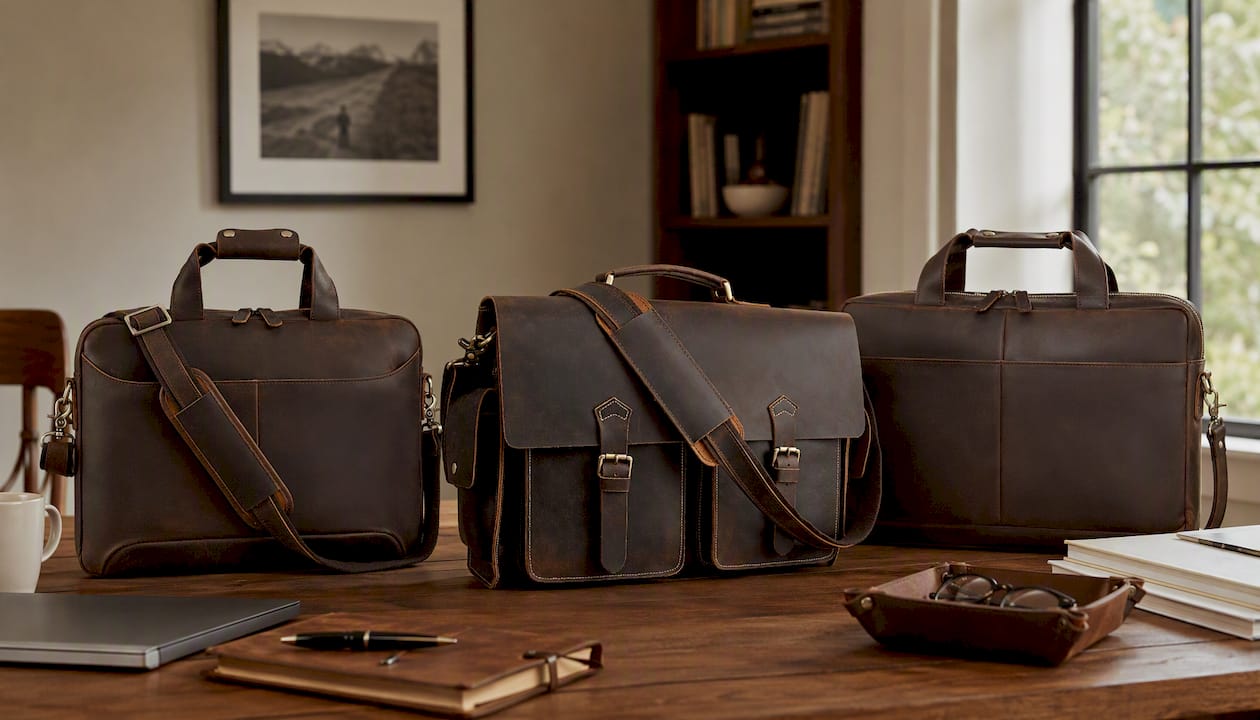
Pair either bag with a Crazy Horse Leather Tech Organizer for cables and chargers, a Leather Watch Travel Case for travel days, or a Personalized Leather Jewelry Travel Case for compact organization on the road. Browse the full range at Grainmarkleather and filter by bag type to find the option that fits your commute.