Full Grain Leather Cost: U.S. Buyer's Price Guide
Finished full-grain leather goods in the U.S. typically retail between $45 and $600+, depending on product type, construction method, and hardware. The price spread exists because full-grain leather requires premium hide selection, slower tanning processes, and more skilled labor than any lower grade. Brand markup adds to that base, but the structural cost difference starts at the material level.
At a glance, here is where most finished goods land:
- Wallets and small accessories: typically priced within a moderate range indicating quality and material cost
- Crossbody and sling bags: generally found in a price range reflecting material and labor quality
- Day bags and totes: usually retail within a higher band due to size and complexity
- Backpacks: priced to reflect heavier construction and labor requirements
- Weekenders and duffels: typically command the highest price band among common product types
Key Takeaways
Full-grain leather goods cost more because the material, tanning, and construction are structurally more expensive — but the cost-per-year math favors them over cheaper alternatives for long-term owners.
| Point | Details |
|---|---|
| Retail price bands | Wallets: $45–$200; crossbodies: $120–$320; backpacks: $220–$450; duffels: $300–$600+. |
| Top inspection items | Confirm explicit “full-grain” labeling, leather thickness in mm, solid hardware, and burnished (not painted) edges. |
| Tanning adds cost | Vegetable tanning takes 30–60 days versus 24–48 hours for chrome tanning — that time difference is a direct cost multiplier. |
| Cost-per-year math | A $400 bag used for 20 years costs $20/year; a $90 replacement bag bought every 3 years costs $30/year. |
| Grainmarkleather | Offers handcrafted full-grain goods with heavy-duty stitching, a one-year warranty, and over 358 five-star reviews — specs are listed on each product page. |
Table of Contents
- What does full grain leather cost by product type?
- What actually drives the price of a full-grain leather bag?
- How do you evaluate a full-grain leather listing before buying?
- Is full-grain leather worth the premium?
- Why pricing transparency matters more than the price tag
- Grainmarkleather products that match this guide’s price bands
What does full grain leather cost by product type?
Retail price bands for finished full-grain goods reflect both material cost and the labor required to cut, stitch, and finish each piece. The table below shows typical U.S. retail ranges.
| Product Type | Typical U.S. Retail Range | Common Price Point | Leather Thickness |
|---|---|---|---|
| Wallet / cardholder | $45–$200 | $80–$140 | 1.2–1.4 mm |
| Crossbody / sling bag | $120–$320 | $180–$260 | 1.4–1.6 mm |
| Day bag / tote | $180–$350 | $220–$300 | 1.6–2.0 mm |
| Backpack | $220–$450 | $280–$380 | 1.8–2.2 mm |
| Weekender / duffel | $300–$600+ | $380–$520 | 1.8–2.2 mm |
Moving up a band usually reflects one or more of three things: larger hide area required, heavier hardware (such as solid brass fittings), or added customization like monogramming or bespoke colors. A crossbody with solid brass D-rings and burnished edges tends to be priced toward the higher end of its range; the same silhouette with plated hardware and painted edges typically prices toward the lower end.
For small goods like wallets, material grade is often the dominant cost driver. Moving from top-grain to full-grain generally adds a substantial premium to retail price in that category, reflecting the higher material cost and quality.
What actually drives the price of a full-grain leather bag?
Understanding the cost structure helps you judge whether a listing is priced fairly or inflated.
- Hide grade and selection. Premium tanneries grade hides strictly and yield only 40–70% usable A-grade material per hide. The rest is downgraded or discarded. That yield loss raises per-piece material cost before a single stitch is placed.
- Hand-finishing. Edge burnishing, wax stuffing, and hand-stitching are labor-intensive steps that commodity manufacturing skips entirely. Each adds time per piece and cannot be replicated at machine speed without changing the result.
- Scale and labor. Small-batch handcrafted production carries higher per-item labor cost than factory runs of thousands. U.S.-made goods carry additional labor and regulatory costs that push prices higher, though they also tend to be more repairable.
Pro Tip: When comparing two bags at similar prices, check the edge finish first. Burnished and sealed edges darken and smooth with use; painted edges eventually flake. That single detail tells you a lot about where the maker cut corners.
How do you evaluate a full-grain leather listing before buying?
A product page should give you enough information to verify the material and construction. Use this checklist when browsing online or inspecting a piece in person.
On the product page, confirm:
- An explicit material statement: “full-grain leather” by name, not just “real leather” or “genuine leather.”
- Tannage, if listed (vegetable-tanned, chrome-tanned, or combination).
- Leather thickness in millimeters — anything under 1.0 mm for a bag body is thin for full-grain.
- Hardware material: solid brass, solid steel, or zinc alloy (the last is acceptable at lower price points; avoid unspecified “metal”).
- Stitching method: hand saddle-stitched with waxed linen thread, or machine lock-stitched.
- Edge finishing: burnished/sealed or painted.
- Warranty length and what it covers.
When inspecting in person or reviewing photos:
- Natural grain shows slight variation, faint scars, and uneven color. Perfectly uniform texture across the entire surface is a sign of corrected or embossed grain.
- Burnished edges look smooth and slightly darkened at the fold. Painted edges look uniform and may show hairline cracks near stress points.
- Heavy-duty stitching sits evenly spaced and tight, with no loose threads at stress points like handle attachments and zipper ends.
For a plain-language breakdown of leather grades and what they mean, that reference covers the terminology you will encounter on most product pages.
Is full-grain leather worth the premium?
For style-conscious shoppers who keep their purchases for years, the answer is yes.
Reasons the premium holds up:
- Lower cost-per-year over a realistic ownership period
- Natural patina that improves with use rather than degrading
- Repairable construction (hand saddle-stitching can be re-stitched; lock-stitch machine seams often cannot)
- Consistent material specs that make quality verifiable before purchase
Where the premium may not suit you:
- Budget under $120 for a bag (the full-grain option at that price point is limited)
- You replace accessories frequently by preference, not necessity
- You need a very lightweight carry option (full-grain hides add weight)
The recommendation for a style-conscious shopper who values patina and longevity: buy once at the right price band, verify the specs using the checklist above, and expect to own the piece for a decade or more.
Why pricing transparency matters more than the price tag
There is a habit in leather goods marketing of leading with the story and burying the specs. You will read about heritage, craft, and tradition before you find out what the leather actually is or how thick it is. That ordering is not accidental.
The checklist in this guide exists because the price of a finished full-grain piece is only meaningful when you can verify what you are paying for. A $280 bag with explicit material specs, a named tannery, and burnished edges is a clearer value than a $180 bag with vague claims and painted edges. The lower number is not the better deal.
What I find worth noting about Grainmarkleather’s approach is that the construction details are listed on the product page rather than buried in a brand story. Heavy-duty stitching, full-grain material, hardware specifications, and a one-year warranty are stated as facts. Over 358 five-star reviews reflect that the finished goods match what the pages describe. That alignment between stated specs and delivered product is what the checklist is designed to help you find, wherever you shop.
Grainmarkleather products that match this guide’s price bands
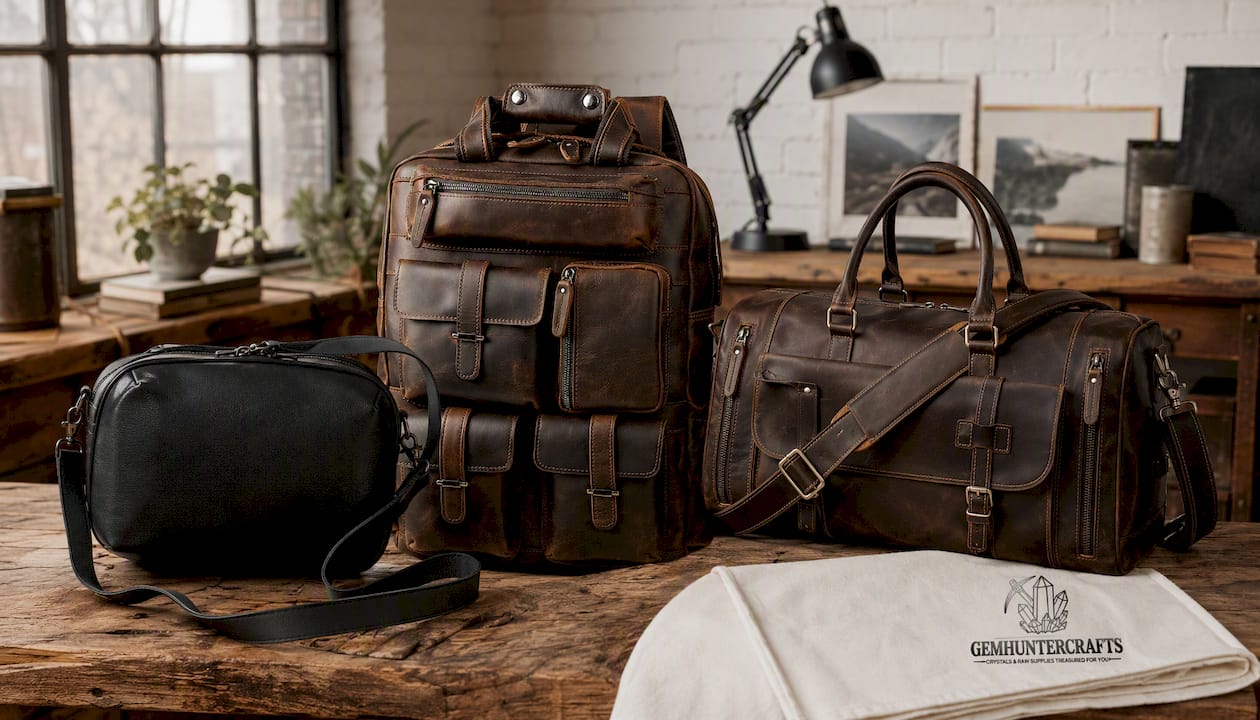
Grainmarkleather’s handcrafted full-grain goods sit within the price bands covered in this guide, with construction details listed on each product page so you can apply the checklist directly.
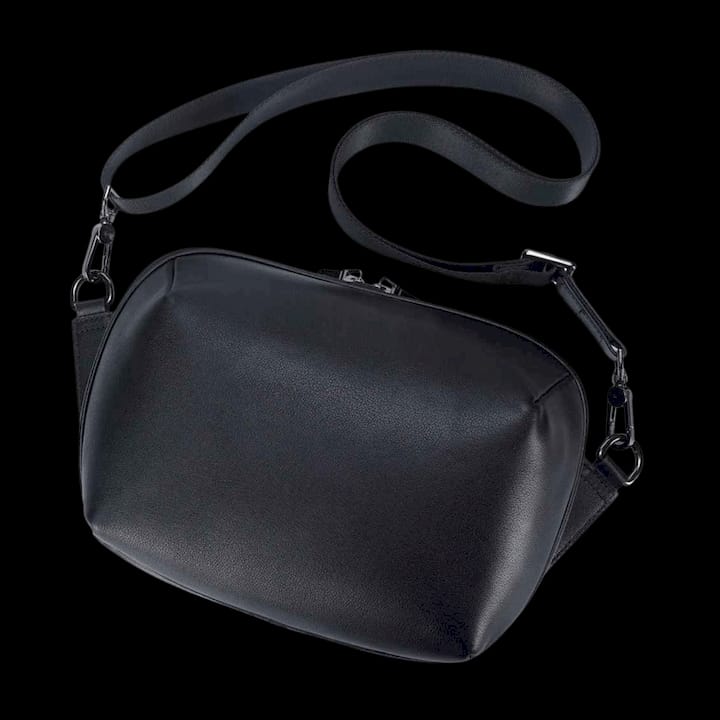
The Personalized Full Grain Leather Traveler Backpack is a handmade rucksack in the backpack price band, with full-grain leather, heavy-duty stitching, and personalization options. The Full Grain Leather Crossbody Bag - The Prairie sits in the crossbody band with explicit material and hardware specs. For weekend travel, the Full Grain Leather Duffel Bag - The Fernwood includes a shoe compartment and matches the weekender price range outlined above.
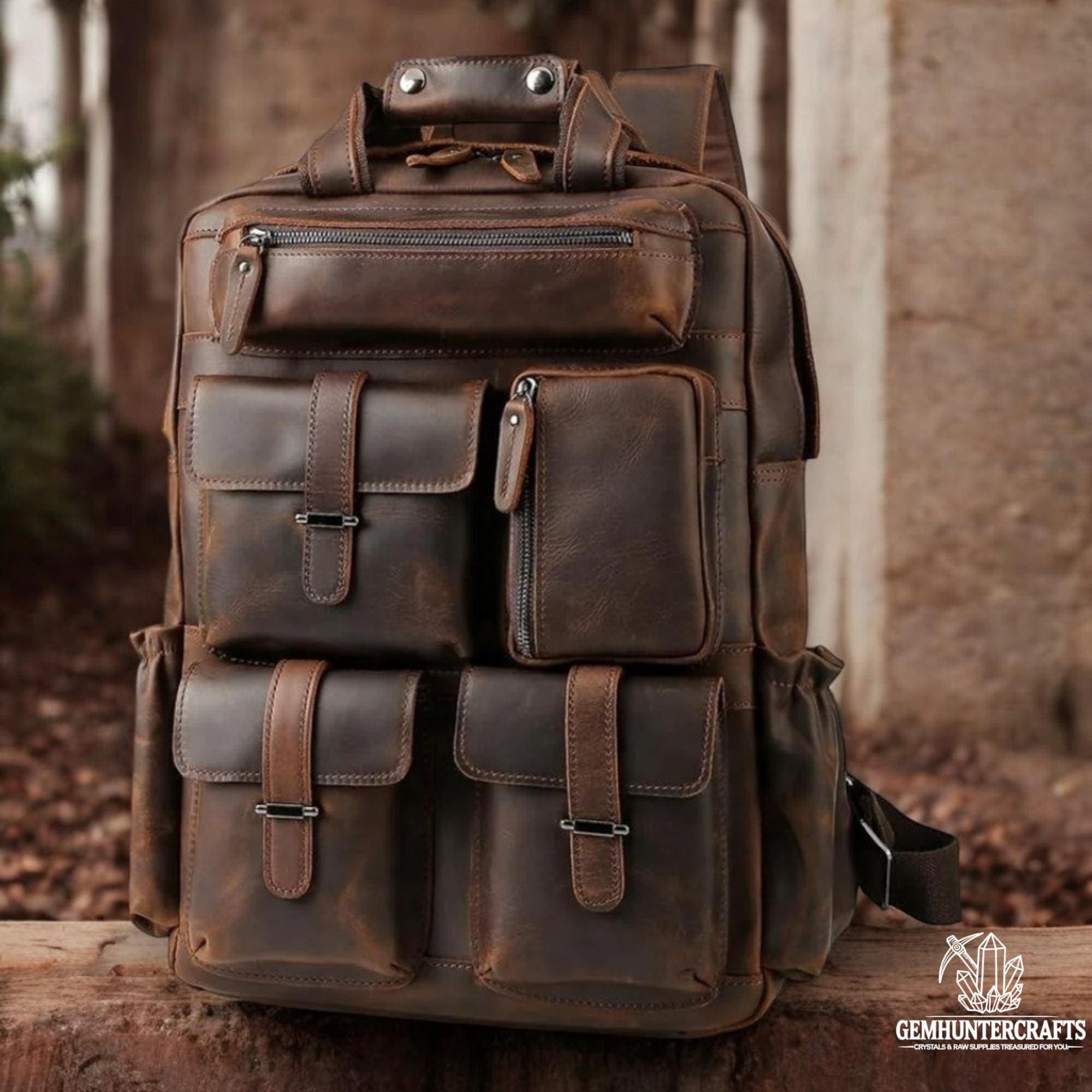
Every item carries a one-year warranty covering construction defects. Review the product specs against the checklist before purchasing — the information is there to use.