Best Leather for Wallets: Durability and Quality Guide
Full-grain vegetable-tanned leather is the best leather for wallets. At a thickness suited for balance between structure and foldability, it accepts dye cleanly and develops a patina that improves over many years with basic care. Avoid bonded and corrected-grain leather entirely. For wallet-grade hides, tanneries like Hermann Oak, Wickett & Craig, and Horween set the standard.
- Best overall: Full-grain vegetable-tanned cowhide of suitable thickness
- Practical alternative: Top-grain leather for uniform appearance and cost control
- Avoid: Bonded leather, corrected-grain, and split leather marketed as “genuine leather”
- Ideal thickness: moderate thickness for the body; slightly thinner for card slots to prevent bulk
- Top tanneries: Hermann Oak, Wickett & Craig, Horween
Table of Contents
- Why full-grain leather is the most durable choice for wallets
- What top-grain leather offers and when it makes sense
- Genuine leather, suede, and nubuck: what they mean for wallet quality
- How to choose the right leather for your wallet
- Expert perspective on sourcing quality wallet leather
- Grainmarkleather wallets: full-grain construction, built to last
- Key Takeaways
Why full-grain leather is the most durable choice for wallets
Full-grain leather retains the entire natural surface of the hide, just below the hair. That intact grain structure, with its dense, interlocking fiber matrix, is what gives the leather its tensile strength. Nothing is sanded away, corrected, or coated over. The result is a hide that resists tearing, puncturing, and the daily friction of a pocket far better than any lower grade.
The aging behavior is equally important. Full-grain is the only leather grade that develops a true patina. Over years of use, oils from your hands and the environment darken and enrich the surface, producing a sheen that is unique to each wallet. A full-grain wallet does not peel or crack the way corrected or bonded leather does. It deepens.
Vegetable tanning amplifies these qualities. Veg-tan leather holds structure, accepts dye evenly, and can be burnished to a glass-like edge finish that chrome-tanned hides cannot replicate. That burnishing capability is one reason artisans consistently prefer it for bifolds and cardholders where edge quality signals craftsmanship.
Natural imperfections, small scars or grain variations, are not defects in full-grain leather. They confirm the hide has not been corrected. A perfectly uniform surface on an unfinished hide is a warning sign, not a quality marker.
Pro Tip: When sourcing full-grain leather for wallets, request a sample and flex it. Quality veg-tan should feel firm but not brittle, and the cut edge should burnish smoothly with a bone folder and water before any finish is applied.
“Full-grain leather is the gold standard for one simple reason: it is the strongest, most durable part of the hide. Its dense, interlocking fiber matrix gives it immense tensile strength — and it is the only grade that ages with character rather than degrading.” — Hoplo Leather
What top-grain leather offers and when it makes sense
Top-grain leather comes from the same top layer of the hide as full-grain, but the surface is lightly sanded and finished to remove natural imperfections. That process produces a softer, more uniform appearance, often sealed with a protective coating that resists light stains and surface scuffs.
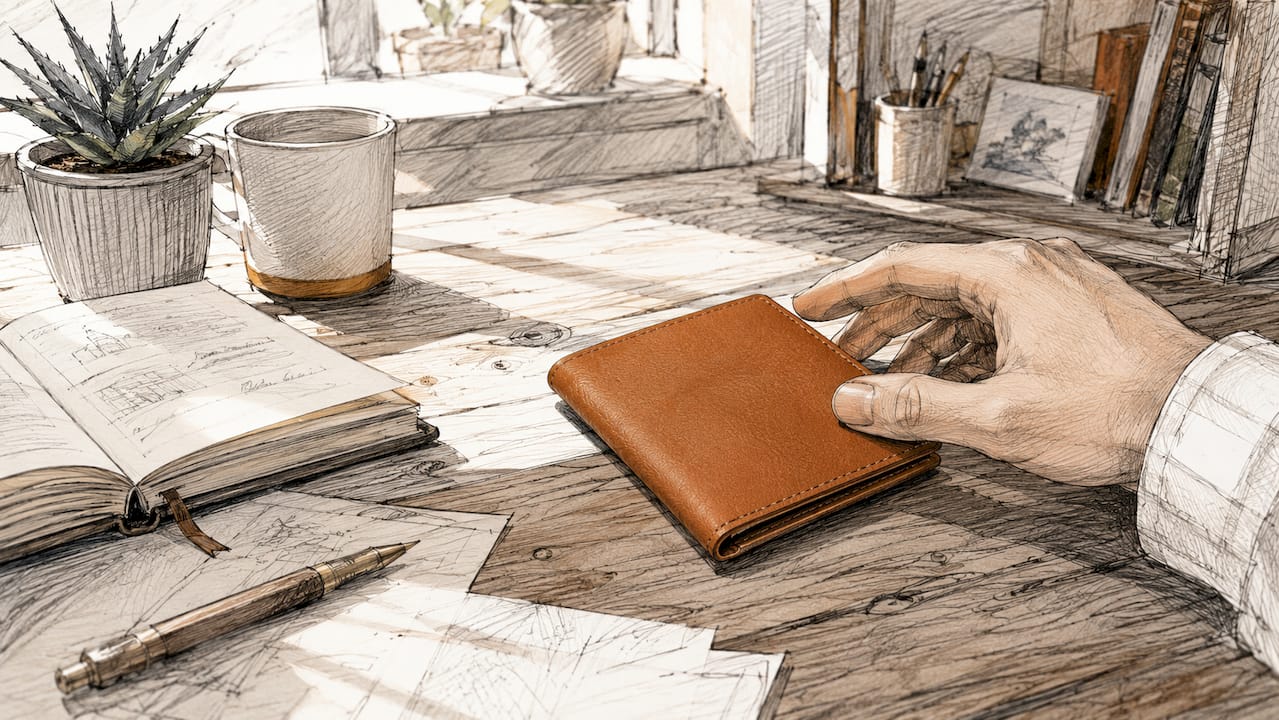
For wallet making, top-grain is a practical choice when consistency matters more than character. Corporate gifts, retail wallet lines, and mid-tier accessories benefit from its clean, predictable surface. The protective finish also makes it easier to maintain for buyers who do not want to condition leather regularly.
Pros:
- Uniform, smooth surface with no visible grain variation
- Protective finish resists minor stains and scratches
- Softer hand-feel from day one, no break-in period
- More affordable than full-grain at comparable thicknesses
- Widely available in consistent dye lots
Cons:
- Sanding removes the strongest fiber layer, reducing long-term durability
- Does not develop a natural patina; surface ages less gracefully
- Protective coating can crack or peel over extended use
- Less suitable for burnished edge finishing
Top-grain leather at an appropriate medium thickness works well for bifolds and slim cardholders where a polished look is the priority. It will not outlast a comparable full-grain wallet, but for buyers who replace accessories every few years, the trade-off is reasonable.
Genuine leather, suede, and nubuck: what they mean for wallet quality
These three categories appear frequently in wallet marketing, and all three carry limitations worth understanding before you buy or build.
Genuine leather is a broad commercial term. In practice, it usually refers to split leather, the lower layers of the hide separated during processing, or corrected-grain leather with an embossed surface applied to hide flaws. Bonded leather, sometimes sold under the same label, uses leather scraps and synthetic adhesives. Both fail quickly under daily wallet use. Peeling, delamination, and edge splitting are common within a few years.
Suede is the flesh side of the hide, buffed to a soft, napped texture. It has no natural grain layer, which means it lacks the fiber density needed for structural wallet components. Suede and nubuck are more prone to staining and abrasion than top-grain or full-grain surfaces.
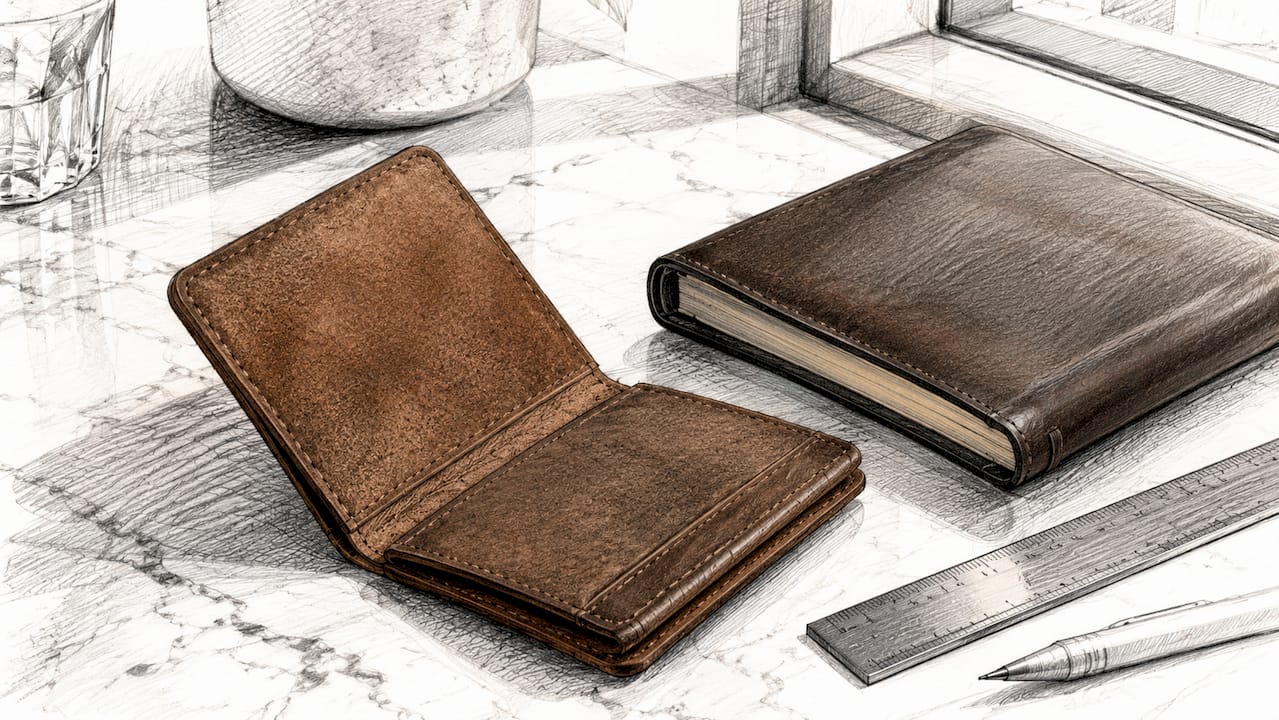
Nubuck is top-grain leather buffed on the grain side to create a velvet-like surface. It is more durable than suede but still delicate. The buffing opens the surface fibers, making it susceptible to oils, moisture, and wear marks.
Key points on all three:
- None of the three develop a patina in the way full-grain does
- Suede and nubuck require specialized protector sprays and regular brushing to maintain appearance
- Genuine leather (split or bonded) is not suitable for any wallet component expected to flex daily
- Nubuck can work for exterior wallet panels if treated and maintained carefully, but it is not a first choice
- Suede is occasionally used for interior linings where softness matters and abrasion is minimal
If you are making a wallet and want a textured exterior, a full-grain hide with a natural pebbled grain, such as goatskin, is a more durable path than nubuck or suede.
How to choose the right leather for your wallet
The right leather depends on how the wallet will be used, how it is constructed, and how much maintenance the owner is willing to do. These criteria narrow the decision quickly.
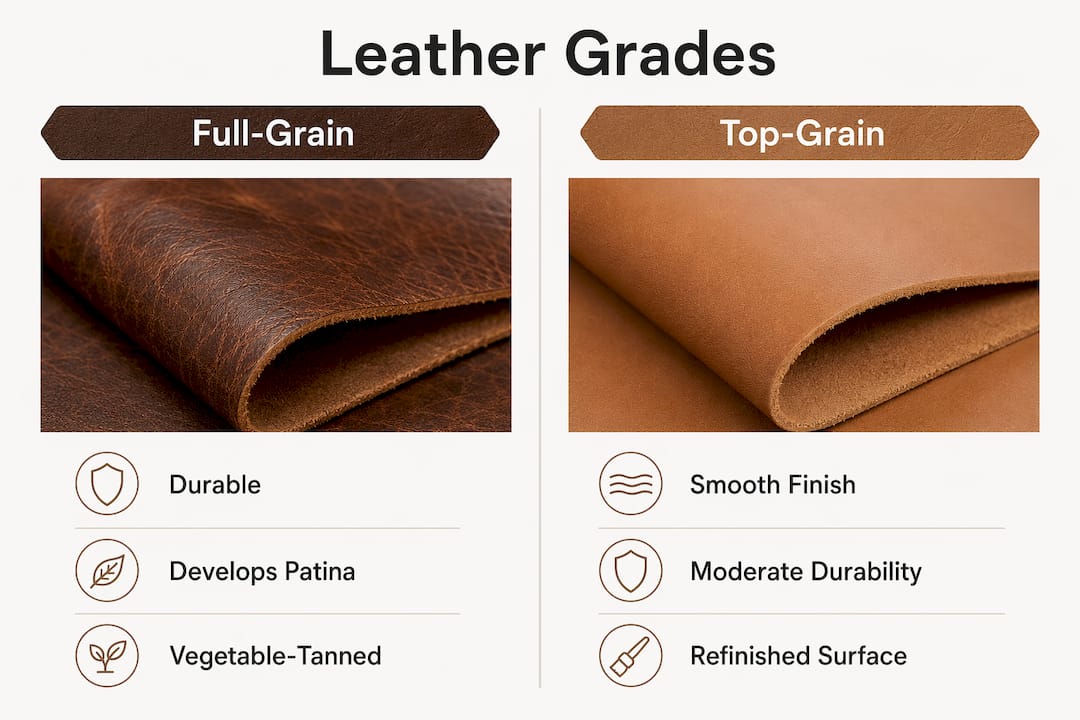
Grain quality. Full-grain is the correct choice for any wallet intended to last a decade or more. Top-grain is acceptable for mid-tier builds where uniformity and cost control matter. Split and bonded leather are not suitable for wallets regardless of price point.
Tanning method. Vegetable-tanned leather is the standard for classic bifolds and cardholders. It holds its shape, burnishes cleanly, and ages with character. Chrome-tanned leather is softer and more water-resistant from the start, making it the better choice for zip wallets, wristlets, and trifolds where the leather must flex around hardware.
Thickness by component. The wallet body should use medium-thickness leather. Card slots and interior pockets work better with thinner leather to prevent bulk when folded. Skiving the edges of interior pieces before assembly keeps the fold clean and reduces thickness at stress points.
Tannery reputation. The grade label on a hide tells you less than the tannery name. A full-grain hide from a consistent, reputable source will outperform a nominally equivalent hide from an unknown supplier.
Maintenance requirements. Full-grain veg-tan needs periodic conditioning with a product like Leather Honey or neatsfoot oil. Chrome-tanned leather is lower maintenance but does not respond as well to conditioning for patina development.
Selection criteria at a glance:
- Wallet type (bifold, cardholder, zip) determines tanning method preference
- Intended lifespan guides grain quality decision
- Build complexity (skived edges, multiple layers) requires consistent hide thickness
- Budget affects tannery access but should not push the choice toward split leather
Pro Tip: For a slim cardholder, skive the card pocket panels to 2–2.5 oz before assembly. The wallet will fold flat from day one and hold that profile as the leather breaks in, rather than bulging at the seams.
Expert perspective on sourcing quality wallet leather
Leather quality is not determined by grade alone. The full process, from the animal’s breed and diet to the tannery’s methods and the craftsperson’s execution, shapes the final product. A full-grain label on a poorly sourced hide is not a guarantee of performance.
Three tanneries consistently produce wallet-grade leather that artisans and buyers can rely on:
- Hermann Oak (St. Louis, Missouri): produces heavy, structured veg-tan cowhide known for consistent thickness and clean burnishing. Its leather is a standard reference for American leathercraft.
- Wickett & Craig (Curwensville, Pennsylvania): one of the few remaining American tanneries using traditional pit-tanning methods. Their hides are dense, firm, and well-suited to bifold construction.
- Horween (Chicago, Illinois): produces Chromexcel, a pull-up leather with a distinctive oily finish, and Shell Cordovan, a non-grain equine leather prized for its durability and patina potential in premium wallets.
Sourcing transparency matters. A maker who can name the tannery and the hide weight is demonstrating knowledge of their materials, not just their marketing. That specificity predicts consistency.
The construction surrounding the leather is equally consequential. Heavy-duty stitching, clean edge finishing, and quality hardware determine whether a wallet holds together at its stress points. A well-sourced hide paired with poor stitching will still fail at the seam before the leather shows wear. For buyers, the best leather wallets for men combine tannery-sourced full-grain hides with construction details that match the leather’s lifespan.
Grainmarkleather uses full-grain leather across its wallet range, with heavy-duty stitching and a one-year warranty on every piece. The Classic Vintage Leather Bifold Wallet and the slim cardholder both reflect this approach: full-grain construction built to age rather than degrade.
Grainmarkleather wallets: full-grain construction, built to last
Knowing the right leather is one part of the decision. Finding it made well is the other.
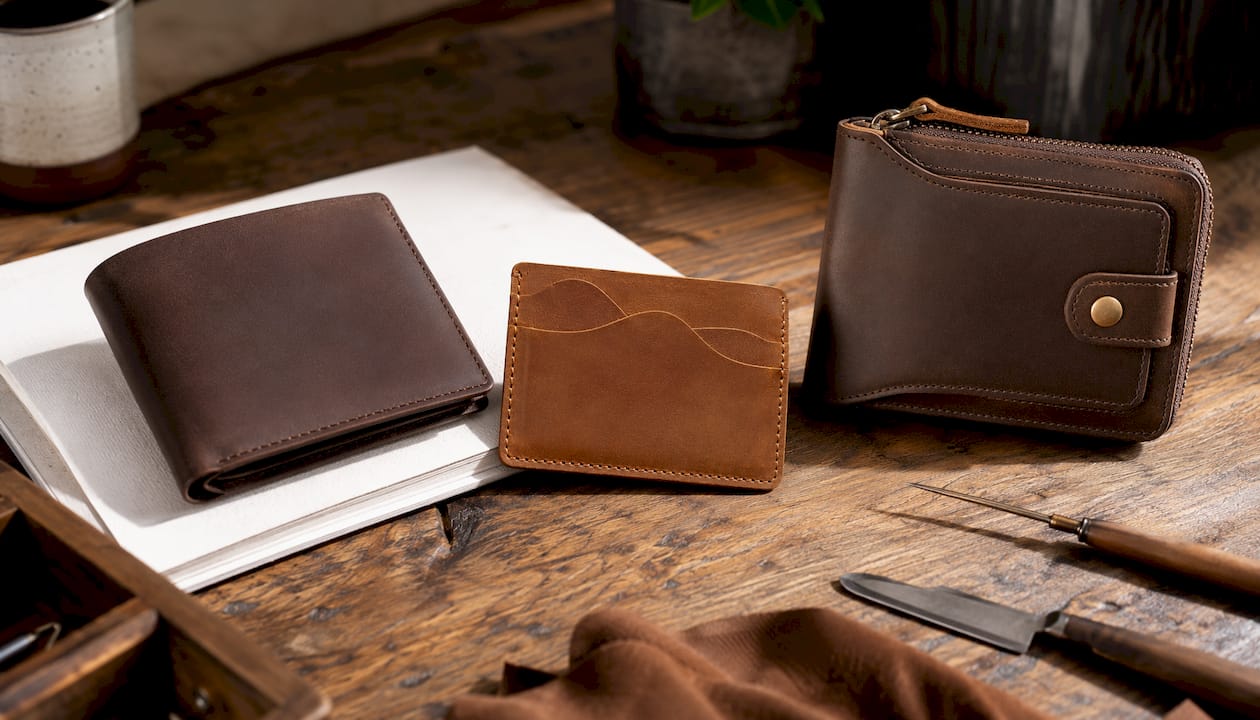
Grainmarkleather handcrafts each wallet from full-grain leather with heavy-duty stitching and no shortcuts on construction. The range covers the main wallet types discussed in this guide: the Classic Vintage Leather Bifold Wallet for buyers who want a traditional bifold that will develop patina over years of use, the Personalized Full Grain Leather Cardholder for a slim, minimal carry, and the Vintage Leather Bifold Wallet with Zipper and RFID Protection for those who need added security features without sacrificing leather quality. Every piece ships with a one-year warranty and global shipping. Personalization is available across the range.
Key Takeaways
Full-grain vegetable-tanned leather at 3–4 oz is the most durable and practical choice for wallets, with proper tannery sourcing and construction determining long-term performance.
| Point | Details |
|---|---|
| Best leather grade | Full-grain retains the natural hide surface and can last 10–20 years with basic care. |
| Ideal thickness | Use moderate thickness for the wallet body; slightly thinner for card slots to prevent bulk. |
| Tanning method matters | Vegetable-tanned leather burnishes cleanly and develops patina; chrome-tanned suits zip and flex-heavy designs. |
| Avoid split and bonded leather | Corrected-grain and bonded leather fail quickly under daily use and do not develop patina. |
| Grainmarkleather | Offers full-grain leather wallets with heavy-duty stitching, a one-year warranty, and personalization options. |