Journal Notebook Cover: Materials, Sizes, and Types
A journal notebook cover is a reusable protective sleeve designed to house one or more notebook inserts. The right cover depends on material, size compatibility, binding type, and whether you want customization. Key selection factors:
- Material: Full-grain leather, cork, canvas, synthetic, or paper-based
- Size: Pocket (3.5 x 5.5 in), standard 5 x 7 in, or A5 (4.3 x 8.3 in)
- Cover type: Refillable, hardbound, softbound, or snap-in
- Binding compatibility: Spiral, stitched, or glued inserts
- Protective features: Water resistance, spine rigidity, closure systems
- Customization: Embossing, printing, engraving, or DIY templates
Table of Contents
- What types of journal notebook covers are available?
- How do you choose the right size for a notebook cover?
- What materials work best for journal covers?
- How can you personalize a journal cover?
- What makes a handcrafted leather journal cover worth the investment?
- How do you care for different cover materials?
- What protective features should a journal cover have?
- Which binding types are compatible with most covers?
- What price range should you expect for different cover types?
- Grainmarkleather handcrafted leather covers and accessories
- Key Takeaways
What types of journal notebook covers are available?
Cover type determines how you use and refill your notebook. There are several categories each suited to different workflows.
- Refillable covers: Hold 1 to 4 inserts in elastic or strap systems. Best for users who separate planning, sketching, and journaling in one cover.
- Hardbound covers: Fixed binding, no insert swapping. Durable and professional, but not refillable.
- Softbound covers: Lighter and more flexible than hardbound. Lay flat more easily, though less protective.
- Snap-in / interchangeable covers: Accept standardized inserts that click or slide in. Common in traveler’s notebook systems.
Refillable systems offer the most flexibility. Organizing multiple inserts in a single cover, such as a planner alongside a sketchpad, keeps daily carry minimal without sacrificing function.
How do you choose the right size for a notebook cover?
Size determines which inserts fit and how portable the cover is. Most covers follow three standard dimensions.

| Size | Dimensions | Common Use |
|---|---|---|
| 3.5 x 5.5 in | Everyday carry, quick notes | |
| Standard | 5 x 7 in | Journaling, writing, photo journals |
| A5 / Traveler’s | 4.3 x 8.3 in | Travel journaling, planners |
Measure your current notebook before buying a cover. A cover that is too tight distorts the spine; one that is too loose lets inserts shift. Size considerations worth checking:
- Pocket covers fit in jacket pockets and small bags
- Traveler’s Notebook size (4.3 x 8.3 in) is the standard for travel journaling systems
- A5 covers accept the widest range of commercially available inserts
- Standard 5 x 7 in suits photo journals and custom-printed covers
Pro Tip: If you use multiple insert types, buy the largest size that still fits your bag. Switching to a smaller cover later means replacing inserts too.
What materials work best for journal covers?
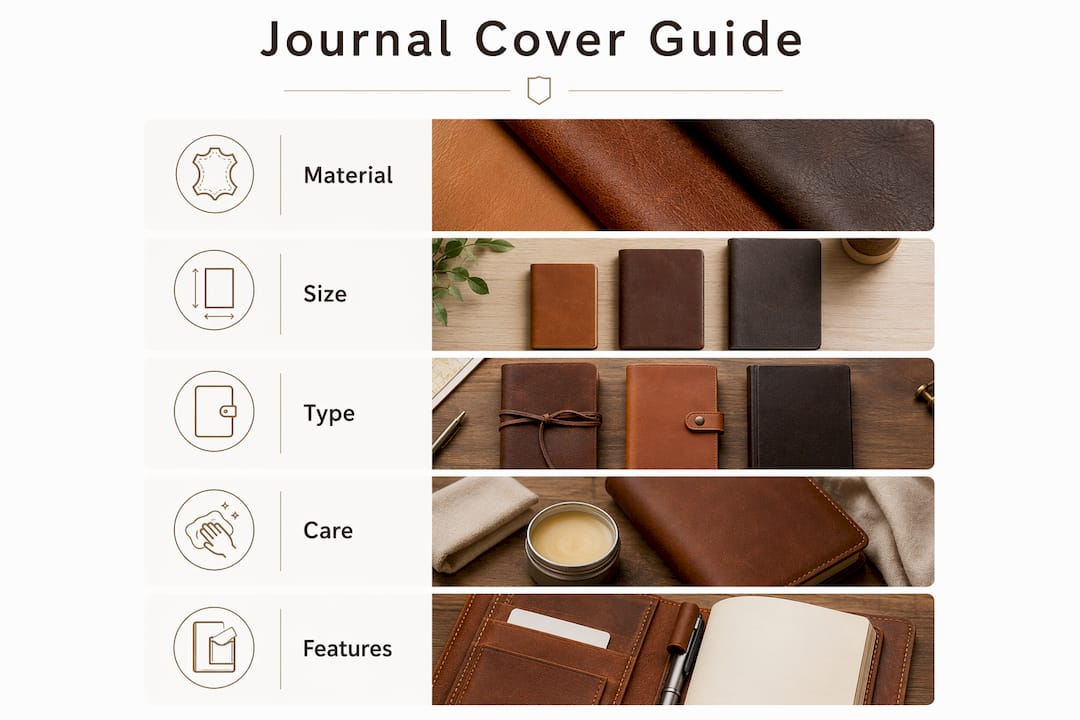
Material affects durability, feel, water resistance, and environmental impact. No single material wins on every dimension.
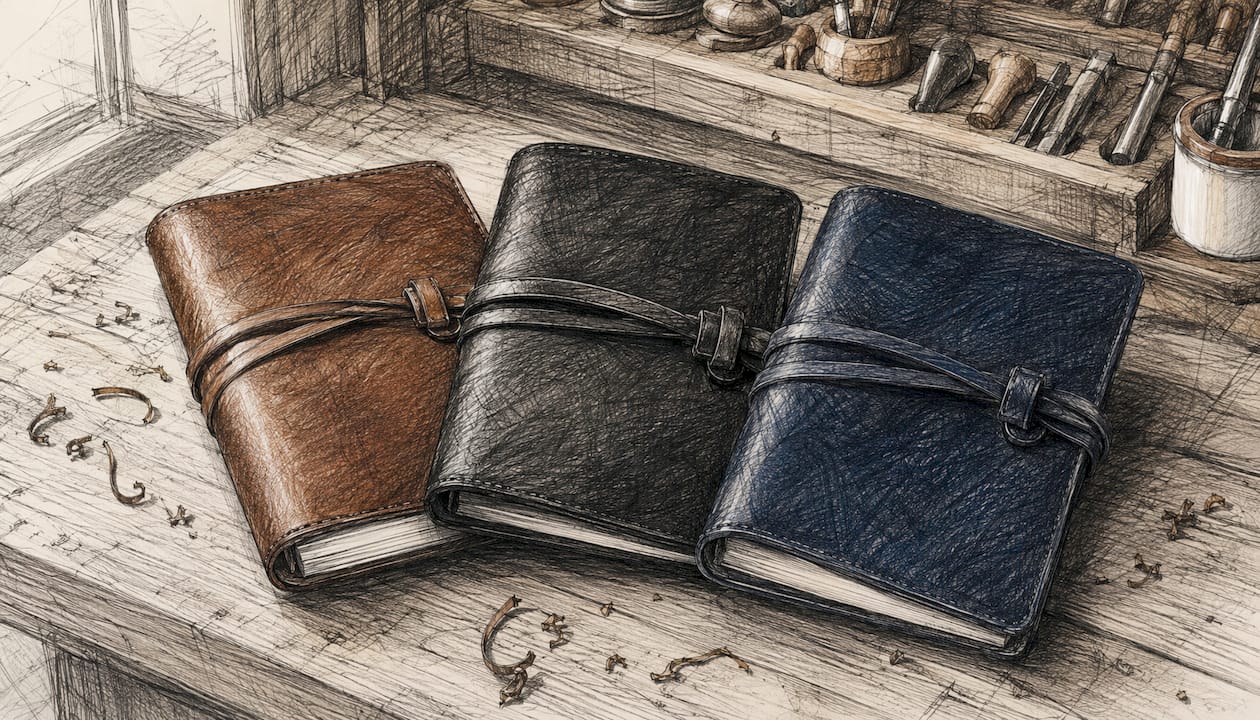
| Material | Durability | Water Resistance | Eco-Friendly | Price Range |
|---|---|---|---|---|
| Full-grain leather | High | Moderate (improves with conditioning) | Moderate | $$$$ |
| Cork | Moderate | High (naturally) | High | $$ |
| Canvas | High | Low | Moderate | $$ |
| Recycled fabric | Moderate | Low–Moderate | High | $–$$ |
| Synthetic leather | Moderate | Moderate | Low | $$ |
| Paper/cardstock | Low | Low | High | $ |
Pros and cons by material class:
- Full-grain leather: Ages well, develops patina, repairable. Heavier and more expensive than alternatives.
- Cork: Naturally water resistant and renewable, lightweight. Less durable under heavy daily use.
- Canvas: Rugged, takes dye well, affordable. Absorbs moisture and stains without treatment.
- Recycled fabric: Low environmental footprint. Durability varies significantly by manufacturer.
- Synthetic leather: Lower cost than full-grain. Does not age or patina; may crack over time.
For a leather cover that pairs well with a quality workspace, the material choice extends naturally to other desk accessories, including a leather office chair for a consistent aesthetic.
How can you personalize a journal cover?
Customization falls into two categories: DIY design tools and professional printing or engraving services.
- Digital templates: Canva offers thousands of notebook cover templates; Adobe Express provides free customizable designs for print or digital use.
- Professional printing: Services print full-wrap photo or artwork designs on hardcover and softcover notebooks, often with turnaround times of 1 to 4 business days.
- Embossing and engraving: Applied to leather covers, these techniques add initials, logos, or patterns permanently without ink.
- Dyeing: Full-grain leather accepts custom dye colors, allowing color matching to personal preference.
- Paper type pairing: Dot grid suits designers; ruled pages work better for writers. Matching paper to cover type completes a functional, personalized setup.
For a full overview of refillable options with personalization built in, the personalized refillable notebook guide covers the key decisions in detail.
What makes a handcrafted leather journal cover worth the investment?
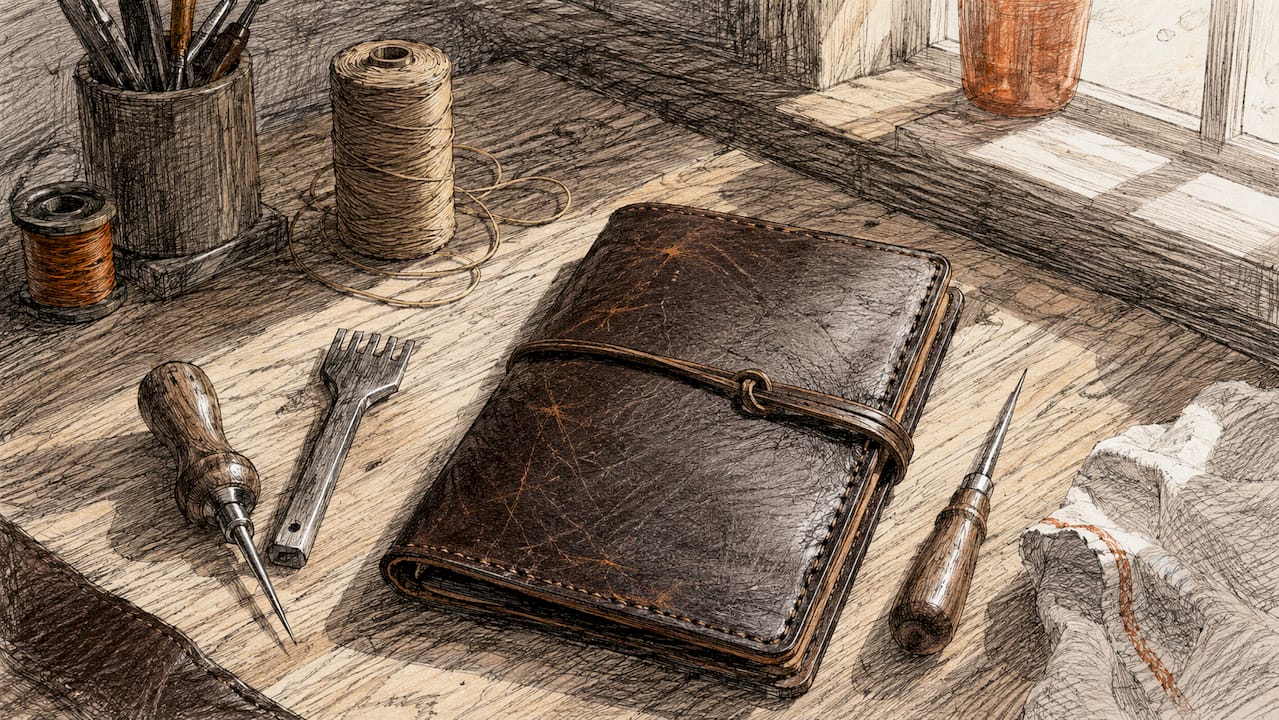
Craftsmanship determines how a leather cover holds up over years, not just months. Spine construction is the most overlooked factor: a reinforced spine prevents buckling when multiple inserts are loaded, preserving the cover’s shape and professional appearance.
Full-grain leather develops a natural patina over time, which means the cover looks better with age rather than worse. Grainmarkleather backs its handcrafted covers with a one-year warranty and heavy-duty stitching throughout. Over 358 five-star reviews reflect consistent satisfaction with that build standard.
Quality hallmarks to look for:
- Reinforced spine that holds form under multiple inserts
- Heavy-duty stitching at stress points
- Full-grain leather sourced for consistent grain and weight
- One-year warranty covering craftsmanship defects
- Natural patina development rather than surface coating
For a comparison of specific options, the best leather notebook covers guide breaks down top choices for travelers and writers.
How do you care for different cover materials?
Leather covers need conditioning every few months with a product like Leather Honey or a similar conditioner to prevent drying and cracking. Wipe down with a dry cloth after exposure to moisture; avoid soaking. Canvas covers tolerate spot cleaning with mild soap and water. Cork wipes clean easily but should not be submerged. Synthetic covers can be wiped with a damp cloth but may degrade faster if exposed to heat or prolonged sunlight.
What protective features should a journal cover have?
Water resistance, spine rigidity, and closure systems are the three features that matter most in daily use. Cork and treated leather offer the best passive water resistance. A rigid or reinforced spine protects inserts from bending in a bag. Closures, whether elastic bands, magnetic snaps, or wrap ties, keep inserts secure and prevent pages from creasing. Some covers add a pocket or card slot, which adds utility without adding significant bulk.
Which binding types are compatible with most covers?
Refillable covers work with stitched and glued inserts most reliably, since those formats have flat spines that sit cleanly inside the sleeve. Spiral-bound notebooks present a fit challenge: the coil adds thickness and can prevent the cover from closing flush. Wire-O and flexible casewrap bindings lay flat when open, making them the most comfortable to write in inside a cover. If you use a spiral notebook, confirm the cover’s interior dimensions account for coil clearance before buying.
What price range should you expect for different cover types?
Paper and cardstock covers start under $5. Canvas and cork options typically fall in the $15–$40 range. Synthetic leather covers run $20–$60 depending on construction quality. Handcrafted full-grain leather covers start around $60 and can exceed $150 for larger formats with embossing or engraving. The price gap between synthetic and full-grain leather reflects material sourcing, stitching labor, and longevity: a well-maintained leather cover lasts years longer than a synthetic one, which affects cost per use over time.
Grainmarkleather handcrafted leather covers and accessories
Grainmarkleather produces handcrafted full-grain leather goods built for daily use. Each piece uses heavy-duty stitching, full-grain leather, and a one-year warranty on craftsmanship. For readers who want a cover that ages well and holds its structure through years of use, that combination of material and build standard is the practical choice over mass-produced alternatives.
The range extends beyond covers to leather bags, wallets, pen cases, and travel accessories, all made to the same construction standard. If you are equipping a full desk or travel kit with leather goods that match in quality and aesthetic, Grainmarkleather’s catalog covers the full set.
Browse the collection at grainmarkleather.com to find the right piece for your setup.
Key Takeaways
Full-grain leather remains the most durable material for a journal notebook cover, with natural patina development and a one-year warranty standard from quality makers like Grainmarkleather.
| Point | Details |
|---|---|
| Refillable systems hold 1–4 inserts | Elastic or strap systems organize planners, sketchpads, and notebooks in one cover. |
| Three standard sizes cover most needs | Pocket (3.5 x 5.5 in), standard 5 x 7 in, and A5 (4.3 x 8.3 in) fit the majority of inserts. |
| Material determines durability and care | Full-grain leather outlasts synthetic and paper options; cork offers the best passive water resistance. |
| Spine construction prevents buckling | A reinforced spine is critical when multiple inserts are loaded into a refillable cover. |
| Grainmarkleather covers | Handcrafted full-grain leather with heavy-duty stitching, one-year warranty, and over 358 five-star reviews. |