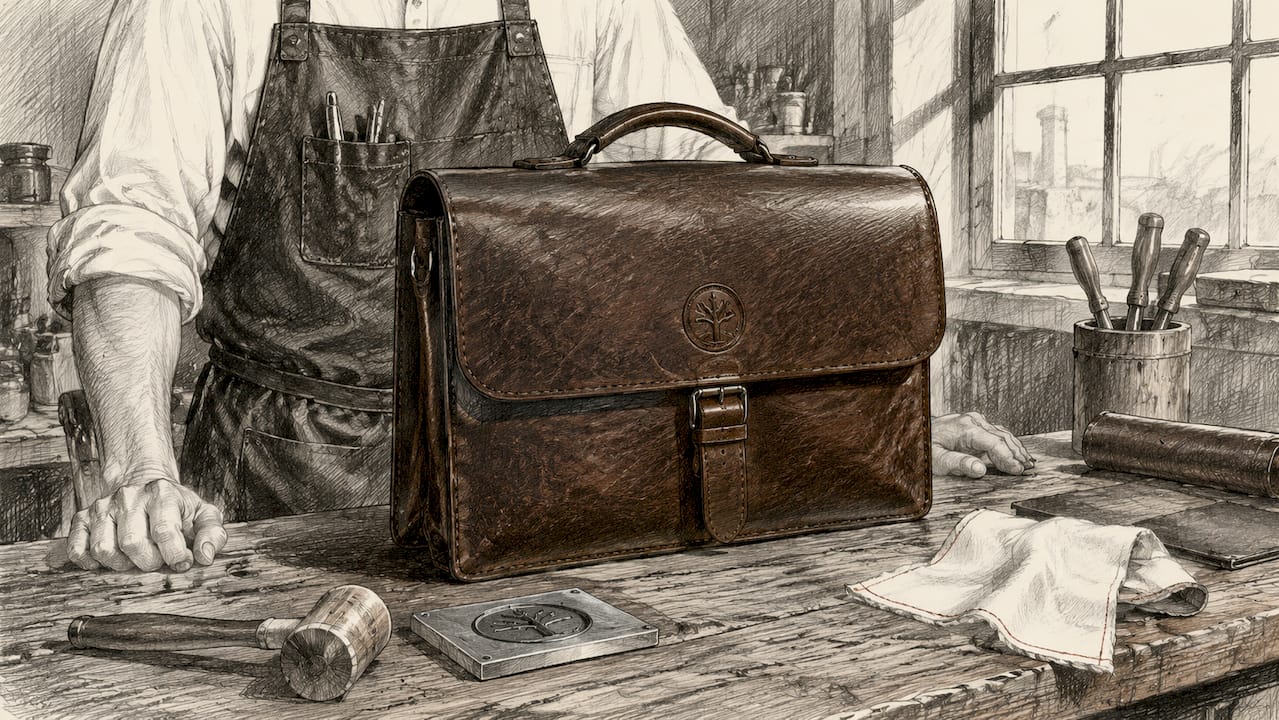
Embossed Leather Logo: A Complete Guide for Brands
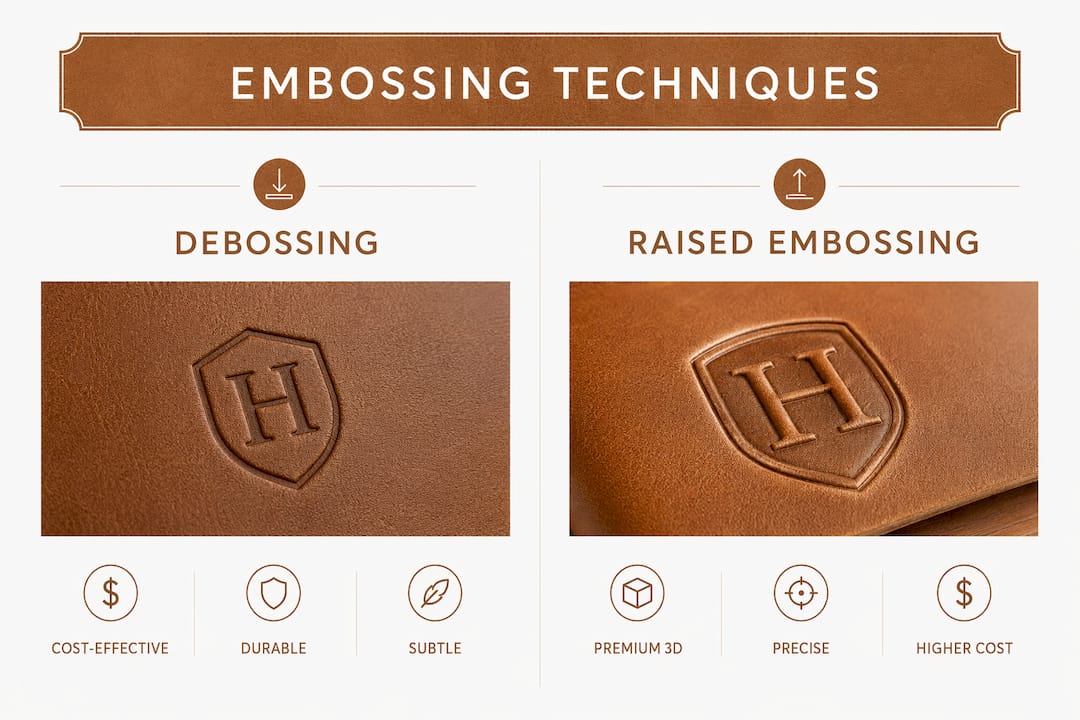
An embossed leather logo is a design physically pressed into leather using heat, pressure, and a machined metal die, creating either a sunken or raised impression directly in the material. The result is permanent, tactile, and requires no ink or coating. Two main techniques exist: debossing (sunken) and raised embossing (3D relief). Both suit different products, budgets, and design styles.
- Debossing: the logo is pressed downward into the leather surface, leaving a clean, sunken mark
- Raised embossing: the leather is shaped upward, producing a three-dimensional relief
- Key tools: precision-machined metal dies, heated plates, hydraulic or manual presses
- Best materials: full-grain and top-grain leather hold impressions cleanly and age well
- Durability: a properly executed debossed logo holds its shape through years of daily use
What types of embossed leather logo techniques are available?
Debossing is the most common, cost-effective, and safest method for adding logos to full-grain leather. It presses the design downward without altering the grain surface or adding any coating, making it stable across batch production and well-suited to daily-use goods like wallets, bags, and card holders.
Raised embossing produces a premium 3D effect but demands more precise mold design, stricter leather thickness control, and more sample testing. Thin or hard leather substrates often cannot hold a raised shape cleanly, which limits this technique to selective, premium applications such as gift sets or bold brand marks on thicker hides.
Hot stamping and laser engraving round out the main options. Hot stamping transfers a foil logo using heat and pressure, producing strong visual contrast. Laser engraving burns or etches the design without a mold, making it practical for small batches and personalization. Neither technique creates the same tactile depth as a pressed die, but both serve specific use cases well.
One important note: suppliers often use “embossing” and “debossing” interchangeably. Always specify whether you want a sunken or raised result before tooling begins, since the dies and processes differ significantly.
| Method | Best for | Cost level | Durability | Main risk |
|---|---|---|---|---|
| Debossing | Most leather goods | Low to medium | High | Logo may be too shallow |
| Raised embossing | Premium gifts, bold logos | High | Medium | Fine details may fail |
| Hot stamping | Gifts, fashion, packaging | Medium | Medium | Foil may peel or fade |
| Laser engraving | Personalization, small batches | Low to medium | Medium | Burn color may look uneven |
How to prepare your logo design for leather embossing
Simple, high-contrast logos produce the clearest results when embossed. Design experts recommend minimal text and clean lines, particularly for small applications like watch straps, luggage tags, or pen cases where fine detail tends to blur under pressure.
Key preparation steps:
- File format: submit vector artwork in AI, EPS, or SVG; high-contrast black-and-white vector files give die manufacturers the precision needed for CNC or laser engraving of the stamp
- Avoid thin lines: strokes under 1pt and very fine serifs often disappear or merge when pressed into leather
- Size for the product: a logo that reads well at 3 inches on a bag may lose legibility at 0.5 inches on a card holder; size the artwork to the actual application
- Digital proof: request a proof before production begins; catching proportion or spacing issues at this stage costs nothing compared to reworking a die
- Simplify for scale: if the logo includes a complex wordmark and an icon, consider embossing the icon alone on smaller goods
For guidance on how logo placement affects readability on bags and wallets, the leather bag with initials guide covers sizing and positioning in practical detail.
What tools and materials do you need to emboss leather?
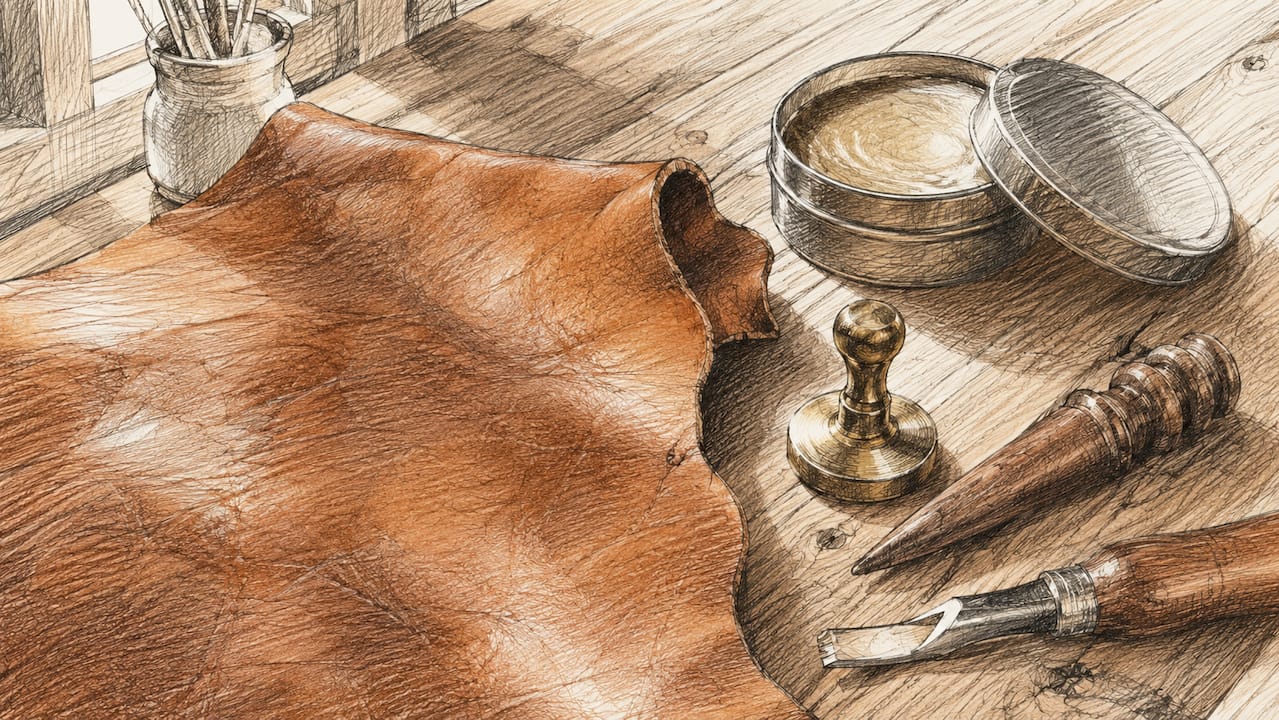
Embossing tools include precision-machined metal dies, heated plates, and hydraulic or manual presses, with the specific setup varying by technique. Debossing typically uses a single-sided die pressed downward; raised embossing requires a matched male-female mold set to push the leather upward without tearing it.
- Metal dies: brass or steel, CNC-machined or laser-engraved to the exact logo geometry
- Press: hydraulic presses offer consistent, repeatable pressure for batch runs; manual clicker presses suit small-scale or prototype work
- Heating element: most dies are heated to 60–90°C to soften the leather fibers and set the impression cleanly
- Leather type: full-grain and top-grain leather are the most suitable substrates; vegetable-tanned leather takes impressions particularly well due to its firm, consistent body
- Leather thickness: raised embossing needs thicker, more pliable hides; thin leather (under 1mm) rarely holds a raised shape without distortion
- Surface preparation tools: sponge or damp cloth for conditioning, plus a smooth backing plate to prevent uneven pressure
Pro Tip: Vegetable-tanned leather, often called “veg-tan,” responds to moisture and pressure better than chrome-tanned hides, making it the preferred choice for crisp, deep impressions in craft and prototype work.
Step-by-step process for embossing a leather logo
- Finalize the design. Confirm the vector file, size, and position on the product. Approve a digital proof before ordering the die.
- Order and inspect the die. Once the machined die arrives, test it on a scrap piece of the same leather grade before committing to production leather.
- Condition the leather. Lightly dampen the surface with a sponge or spray bottle. The leather should feel slightly cool to the touch, not wet. This softens the fibers and allows a cleaner, deeper impression.
- Set temperature and pressure. Leather preparation and press settings directly affect emboss quality and longevity. For most full-grain hides, a moderately heated die with firm, even pressure for a short duration produces a clear result.
- Press and hold. Lower the die steadily. Avoid rocking or shifting during the press, which causes double-impression blur.
- Release and inspect. Lift the die cleanly. Check depth, edge definition, and any distortion around the logo perimeter.
- Allow to dry and set. Let the impression cool and the leather fibers firm up before handling or stitching.
Common pitfalls: pressing dry leather (the impression will be shallow and may crack), using too much heat (scorches the surface), and pressing too briefly (the impression relaxes when the die lifts).
Pro Tip: Test embossing depth on a corner scrap first. A deeper impression looks bolder but can weaken thin leather around fine logo details. Start at medium depth and increase only if the result reads too softly.
Durability, maintenance, and ordering considerations
Debossed logos are more durable on daily-use leather goods than raised embossing, which can wear at the high points of the relief over time. For items like wallets, crossbody bags, or pen cases that see constant handling, a sunken impression holds its definition far longer.
Maintenance tips for preserving embossed detail:
- Apply a leather conditioner every 3–6 months to keep the hide supple; dry leather causes embossed edges to crack
- Avoid soaking the embossed area; prolonged moisture can soften the impression and reduce definition
- Store leather goods away from direct heat, which can flatten a raised emboss over time
- For stain removal near an embossed logo, use a gentle, pH-neutral cleaner; the leather stain removal guide covers safe methods that will not damage the surrounding impression
Custom embossed leather logos generally require 1–3 weeks lead time depending on design complexity and order size. Costs rise with die complexity, leather grade, and embossing type. Raised embossing carries higher tooling costs than debossing. Artwork approval and a physical sample are standard steps before full production runs.
On the ethical side, full-grain leather from tanneries that follow Leather Working Group (LWG) certification standards offers a traceable, lower-impact supply chain compared to uncertified hides.
How Grainmarkleather approaches embossed logo branding
Grainmarkleather builds each piece from full-grain leather with heavy-duty stitching, and the embossed logo is treated as a structural part of the product rather than a surface decoration. The choice of embossing style follows the product’s end use: debossing for daily-carry items like the full-grain leather shoulder bag, where a clean sunken mark holds up through years of handling, and selective raised embossing for gift-oriented pieces where a bolder tactile effect suits the occasion.
Combining a well-executed embossed logo with full-grain leather and precise stitching is what keeps a branded leather good looking intentional rather than promotional. The logo should read as part of the material, not applied to it. At Grainmarkleather, every customization option is backed by a one-year warranty, because the embossing and the leather it sits on are held to the same standard.
Grainmarkleather carries over 358 five-star reviews, and customers consistently note the quality of the embossed detailing on finished goods. The one-year warranty covers craftsmanship, including embossed logo integrity on all products.
What does custom embossed leather logo work cost?
Pricing for a custom embossed leather logo depends on four main variables: die complexity, embossing type, leather grade, and order volume. Debossing dies are less expensive to produce than raised embossing molds, which require matched male-female tooling. Laser engraving carries no die cost, which makes it the lowest-entry option for small or one-off orders.
A simple debossing die for a clean brand mark typically costs less than a raised embossing mold for the same design. Hot stamping adds foil material costs on top of the die. For corporate gifting or branded merchandise runs, ordering in volume reduces the per-unit cost significantly, since the die cost is amortized across more pieces. Sampling fees are standard and usually credited against the production order.
Troubleshooting common embossing issues
Shallow impression: the leather was too dry or the press temperature was too low. Re-dampen the surface and increase dwell time before pressing again.
Blurred edges: the die shifted during pressing, or the logo contained lines too fine for the leather grade. Secure the die firmly and simplify the artwork for the next run.
Cracking around the logo: the leather was over-dried or the press temperature was too high. Condition the hide thoroughly before the next attempt and reduce heat by 10°C.
Raised embossing not holding shape: the leather is too thin or too hard for the mold. Switch to a thicker, more pliable hide or convert the design to debossing.
Uneven depth across the logo: the backing plate is not level, or pressure is inconsistent across the press bed. Check the platen alignment and use a firm, flat backing material.
Key Takeaways
A well-executed embossed leather logo requires the right technique for the product, a clean vector design, and properly conditioned full-grain leather.
| Point | Details |
|---|---|
| Debossing is the standard choice | It is the most durable and cost-effective method for daily-use leather goods. |
| Vector files are required | Submit AI, EPS, or SVG artwork in high-contrast black and white for accurate die production. |
| Lead time is typically a few weeks | Custom orders typically require this window, plus artwork approval and a physical sample. |
| Leather grade determines quality | Full-grain and top-grain leather hold embossed impressions most cleanly and age well. |
| Maintenance preserves detail | Condition leather every 3–6 months and avoid prolonged moisture near the embossed area. |
Grainmarkleather offers full-grain leather goods with custom embossed logo options across bags, cases, and travel accessories. The leather toiletry bag and cowhide leather duffel bag are two high-priority options for corporate gifting or personal branding, both available with embossed logo customization and backed by a one-year warranty.