Pocket Leather Journal: What to Know Before You Buy
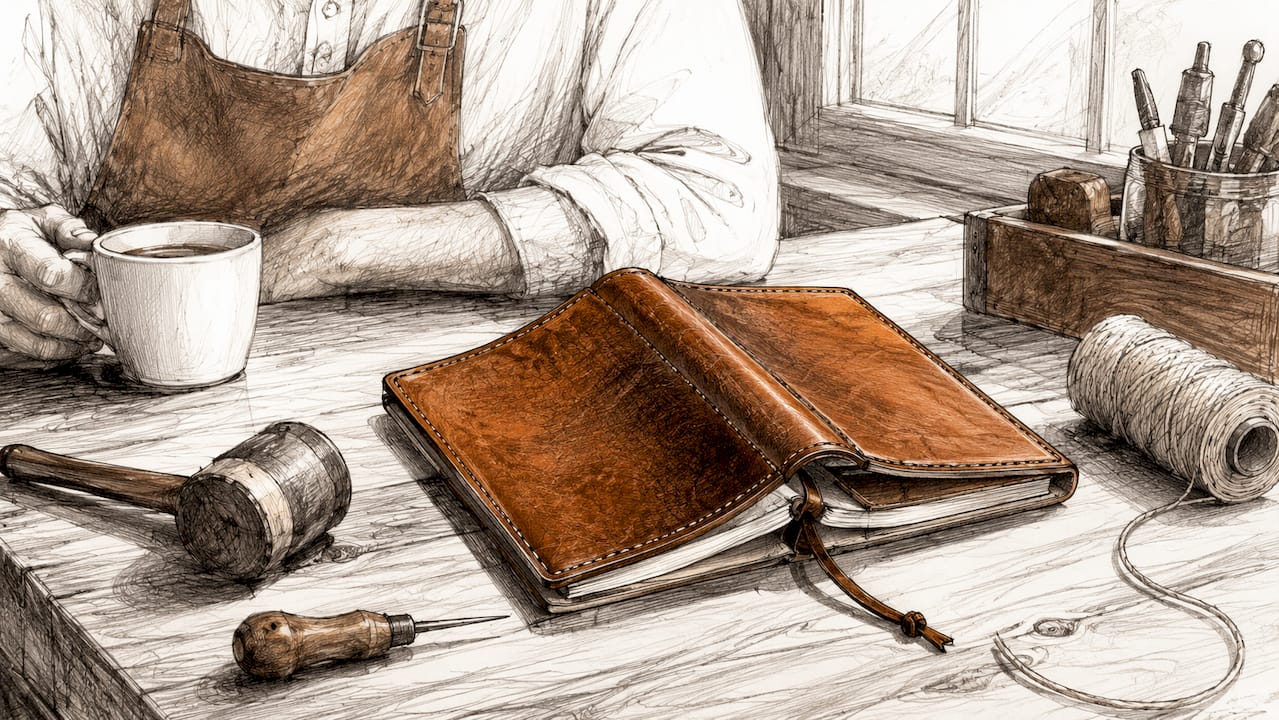
A pocket leather journal is a compact, handcrafted notebook with a full-grain leather cover, typically sized to fit a shirt pocket or jacket. It combines daily portability with lasting durability. The best versions use refillable inserts, heavy-duty stitching, and aged leather that develops a personal patina over years of use.
Table of Contents
- What makes a pocket leather journal worth carrying every day
- Why full-grain leather matters for longevity and patina
- Which paper insert format fits your writing style
- Why a refillable design extends the value of your cover
- How Grainmarkleather approaches handcrafted leather journals
- How to evaluate craftsmanship in a handcrafted leather journal
- What size dimensions work best for a pocket journal
- Style variations and customization options to consider
- Pricing and value factors for luxury pocket journals in the US market
- Grainmarkleather handcrafted leather goods for writers and travelers
- Key Takeaways
What makes a pocket leather journal worth carrying every day
A small leather notebook built from full-grain leather does something mass-produced alternatives cannot: it gets better with use. Skin oils and daily handling gradually darken and soften the cover, creating a patina that is specific to the owner.
- Compact enough for a shirt pocket or small bag
- Full-grain leather cover resists abrasion and daily wear
- Refillable inserts extend the life of a single cover indefinitely
- Suitable for note-taking, sketching, travel logging, or bullet journaling
- Customizable with initials or personal text for a more personal carry
The appeal is functional and aesthetic at once. A well-made portable leather journal is not a disposable item.
Why full-grain leather matters for longevity and patina
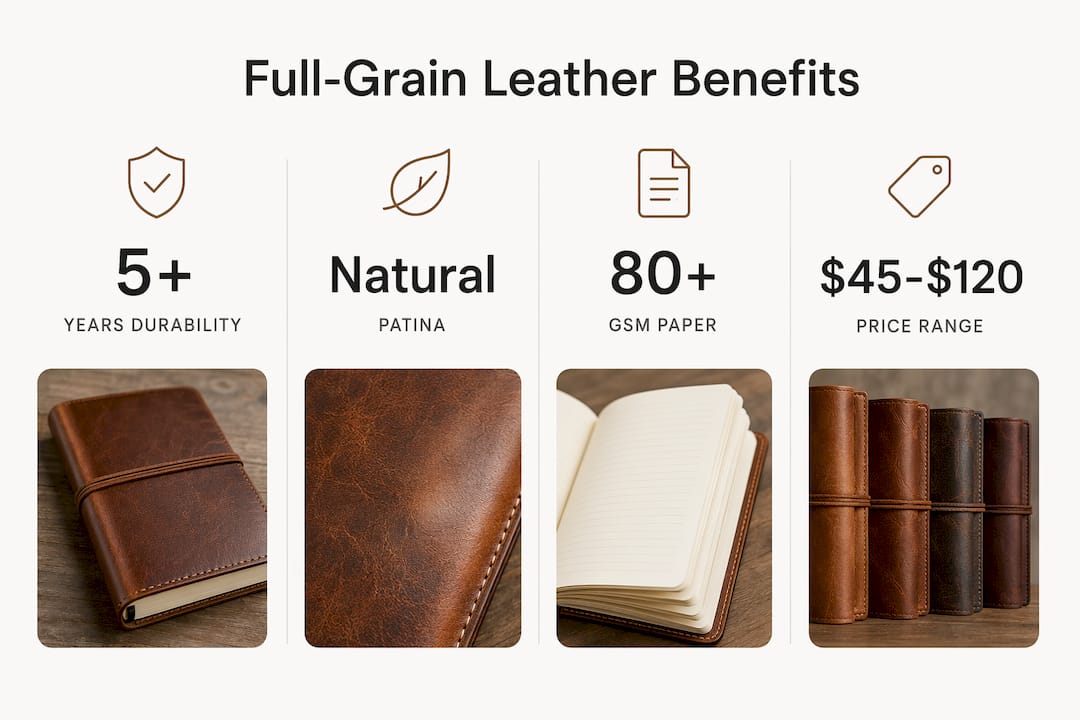
Full-grain leather uses the outermost hide layer with its natural grain intact. That density makes it more abrasion-resistant than corrected or bonded leathers, and it holds up to daily pocket carry without fraying or cracking under normal conditions.
- Dense fiber structure resists moisture and surface wear
- Natural oils from skin gradually develop a unique patina
- Oil-tanned variants age faster and more visibly than chrome-tanned
- Tight grain prevents the delamination common in lower grades
The initial cost of a full-grain leather writing pad is higher, but the cover outlasts the inserts by years. Grainmarkleather backs this with a one-year warranty and 358+ five-star reviews confirming long-term satisfaction.
Which paper insert format fits your writing style
Paper choice shapes the daily experience more than most buyers expect. The three standard formats each serve a different purpose.
- Lined: Best for daily journaling, meeting notes, and structured writing
- Blank: Preferred by sketchers and those who mix text with diagrams
- Dotted: The standard for bullet journaling and grid-based planning
Paper weight matters too. Fountain pen users should select inserts rated above 80gsm to prevent ink bleed and feathering. Most quality inserts in the 80–120gsm range handle ballpoint, rollerball, and fine-liner pens without issue.
Why a refillable design extends the value of your cover
A refillable leather journal separates the cover investment from the paper supply. When one insert fills up, you replace it rather than retiring the cover.
- Cover lasts years; inserts are inexpensive to replace
- Format flexibility: swap lined for dotted as needs change
- Elastic closures on many designs double as pen loops
- Reduces waste compared to single-use bound journals
- Ideal for daily carry where the cover takes the most wear
How Grainmarkleather approaches handcrafted leather journals
Grainmarkleather produces full-grain leather goods with heavy-duty stitching and personalization options across its range, including journals, pen cases, wallets, and bags. Every piece ships with a one-year warranty.
- Full-grain leather only, no corrected or bonded alternatives
- Heavy-duty stitching on all seams and binding points
- Custom embossing and personalization available
- 358+ five-star customer reviews across the product range
- Care guidance available on the full-grain leather lifespan blog
Conditioning the leather two to three times per year with a quality leather conditioner preserves suppleness and supports patina development.
How to evaluate craftsmanship in a handcrafted leather journal

Run a quick check before purchasing. Turn the cover over and examine the flesh side: clean, consistent fiber structure indicates full-grain material. Check stitching at the spine and corners for even tension and no loose threads. Edges should be burnished or painted, not raw and fraying. The cover should flex without cracking when bent gently.
What size dimensions work best for a pocket journal
Standard pocket journal dimensions run approximately 3.5" x 5" to 4" x 6". That range fits a back pocket, jacket breast pocket, or small crossbody bag without bulk. A 3" x 5" format, like the M.LaHart leather pocket notebook at 144 pages, sits at the compact end. Anything wider than 4.5" starts to feel more like a travel diary than a true pocket carry.
Style variations and customization options to consider
Full-grain leather journals come in several cover treatments and closures. Crazy horse leather offers a waxy, distressed finish that ages quickly. Smooth oil-tanned leather develops a subtler patina. Closure options include wrap ties, magnetic snaps, and elastic bands. Personalization typically covers blind or gold foil stamping of initials, names, or short text. Color options commonly include black, tan, brown, and oxblood.
Pricing and value factors for luxury pocket journals in the US market
Handcrafted full-grain leather pocket journals in the US market typically range from $45 to $120, depending on leather grade, page count, and personalization. Refillable designs sit at the higher end but offer better long-term value. A $55 entry like the M.LaHart notebook represents the accessible tier; bespoke or heavily personalized covers from craft makers run $80–$120. The value calculation favors quality covers: a $90 cover used across ten insert refills costs far less per year than replacing a cheap bound journal annually.
Grainmarkleather handcrafted leather goods for writers and travelers
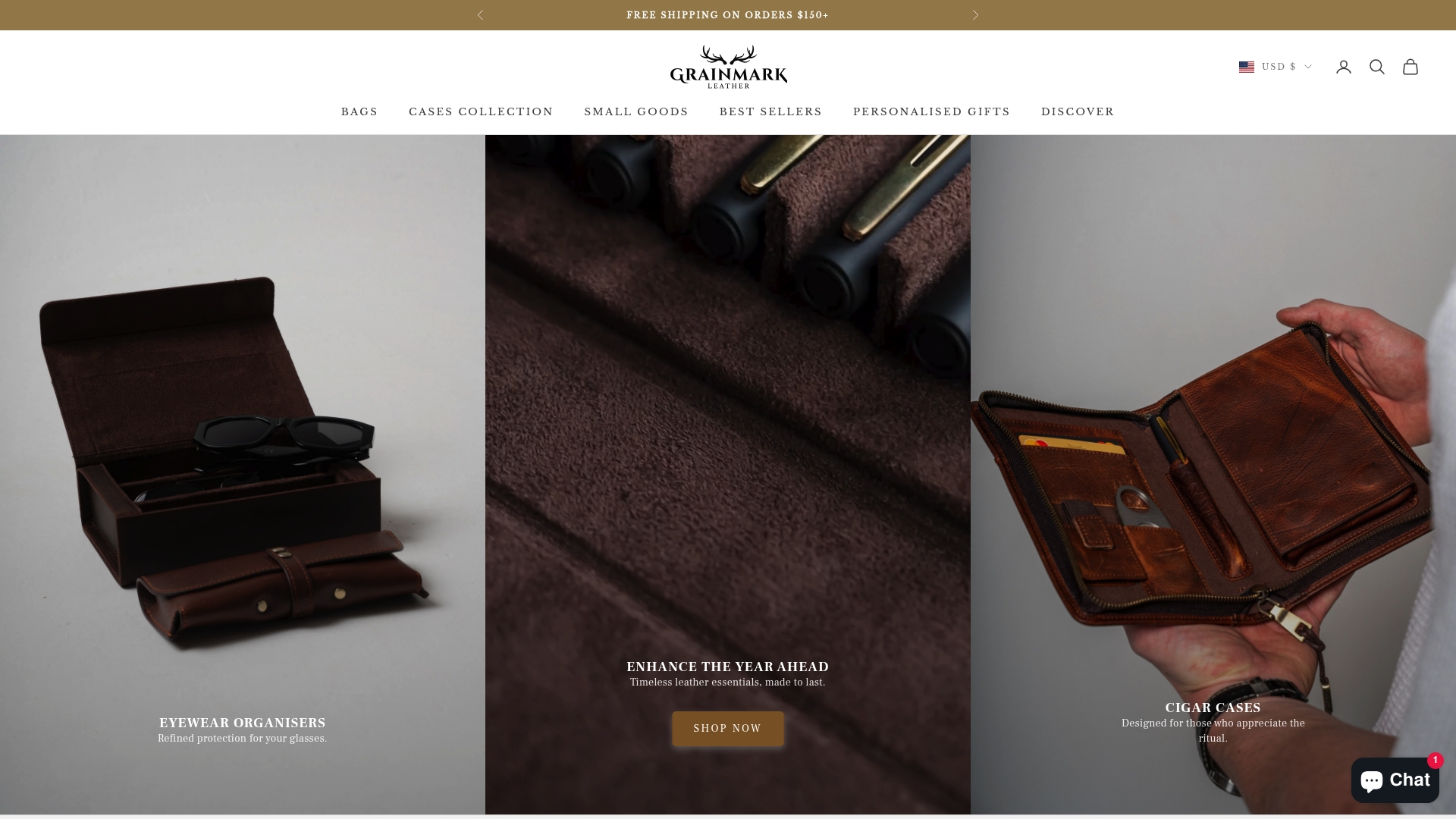
Grainmarkleather makes full-grain leather accessories built for daily use, including journals, pen cases, wallets, and travel goods. Every piece uses heavy-duty stitching, carries a one-year warranty, and can be personalized. For writers and travelers who want their carry to hold up and look better over time, the leather luggage tag and leather laptop sleeve pair naturally with a pocket journal as a complete travel set. Browse the full range at Grainmarkleather to find the piece that fits your carry.
Key Takeaways
Full-grain leather pocket journals outlast cheaper alternatives because the cover material, stitching quality, and refillable design all compound over time.
| Point | Details |
|---|---|
| Leather grade determines longevity | Full-grain leather resists abrasion and develops patina; avoid corrected or bonded grades. |
| Paper weight affects ink performance | Inserts above 80gsm prevent bleed for fountain pen users. |
| Refillable covers offer better value | Replace inserts, not the cover; format can change with each refill. |
| Size range for true pocket carry | 3.5" x 5" to 4" x 6" fits a jacket pocket without bulk. |
| Grainmarkleather | Offers full-grain leather goods with heavy-duty stitching, one-year warranty, and 358+ five-star reviews. |