

Crossbody vs Sling Bag: Which One Should You Choose?
A crossbody bag is defined as a bag worn across the torso with a long strap, designed to distribute weight evenly and sit near the hip for all-day comfort. A sling bag uses a single diagonal strap and rests higher on the back or chest, built for quick access and light loads. The crossbody vs sling bag decision comes down to one core question: how long will you wear it, and how much will you carry?
What are the functional differences between crossbody and sling bags?
The most important structural difference is strap design and body position. A crossbody bag hangs at hip level on the opposite side from the shoulder carrying the strap. A sling bag sits diagonally across the back or chest and swings forward for access without removing the bag.

Sling bags are recommended for loads under 5–7 lbs and carry volumes under 10 liters. That limit reflects a design philosophy: sling bags encourage minimal carry, not maximum capacity. Crossbody bags, by contrast, are preferred when you carry items for more than 4 hours daily, because the lower strap position spreads weight more evenly across the torso.
Strap width matters more than most people realize. Ergonomic guidelines recommend a minimum strap width of 1 inch for all-day crossbody wear, with an ideal bag weight under 1.5 lbs when empty. A narrow strap concentrates pressure on a single point of the shoulder, which causes fatigue within hours.
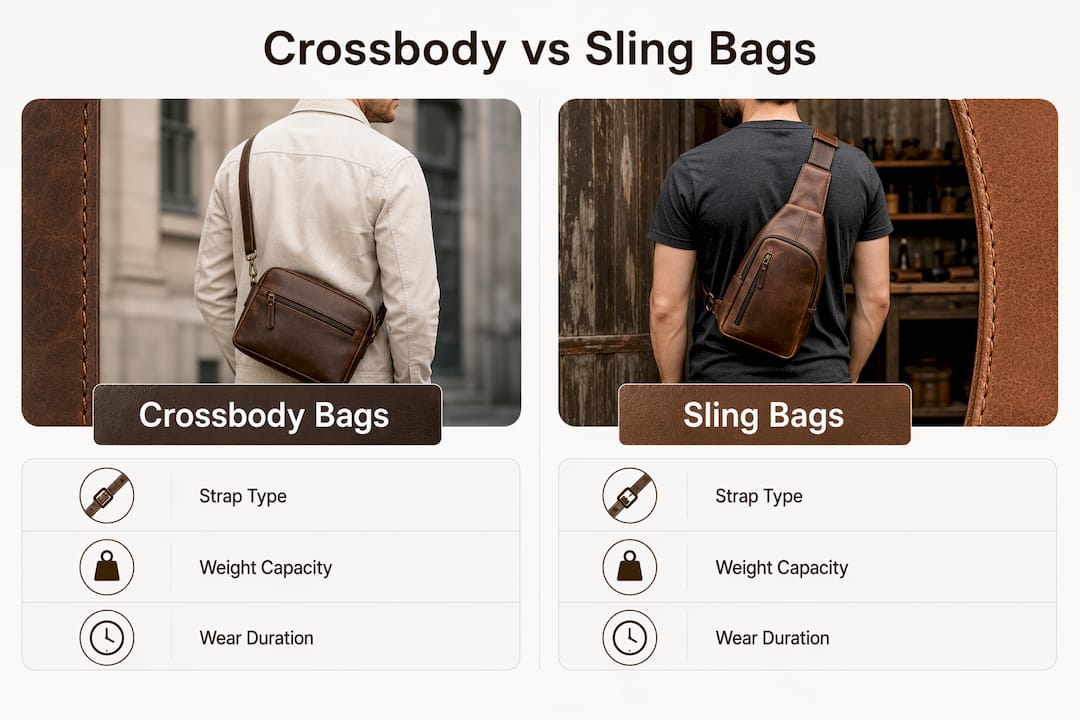
Sling bags gain a functional edge through one specific feature: the stabilizer strap. A stabilizer strap prevents forward swinging during active movement such as cycling or running. Without it, the bag shifts with every stride. Crossbody bags rarely include this feature because their lower, stable position makes it unnecessary.
| Feature | Crossbody bag | Sling bag |
|---|---|---|
| Strap type | Long, adjustable, single | Diagonal, often with stabilizer |
| Body position | Hip level, opposite side | Back or chest, center-diagonal |
| Ideal load | Up to 4+ hours daily wear | Under 5–7 lbs, short trips |
| Access method | Stable, slower rotation | Fast swing to front |
| Best use | All-day carry, heavier items | Quick errands, active use |
Pro Tip: When testing a crossbody bag in a store, load it with your typical daily items and walk for five minutes. If the strap digs in or the bag swings, the strap is too narrow or too long for your frame.
How do daily wear, travel, and commuting change the choice?
The choice between these two bag types is primarily activity-driven. Sling bags offer rapid access by swinging to the front while you keep moving. Crossbody bags provide stable, slower access from the hip. That single difference shapes which bag fits which scenario.
For daily commuting and travel, consider these use cases:
- Long commutes and all-day city wear: A crossbody bag handles a wallet, phone, keys, a small notebook, and a water bottle without straining the shoulder. The hip-level position keeps the bag out of the way on crowded trains.
- Quick errands and short trips: A sling bag in the 5–8 liter range covers a phone, card holder, earbuds, and a light jacket. The 5–8 liter sweet spot balances capacity and comfort for trips under two hours.
- Active travel and crowded spaces: Sling bags excel in airports, markets, and tourist areas where you need to check your bag frequently. The swing-forward motion takes under two seconds.
- Security in urban environments: Crossbody bags with inward-facing zippers reduce pickpocket risk because the zipper pull faces your body. This design detail is worth checking before buying any crossbody bag for travel.
- Crossbody bag vs backpack comparison: A crossbody bag sits lighter and offers faster access than a backpack for loads under 10 lbs. A backpack distributes weight across both shoulders, making it better for loads above that threshold.
The deciding factor for most people is how often they open the bag while moving. Frequent bag access while walking favors a sling bag. Stable, less frequent access favors a crossbody bag.
What style and material factors affect your decision?
Material choice directly affects both the look and the long-term durability of either bag type. The three most common materials are nylon, canvas, and full-grain leather, and each serves a different purpose.
- Nylon: Light, water-resistant, and easy to clean. Best for active use, travel, and sling bags where weight matters. The trade-off is a casual, functional appearance that does not suit formal settings.
- Canvas: Durable and mid-weight. Holds structure well for crossbody bags. Less water-resistant than nylon but more visually versatile.
- Full-grain leather: The most durable option over time. Full-grain leather provides a premium look but requires periodic conditioning to prevent drying and cracking. It adds weight, which matters more for sling bags than crossbody bags.
Sling bags lean toward casual and sporty aesthetics. Their compact, angular silhouette works well with streetwear, activewear, and travel outfits. Crossbody bags span a wider style range. A structured full-grain leather crossbody bag reads as polished enough for business-casual settings, while a soft canvas version works for weekend use.
Size also determines style versatility. A small crossbody bag under 6 liters functions as a minimalist fashion accessory. A larger version at 10–12 liters becomes a practical daily bag that replaces a backpack for lighter loads. Sling bags rarely exceed 13 liters, which keeps them in the casual-to-active category by default.
Pro Tip: Full-grain leather crossbody bags develop a patina over years of use, which improves their appearance rather than degrading it. That aging process does not apply to nylon or canvas, which simply wear out.
Grainmarkleather’s full-grain leather crossbody bag illustrates how material quality affects both function and longevity. The structured design holds its shape under daily use, which cheaper materials do not.
What ergonomic factors matter for all-day carrying comfort?
Ergonomics is the most overlooked factor when people choose between these two bag types. Most buyers focus on looks first and discover comfort problems after weeks of use.
-
Strap width and padding: A minimum 1-inch strap width distributes shoulder pressure across a larger surface area. Padded straps reduce fatigue further. Thin, unpadded straps on either bag type cause shoulder soreness within a few hours of continuous wear.
-
Bag weight when loaded: The ideal crossbody bag weighs under 1.5 lbs empty, leaving room for contents without exceeding a comfortable total load. Sling bags should stay under 5–7 lbs total. Overloading a sling bag concentrates all weight on one shoulder with no counter-distribution, which causes fatigue and can strain the trapezius muscle over time.
-
Strap length and body position: A crossbody strap set too short pulls the bag up toward the armpit, which restricts arm movement. Set too long, the bag swings at thigh level and bounces with each step. The correct length positions the bag at hip level with the bag resting flat against the body.
-
Stabilizer strap use for active wear: When using a sling bag for cycling, hiking, or running, a stabilizer strap is not optional. It anchors the bag against the body and prevents the diagonal strap from shifting with movement. Without it, the bag rotates and causes uneven pressure across the back.
-
Single strap vs. distributed weight: A crossbody bag still uses a single strap, but the lower body position and longer strap angle reduce the direct downward pull on the shoulder. A sling bag’s higher, steeper strap angle concentrates more force on a smaller shoulder contact point. For wear beyond four hours, the crossbody position is measurably more comfortable.
For readers comparing a crossbody bag vs backpack for ergonomics, a backpack wins for loads above 10 lbs because it uses both shoulders. For loads under 10 lbs, a well-fitted crossbody bag causes less postural disruption because it does not require you to reach back to access it.
Key Takeaways
The best choice between a crossbody bag and a sling bag depends on load size, wear duration, and how often you need to access the bag while moving.
| Point | Details |
|---|---|
| Wear duration decides comfort | Choose a crossbody bag for wear exceeding 4 hours; sling bags suit shorter trips. |
| Load limits protect your shoulder | Keep sling bags under 5–7 lbs total to avoid shoulder fatigue. |
| Access speed favors sling bags | Sling bags swing forward for fast access; crossbody bags offer stable but slower reach. |
| Material affects both weight and style | Full-grain leather adds durability and polish; nylon reduces weight for active use. |
| Strap width is non-negotiable | A minimum 1-inch padded strap prevents pressure points on either bag type. |
What I’ve learned from years of watching people choose the wrong bag
People consistently make the same mistake: they buy a sling bag because it looks minimal and modern, then overload it within a week. Sling bags are designed to encourage minimal carry, not to replace a crossbody bag or a backpack. When you force a sling bag to carry what a crossbody bag should carry, you get shoulder pain and a bag that wears out faster.
The second mistake is buying a crossbody bag purely for style without checking strap width. A beautiful bag with a 0.5-inch strap becomes unwearable after two hours. I have seen this happen repeatedly with fashion-forward designs that prioritize looks over function.
My practical rule: if you open your bag more than six times per hour while moving, get a sling bag. If you carry it for more than three hours without stopping, get a crossbody bag. Most people need both, and that is not a failure of decision-making. It is an accurate read of how varied daily life actually is.
The material question is simpler than people make it. Full-grain leather is the right choice if you want one bag that lasts years and improves with age. Nylon is right if weight and weather resistance matter more than appearance. Canvas sits in the middle and suits people who want a structured look without the maintenance of leather.
— Jevgeni, Founder
Grainmarkleather leather bags for daily carry and travel
Grainmarkleather builds crossbody and sling bags from full-grain leather with heavy-duty stitching and a one-year warranty on every piece. Each bag is handcrafted to hold its structure under daily use, which mass-produced nylon bags do not.
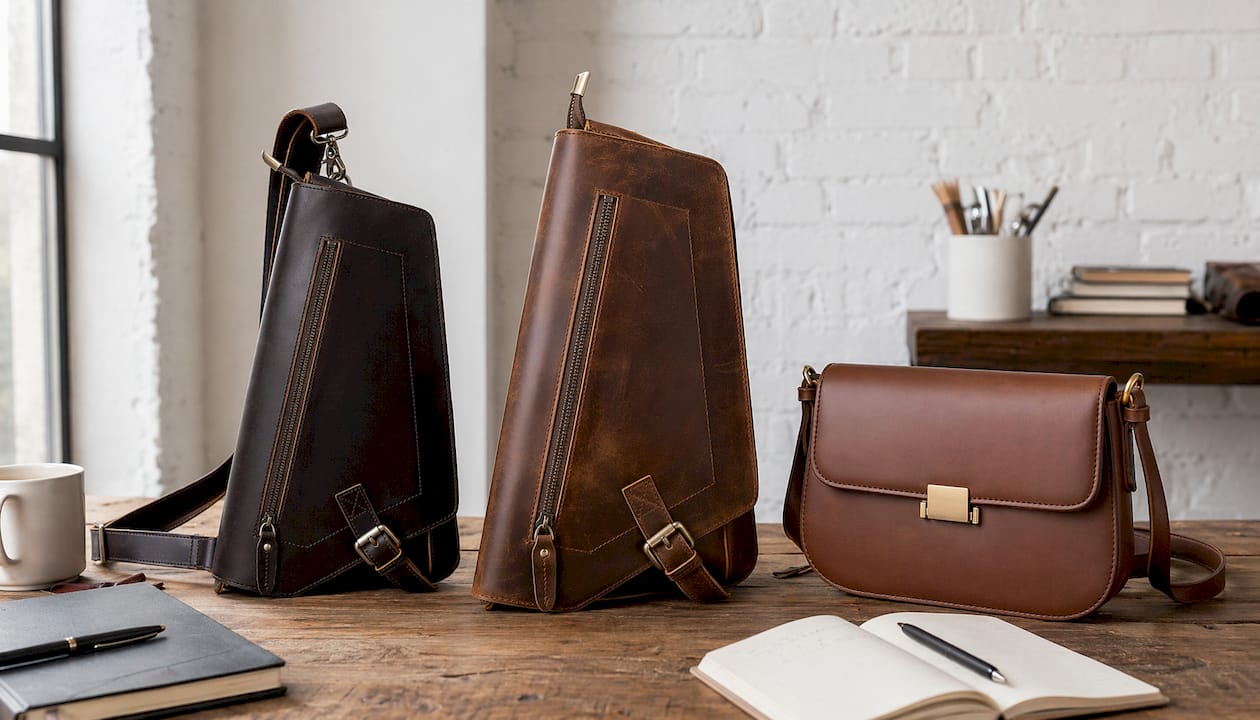
The cowhide leather crossbody bag covers travel and daily commuting with a compact profile and adjustable strap. For readers who want a broader comparison of leather carry options before deciding, the leather crossbody alternatives guide covers six options with practical notes on each. Grainmarkleather also offers a tactical full-grain leather crossbody bag for readers who need a more rugged design for heavier daily use.
FAQ
What is the main difference between a crossbody and a sling bag?
A crossbody bag hangs at hip level on the opposite side from the carrying shoulder, designed for all-day wear and heavier loads. A sling bag sits diagonally across the back or chest and swings forward for fast access, suited to lighter, shorter trips.
Which is better for travel, a crossbody or a sling bag?
A sling bag works best for active travel in crowded spaces where you need fast, frequent access. A crossbody bag is better for long travel days because it distributes weight more evenly and reduces shoulder fatigue over several hours.
How much weight should a sling bag carry?
Sling bags should carry no more than 5–7 lbs to maintain ergonomic comfort. Exceeding that limit concentrates all load on one shoulder and causes fatigue, particularly during wear longer than two hours.
What size sling bag is best for everyday use?
A 5–8 liter capacity is the practical range for daily sling bag use. It holds a phone, wallet, keys, earbuds, and a light layer without adding bulk or strain.
Is a crossbody bag better than a backpack for light loads?
A crossbody bag offers faster access and less postural disruption than a backpack for loads under 10 lbs. A backpack distributes weight across both shoulders, making it the better choice once load weight exceeds that threshold.