Dry Rot Purse: How to Identify, Prevent, and Repair It
Dry rot in a leather purse is the irreversible collapse of the collagen fiber matrix inside the hide, caused by prolonged dehydration and environmental stress. It differs fundamentally from surface dryness, which remains treatable. Once collagen fibers break down, no conditioner or oil can fully rebuild internal structure. Recognizing the difference early, controlling storage conditions, and following a consistent care schedule are the three actions that determine whether a leather bag survives for decades or deteriorates beyond repair.
What does dry rot look like on a purse?
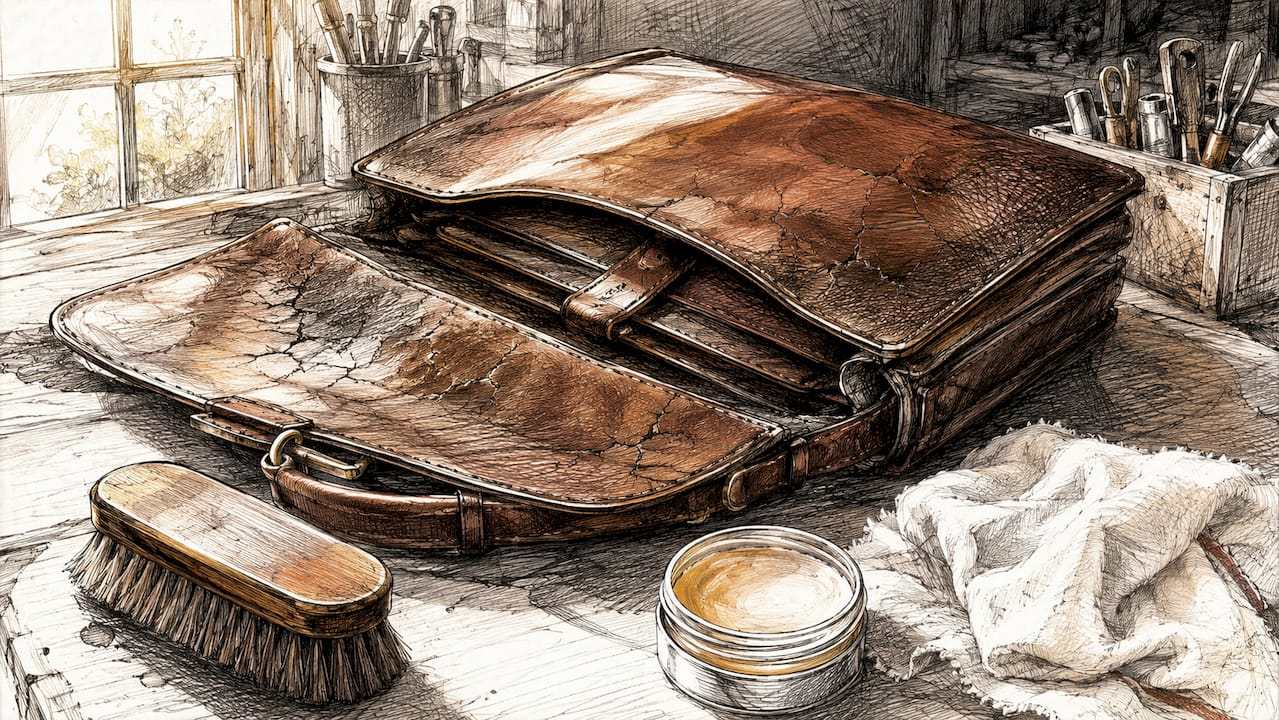
Dry rot produces specific physical signs that separate it from ordinary surface dryness. The leather feels stiff and brittle rather than simply tight or parched. Bending a panel produces a cracking sound, and the surface may shed a fine powder or small flakes when flexed. These symptoms reflect collagen fiber collapse, not just moisture loss at the surface.
Surface dryness, by contrast, shows minor cracking and a dull finish, but the leather retains flexibility. You can bend it without hearing a crack, and the surface does not powder. That distinction matters because surface dryness responds well to conditioning, while true dry rot does not.
Signs of dry rot to check:
- Stiff, rigid panels that resist bending
- Powdery residue or fine flaking when the surface is flexed
- Deep cracks that penetrate through the hide rather than sitting on top
- Stitching that has become brittle or snaps under light tension
- A hollow or papery sound when the leather is tapped
Signs of treatable surface dryness:
- Dull, faded color with minor surface cracking
- Leather that still bends without cracking or powdering
- Stitching that remains intact and pliable
- No flaking or powder on the surface
Pro Tip: Run the flex test before applying any product. Hold a small panel between both hands and gently bend it. If the leather cracks audibly or sheds powder, the damage is structural. If it flexes without breaking, conditioning can still help.
Stitching condition is an underused diagnostic tool. Thread deteriorates alongside leather when moisture is absent for extended periods. Brittle or snapping thread on an otherwise intact bag often signals that the hide beneath has also lost critical moisture, even if surface cracking is not yet visible.
What environmental factors cause dry rot in leather purses?
Humidity is the primary environmental variable controlling leather health. Ideal relative humidity for leather storage sits between 45% and 55%. Below 40%, leather loses bound moisture faster than it can be replenished, and collagen fibers begin to dehydrate and stiffen.
Most owners do not realize how quickly a standard home environment can drop below that threshold. Air conditioning systems in summer and central heating in winter both reduce indoor humidity significantly. A room that reads 50% RH in spring may drop to 25–30% RH in january when heating runs continuously.
Storing leather near AC vents should be avoided because the airflow acts as a high-power dehydration device, pulling moisture directly from collagen fibers and lowering the immediate microclimate around the bag to as low as 25–30% RH. Relocation away from direct airflow is the single most effective environmental intervention.
Common environmental mistakes that accelerate deterioration:
- Storing purses on shelves directly above or beside heating vents
- Placing bags near windows with direct sunlight exposure
- Using sealed plastic bags or airtight containers, which trap humidity fluctuations and prevent breathability
- Overusing silica gel packets in already dry climates, which actively pull bound moisture from the leather rather than simply preventing condensation
- Leaving bags in car trunks during summer, where temperatures and airflow extremes are severe
The silica gel point deserves emphasis. These packets serve a legitimate purpose in humid climates where condensation is a real risk. In dry climates where ambient RH already sits below 45%, placing silica gel inside a storage bag accelerates the very damage you are trying to prevent. Use them only when humidity exceeds 60%.
How to prevent purse deterioration before it starts
Prevention costs far less time and money than repair. The core principle is consistent, moderate care rather than reactive treatment after visible damage appears.
Cleaning and conditioning schedule:
- Light cleaning every few days for bags used daily, using a soft dry cloth to remove surface dust
- Deep cleaning every 2–3 months with a pH-neutral leather soap and distilled water
- Conditioning every 3–6 months to replenish lipids and maintain fiber flexibility
Conditioner selection matters as much as frequency. Use products formulated specifically for leather, such as those containing lanolin, beeswax, or neatsfoot oil in balanced concentrations. Avoid vegetable and food oils entirely. Olive oil and similar products destabilize leather pH, attract dust, and cause rancidity inside the fiber structure, accelerating breakdown rather than slowing it.
Leather purse care tips for daily handling:
- Rotate bags in regular use so no single piece sits unused and unattended for months
- Store bags upright in breathable cotton dust bags, not plastic
- Stuff the interior with acid-free tissue paper to maintain shape and prevent creasing that stresses the leather
- Keep bags away from direct sunlight, which fades color and dries fibers faster than ambient air alone
- Avoid leaving a bag in a hot car, near a radiator, or on a surface that conducts heat
Pro Tip: Apply conditioner in a cool, shaded space rather than in direct light or near a heat source. Warm leather absorbs product unevenly, which can leave patches of oversaturation next to dry areas.
Consistent care also protects hardware and stitching. Metal fittings corrode in high humidity and oxidize in dry conditions. Thread loses tensile strength when the surrounding leather dehydrates. A bag maintained at stable humidity with regular conditioning ages uniformly rather than failing at stress points first.
How to fix dry rot leather and restore dehydrated purses
Restoration is a process of internal lipid replenishment, not cosmetic surface treatment. The goal is to reintroduce moisture and oils into the collagen fiber network gradually, not to make the surface look shiny.
| Damage level | Recommended approach | Expected outcome |
|---|---|---|
| Surface dryness, minor cracking | pH-neutral cleaning, conditioner applied in thin layers | Full or near-full flexibility restored |
| Moderate dehydration, visible cracking | Layered conditioning with 12+ hour rest periods between coats | Significant improvement, some cracking may remain |
| Early dry rot, stiffness with minor powdering | Professional-grade conditioner, patience, realistic expectations | Partial improvement only; structural integrity not restored |
| Advanced dry rot, deep powdering, brittleness | Professional conservation assessment | Cosmetic stabilization at best; replacement likely needed |
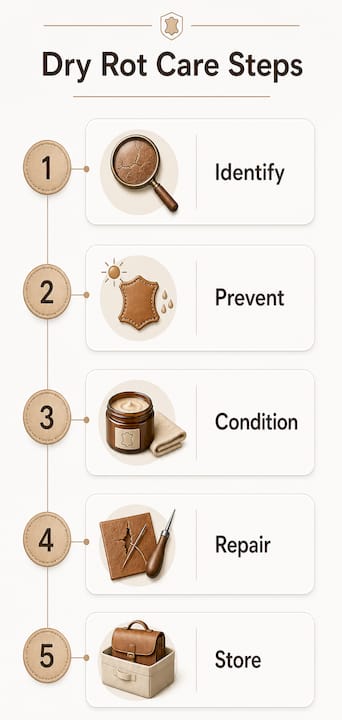
The repair process for early-stage damage follows a specific sequence. Clean the surface first with a pH-neutral leather soap and distilled water, using a soft cloth. Allow the leather to dry completely at room temperature before applying any product. Then apply a thin layer of conditioner and allow at least four hours for absorption before assessing whether another coat is needed.
Layered conditioning with 12 or more hours between applications produces better results than a single heavy coat. A heavy application clogs surface pores and prevents deeper penetration, leaving the interior fibers still dehydrated while the surface appears treated.
Crack fillers and leather repair compounds address cosmetic gaps but do not restore structural integrity. They are appropriate for surface cracks on otherwise flexible leather. Applying filler to brittle, dry-rotted leather produces a surface that looks repaired but remains fragile underneath.
Pro Tip: If the leather does not improve in flexibility after two or three conditioning cycles, the damage is likely structural. Stop adding product and consult a professional leather conservator. Oversaturation on already compromised fibers accelerates tearing.
Truly dry-rotted leather often tears further during restoration attempts. Realistic expectations are not pessimism. They prevent owners from spending time and money on a bag that has passed the point of functional recovery.
Long-term storage and ongoing management to prevent recurrence
Restored leather requires the same environmental controls as healthy leather, applied consistently. A bag that recovers from early dehydration will deteriorate again within months if returned to the same storage conditions that caused the damage.
Long-term storage checklist:
- Maintain ambient humidity between 45% and 55% year-round using a hygrometer to monitor the storage space
- Store bags in breathable cotton dust bags, never in plastic or sealed containers
- Stuff interiors with acid-free tissue paper to preserve shape without chemical transfer
- Keep storage areas away from exterior walls in winter, which conduct cold and reduce local humidity
- Inspect each bag every 2–3 months for early signs of surface dryness, color change, or stitching stress
- Apply a light conditioning coat at the start of each dry season, typically late fall and mid-winter in most American climates
In climates where winter RH regularly drops below 40%, a small room humidifier in the storage area provides more reliable protection than any topical product. Leather absorbs moisture from the air continuously. Maintaining ambient humidity reduces the conditioning frequency needed to keep fibers healthy.
Sunlight exposure deserves a separate note. UV radiation degrades both the dye and the collagen structure of leather. A bag stored near a window in direct light will fade and dry faster than one stored in a dark closet, even if both spaces share the same ambient humidity. Opaque storage or a closed cabinet is the standard recommendation for long-term preservation.
Key Takeaways
Dry rot is irreversible once collagen fibers collapse, making consistent prevention through humidity control and regular conditioning the only reliable strategy for leather purse longevity.
| Point | Details |
|---|---|
| Dry rot vs. surface dryness | Powdering and deep brittleness signal irreversible collagen collapse; minor cracking with flexibility intact is still treatable. |
| Humidity target | Keep storage humidity between 45% and 55%; below 40% causes rapid fiber dehydration and accelerates dry rot. |
| Conditioning schedule | Condition leather every 3–6 months; avoid vegetable oils, which destabilize pH and worsen deterioration. |
| Restoration limits | Layered conditioning with 12+ hour rest periods helps early damage; advanced dry rot requires professional assessment, not more product. |
| Storage environment | Avoid AC vents, direct sunlight, and sealed plastic bags; use breathable cotton dust bags with acid-free tissue for shape retention. |
What I’ve learned from years of working with leather
Jevgeni, Founder
The most common mistake I see is treating dry rot as a conditioning problem. Owners apply product after product, hoping the leather will come back. It rarely does once the damage is structural. What they needed was humidity control six months earlier, not a bottle of conditioner after the fact.
The second mistake is trusting home remedies. Olive oil, coconut oil, and similar kitchen products get recommended online constantly. They cause rancidity inside the fiber structure and attract particulate matter that grinds against already weakened collagen. Professional-grade conditioners exist for a reason. The chemistry matters.
My practical advice: buy a hygrometer before you buy another conditioner. A $15 humidity monitor tells you more about your leather’s risk level than any visual inspection. If your storage space runs below 40% RH in winter, no amount of topical treatment will compensate for that environment. Fix the room first.
The purses worth saving are the ones caught early. If the leather still bends without cracking, you have time. If it powders, be honest with yourself about what restoration can realistically achieve. A professional conservator can stabilize the piece cosmetically, but the structural integrity is gone. Sometimes the right answer is to preserve what remains rather than attempt a full restoration that accelerates the final failure.
— Jevgeni, Founder
Grainmarkleather leather goods built for long-term use
Leather that is properly tanned and finished from the start requires less intervention over its lifetime. Grainmarkleather builds each piece from full-grain leather, the densest and most moisture-retentive grade available, using heavy-duty stitching designed to outlast the care cycles described in this guide.

The leather saddle bag and the full-grain traveler backpack are both built from full-grain cowhide that responds well to standard conditioning routines. Each piece ships with a one-year warranty and carries over 358 five-star reviews. For readers building a leather collection worth maintaining, the full Grainmarkleather catalog covers bags, wallets, and accessories across a range of sizes and styles.
FAQ
What is dry rot in a leather purse?
Dry rot is the irreversible collapse of the collagen fiber matrix inside leather, caused by prolonged dehydration. It produces brittleness, powdering, and deep cracking that no conditioner can fully reverse.
How can I tell if my purse has dry rot or just surface dryness?
Flex a small panel of the leather. If it cracks audibly or sheds powder, the damage is structural dry rot. If it bends without breaking, the leather retains flexibility and surface dryness is the more likely diagnosis.
Can you fix dry rot leather at home?
Early-stage dehydration responds to layered conditioning with professional-grade products and rest periods of at least four hours between coats. True dry rot, where the leather powders and snaps, cannot be fully repaired at home and requires professional conservation.
How often should I condition a leather purse to prevent dry rot?
Condition leather purses every 3–6 months as a standard schedule. Increase frequency to every 2–3 months in dry climates or during winter heating season when ambient humidity drops below 40%.
What storage conditions prevent dry rot in leather bags?
Store leather bags in breathable cotton dust bags at a relative humidity of 45%–55%, away from AC vents, direct sunlight, and heat sources. Use a hygrometer to monitor the storage space and add a room humidifier if humidity regularly drops below 40%.