Full-Grain Leather: What It Means and How to Spot It
Full-grain leather uses the outermost layer of the hide and leaves that surface completely intact. The hide is not sanded, buffed, or split away from the grain layer, so natural marks — pores, hair follicle traces, small scars — remain visible. Those marks are not defects. They are evidence that the hide grain is undisturbed, and they are precisely what allows the leather to develop a patina over years of use.
Key Takeaways
Full-grain leather is the outermost hide layer kept intact, and that single fact determines its durability, patina, and price relative to every other leather grade.
| Point | Details |
|---|---|
| Definition | Full-grain uses the intact outer hide layer with no sanding, splitting, or surface correction. |
| Identification | Look for visible pores, natural marks, dense cut edges, and explicit “full-grain” labeling. |
| Grade labels are informal | No US standard regulates “full-grain” or “genuine leather” — always ask for tanning method and hide origin. |
| Care priority | Condition every 3–6 months; avoid over-conditioning and direct heat after water exposure. |
| Grainmarkleather | Offers full-grain bags, wallets, and accessories with a one-year warranty and customization options. |
Table of Contents
- What does “full-grain leather” actually mean?
- How full-grain leather is made
- Full-grain vs top-grain vs split leather: a practical comparison
- Pros and cons of full-grain leather
- How to tell if a product is truly full-grain leather
- Where full-grain leather is commonly used
- How to care for full-grain leather
- Common myths about leather grades and marketing labels
- When does full-grain leather make sense for your purchase?
- A maker’s perspective on what full-grain hides actually require
- Grainmarkleather: full-grain goods built for daily use
- Sources
What does “full-grain leather” actually mean?
The term refers to the anatomy of the hide. Animal skin has layers: the outermost is the grain layer, dense with tightly interlocked fibers. Below it sits the corium, a looser fibrous structure. Full-grain leather retains the uncorrected topmost layer, keeping maximum fiber density intact. That density is what gives full-grain its strength and its capacity to resist flex-point cracking over time.
What you will not find in full-grain: no embossed fake grain, no sanding to remove surface variation, no heavy pigment coating to create a uniform look. The surface pores are real. The occasional small scar or growth mark is real. A perfectly smooth, uniform panel almost always signals surface correction — which puts it in a different category entirely.
How full-grain leather is made
The production sequence matters because each step either preserves or compromises the grain layer.
- Hide selection and inspection. Hides are graded at the tannery. Only those with a clean, intact grain surface qualify for full-grain production. Hides with deep damage are redirected to corrected or split grades.
- Hair removal (liming). The hair and epidermis are removed chemically or mechanically, exposing the grain surface without cutting into it.
- Tanning. Tanning stabilizes the hide’s proteins, converting raw skin into durable leather. Vegetable tanning uses plant-based tannins and produces firmer leather that develops a pronounced patina. Chrome tanning uses chromium salts, yielding softer, more moisture-resistant leather. Both methods can produce full-grain results; the tanning choice changes feel and aging behavior, not the grade.
- Minimal finishing. Full-grain receives light surface treatment — a thin conditioner or aniline dye — rather than a heavy pigment coat. The grain texture stays visible and breathable.
- Drying and conditioning. The leather is dried slowly and conditioned to restore oils lost during tanning. No sanding or buffing occurs at this stage.
The absence of corrective steps is what defines the grade. Processors who sand the surface to remove marks are, by definition, producing top-grain or corrected-grain leather, not full-grain.
Full-grain vs top-grain vs split leather: a practical comparison
Top-grain leather starts from the same upper hide but is sanded or buffed to remove surface imperfections, then finished with a coating. That processing reduces breathability and limits patina development. Split leather comes from the corium layer after the grain is separated; reconstituted or bonded leather is made from ground leather fibers pressed together with adhesives.
The informal grade framework maps directly to how much of the outer surface is preserved.
| Dimension | Full-grain | Top-grain | Split / corrected |
|---|---|---|---|
| Durability / strength | Highest — dense fiber structure resists cracking | Moderate — surface correction weakens fibers slightly | Lower — looser corium fibers, prone to peeling |
| Patina over time | Deep, natural patina develops with use | Limited patina; coating restricts aging | Minimal to none |
| Surface finish | Natural pores, marks visible; aniline or semi-aniline | Uniform, smooth; pigment coat applied | Embossed pattern common; coating heavy |
| Price / value | Higher upfront; longer lifespan | Mid-range; shorter lifespan | Lower upfront; shorter lifespan |
| Weight / thickness | Heavier and thicker | Slightly lighter after splitting | Thinner, lighter |
| Water resistance / oil absorption | Absorbs conditioners well; moderate water resistance | Coating provides short-term water resistance | Poor absorption; coating wears off |
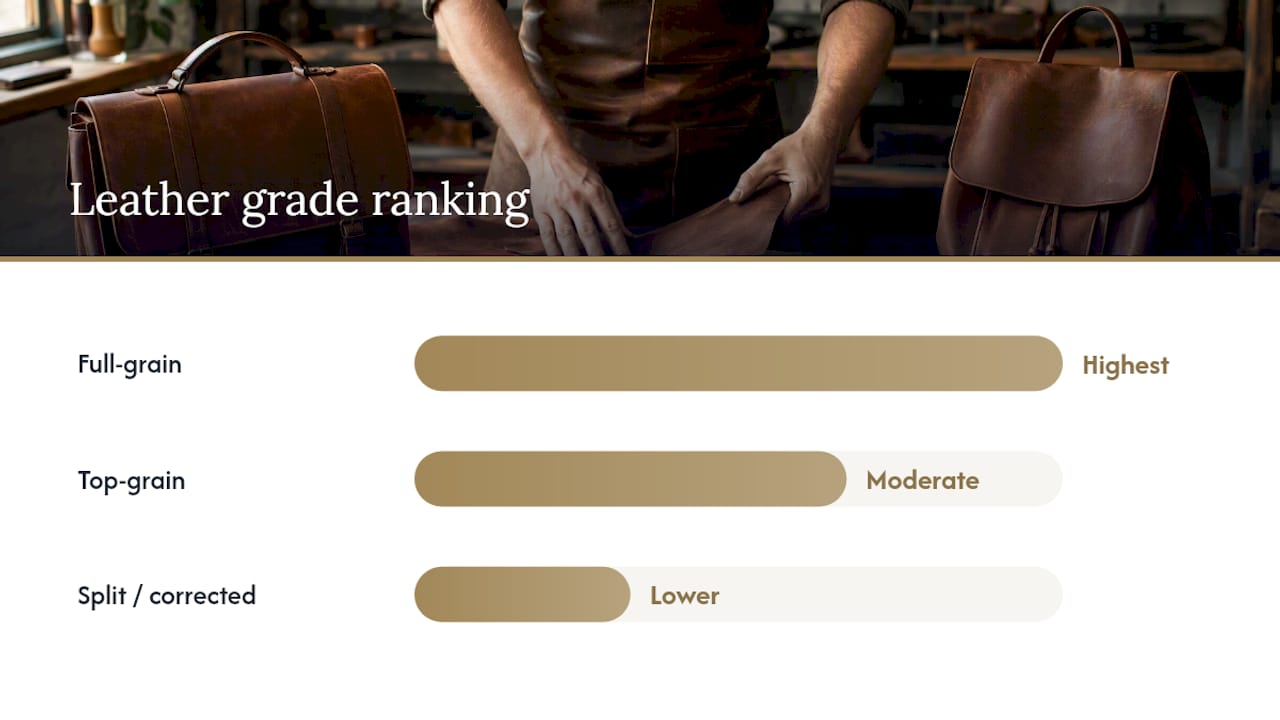
“Genuine leather” is a marketing term, not a quality designation. It typically indicates split or heavily processed leather, not full-grain. Grade labels are informal market conventions, not regulated standards — which is why verifying the specific grade with the maker matters.
Pros and cons of full-grain leather
Full-grain’s core advantages are structural. The intact fiber layer resists flex-point cracking better than processed surfaces, and the open grain absorbs conditioning oils, which feeds the leather and slows drying. Over years of daily use, the surface darkens and smooths in patterns that reflect how the piece is carried — a quality that dramatically extends useful life compared to heavily coated alternatives.
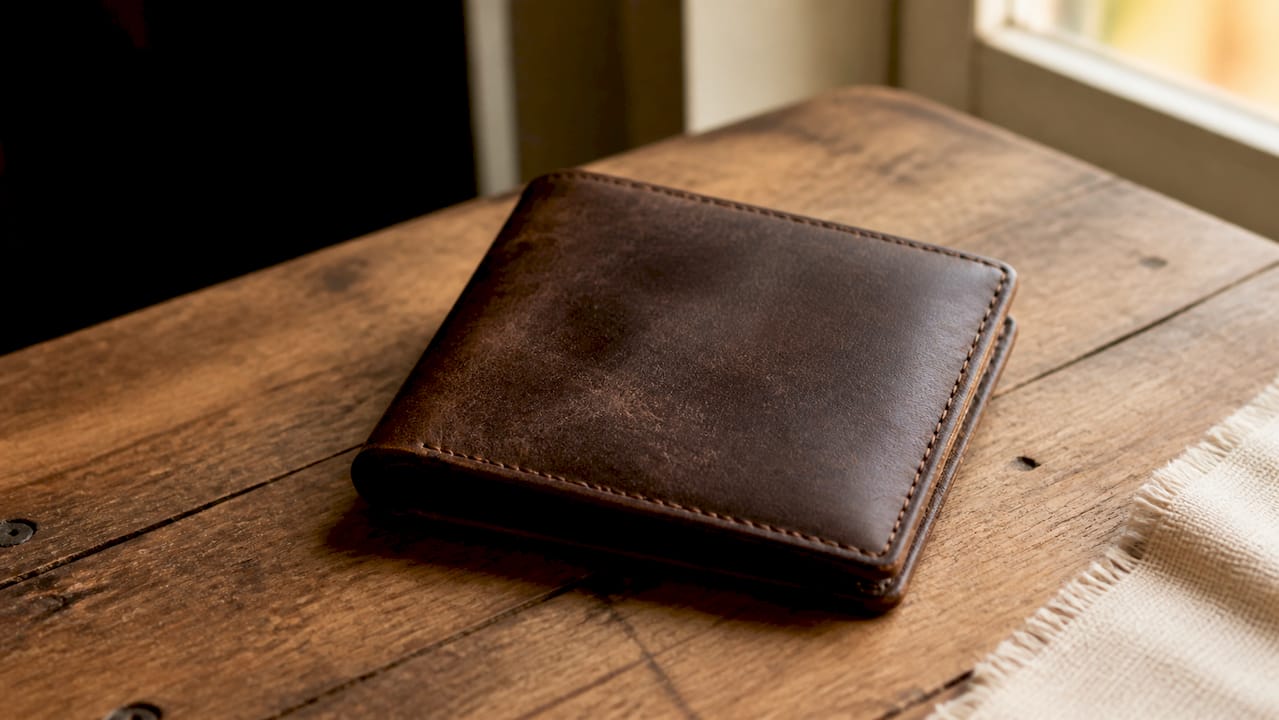
The trade-offs are real. Full-grain costs more upfront because fewer hides qualify and less processing is done to hide flaws. The material is heavier and thicker than corrected alternatives, which matters for slim wallets or lightweight travel bags. A break-in period is normal: the leather stiffens initially and softens with use. Natural marks are visible, which some buyers prefer and others do not.
Pro Tip: For a daily-use briefcase or bag you plan to carry for a decade, full-grain is the sensible choice. For a purely fashion item used occasionally, top-grain’s uniform surface and lower price may be the better fit. Match the grade to the use-case, not to a general notion of “best.”
How to tell if a product is truly full-grain leather
Verification requires more than reading a label. Concrete checks:
- Read the label precisely. The listing should say “full-grain leather,” not “genuine leather,” “top-grain,” or simply “leather.” Vague labels almost always indicate a processed grade.
- Inspect the surface for natural variation. Pores, faint follicle marks, and minor tonal variation are expected. A perfectly uniform surface across a large panel signals surface correction.
- Check the cut edges. Full-grain leather has a dense, consistent edge. Peeling layers or a fibrous, crumbling edge indicate split or bonded material.
- Smell the leather. Full-grain has a clean, earthy smell. Heavy chemical or plastic odor often indicates a thick synthetic coating over processed leather.
- Ask for specifications. Confident makers list hide origin, tanning method, and thickness in millimeters. Transparency about sourcing is a reliable signal of genuine full-grain.
- Assess the price relative to category. Full-grain goods cost more to produce. An unusually low price for a “full-grain” item warrants closer inspection.
For leather watch straps and small accessories, the same principles apply — quality leather strap guides use identical identification criteria: visible grain, clean edges, and transparent sourcing. Grainmarkleather’s grades of leather explainer covers these distinctions in detail.
Where full-grain leather is commonly used
Full-grain is preferred wherever longevity and patina matter more than a uniform surface.
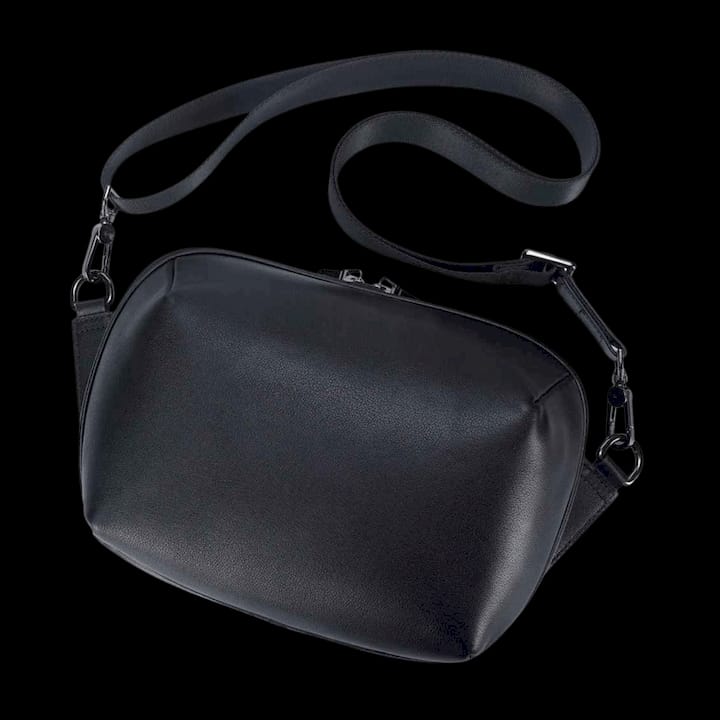
Bags and briefcases benefit most from full-grain’s structural strength. Daily carry puts repeated stress on handles, base corners, and zipper surrounds — areas where fiber density prevents cracking. The Prairie crossbody and the Raveline crossbody are both built on full-grain hides for this reason. Browse the full leather bags collection for additional examples.
Wallets develop the most visible patina of any leather good because they are handled constantly. Full-grain is the standard choice for heirloom wallets; the best leather for wallets guide covers material trade-offs in detail.
Belts and straps rely on full-grain’s tensile strength at the buckle holes. Footwear benefits from breathability and the ability to mold to the foot over time. Work gloves use roughout full-grain — the grain side turned inward — for abrasion resistance on the flesh side.
How to care for full-grain leather
A simple routine preserves both durability and patina development.
- Wipe down weekly. Use a dry or slightly damp cloth to remove surface dust and oils. Avoid soaking the leather.
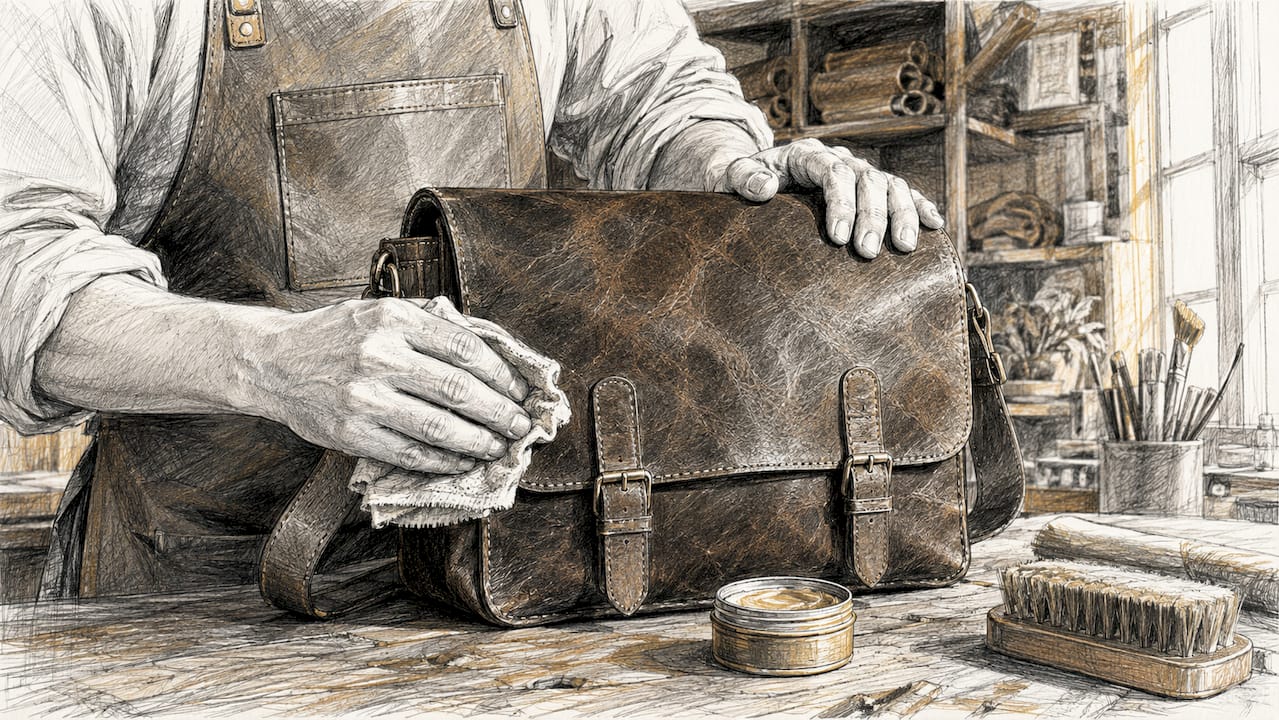
- Condition every 3–6 months. Apply a leather conditioner (beeswax-based or lanolin-based products work well) with a soft cloth, working it in with circular motions. Let it absorb for 15–20 minutes, then buff off the excess.
- Dry naturally after water exposure. If the leather gets wet, blot it with a cloth and let it dry at room temperature away from direct heat. Heat sources crack the surface.
- Store in a cool, dry place. Use a dust bag or breathable cover. Avoid plastic, which traps moisture.
- Protect edges and stitching. Apply edge wax or a small amount of conditioner to cut edges periodically. Stitching is a wear point; inspect it when conditioning.
Over-conditioning is a real risk. Applying conditioner more than once every two months can saturate the fibers, soften the structure, and produce a greasy surface. The leather needs oil, not excess oil. For more on full-grain leather lifespan, Grainmarkleather’s guide covers real-world wear patterns in depth.
Pro Tip: To encourage an even patina, rotate how you carry a bag or fold a wallet so all surfaces receive similar light and handling exposure. Uneven use produces uneven darkening.
Common myths about leather grades and marketing labels
The most persistent myth is that leather grades follow a regulated, universal standard. They do not. “Full-grain,” “top-grain,” and “genuine leather” are informal market conventions. No US federal standard defines or enforces these terms for finished leather goods. A product labeled “genuine leather” is not certified to any quality level — the term typically indicates split or heavily processed material, but its use is not controlled.
A second myth: that all full-grain leather is identical. Tanning method, hide origin, and finishing choices produce very different results within the full-grain category. Vegetable-tanned full-grain from a reputable tannery behaves differently from chrome-tanned full-grain from a commodity source. Grade is a starting point, not a complete specification.
The practical takeaway: ask for the grade stated explicitly, the tanning method, and the hide origin. Makers who use full-grain confidently list these details. Grainmarkleather’s grades of leather page explains what each label typically implies and what to request from any seller.
When does full-grain leather make sense for your purchase?
Full-grain is the right choice when the item will be used daily, expected to last years, and allowed to develop character over time. A few practical checks:
- Daily carry for 5+ years? Full-grain’s fiber density justifies the price premium.
- Patina matters to you? Full-grain is the only grade that develops a genuine, deepening patina.
- Structural loads (handles, straps, buckle points)? Full-grain resists cracking at stress points better than corrected grades.
- Budget is the primary constraint? Top-grain offers a reasonable middle ground for occasional use.
- Uniform, blemish-free appearance is the priority? Top-grain’s corrected surface may suit that preference better.
For a daily briefcase or crossbody bag, full-grain is the practical choice. For a wallet used every day, full-grain patina makes the piece more personal over time. For a fashion wallet used occasionally, top-grain’s lower price and consistent surface are reasonable trade-offs. When evaluating any purchase, ask the seller for hide origin, tanning method, and thickness — specifications that confident makers provide without hesitation.
A maker’s perspective on what full-grain hides actually require
Grainmarkleather: full-grain goods built for daily use
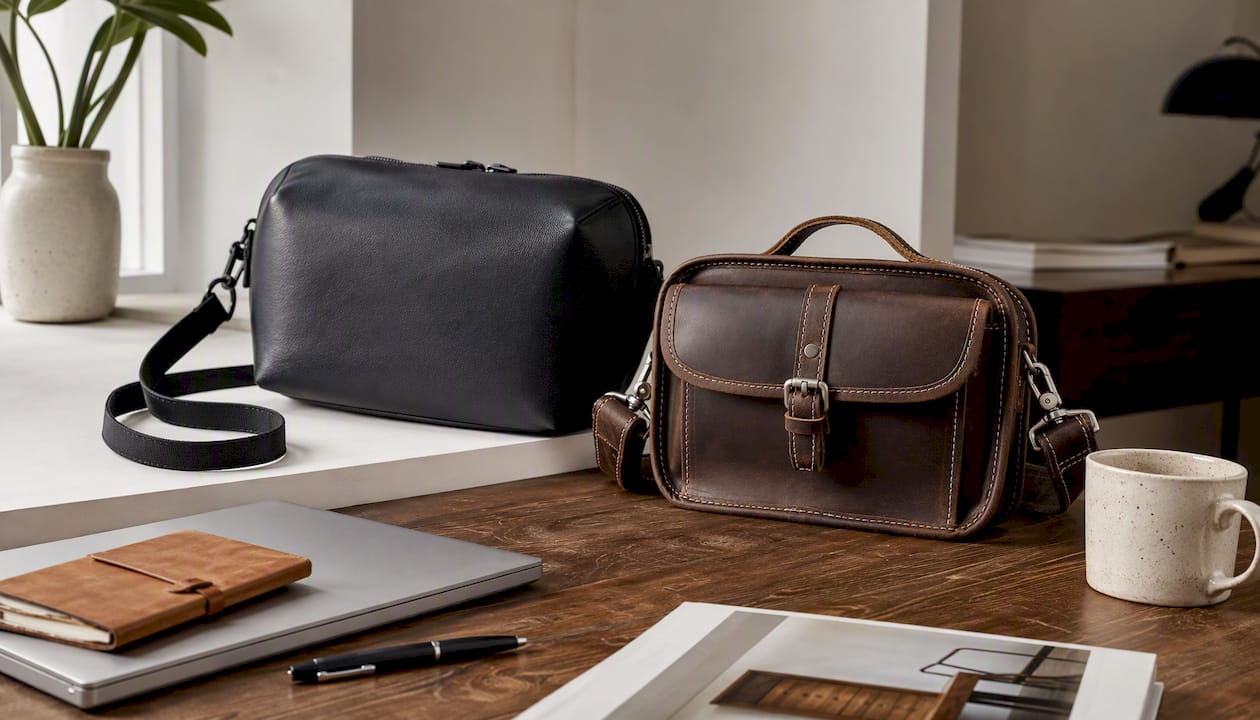
Grainmarkleather makes handcrafted bags, wallets, pen cases, and cigar cases from full-grain and top-grain leather, with heavy-duty stitching and a one-year warranty on every piece. The Prairie crossbody and Raveline crossbody are built on full-grain hides selected for fiber density and surface integrity — the same criteria this article covers. Customization is available through leather embossing for buyers who want a personalized piece. Browse the best-selling leather goods or contact Grainmarkleather directly to ask about hide origin and tanning method for any product.
Sources
- A guide to leather (Popular Mechanics)
- Full-Grain vs Top-Grain vs Genuine Leather: What Differs | Holdform
- What is Full-Grain Leather? | Pellove
- Full Grain vs Top Grain Leather | Expert Quality Guide – Decrum
- Tanning