Worn Leather Bag: Style, Care, and Restoration Guide
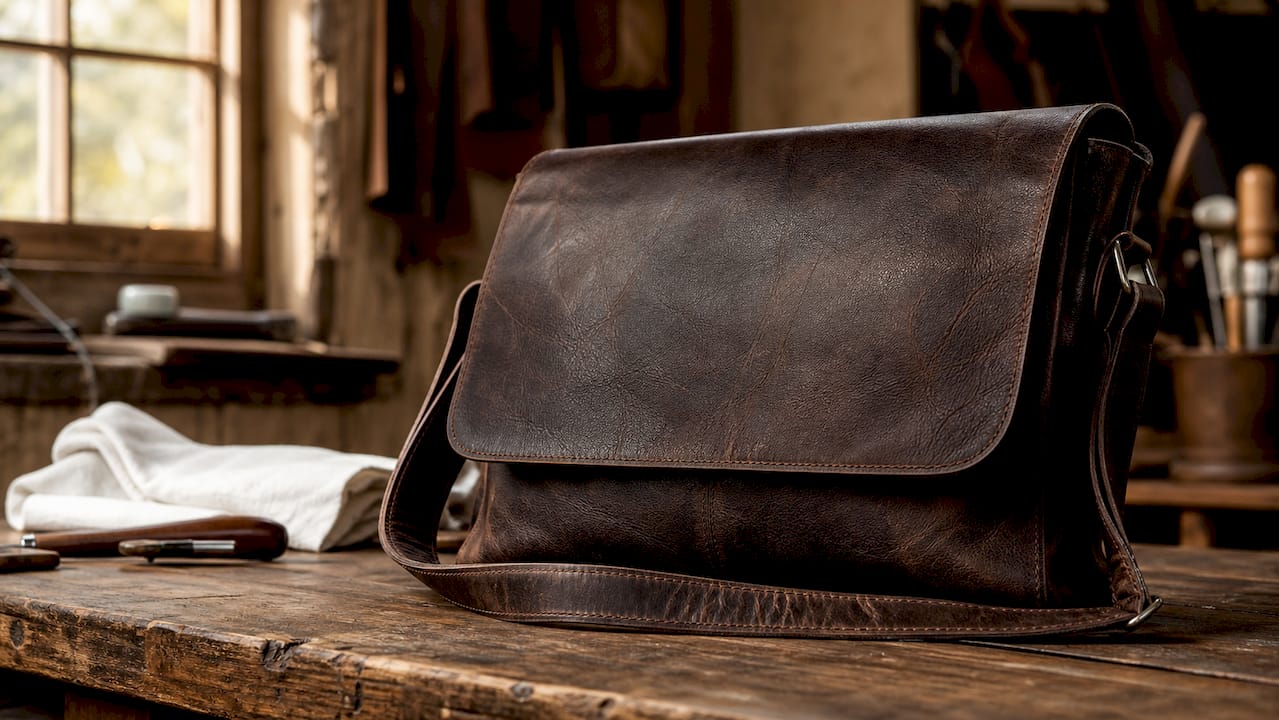
A worn leather bag is defined as a leather accessory that shows natural aging through patina, surface marks, and texture changes, all of which indicate authentic quality and personal history. Full-grain leather develops these characteristics over time, and collectors and everyday users alike prize them. Whether you own a vintage piece from decades past or a modern distressed leather tote, understanding what makes aged leather valuable helps you care for it correctly and wear it with confidence.
What distinguishes authentic vintage leather bags from modern distressed styles?
Authentic vintage leather bags and intentionally distressed new bags share a similar look but come from very different origins. Knowing the difference helps you buy, care for, and appreciate each type correctly.
Vintage leather bags from the 1940s are rare and highly valued for their craftsmanship and deep patina. That patina builds over decades of use, exposure to light, and contact with natural oils from the owner’s hands. The result is a surface that no factory process can replicate. Vintage leather handbags from this era carry a grading system ranging from Grade 1 to Grade 6, reflecting condition from near-new to acceptable with visible wear. Understanding these condition grades helps buyers assess authenticity and fair value before purchasing a second-hand leather purse.
Modern distressed leather bags take a different path. Distressed leather hides use full-grain cowhide processed to appear worn from the moment of purchase. The finish is soft, the texture is irregular, and the surface hides new scratches better than polished leather does. This makes distressed styles practical for heavy daily use, since the first scuff blends right in.
Pro Tip: When buying a vintage leather bag, examine the stitching thread color. Original thread on bags from the mid-20th century often shows slight yellowing or color shift, which is difficult to fake in a restoration.
| Feature | Authentic vintage leather | Modern distressed leather |
|---|---|---|
| Origin of wear | Decades of real use | Factory processing before sale |
| Patina depth | Deep, uneven, earned over time | Surface-level, uniform appearance |
| Material | Full-grain leather, often box calf | Full-grain cowhide, tumbled or waxed |
| Condition grading | Grade 1–6 scale used by resellers | Not graded; sold as new |
| Scratch behavior | Marks add to authenticity | New marks blend into existing texture |
| Price range | Higher due to rarity and history | Accessible; priced as new goods |
Both styles suit different buyers. Vintage leather handbags appeal to collectors and those who value documented history. Distressed styles suit buyers who want the aged aesthetic without the search process or premium price of a true antique.
How should you care for a worn leather bag to maintain its patina and durability?
Caring for a worn leather bag means preserving what makes it valuable, not erasing it. The goal is to clean and protect the leather without stripping the patina that took years to develop.
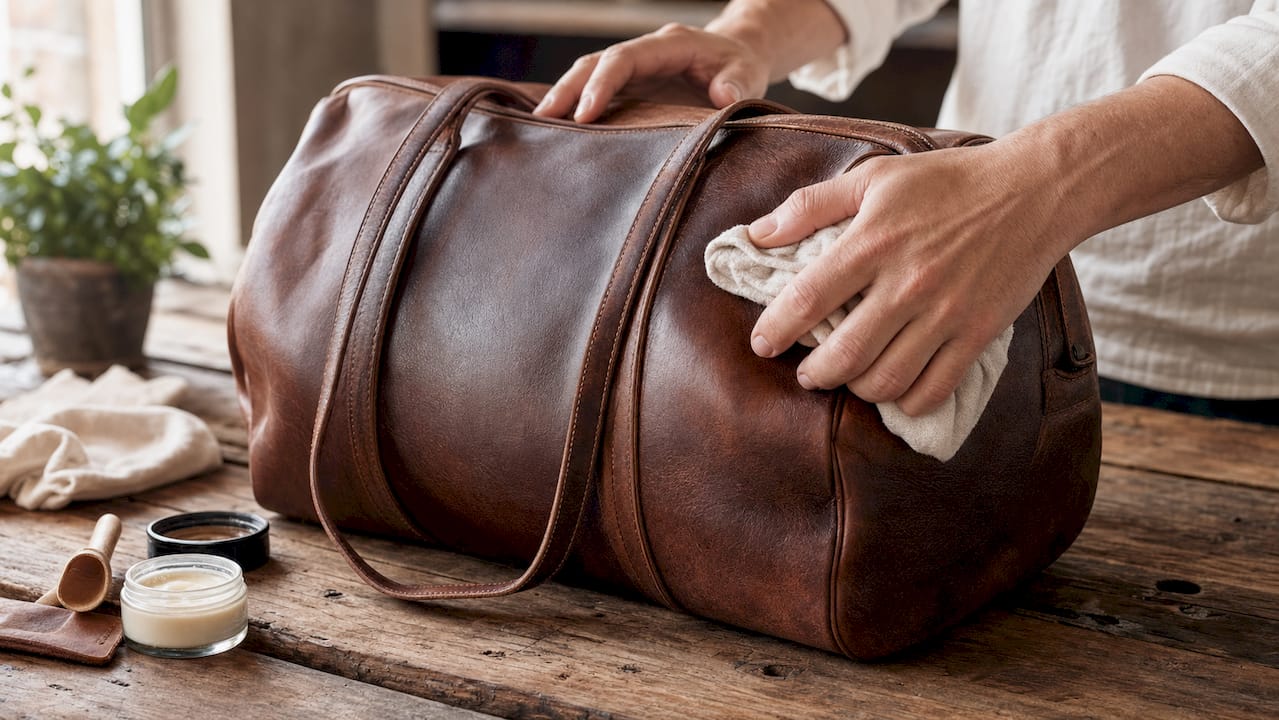
Mild leather cleaners remove dirt and surface stains without stripping the protective oils that keep full-grain leather supple. Harsh solvents and alcohol-based products damage the surface and can permanently lighten patina. A soft, damp cloth handles most everyday dust and light marks without any product at all.
Conditioning is necessary but easy to overdo. Apply a thin layer of a quality leather conditioner every three to six months, depending on how often you use the bag. Over-conditioning softens the leather too much and can cause it to lose its structure over time. Washed leather finishes, in particular, are prone to early surface marks and benefit from lighter, more frequent conditioning rather than heavy applications.
Do’s and don’ts for leather bag care:
- Do wipe the bag with a dry cloth after exposure to rain or humidity.
- Do store the bag stuffed with tissue paper to hold its shape when not in use.
- Do keep the bag away from direct sunlight, which fades color and dries out leather.
- Do use a dedicated leather conditioner, not household oils or petroleum products.
- Don’t use baby wipes, makeup remover, or dish soap on leather surfaces.
- Don’t store leather in plastic bags, which trap moisture and cause mold.
- Don’t try to remove all scuffs. Light scratches on full-grain leather add character without compromising durability.
- Don’t apply heat to dry wet leather. Let it air dry at room temperature.
Pro Tip: Rub a small amount of conditioner into a hidden area first, such as the bottom corner of the bag, and wait 24 hours before treating the full surface. This confirms the product will not alter the color or finish.
Professional restoration is worth considering when the leather shows cracking, deep color loss, or structural damage to handles and seams. A trained leather restorer can address these issues without over-treating the bag and erasing its character.
What are effective techniques to restore and refresh a worn leather bag?
Restoration is not about making a worn bag look new. The goal is to stabilize the leather, address damage, and let the bag’s natural character remain intact.
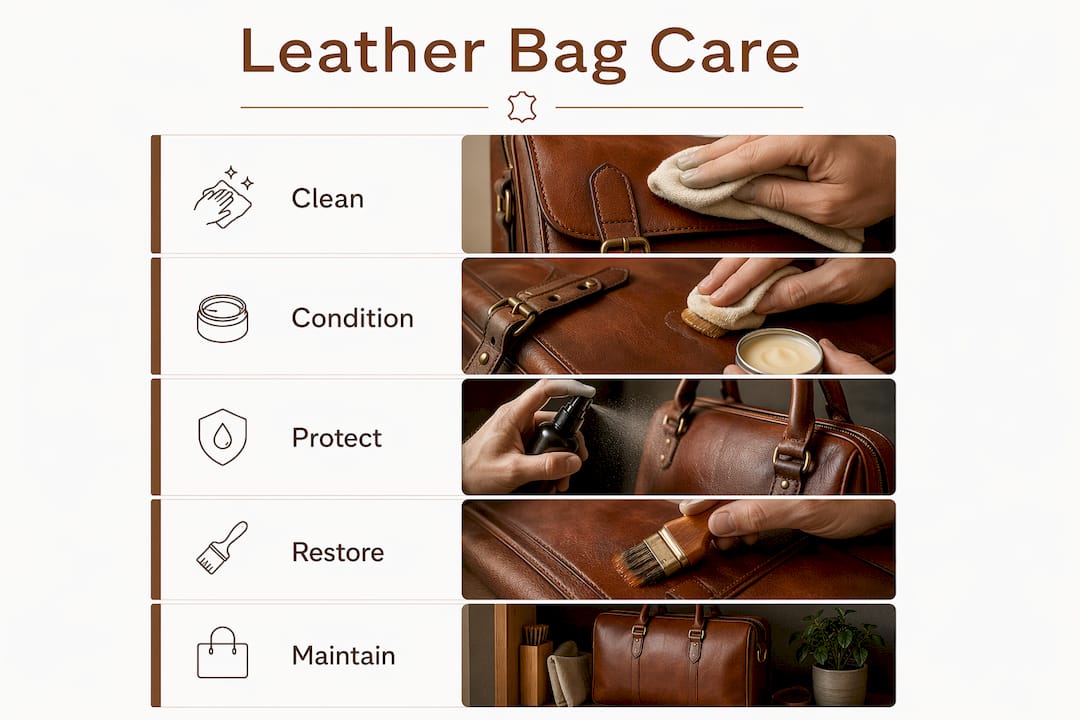
Professional restoration focuses on cleaning, conditioning, patina preservation, and repairing structural elements without over-restoring the bag. At home, you can handle the first several steps yourself before deciding whether a professional is needed.
Step-by-step restoration process:
- Clean the surface. Use a soft brush to remove loose dirt, then apply a mild leather cleaner with a damp cloth in small circular motions. Work in sections and avoid soaking the leather.
- Dry completely. Allow the bag to air dry at room temperature for at least two hours. Never use a hair dryer or place it near a heat source.
- Assess the damage. Examine the bag in good light. Note areas of fading, cracking, loose stitching, or hardware corrosion. This assessment determines what you can fix at home and what requires a professional.
- Condition the leather. Apply a thin, even layer of leather conditioner using a soft cloth. Work it into the surface and let it absorb for 30 minutes before buffing off any excess.
- Address fading. For minor color loss, a leather dye or cream in a matching shade can restore evenness. Test on a hidden area first. Deep or uneven fading across large sections is better handled by a professional.
- Repair stitching. Loose or broken stitching on handles and seams weakens the bag’s structure. A leather needle and waxed thread can close small gaps. Longer seam repairs benefit from professional saddle stitching.
- Protect the surface. Apply a leather protector spray after conditioning to guard against moisture and UV exposure. Reapply every few months for ongoing protection.
Pro Tip: Embrace marks that are part of the bag’s history. Collectors and experts value these signs of quality leather maturing. Attempting to remove every mark often does more harm than good and reduces the bag’s authenticity.
Simple at-home methods can refresh the appearance of a lightly worn bag. Deeper damage, including cracked leather or failing structure, requires a professional who understands how to work with aged full-grain leather without stripping what makes it valuable.
How to style and use a worn leather bag for fashion and functionality?
A worn leather bag works across a wide range of outfits and occasions because its texture and color depth add visual interest without competing with other elements. The key is matching the bag’s character to the look you want.
Vintage leather handbags pair naturally with tailored clothing, structured coats, and neutral palettes. The aged surface adds contrast against clean lines and solid fabrics. A soft leather crossbody in a distressed finish suits casual outfits, weekend wear, and travel, since its relaxed texture fits informal settings without looking out of place. Distressed leather bags appeal specifically for rugged, everyday wear and provide immediate softness from the first use.
Styling considerations by bag type:
- Distressed leather tote: Works for office, market, and travel use. The large format handles daily loads, and the worn finish does not show new marks.
- Soft leather crossbody: Suits hands-free wear for commuting, travel, or casual outings. The supple texture molds to the body over time.
- Vintage saddle bag: Pairs with denim, leather boots, and earth tones. The structured shape holds up well and ages gracefully with use.
- Full-grain leather backpack: Handles daily commuting and travel. The surface develops a personal patina that reflects the owner’s habits and routes.
Color choice matters when styling aged leather. Tan, cognac, and brown tones develop the most visible and attractive patina over time. Black full-grain leather also ages well, developing a subtle sheen rather than a color shift. Both options suit a range of outfits and remain versatile across seasons.
Key Takeaways
A worn leather bag’s value comes from its full-grain construction, which allows patina and character to develop naturally over time rather than degrading with use.
| Point | Details |
|---|---|
| Vintage vs. distressed | Vintage bags earn patina through decades of use; distressed bags replicate that look through factory processing. |
| Care approach | Use mild cleaners and light conditioning every 3–6 months; avoid harsh solvents and excess heat. |
| Restoration priority | Clean, condition, and repair structure before addressing color; preserve existing patina rather than erasing it. |
| Embrace wear marks | Light scratches and surface marks on full-grain leather add authenticity and do not reduce durability. |
| Styling versatility | Worn leather bags suit casual, office, and travel settings depending on the bag’s format and color. |
Why I think most people misread a worn leather bag
Most people treat wear on a leather bag as a problem to fix. I’ve spent years working with full-grain leather, and that instinct gets it backwards.
The marks on a well-used bag are not failures. They are the record of how the leather has responded to real life. A scuff on a handle, a slight darkening at the corners, a shift in surface texture where the bag rests against clothing: these are signs that the leather is doing exactly what full-grain leather is supposed to do. No synthetic material ages this way. No bonded leather or coated fabric develops a patina that deepens with time. Only full-grain leather does this, and it does it because the surface is intact and alive.
The mistake I see most often is over-restoration. Someone finds a beautiful second-hand leather purse with decades of character, then conditions it aggressively and buffs out every mark trying to make it look new. What they end up with is a bag that looks neither new nor authentically aged. The patina is gone, and it cannot be put back.
My advice is to clean gently, condition lightly, and leave the rest alone. A worn bag that looks worn is telling the truth about what it is. That honesty is exactly what makes it worth owning.
— Jevgeni, Founder
Full-grain leather bags that age with you
Grainmarkleather builds each bag from full-grain cowhide with heavy-duty stitching and a one-year warranty. Every piece is designed to develop its own patina over time, the same quality that makes worn leather bags worth keeping for decades.
The leather saddle bag is a practical starting point for anyone who wants a crossbody that ages well and fits daily use. For travel, the full-grain leather backpack handles commuting and longer trips while developing a surface character that reflects real use. Both are available with personalized embossing. Browse the full range of handcrafted leather goods to find a piece suited to your needs.
FAQ
What is a worn leather bag?
A worn leather bag is a leather accessory that shows natural aging through patina, surface marks, and texture changes. These characteristics develop through regular use on full-grain leather and are considered signs of quality and authenticity.
Are light scratches on a leather bag a sign of damage?
Light scratches on full-grain leather are not damage. Collectors and leather experts recognize them as signs of quality leather maturing, and they add to the bag’s character without reducing its structural integrity.
How often should you condition a worn leather bag?
Condition a worn leather bag every three to six months, depending on how frequently you use it. Over-conditioning softens the leather too much and can cause it to lose its shape over time.
What is the difference between vintage and distressed leather?
Vintage leather develops its worn appearance through decades of real use, while distressed leather is factory-processed to look aged from the moment of purchase. Both use full-grain leather, but vintage bags carry a documented history that distressed styles cannot replicate.
When should you take a worn leather bag to a professional?
Take a worn leather bag to a professional restorer when it shows cracking, significant color loss across large areas, or structural damage to handles and seams. Simple cleaning and conditioning can be done at home, but deeper repairs benefit from professional handling to preserve the bag’s authenticity.