
Best Leather Backpacks for Work: A Practical Guide
You leave home with a laptop, charger, notebook, water bottle, and maybe a change of clothes. The train is crowded, the coffee stop is rushed, and by the time you reach the office, the bag that looked polished online is pulling at your shoulders. On remote-work days, you carry less. On office days, it has to handle the whole routine.
That's the test of the best leather backpacks for work: not whether the leather looks impressive on a product page, but whether the bag fits your commute, holds your actual work kit, and carries that load comfortably. Use this quick comparison to identify the kind of bag worth considering before you get drawn in by surface details.
| Commute profile | Best starting point | Prioritize | Think twice about |
|---|---|---|---|
| Public transit with a hybrid schedule | A compact, organized backpack | Close-to-back laptop storage, quick-access pockets, adjustable straps | A heavy bag with hard-to-reach compartments |
| Mostly driving | A structured, office-ready pack | Easy loading, a stable base, tidy document storage | Paying for a complex harness you rarely use |
| Walking or cycling for much of the commute | A lighter, stable pack | Low empty-bag weight, secure fit, practical weather handling | Thick, heavy leather and excess capacity |
| Frequent paper or document carry | A roomier, divided pack | A document section, a protected laptop sleeve, balanced packing | One large compartment where everything shifts |
Table of Contents
- Why the Right Leather Work Backpack Matters
- Understanding Leather Types for Work Bags
- Sizing and Capacity That Fit Your Workday
- Fit, Straps, and Daily Carry Comfort
- Comparing Work Backpacks by Commute Profile
- Durability Beyond the Marketing Words
- Matching a Backpack to Your Profession
- Pre-Purchase Checklist and Care Basics
Why the Right Leather Work Backpack Matters
You reach the station with one shoulder strap twisted, your laptop shifting against your back, and a charger digging into a document folder. At the office, the bag sits beside a meeting table looking perfectly respectable. Those two moments tell you more about its value than a close-up of the leather ever will.
A work backpack is a daily-use tool. Its comfort depends on how it carries a laptop, charger, documents, water, and personal items together, while its reliability depends on details such as strap construction, seams, and closures. Leather can bring a polished appearance and a material that develops character with wear, but it also adds weight. That trade-off matters most when you're walking, transferring between transport, or carrying the bag through a full working day.
Hybrid work makes the decision more specific. An international workplace survey of nearly 11,000 office workers found that 80% work remotely each week, usually one or two days, while 71% still consider the physical office important (ISS's workplace study). Your bag may be nearly empty on one day and fully loaded on another. The right choice needs to handle both without encouraging you to carry things you don't need.
The buying question: Which bag fits your real weekly routine, not an imagined day when every pocket is useful?
Make the choice around material, capacity, fit, and durability. Material tells you what kind of leather you're buying. Capacity determines whether the bag suits your work kit or tempts you to overpack. Fit and construction decide how that weight sits on your body, while durability depends on how the whole bag is made, not just the hide.
Understanding Leather Types for Work Bags
“Leather” on a product page doesn't tell you enough. Read the description for the specific type, then check whether the seller explains the material clearly. Full-grain leather is a common choice for premium work bags because it retains the hide's natural grain. That natural surface can show marks and change with use, rather than looking uniformly coated. The trade-off is practical: a full-grain bag can feel substantial, and a heavy empty bag leaves less room for the contents you need to carry comfortably.
Top-grain leather is typically sanded or corrected at the surface and finished for a more uniform appearance. That treatment can make it look consistent, but it changes the natural surface. “Genuine leather” is a broad label, not a clear quality grade on its own. Bonded leather is made from leather fibers or scraps combined with binders and a surface finish, so don't treat the phrase as equivalent to a bag made from a complete hide.
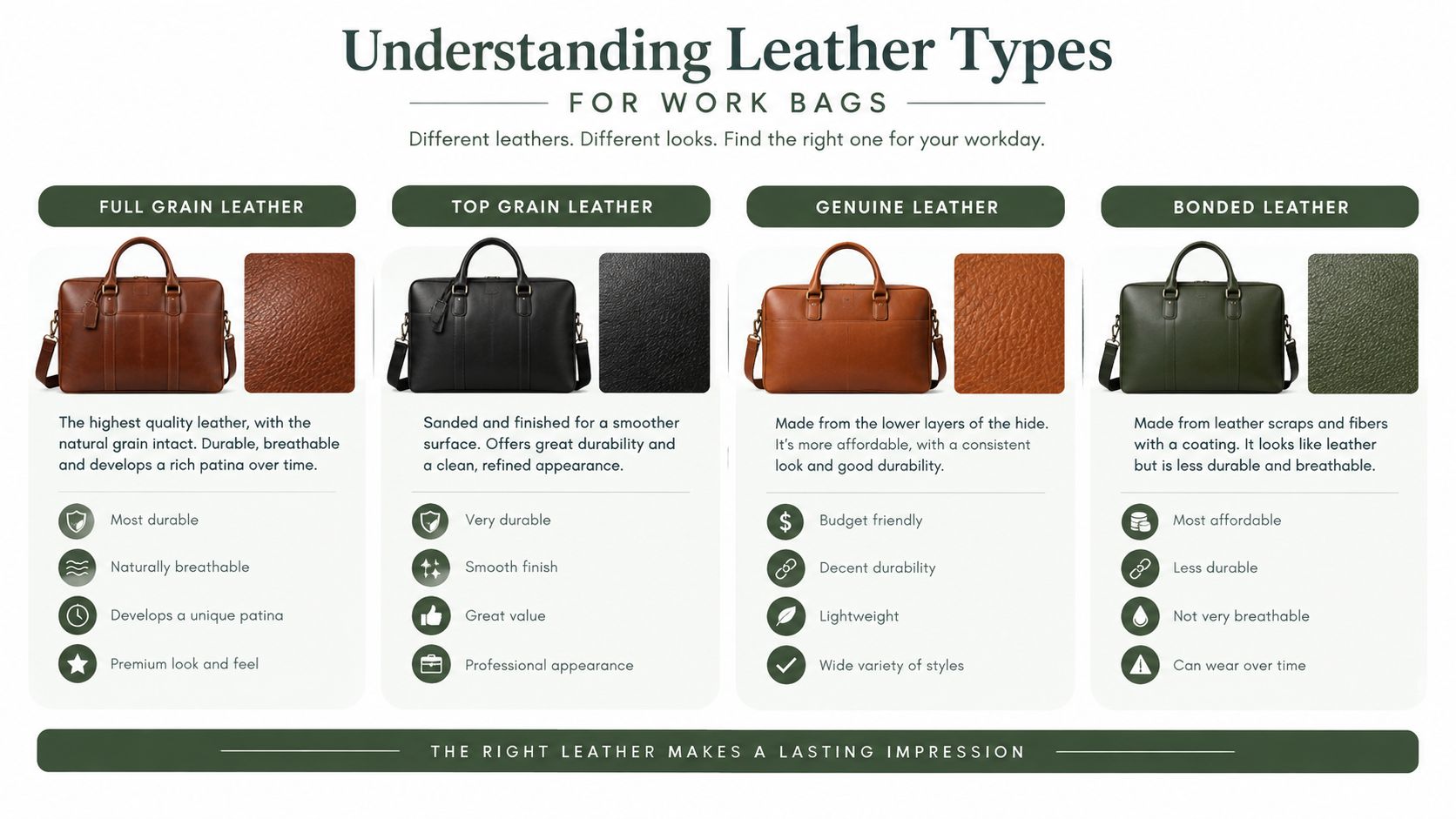
The most useful mental model is simple: a grade describes the material, while a finish describes how its surface has been treated. Neither word alone tells you how well a backpack will perform. For a closer explanation of leather grades, see this guide to understanding leather grades.
What to check on the product page
Look for the leather type, details about the lining and construction, and clear photographs of high-wear areas. Be cautious when the description relies on words like “premium” or “luxury” without naming the leather. Ask whether the bag's leather has been corrected or coated if that distinction matters to you.
Full-grain is a reasonable choice if you value its natural surface and long-term wear, and you're comfortable with the weight and upkeep. It isn't automatically the right choice for a long walk or a cycling commute. If you're also comparing bags for a ride-to-work routine, Rider 18's bag buying advice offers a useful reminder to judge a bag against the way you travel, not just the way it looks.
Sizing and Capacity That Fit Your Workday
Start with what you carry, not the bag's external dimensions. A laptop, charger, paper files, water bottle, and spare clothing all take up space, but a roomy main compartment doesn't guarantee that the bag will organize those items well. The practical goal is a bag that fits your routine without leaving so much unused room that you start filling it by habit.
Check these points before choosing a size:
- Measure your laptop. Compare the device's dimensions with the sleeve's usable dimensions, not just a seller's broad laptop-size label. Leave room for the device to go in and out without forcing it past the zipper.
- List your regular carry. Include the items you bring on a typical office day. Add occasional items separately so they don't dictate the size of a bag you use every day.
- Look at the interior layout. A padded sleeve, a divider for documents, and a quick-access pocket can make a compact bag more useful than a larger, undivided one.
- Test the extra capacity. If the bag has room for gym clothes or an overnight change, decide whether that feature serves a real use case or invites unnecessary packing.
A well-positioned laptop compartment matters as much as its dimensions. The device should sit securely near your back, rather than sliding around in the main compartment. For advice on protecting a laptop while carrying it, CTF Mobile Phones & Computer Repairs' laptop-case guide can help you compare sleeves and protective cases. If you're deciding whether a backpack or a more formal carry style suits your work routine, this overview of leather laptop briefcases gives you another format to consider.
Keep small accessories contained, and check for a secure pocket for valuables. A hidden zip can be useful for a wallet or travel document, but don't let a long list of pockets distract you from whether the main space fits the items you carry. Choose the smallest capacity that accommodates your real workday without crowding your laptop or documents.
Fit, Straps, and Daily Carry Comfort
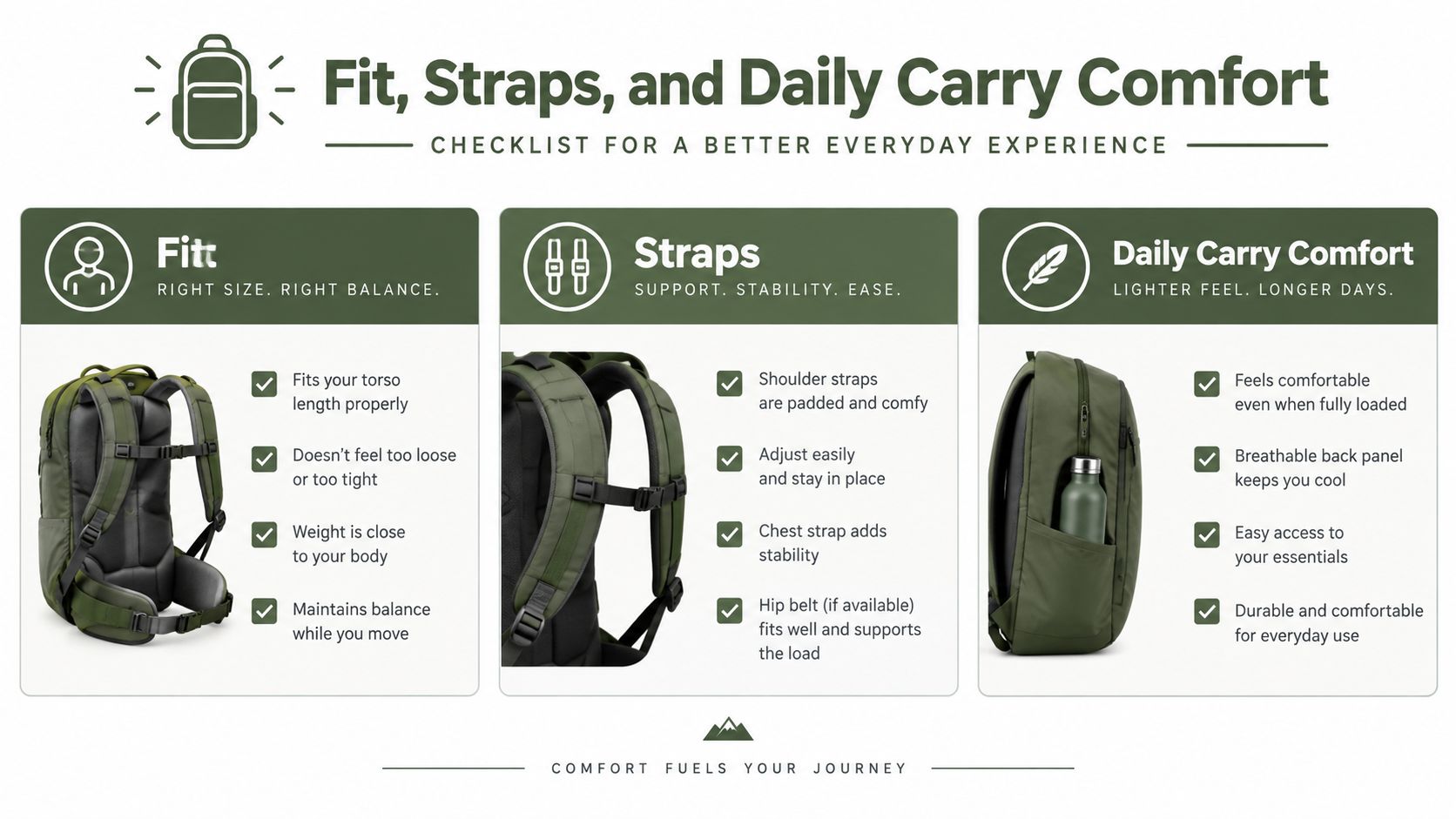
Leather thickness is an easy detail to compare. Fit is the one you'll feel every time you pick up the bag. A backpack with two broad, adjustable shoulder straps can distribute its load more evenly than an asymmetric shoulder bag. A stable back panel and a laptop compartment close to the wearer can help keep the bag from pulling backward as you walk.
In a study of 12 male university volunteers, participants walked through hallways, stairs, and ramps while carrying a backpack loaded to 15% of body weight. Carrying the pack produced higher heart rate and discomfort in the neck, shoulders, upper back, and lower back than walking without a load. Position mattered too: the reported peak heart rate was 122 beats per minute with the pack high on the upper back, compared with 117 beats per minute when it sat lower (study on backpack carriage position). That finding doesn't mean every backpack should sit low. It's a reason to assess how the design carries its load and whether it stays stable against your back.
A harness you can judge before buying
If you can try a bag in person, load it with items similar to your work kit and walk around. If you're buying online, look closely at product images or videos showing how the straps adjust and where the laptop sits.
- Shoulder straps: They should adjust enough to hold the bag securely without forcing your shoulders upward.
- Back panel: Look for a panel that sits steadily against you. Padding should support the load without adding unnecessary bulk.
- Laptop placement: A sleeve close to the back keeps the heaviest rigid item from swinging around in the main compartment.
- Sternum strap: If you routinely carry a full bag, an adjustable sternum strap can help keep shoulder straps in place. It's less important if your pack is usually lightly loaded.
A 2020 ergonomic study assessed loads at 10%, 15%, and 20% of users' body weight. In its experimental assessment, comfort was 12.06% lower at 15% than at 10%, 23.89% lower at 20% than at 15%, and 38.83% lower at 20% than at 10% (study of backpack loading and comfort). These findings don't test leather backpacks as products, but they support a practical buying rule: don't choose a bag for maximum capacity if that capacity will make your regular load heavier.
Comparing Work Backpacks by Commute Profile
A public-transit commuter and a driver don't need the same backpack, even if they carry the same laptop. One handles stairs, station platforms, security checks, and time on foot. The other may carry the bag from a parking space to a desk, so easy loading and office-ready presentation matter more than a highly adjustable harness. Choose for the commute you actually make.
| Commute Profile | Recommended Capacity | Key Harness Features | Must-Have Organization |
|---|---|---|---|
| Hybrid public-transit worker | Compact to moderate, enough for a laptop and daily essentials | Adjustable straps, stable back panel, laptop compartment near the back | Quick-access pocket, protected device storage, room for documents |
| Driver who uses the car as a second office | Compact to moderate, based on the actual work kit | Comfortable two-strap carry for the walk from car to office | Easy-to-reach pockets, document section, secure closure |
| Walker or cyclist covering real distance | The smallest size that fits the regular load | Stable fit, broad adjustable straps, secure laptop placement | Compact accessory storage, practical weather handling |
| Document-heavy professional | Moderate to roomier, with space for files and a laptop | Balanced compartments and straps that can be adjusted evenly | A document divider, laptop sleeve, dedicated accessory pockets |
Match the bag to the journey
Public transit: Choose a bag that opens and closes without fuss and keeps your laptop and essentials easy to access. A bulky pack with too many compartments can slow you down when you need to find a travel card or shift items before boarding.
Mostly driving: You can prioritize a structured shape and a polished finish if the bag spends more time in the car than on your shoulders. Still, check that it carries comfortably between the vehicle, office, and meeting room. A bag that's awkward to set down or retrieve quickly becomes a daily irritation.
Walking or cycling: I'm strict about empty weight here. A beautiful full-grain backpack that starts heavy and encourages overpacking is a poor match for a long commute. Look for a stable harness, a close-fitting laptop sleeve, and enough organization to prevent the contents from shifting. If you commute by bike, make weather handling a specific question rather than assuming that leather is waterproof.
Paper-heavy work: Lawyers, consultants, and other professionals who carry files need a separate document area, not a larger undivided cavity. The weight should sit evenly across both shoulders. A briefcase may suit some office routines better, so weigh the differences in briefcase-versus-backpack carry before deciding.
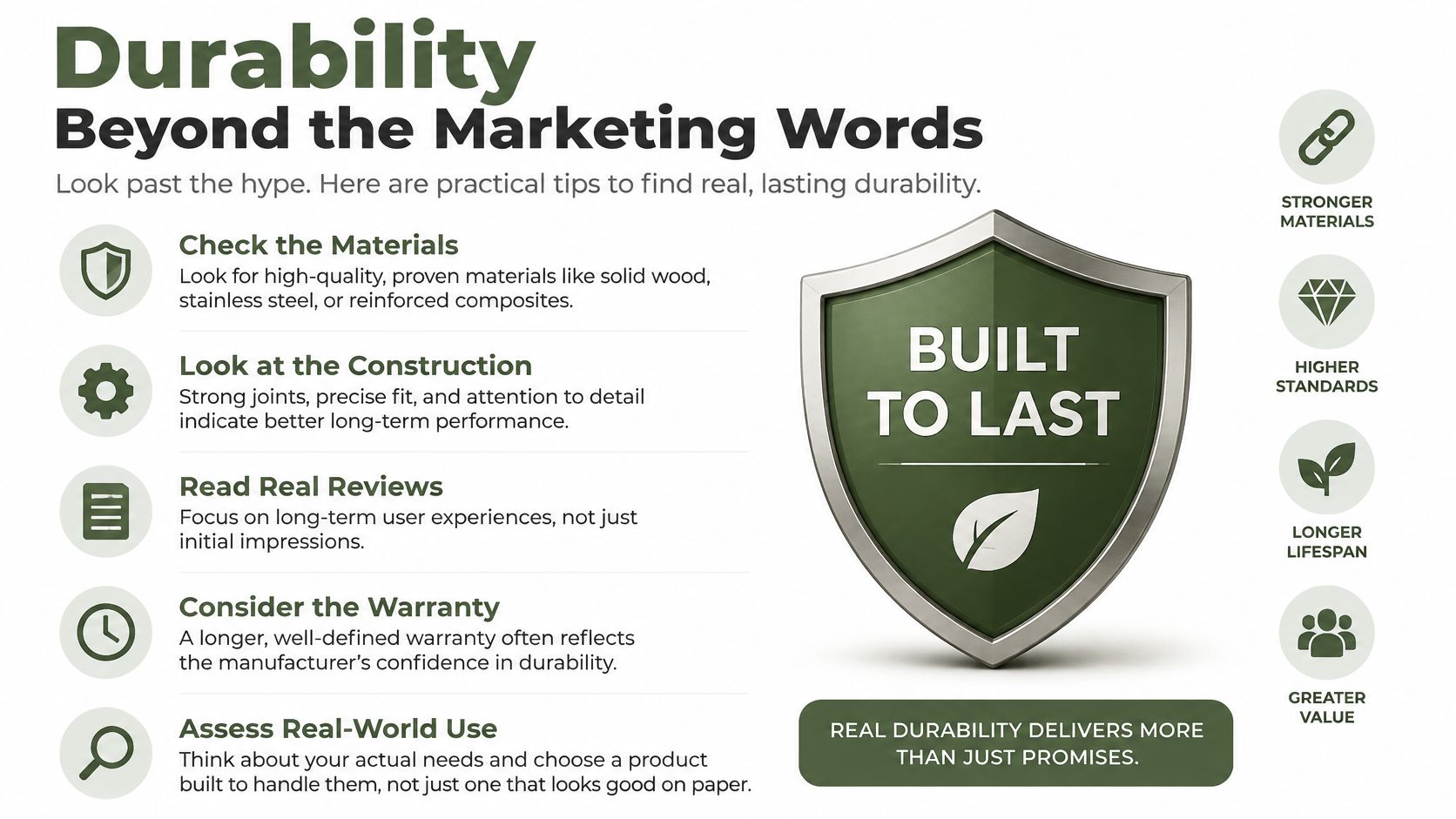
Durability Beyond the Marketing Words
“Heavy duty” isn't a test result, and thicker leather doesn't guarantee a more durable backpack. A bag can use substantial leather and still fail where a strap joins the body, a zipper bends under strain, or a lining seam exposes rough edges to a laptop. Judge the whole construction, especially at the spots that bear the load or meet hard surfaces.
Ask for test details, not just claims
Independent bag-quality guidance identifies standardized methods for evaluating abrasion, tearing, and seams. Abrasion testing may use ISO 12947, ASTM D4966 (Martindale), ASTM D4157 (Wyzenbeek), or ASTM D3884 (Taber). Tear testing may use ASTM D2261 or ISO 13937, while seam strength or slippage can be assessed with ASTM D1683 or ISO 13935 (backpack durability testing guidance).
A test name alone isn't enough to compare two reports. Ask what part of the bag was tested, how the sample was prepared, what counted as failure, and which laboratory ran the test. The number of cycles means little if one maker counts the first broken thread and another counts only a visible surface change.
Inspect these areas closely:
- Stress points: Look for reinforced stitching or rivets where shoulder straps and handles attach.
- Base and edges: Check how the base corners are protected and whether edges are finished cleanly.
- Zippers and lining: Look for reinforcement where zippers meet the body and seams that keep rough edges away from electronics.
If the seller can't answer basic questions about construction or testing, don't let a confident “premium” label settle the matter. For a broader view of the details that distinguish a well-made bag, consult this guide to leather bag quality. Durability is a property of the materials and the way they're joined.
Matching a Backpack to Your Profession
Your job title matters less than what you carry and how you travel. A lawyer moving between meetings with folders has different needs from a studio worker who carries a laptop and creative tools. Choose the silhouette and construction that support the routine, then decide whether leather is the right material for it.
Corporate professional in a suit-friendly office: Choose a restrained profile with clean seams, discreet hardware, and a dark, versatile finish. A structured full-grain pack can look polished without pretending to be a briefcase. Skip oversized shapes and casual hardware that fight the way you dress.
Creative or studio-based worker: Organization matters more than a formal silhouette. Look for a layout that separates a laptop from tools and personal items, with enough give to handle an uneven load. If you walk or cycle far, consider a lighter textile option. Leather's finish won't compensate for a bag that's too heavy for the trip.
Lawyer or consultant: Prioritize a dedicated document area, protected laptop storage, and a shape that sits neatly at a meeting table. Adjustable straps and a balanced interior matter because the bag may be full of paper as well as devices. If you want one bag to move between offices, avoid a single large compartment that lets files bend or slide.
Frequent short-trip traveler: A backpack that carries work gear and a few travel essentials can be useful, but only if it stays manageable on foot. Choose secure pockets and a layout that separates documents from personal items. Don't mistake extra space for a good travel design; a heavier leather bag can become a burden when you're also handling luggage.
Biomechanical reporting notes that two-shoulder backpacks distribute forces more evenly than asymmetric shoulder bags, and clinical guidance recommends keeping a filled backpack at or below roughly 10 lb (4.5 kg) (guidance on carrying a laptop and backpack load). That makes the empty-bag weight and usable capacity important specifications, particularly for a full-grain pack.
Grainmark Leather offers full-grain leather backpacks alongside other leather carry goods, so it's one retailer to include when comparing materials, layouts, and styles. But don't choose leather because it sounds like the grown-up answer. Choose it when you value its natural finish and potential for long service, and when its weight works for your commute. If you walk or cycle a long way with a full load, a lighter textile bag may serve you better.
Pre-Purchase Checklist and Care Basics
Before checkout, run through the points that affect daily use:
- Weight: Check the empty-bag weight, then consider the loaded weight of your usual work kit.
- Fit: Confirm that the laptop sleeve fits your device and that the shoulder straps adjust to your body.
- Layout: Make sure your documents, charger, and small essentials have distinct places.
- Weather: Ask how the bag handles rain and what care the leather needs.
- Repair: Check whether the maker offers warranty support or repairs for damaged components.
Full-grain leather will change with use, so expect the surface to develop character rather than remain untouched. Condition it according to the maker's guidance, let it dry naturally if it gets wet, and don't store it in direct sun. Avoid overstuffing, which strains the seams and makes the bag heavier to carry. For practical cleaning guidance, follow these tips for cleaning a leather backpack.
If the bag fits your workday, carries comfortably, and has construction you can verify, it's the right choice for you, regardless of which list it appears on.
Grainmark Leather offers full-grain leather backpacks, work bags, and other carry goods for professionals who want organized storage in a classic leather finish. Compare its backpack layouts with the commute and load you have, then visit Grainmark Leather to explore the collection.