How to Clean a Leather Backpack Without Ruining It
A leather backpack should never be cleaned like a canvas gym bag.
Water, heat, harsh detergent, alcohol wipes, and impatient scrubbing can flatten the grain, lift the finish, dry the leather, or leave pale patches that are difficult to correct.
The safest method is simple: dust first, spot test, clean gently with a barely damp cloth or leather cleaner, dry slowly at room temperature, then condition lightly only when the leather feels dry.
At Grainmark Leather, every backpack is made with the kind of material that rewards calm, careful maintenance.
A good leather backpack does not need aggressive cleaning to look refined.
It needs the right routine, used at the right time, with enough restraint to preserve the character of the leather.
Before You Clean: Know What You Are Working With

Leather is strong, but it is also a natural material. Its surface carries oils, grain, dye, and finish, all of which can react badly to the wrong product.
The first rule is to identify the leather type before applying anything wet.
Most smooth leather backpacks can be cleaned with a soft cloth, a small amount of leather cleaner, and careful drying.
Full-grain leather, in particular, often develops a richer patina with age, so the goal is not to make it look factory-new forever.
The goal is to remove dust, sweat, surface grime, and stains while keeping the leather supple and dignified.
Avoid using one method for every bag you own. Smooth leather, suede, nubuck, patent leather, and heavily waxed leather all respond differently.

For a smooth full-grain backpack such as Grainmark Leather’s Full Grain Leather Backpack - The Timberhorn, the approach should be gentle and deliberate, especially around structured panels, seams, zippers, and the laptop compartment.
What You Need to Clean a Leather Backpack Safely
A proper leather cleaning kit does not need to be complicated. In fact, the shorter the list, the safer the process usually is.
- Soft microfiber cloths
- A soft-bristle brush
- Clean, lukewarm water
- Leather-specific cleaner for smooth leather
- Neutral leather conditioner or cream
- Plain tissue paper or a clean cotton towel for drying support
Use a soft microfiber cloth for dusting and wiping. Keep a second clean cloth for drying and buffing.
A soft-bristle brush can help lift dust from seams, stitching, zipper lines, and strap edges.
For deeper cleaning, use a leather-specific cleaner made for smooth leather. A small bowl of clean, lukewarm water can help with light wiping, but the cloth should be damp, never wet.
For conditioning, choose a neutral leather conditioner or cream suitable for the leather type. Use it sparingly.
More conditioner does not mean better care. Too much can darken the surface, soften the structure, or leave a greasy film.
Do not use bleach, ammonia, dishwashing liquid, laundry detergent, alcohol wipes, baby wipes, vinegar mixtures, baking soda paste, nail polish remover, or sanitizer.
Those products may seem convenient, but leather rarely forgives shortcuts.
Step 1: Empty the Backpack Completely

Start by taking everything out of the backpack. Remove papers, chargers, pens, keys, coins, receipts, and loose items from internal pockets.
Check hidden compartments, laptop sleeves, pen slots, and side pockets.
Shake the backpack gently while holding it upside down. Do not beat it or twist it.
Crumbs and grit can hide in corners and later scratch the lining or leather if they are dragged across the surface.
If the interior has a fabric lining, use a handheld vacuum on low suction or a soft brush to remove debris. Be careful around seams and pocket edges.
Leather backpacks often have layered construction, so rough interior cleaning can loosen stitching over time.
Step 2: Dust the Leather Before Adding Moisture

Never put water or cleaner onto a dusty leather surface. Dust acts like fine grit. Once moisture is introduced, it can smear across the leather and create dull patches.
Use a dry microfiber cloth to wipe the exterior in smooth, light passes. Work from the top down.
Pay attention to the handle, straps, base corners, front pocket edges, and the area that rests against clothing. Those zones collect the most oils and city dust.
For backpacks with hardware and reinforced details, such as The Timberhorn with its YKK zippers and reinforced stitching, use a soft brush around zipper tape and seams.
The aim is to lift dust, not scrub the leather.
Step 3: Spot Test Before Cleaning the Whole Bag

Spot testing is the quiet discipline that prevents expensive mistakes. Choose a hidden area, such as the underside of a strap, the lower back panel, or an interior leather tab.
Apply a tiny amount of cleaner or dampness using a soft cloth.
Wait until the area dries fully. Check for darkening, color transfer, stickiness, rough texture, or a cloudy finish. If anything looks wrong, stop and consult a leather care professional.
Even quality leather can react differently depending on dye, finish, age, previous products used, and exposure to sunlight.
A spot test may feel slow, but it is far better than discovering a problem across the front panel.
Step 4: Clean the Exterior With a Light Hand
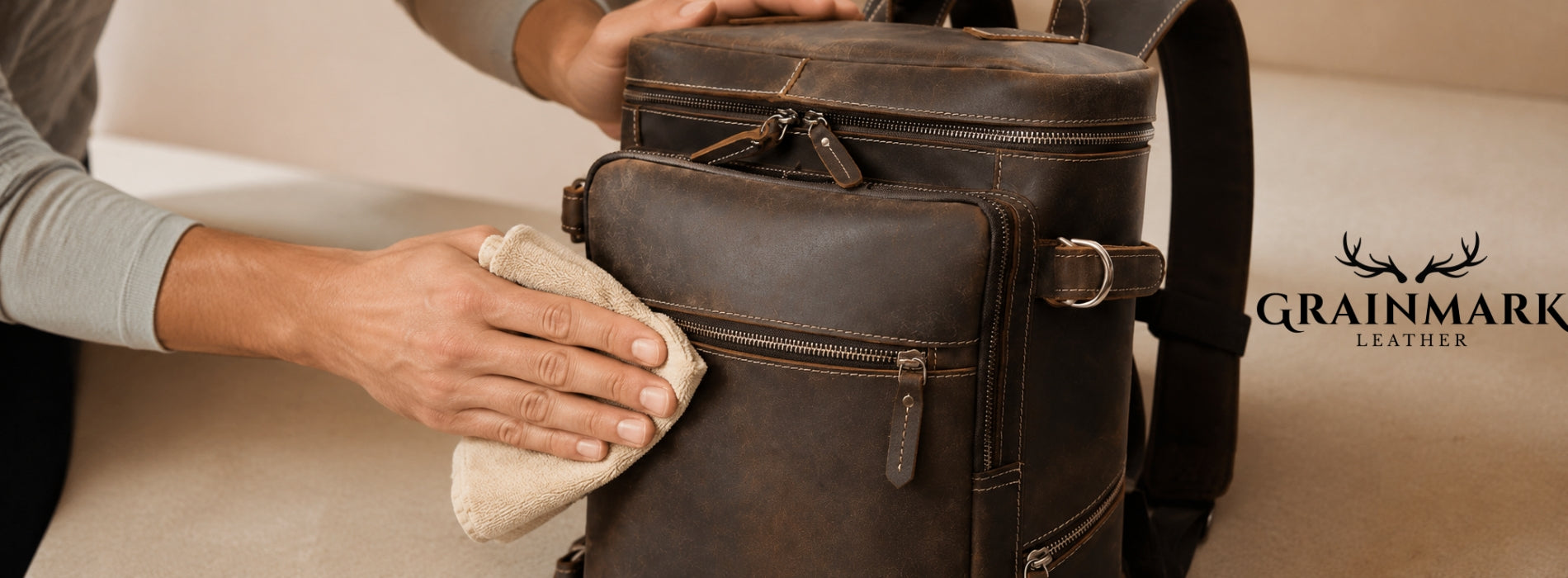
For routine cleaning, dampen a microfiber cloth with clean water and wring it until it feels almost dry. Wipe the leather gently in small sections.
Do not soak the surface. Do not rub one area repeatedly. Gentle, even passes are safer than hard pressure.
If water alone is not enough, apply a small amount of leather cleaner to the cloth rather than directly onto the backpack.
Work it over the leather using light circular motions, then follow with a clean, barely damp cloth to remove residue.
Clean panel by panel: front, back, sides, base, straps, and handle. Give extra attention to the handle because hand oils build up there first.
On shoulder straps, clean the outer leather and edges carefully, but avoid saturating padding or fabric backing.

For a more compact daily carry, such as Grainmark Leather’s Full Grain Leather Backpack - The Scouter, careful cleaning around pockets is important.
Its front zipper pocket, side zip pockets, internal divider sleeve, and luggage-friendly details make it practical for work and travel, but pocket edges are also where dust gathers.
A soft brush and light cloth work better than heavy cleaner.
Step 5: Clean Around Hardware, Zippers, and Seams
Hardware gives a leather backpack structure and polish, but it also collects dirt. Use a dry cloth or soft brush around zipper pulls, rivets, buckles, and metal loops.
If needed, a cotton swab lightly dampened with water can help clean tight areas.
Do not flood zipper lines with water. Moisture can settle into zipper tape, stitching holes, and seam channels.
If the backpack has a USB charging port or other technical feature, avoid applying liquid near that area.
Clean around it with a dry cloth first, then use a barely damp cloth only on nearby leather if necessary.
Seams deserve patience. Grime often settles there, especially along the bottom panel and where straps meet the body.
Brush gently along the seam line, then wipe with a soft cloth. If dirt remains, repeat the process rather than using force.
Step 6: Deal With Stains Without Panic

Stains should be handled according to type. Acting quickly matters, but panic cleaning usually causes more damage than the stain itself.
Water marks
For water marks, blot with a clean cloth and let the leather dry naturally.
If a ring remains, lightly wipe the surrounding panel with a barely damp cloth so the moisture blends more evenly. Never aim a hair dryer at the spot.
Oil or grease
For oil or grease, blot gently with a dry cloth. Do not rub. Some oil stains settle into leather and soften over time, becoming less visible as the patina develops.
If the stain is fresh and severe, a professional cleaner is safer than home experimentation.
Ink
For ink, avoid alcohol unless a leather professional recommends it for that exact finish. Ink can bond with leather quickly, and harsh removal attempts can strip color from the bag.
A small ink mark is often less damaging than the pale scar left by aggressive rubbing.
Food or drink spills
For food or drink spills, remove solids gently, then blot liquid with a clean cloth. Use a leather cleaner if residue remains.
Sweet drinks can leave a sticky film, so a careful second wipe with a barely damp cloth may be needed.
Step 7: Dry the Backpack Properly

Drying is where many people ruin otherwise successful cleaning. Leather should air dry slowly at room temperature.
Keep the backpack away from radiators, fireplaces, direct sunlight, tumble dryers, blow dryers, and hot car interiors.
Place the backpack upright on a clean towel. Open the main compartment so air can circulate.
If the leather feels damp, loosely stuff the interior with plain, acid-free tissue paper or a clean cotton towel to help preserve shape.
Do not overstuff it, as too much pressure can distort the panels.
Allow several hours for drying, or overnight if needed. Leather may look slightly darker while damp. Judge the result only after it has dried fully.
Step 8: Condition Only When Needed
Conditioning helps restore suppleness, but it should not be automatic after every light wipe. If the backpack feels smooth, flexible, and healthy, it may not need conditioner.
If it feels dry, stiff, or slightly tired, a small amount can help.
Apply conditioner to a soft cloth, not directly to the leather. Use a very thin layer and work it gently across the surface.
Focus on areas that flex often, such as straps, handle bases, corners, and flap edges. Avoid heavy buildup around stitching.
Let the conditioner absorb, then buff with a clean dry cloth. If the leather looks greasy or tacky, too much product was used. Wipe away excess and allow the bag to rest.
A premium backpack should keep its structure. Over-conditioning can soften the leather too much, especially around panels and pockets.
The most elegant finish is nourished, not shiny with product.
How Often Should You Clean a Leather Backpack?

For regular use, wipe dust away once a week or every few wears. A more careful exterior clean can be done monthly if the backpack is used daily in cities, trains, offices, cafés, or airports.
Conditioning may be needed every few months, depending on climate, use, and how dry the leather feels.
A backpack carried in dry winter air may need conditioning sooner. One used in humid weather may need more attention to airing and storage.
A travel backpack may need a quick wipe after each trip, especially around the base, handles, and straps.
Do not wait until the leather looks dirty from a distance. Light, regular care protects the surface far better than a dramatic rescue clean once a year.
What to Avoid at All Costs
- Do not machine wash a leather backpack.
- Do not soak it in a sink or shower.
- Do not use steam cleaners.
- Do not dry it with heat.
- Do not apply shoe polish unless a leather expert confirms it is appropriate.
- Do not use colored creams on lighter leather unless you know the exact shade.
Avoid hanging a heavy leather backpack by its top handle for long periods. Weight can stretch the handle and strain stitching.
Store it upright instead, with light support inside to preserve shape.
Do not wrap leather in plastic for long-term storage. Leather needs breathable protection.
A cotton dust bag or clean pillowcase is a better choice.
How to Store a Leather Backpack After Cleaning

Once the backpack is fully dry, store it in a cool, dry place away from direct sunlight. Empty the pockets first.
Open the zippers slightly to allow airflow, then support the interior with soft tissue paper or a folded cotton cloth.
Keep the backpack upright where it will not be crushed. Avoid stacking heavy items on top of it.
If storing for a season, check it occasionally. Leather that sits forgotten in a humid corner can develop odor or mildew.
A well-made backpack deserves room to breathe. Good storage is less about fussiness and more about respect for the material.
A Simple Leather Backpack Care Routine
For daily care, handle the backpack with clean hands where possible. Wipe away rain as soon as you can. Let the bag air dry naturally if it gets damp.
Brush dust from seams before it settles. Keep pens capped, bottles closed, and cosmetics inside pouches.
For weekly care, give the exterior a dry wipe and empty the interior. For monthly care, inspect corners, straps, handles, and zipper areas.
For seasonal care, decide whether the leather needs a light clean and a small amount of conditioner.
The finest leather care routine is consistent rather than complicated.
FAQs
Can I clean a leather backpack with just water? ▾
Yes, for light dust and surface dirt, a barely damp cloth can be enough. The cloth should never be wet enough to leave water sitting on the leather. Always dry the backpack naturally afterward.
Can I use soap on a leather backpack? ▾
Use a leather-specific cleaner whenever possible. If mild soap is used, it should be extremely diluted, tested first, and wiped away carefully. Many household soaps are too harsh and can strip oils from leather.
How do I remove odor from a leather backpack? ▾
Empty the bag, air it in a dry room, and place odor-absorbing material such as baking soda in an open container near the backpack, not directly on the leather. Avoid perfume sprays, disinfectants, or fabric fresheners, as they can stain or dry the leather.
Is leather conditioner always necessary? ▾
No. Conditioner is useful when leather feels dry, stiff, or tired. Applying it too often can darken the leather or soften the structure. Use less than you think you need.
Can scratches be removed from full-grain leather? ▾
Many light scratches can be softened by rubbing gently with a clean finger or soft cloth, allowing natural oils and warmth to blend the mark. Deeper scratches may remain visible, but on full-grain leather they often become part of the patina rather than a flaw.
Final Thoughts
Cleaning a leather backpack without ruining it comes down to restraint. Remove dust before moisture.
Test before treating. Clean with a light hand. Dry slowly. Condition sparingly. Store it with care.
A Grainmark Leather backpack is meant to gather character, not lose its identity under harsh cleaning products.
Whether it is a spacious travel-ready piece like The Timberhorn or a refined everyday companion like The Scouter, proper care keeps the leather strong, composed, and quietly handsome for years of use.