

Best Leather Travel Bags for Men That Last Years
You're at the airport with a two-night itinerary, a laptop, a change of clothes, and a leather duffel that looked perfect online. At the check-in desk, it feels different. The bag is awkward on one shoulder, the main opening won't stay wide, your charger has disappeared beneath a sweater, and the empty case already feels heavier than expected.
That's the wrong-bag problem. The best leather travel bags for men aren't chosen by color or a polished product photograph alone. They're judged by trip length, carry format, opening design, empty weight, protection, and the quality of the parts that take the most abuse.
This guide uses that practical filter. You'll see when a structured duffel makes sense, when a backpack is more comfortable, why a wheeled bag can be the sensible choice for longer journeys, and where leather loses to lighter materials. You'll also learn how to inspect hide, stitching, hardware, pockets, and serviceability before buying. If you're comparing leather with canvas, this guide to canvas travel bags is useful for understanding that alternative's different balance of weight, flexibility, and appearance.
Table of Contents
- Introduction to Choosing Leather Travel Bags That Work Hard
- Why Full Grain Leather Leads Premium Travel Bags
- Comparing the Main Leather Travel Bag Formats
- Materials Hardware and Construction That Determine Durability
- How to Match Size Weight and Packing Capacity to Your Trip
- Styling Personalization and Long Term Ownership Value
- Our Recommendation for Every Traveler Profile
Introduction to Choosing Leather Travel Bags That Work Hard
A good travel bag should disappear into your routine. It should open without a struggle, keep essentials in predictable places, and remain comfortable after you've crossed a terminal, climbed train stairs, or carried it from a hotel to a meeting. Leather can deliver that combination, but only when the design matches the way you travel.
A short road trip has different demands from a weekly business flight. A weekend duffel can prioritize a broad opening and a clean silhouette. A frequent flyer may need a backpack with padded device storage or a rolling format that removes weight from the shoulders. A professional moving between office and airport may prefer a structured bag that looks appropriate in both settings.
The practical rule: choose the carry format first, then judge the leather and details within that format.
Many buyers start with brand reputation or finish. Those matter, but they come after the fundamentals. A visually impressive bag can still fail if its handles attach to weak panels, its zipper catches at the corners, or its interior forces every small item into one deep compartment. Conversely, a simpler-looking bag with reinforced stress points and useful organization may become the one you reach for most often.
Start with the trip you actually take
Ask yourself three questions before browsing products:
- How long are most trips? A compact overnight load needs different capacity from a business trip with shoes, documents, and clothing.
- How do you move through transit? Shoulder carry works well for short distances, while wheels or balanced backpack straps help when terminals and connections dominate the journey.
- What must stay protected? A laptop, tablet, camera, passport, and cables need dedicated protection and access. Leather alone doesn't provide laptop padding.
The right bag reduces friction at every stage. It lets you pack by category, retrieve what you need without unpacking everything, and carry the load in a way your shoulders and hands can tolerate. That's a more useful definition of premium than a glossy finish.
Why Full Grain Leather Leads Premium Travel Bags
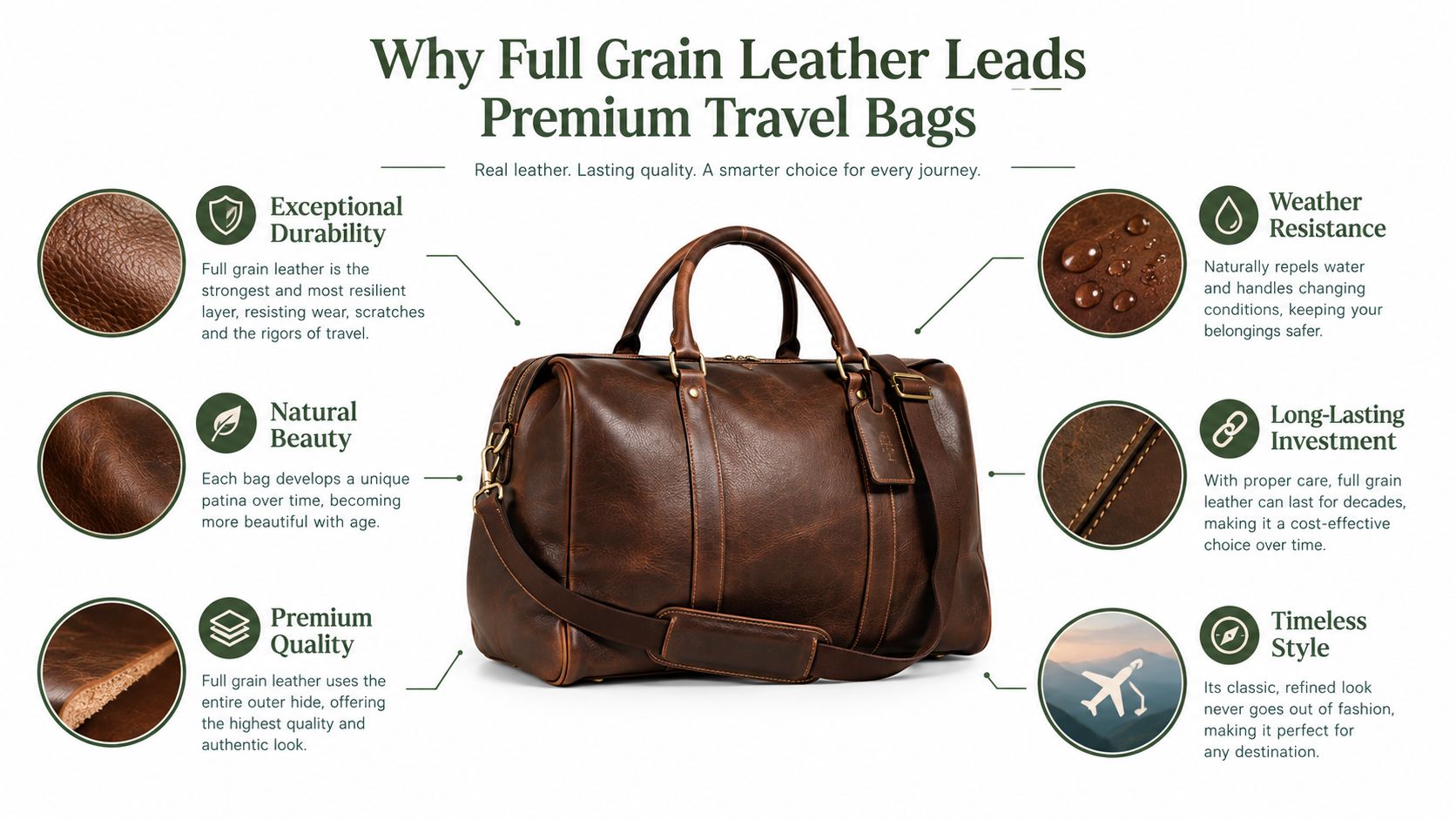
Full-grain leather keeps the hide's outer fiber structure intact. That structure gives it a dense, natural surface that generally handles abrasion better than corrected grades. Instead of being designed to look unchanged forever, quality full-grain leather is expected to develop patina, meaning the surface gains variation and character through handling, light, and contact.
That aging process is one reason leather remains established in professional travel. The global travel bag market is projected to be especially relevant to men's leather travel bags because men are expected to represent 51.6% of the market in 2026, while leather is projected to hold 26.5% of total share in the same year, according to Coherent Market Insights' travel bag market report. The report connects demand with business travel and urban commuting, two settings where structured duffels, briefcases, and carry-on bags have to move between professional and personal use.
Why the market context matters
Independent research places the leather luggage category at USD 48.2 billion in 2024, with a projection of USD 72.8 billion by 2034 at a 4.2% CAGR. Travel bags represented 42% of the global leather luggage and goods market in 2024, according to Emergen Research's leather luggage and goods market report. These figures don't mean every leather bag is a sound purchase. They do show that leather travel goods occupy a substantial premium category rather than a narrow fashion niche.
The useful distinction is between material quality and material preference. Full-grain leather may last well, but it also tends to add weight, require care, and cost more than textile alternatives. If your trips involve heavy rain, strict carry-on limits, or long walks with a loaded bag, those drawbacks deserve equal attention.
For men who travel mainly by car, train, or short-haul flight, leather's structure and aging can justify the trade. It holds a professional shape, pairs naturally with work clothing, and can become more distinctive as it wears. For a traveler who wants the lightest possible load, a technical fabric backpack may perform better.
For a closer explanation of what the term means, see Grainmark Leather's guide to full-grain leather. The important buying lesson is simple: full-grain leather is a construction choice with long-term benefits, not a substitute for good patterning, hardware, padding, or sensible capacity.
Comparing the Main Leather Travel Bag Formats
The same leather can behave very differently depending on the bag's shape. A duffel concentrates weight in your hand or on one shoulder. A backpack distributes it across both shoulders. A briefcase keeps documents accessible but offers limited clothing capacity. A wheeled bag minimizes lifting, yet its frame and rolling hardware can add bulk and failure points.
| Bag Format | Best Trip Length | Carry Comfort | Organization Strength | Style Context |
|---|---|---|---|---|
| Leather duffel | Overnight to short weekend | Good for short carries, tiring when overloaded | Strong in a wide main compartment, variable pockets | Weekend, business casual, road travel |
| Leather backpack | Daily travel to short trips | Usually best for hands-free movement | Strong for devices, cables, and small essentials | Commute, airport, casual professional |
| Leather briefcase | Day trips and work travel | Comfortable at moderate loads | Excellent for documents and devices, limited clothing space | Office, meetings, business travel |
| Leather wheeled bag | Longer trips and heavy packing | Best when rolling is practical | Strong capacity, often less flexible access | Frequent flying, formal travel |
Duffels and weekenders
A leather duffel is the classic choice for a short trip because it offers a large, flexible compartment without the rigid outline of a suitcase. A wide top opening lets you place shoes and folded clothing without reaching through a narrow zipper track. The weakness appears when the bag is packed too densely. Its contents settle toward the bottom, and shoulder carry becomes uncomfortable.
A structured weekender works particularly well for a two-night trip, especially when you're traveling by car or train and want quick access. It's less convincing for repeated long terminal walks unless it has a well-padded shoulder strap and handles that stay balanced.
Backpacks and briefcases
A backpack earns its place when your route includes walking, public transport, or a laptop. It leaves both hands free and can distribute weight more effectively than a duffel. Organization matters more here because multiple narrow compartments can become cluttered. Look for a padded device sleeve, a separate document area, and a front pocket that doesn't force you to dig.
A briefcase is the most focused format. It's ideal for a workday trip with a laptop, charger, notebook, and documents, but it's not a substitute for a clothing bag. If you're considering this format for mixed office and travel use, Grainmark Leather's overview of leather backpacks for travel helps clarify when a backpack offers more practical flexibility.
A bag can look professional and still be badly suited to the way you move. Carry comfort is a travel requirement, not a styling detail.
Wheeled leather bags
Wheels make sense when the load is substantial or your route involves long, smooth floors. They're less useful on stairs, uneven pavement, and crowded sidewalks, where you'll still need to lift the case. Check the wheel housing, handle attachment, and base reinforcement carefully. A leather exterior doesn't compensate for a weak rolling mechanism.
The best format is the one that matches the dominant part of your journey. Choose a duffel for flexible short-trip packing, a backpack for hands-free transit, a briefcase for work-first travel, and wheels when lifting the packed bag would become the main problem.
Materials Hardware and Construction That Determine Durability
A travel bag fails at stress points, not in the middle of an untouched leather panel. Handles pull against their attachments, shoulder straps twist under load, corners scrape floors, and zippers endure repeated tension. Inspect those areas before you get distracted by color or grain.
Independent leather-goods guidance identifies full-grain leather as the most durable choice because it preserves the hide's outer fibers, resists abrasion better than lower grades, and develops patina rather than cracking. The same practical guidance emphasizes double-stitched stress points, solid metal hardware, and YKK-class zippers as construction details that influence whether a duffel survives repeated airport and weekend use. The complete leather duffle bag buying guide is a useful inspection reference.
What to inspect on the outside
Run your eye along every attachment rather than judging the hide in isolation.
- Handle bases: Look for broad leather reinforcement and stitching that distributes the pull.
- Shoulder strap anchors: Metal rings should sit securely, and the leather around them shouldn't look thin or stretched.
- Corners and base: These areas need protection because airport floors and vehicle trunks create constant abrasion.
- Zipper path: Open and close it several times. A smooth track and substantial teeth matter more than decorative pulls.
- Hardware finish: Solid-feeling metal hardware is preferable to flimsy fittings that bend or loosen.
Crazy Horse leather, especially when wax-infused, can show rub marks that shift with handling. That isn't automatically damage. The finish often develops a changing patina, although deep cuts, saturated moisture, and neglected edges still require care.
What the interior should reveal
Leather thickness alone won't protect a laptop. Padding and a secure sleeve do that job. A device compartment should hold the computer away from the base and prevent it from sliding against hard hardware. A soft lining helps reduce scuffing, but a lining that is difficult to clean can become a nuisance after spills.
A wide-opening main compartment makes packing easier, while smaller structured pockets should handle passports, tablets, cables, and keys. If you're also comparing fine leather accessories, Nothing But Bands' leather guide offers useful context on how leather finish and hardware interact in products designed for repeated handling.
Before buying, ask whether the bag can be repaired. Replaceable straps, accessible stitching, standard hardware, and a clear service policy are stronger signs of ownership value than an especially bright new finish. For terminology around hide grades, Grainmark Leather's leather grades guide can help you separate full-grain construction from vague uses of “genuine leather.”
How to Match Size Weight and Packing Capacity to Your Trip
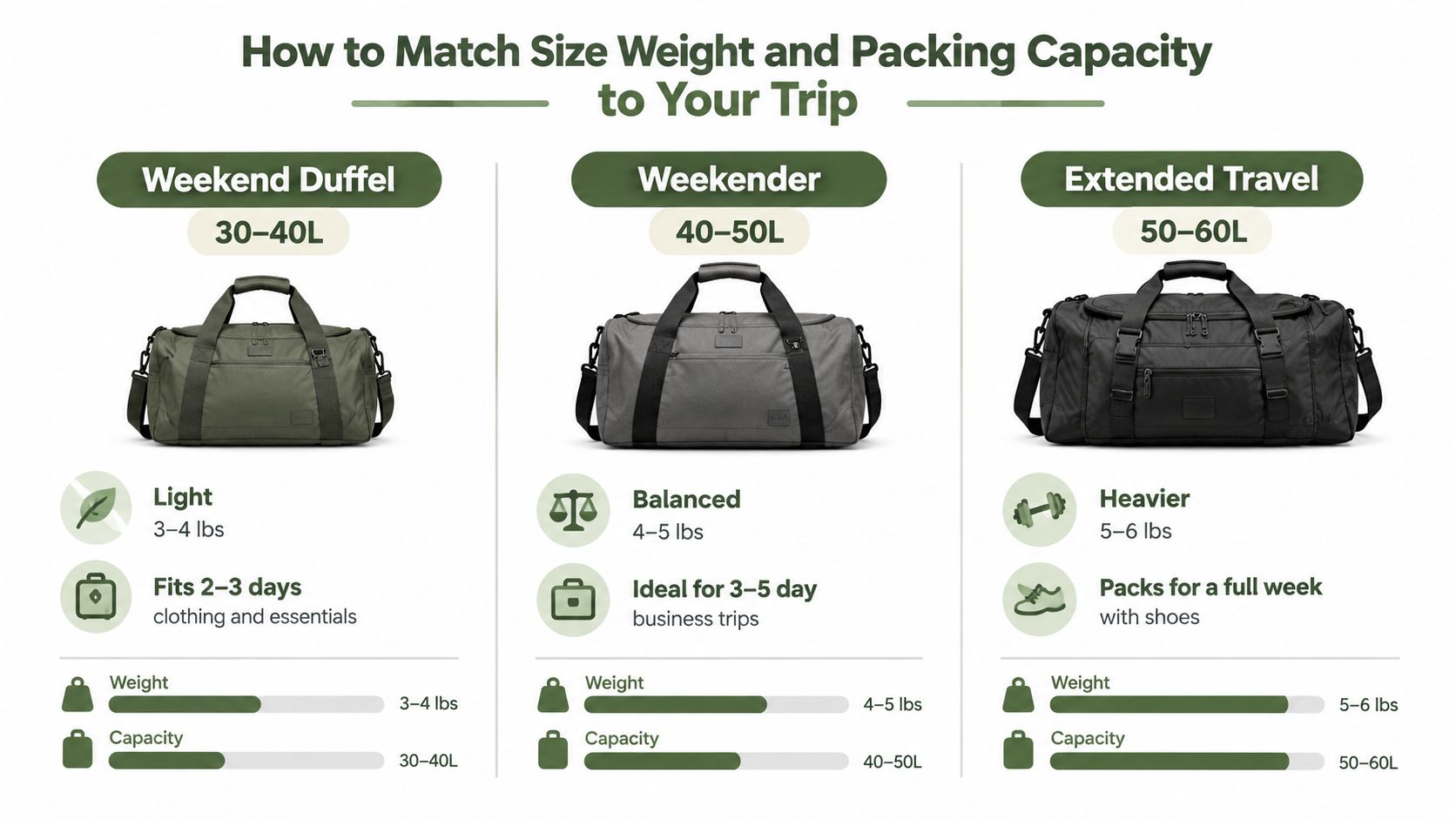
Capacity labels help, but they don't tell you how a bag behaves when packed. Two bags with similar volume can feel completely different if one has a narrow opening, wasted taper, or thick hardware. Measure the bag's exterior, check its empty weight, and think about the actual objects you carry.
A published leather-duffel comparison illustrates the trade-off clearly with a bag measuring 23 x 10 x 10.6 inches and weighing just under five pounds, as documented by OutdoorGearLab's duffel testing methodology. That combination may suit someone who values structure and leather, but it leaves less weight allowance for clothing than a lighter fabric case would.
Use a four-part packing test
First, build your normal load. Include the shoes, toiletries, work devices, and outer layer you routinely bring. Don't estimate from an idealized packing list that leaves out the objects that usually create overflow.
Second, check the opening. A wide-opening compartment lets you place folded clothing flat and retrieve items without disturbing the entire load. A narrow cylindrical opening may look elegant, but it can make packing cubes and shoes harder to position.
Third, examine the pockets. Passports, tablets, cables, and chargers should have assigned locations. Too few pockets create a black hole. Too many shallow pockets reduce usable volume and encourage overpacking.
Finally, compare the empty bag with your airline routine. Rules differ by carrier and route, so verify the current size and weight limits before purchase. If you frequently face strict cabin restrictions, a heavy leather bag can consume more of your allowance before you pack anything.
For a short road trip, leather's weight may be a reasonable exchange for structure and appearance. For a frequent flyer walking between connections, a lighter backpack or hybrid may be more rational. A useful adjacent reference is this guide to packing your gym bag smarter, because the same principles apply: put frequently used items where you can reach them, separate damp or messy gear, and avoid filling every available space.
A practical packing sequence is:
- Base layer: Shoes and heavier items sit low and close to the center.
- Soft middle: Folded clothing or packing cubes fill the main body.
- Protected zone: Devices stay in padded sleeves, away from hardware.
- Access layer: Passport, wallet, cables, and toiletries remain reachable.
For more product-specific direction, Grainmark Leather's guide to the best men's travel duffle bag can help you compare formats against this checklist.
Styling Personalization and Long Term Ownership Value
A leather travel bag becomes valuable through repeated use, not because it looks flawless on the day it arrives. A restrained brown or black finish can work with business clothing, denim, and casual weekend wear. Consistent hardware and matching small goods also make the bag feel deliberate rather than assembled from unrelated pieces.
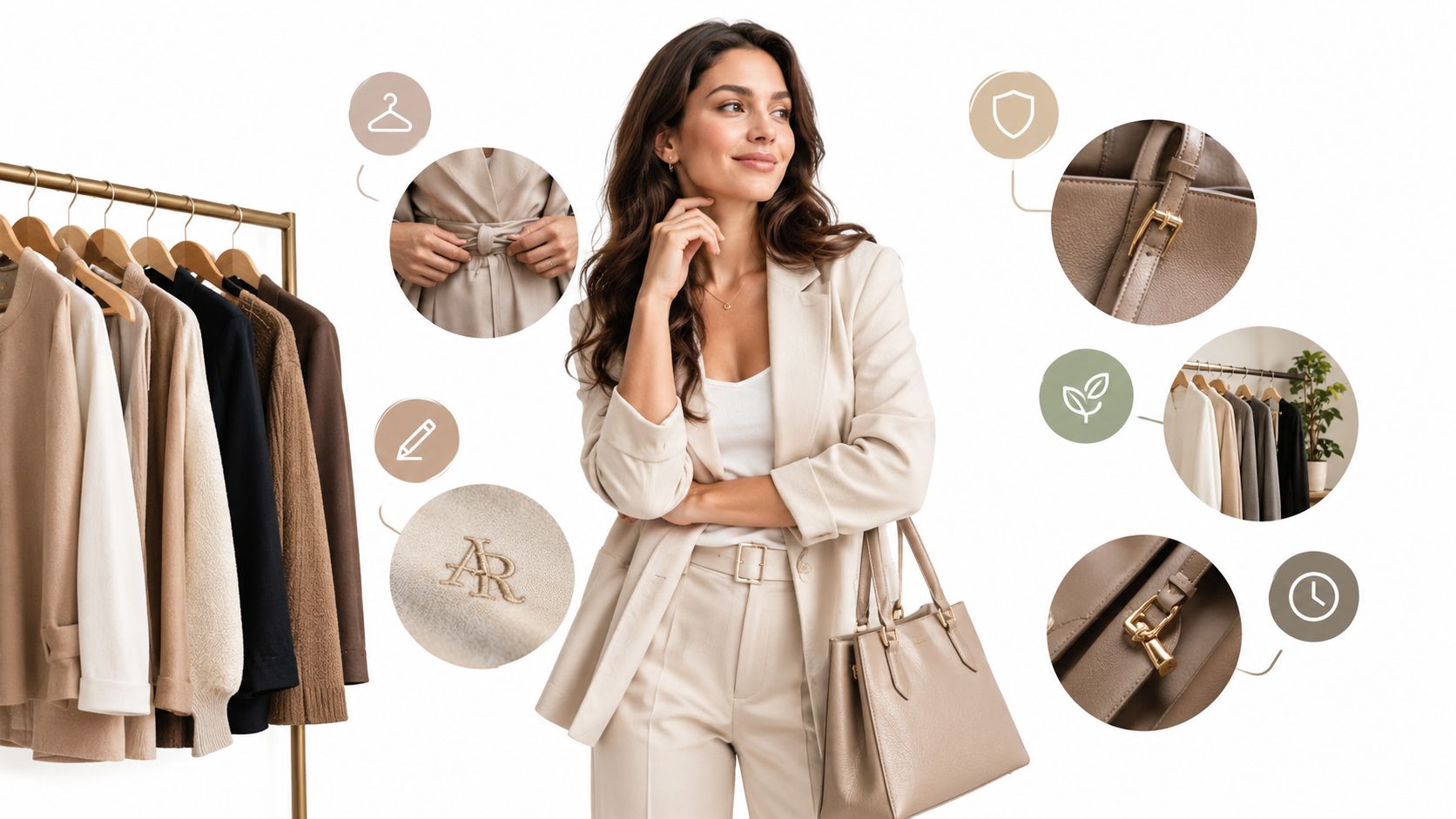
Personalization has a practical role beyond gifting. Monogramming can make a common bag easier to identify on a luggage rack, and it can turn a functional purchase into something you're more likely to keep rather than replace. Keep the treatment discreet if the bag will accompany you into formal meetings. Initials are usually more versatile than oversized decorative marks.
Maintenance is part of the price
Full-grain leather can handle ordinary scuffing, but it isn't maintenance-free. Wipe surface dirt with a soft cloth, let moisture dry naturally, and use a suitable conditioner sparingly. Avoid soaking the bag, placing it against prolonged heat, or applying an untested product that darkens the finish unevenly.
Ownership value also depends on what happens after the first serious mark. Ask whether the maker supports replacement straps, zipper repairs, handle work, or stitching repairs. A bag with serviceable parts may remain useful after airline handling has affected the edges or hardware. Sustainability is therefore not only about material selection. Repair, reuse, and long service life reduce the need to replace a functioning bag, provided the construction supports those outcomes.
Judge the bag by its future condition
A strong candidate should still make sense after its first patina develops. Look for leather that can age attractively, hardware that can be replaced or tightened, and an interior that won't become unusable after ordinary wear. The initial shine is temporary. Construction quality and support determine whether the bag earns a permanent place in your travel routine.
Our Recommendation for Every Traveler Profile
The right choice depends on the journey you repeat, not the image you want to project.
For the weekly business flyer, choose a structured backpack or compact wheeled leather bag if you walk through large terminals and carry a laptop daily. A padded device sleeve, quick-access document area, and organized cable storage matter more than decorative straps. A duffel can work if your route is short and your clothing load stays controlled.
For the weekend road-tripper, choose a leather weekender or duffel with a broad opening, reinforced handles, and a removable shoulder strap. You'll benefit from flexible capacity and fast access, especially when the bag moves between a car trunk and a hotel room. Add a separate toiletry bag if liquids and grooming items tend to disrupt your clothing layout.
For the minimalist one-bag traveler, prioritize low empty weight, a compact footprint, and disciplined organization. Leather wins when you value a polished appearance and long ownership, but it doesn't win automatically if your priority is maximum capacity under strict airline limits. A backpack or hybrid design may carry more comfortably than a shoulder duffel.
For the gift buyer, personalization and useful organization are the safest priorities. Choose a format that matches the recipient's actual routine, then consider a monogram, tech organizer, or toiletry companion rather than selecting a larger bag just because it appears more substantial.
Before checkout, confirm:
- Format: Does the carry method match your longest walking segment?
- Capacity: Does it fit your real packing list without forced expansion?
- Protection: Are laptops and fragile items separated by padding?
- Construction: Are stress points reinforced and closures substantial?
- Ownership: Can the bag be cleaned, repaired, and used for years?
Grainmark Leather offers full-grain leather duffels, backpacks, briefcases, wheeled bags, and coordinating organizers for men's work and travel carry. Review the Grainmark Leather collection, compare the format with your normal trips, and choose the bag whose construction and capacity will make travel easier rather than merely more stylish.