Top Grain vs Genuine Leather: Which Should You Buy?
Top-grain leather is the refined outer hide layer, lightly sanded and finished for a consistent surface. Genuine leather is a broad FTC-permitted label that typically means split or heavily processed hide. For daily-use bags, wallets, and belts, top-grain is the better long-term investment. Genuine leather suits short-term or budget purchases where lifespan is a secondary concern.
Table of Contents
- What is top-grain leather, and how does genuine leather differ?
- Top grain vs genuine leather: side-by-side comparison
- How can you tell top-grain from genuine leather in person?
- Pros and cons of top-grain and genuine leather
- What lifespan should you expect, and how do you extend it?
- Which grade should you choose for bags, wallets, and furniture?
- Why makers choose top-grain for handcrafted goods
- Key Takeaways
- Why the “genuine leather” label misleads more buyers than it helps
- Grainmarkleather’s top-grain and genuine leather goods
- Useful sources
What is top-grain leather, and how does genuine leather differ?
Top-grain sits one step below full-grain in the leather grade hierarchy. It comes from the outer layer of the hide, which holds the densest fiber structure. Manufacturers lightly sand or “correct” the surface to remove natural blemishes, then apply a pigmented finish. The result is a uniform, clean appearance with good structural integrity.
Genuine leather, by contrast, is a minimum disclosure term. The FTC permits it for any product containing animal hide, but it imposes no quality standard. In practice, it commonly refers to split leather — the inner layers left after the outer hide is separated — which is then heavily coated or embossed to resemble a natural grain surface.
How each grade is typically processed:
- The raw hide is split horizontally. The top layer goes toward full-grain or top-grain production; the lower split goes toward genuine/split leather.
- Top-grain hides are lightly sanded to even out surface imperfections.
- A pigmented coating is applied to top-grain, giving it color consistency and mild stain resistance.
- Split/genuine hides receive a heavier synthetic coating and are often embossed with an artificial grain pattern to simulate texture.
- Both grades are cut and assembled into finished goods, though the underlying fiber density differs substantially.
Common product contexts by grade:
- Top-grain: luxury handbags, automotive upholstery, high-end furniture, quality belts and wallets
- Genuine/split: budget accessories, fashion bags with short expected lifespans, entry-level upholstery, promotional items
Top grain vs genuine leather: side-by-side comparison
| Dimension | Top-Grain Leather | Genuine (Split) Leather |
|---|---|---|
| How it’s made | Outer hide layer, lightly sanded, pigmented finish | Lower split layers, heavy coating, often embossed |
| Durability | 5–10 years with regular care | Typically 1–3 years in regular use |
| Appearance / patina | Consistent grain, limited natural patina | Uniform embossed surface, no meaningful patina |
| Price / value | Mid to upper range; better cost-per-year | Lower upfront cost; higher replacement frequency |
| Maintenance | Conditions well; surface responds to leather care products | Coating resists conditioner; limited repair once surface fails |
| Best uses | Daily bags, wallets, belts, quality upholstery | Fashion accessories, short-term use, budget items |
| How to identify | Irregular pores, visible fiber at cut edge, slight give | Repeating embossed pattern, smooth cut edge, stiff feel |
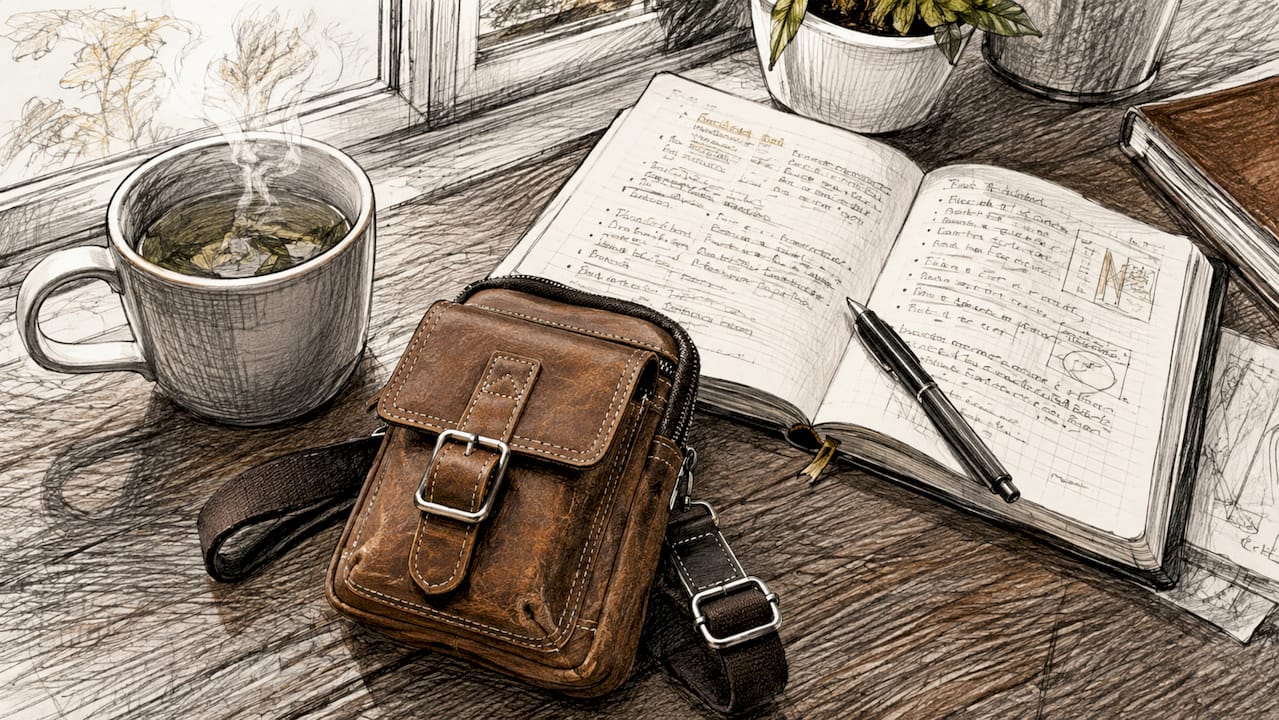
Top-grain is the stronger long-term buy for most everyday goods. Genuine leather can still make sense for fashion pieces you expect to replace relatively quickly, where upfront cost matters more than longevity.
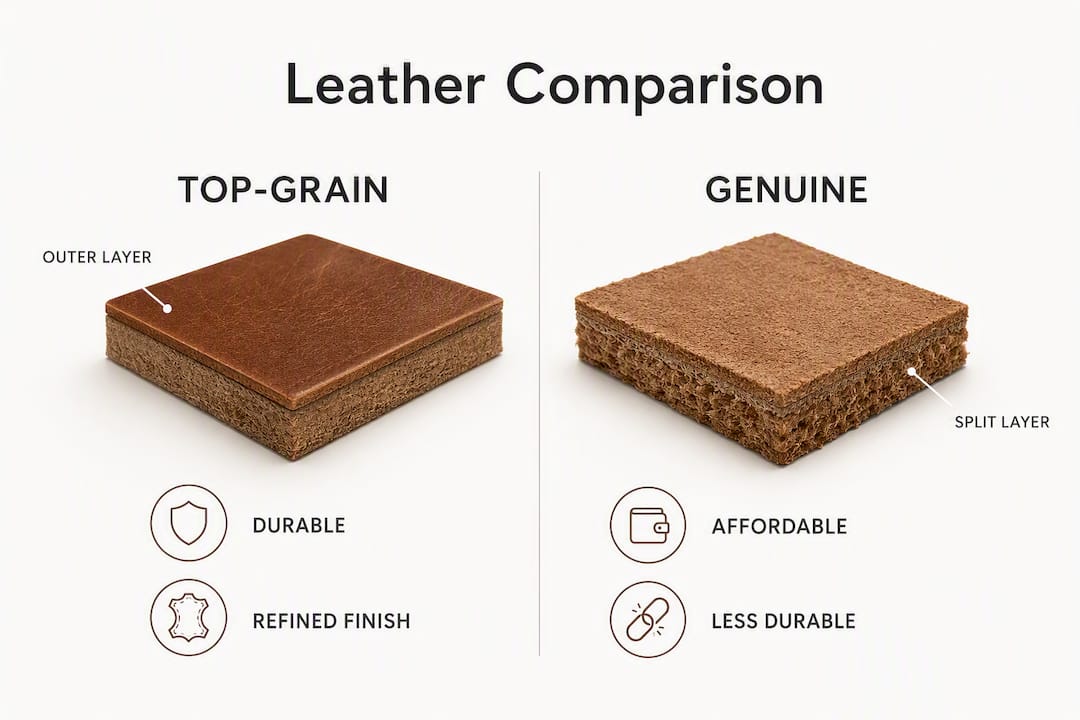
How can you tell top-grain from genuine leather in person?
The label alone is not enough. Leatherworkers recommend checking physical evidence directly.
In-person checklist:
- Grain pattern: Top-grain shows slight irregularity in pore size and spacing. Genuine/split often repeats an identical embossed pattern across the surface.
- Cut edge: Slice or look at an unfinished edge. Top-grain shows visible fibrous structure. Split leather edges are smoother, sometimes with a fabric or paper backing.
- Smell: Higher-grade leather has a faint, natural hide smell. Heavy synthetic coatings on genuine leather often produce a plastic or chemical odor.
- Flexibility: Top-grain bends with slight resistance and returns to shape. Heavily coated split leather can feel stiff or crinkle at the surface.
- Backing: Check the interior lining or an unfinished area. Fabric or felt backing bonded to a thin layer is a sign of split or bonded leather, not top-grain.
Online shopping checklist:
- Look for explicit grade labeling: “top-grain” or “full-grain” in the product description, not just “genuine leather.”
- Request or look for close-up photos of cut edges — sellers who show this are being transparent about construction.
- Check whether the seller names the hide layer and finishing process. Vague descriptions like “premium genuine leather” without further detail are a flag.
- Price is a rough signal: top-grain goods at $30–$50 are unlikely. If the price seems too low for the claimed grade, it probably is.
Pro Tip: Press your thumb firmly into the surface for three seconds and release. Top-grain leather will show a slight, temporary impression that fades. A heavily coated split surface tends to spring back immediately with no impression, because the coating, not the hide, is doing the work.
Pros and cons of top-grain and genuine leather
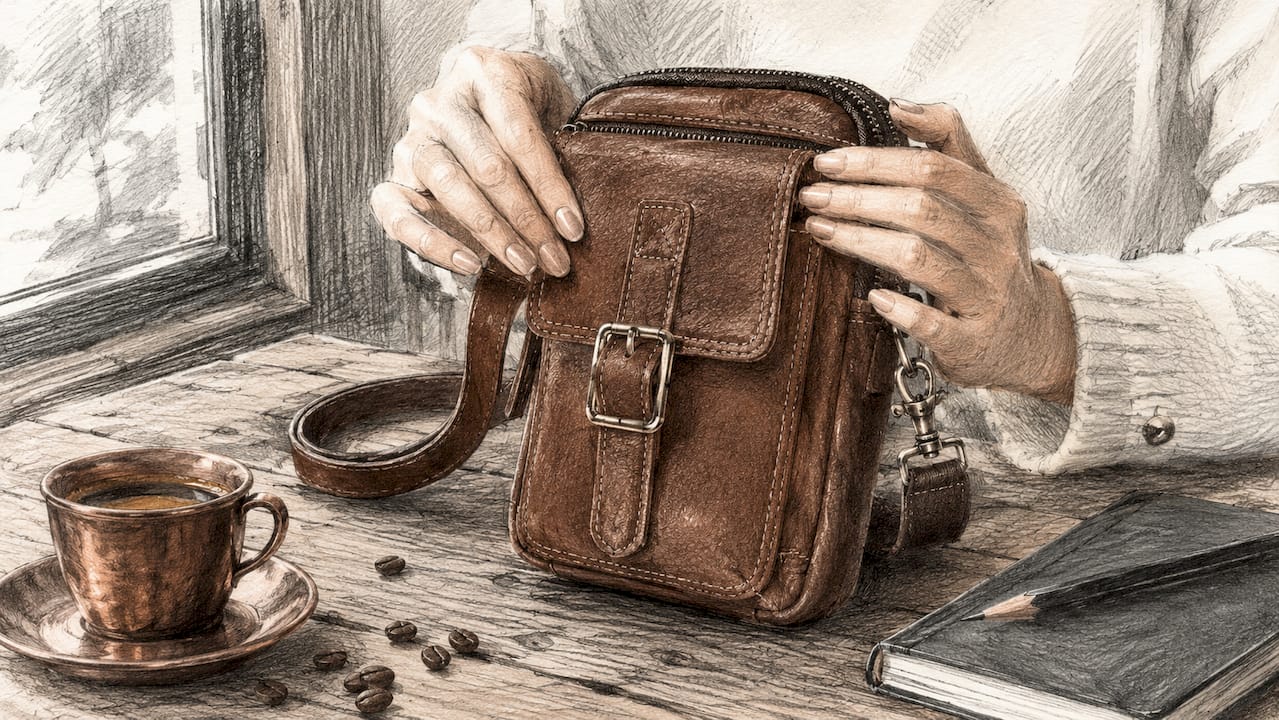
Top-grain’s strengths are consistency and durability. The sanded and pigmented surface resists surface stains better than uncoated lower layers, cleans easily with a damp cloth, and holds stitching well over years of use. For handcrafted goods where structural integrity matters, it is a practical choice.
The trade-off is character. Top-grain’s corrected surface limits the deep, uneven patina that makes full-grain leather develop a unique appearance over time. The finish is more uniform from day one, which some buyers prefer and others find less interesting.
Genuine leather’s main advantage is price. For fashion accessories or items with a short intended lifespan, the lower cost is a real benefit. The surface is consistent and can look presentable when new.
The durability gap is significant, though. Once the synthetic coating on genuine/split leather begins to crack or peel, reconditioning is largely ineffective — the conditioner cannot penetrate the coating to reach the underlying fibers. Replacement becomes the only practical option, which raises the true cost over time.
Disadvantages worth noting:
- Top-grain vs full-grain: Top-grain loses some of the natural fiber density removed during sanding. A heavily corrected top-grain with a thick pigment coat can perform closer to split leather than to full-grain. Minimal correction preserves strength; heavy correction reduces it.
- Genuine leather: Poor stitch retention in lower-density split fibers, limited repairability, and short usable lifespan make it a poor choice for anything expected to last more than a couple of years.
What lifespan should you expect, and how do you extend it?
The numbers are direct: genuine leather typically lasts only a few years in regular use, top-grain commonly reaches multiple years with basic care, and full-grain serves as the long-term reference point lasting many years. On a cost-per-year basis, a $200 top-grain bag used for several years costs less annually than a $60 genuine leather bag replaced frequently.
Maintenance that extends lifespan:
Clean top-grain leather with a slightly damp cloth every few weeks under regular use. Apply a leather conditioner two to four times per year to prevent the surface from drying and cracking. For upholstery, specialized leather cleaning techniques differ from general fabric care and are worth following precisely.
Store leather goods away from direct sunlight and heat sources, which accelerate surface drying. Use a dust bag or breathable cover for items stored long-term.
What to avoid: Strong solvents, alcohol-based cleaners, and abrasive cloths damage the pigmented surface of top-grain leather. Prolonged moisture exposure without drying causes fiber breakdown. Avoid leaving leather goods in a hot car or near radiators.
Which grade should you choose for bags, wallets, and furniture?
The right grade depends on how often you use the item and how long you expect to keep it.
- Daily-use bags and wallets: Top-grain is the practical floor. The fiber density holds stitching under repeated stress, and the surface cleans without special effort. For leather wallets carried every day, top-grain outperforms genuine leather in every durability measure that matters.
- Belts and straps: Top-grain or full-grain. Genuine leather belts under regular tension tend to delaminate or crack at stress points within a year or two.
- Fashion bags and seasonal accessories: Genuine leather is acceptable here. If you replace bags seasonally or treat them as trend items, the lower cost makes sense and the shorter lifespan is not a problem.
- Upholstery and high-wear furniture: Top-grain at minimum. The surface stain resistance and structural consistency matter more over years of daily contact than they do for a wallet.
- Heirloom or investment pieces: Full-grain. Nothing in the top-grain or genuine category approaches the 20-plus-year lifespan of well-maintained full-grain leather. See how long full-grain leather lasts for a detailed breakdown.
On environmental impact: Fewer replacements mean less material consumption and less waste. A top-grain bag that lasts a decade replaces five or more genuine leather bags over the same period. When longevity is practical, it is also the lower-impact choice.
Why makers choose top-grain for handcrafted goods
From a production standpoint, top-grain offers workability that split/genuine leather cannot match. The outer fiber layer holds edge dye cleanly, accepts saddle stitching without tearing, and responds predictably to conditioning and finishing. Top-grain’s structural performance depends on how much of the outer dense fibers were removed during correction — minimal correction preserves stitch-holding capacity and long-term strength.
Split leather, by contrast, has lower fiber density. Stitching through it under tension risks tearing, and the synthetic coating limits the finishing options available to an artisan. For visible, handcrafted goods where construction quality is part of the product, split/genuine is a practical constraint, not a choice.
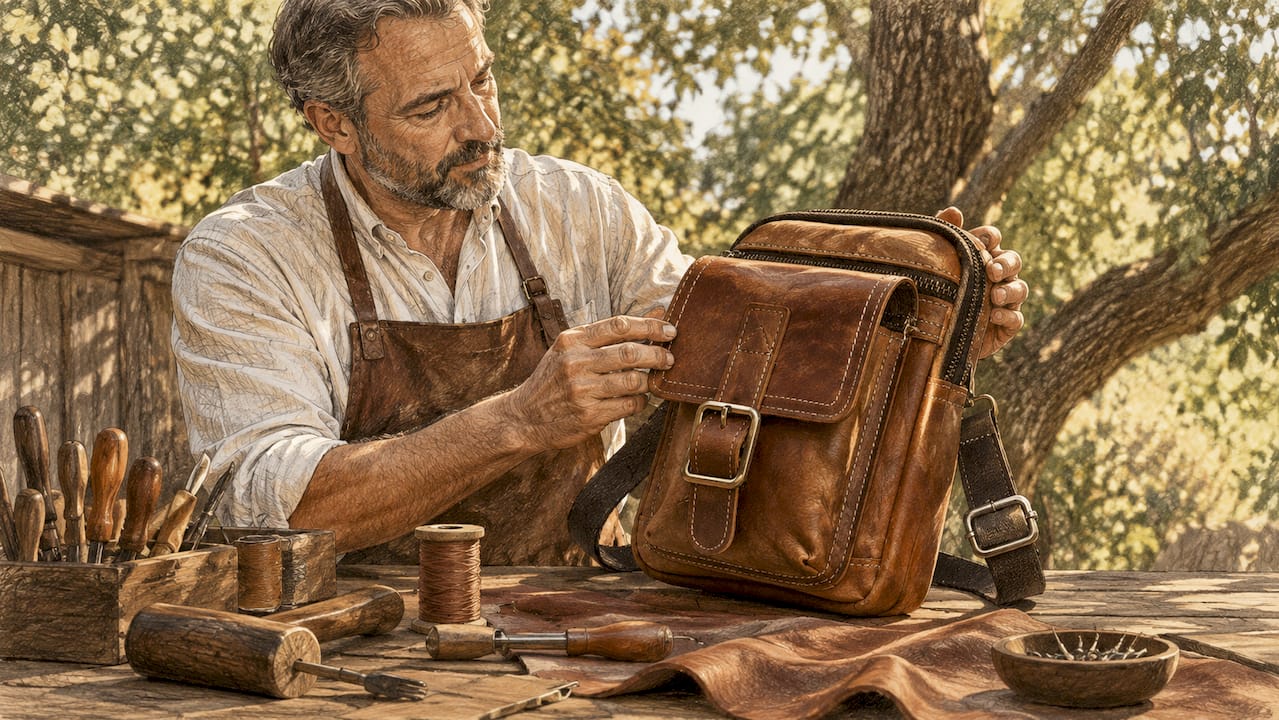
Grainmarkleather uses top-grain leather across its handcrafted bag and accessory range, backed by a one-year warranty on construction. Product pages specify the hide grade and finishing details — checking those descriptions before purchase is the clearest way to confirm what you are buying. For buyers who want personalization, leather embossing is available as a customization option on select pieces.
Key Takeaways
Top-grain leather outlasts genuine leather by a wide margin in regular use, making it the better long-term value for daily-use goods despite a higher upfront cost.
| Point | Details |
|---|---|
| Grade definitions | Top-grain is the outer hide layer, lightly corrected; genuine leather is typically a lower split with heavy synthetic coating. |
| Lifespan gap | Genuine leather lasts roughly 1–3 years; top-grain commonly reaches 5–10 years with basic care. |
| Identification | Check cut edges for fiber structure and look for irregular grain — embossed repeating patterns indicate split/genuine. |
| Care priority | Condition top-grain two to four times per year; avoid solvents, heat, and prolonged moisture. |
| Grainmarkleather | Uses top-grain leather in handcrafted bags and accessories, with a one-year warranty and grade disclosure on product pages. |
Why the “genuine leather” label misleads more buyers than it helps
The conventional framing treats “genuine leather” as a quality tier just below top-grain. It is not. It is a legal minimum — the FTC requires only that the product contain animal hide, nothing more. A wallet labeled “genuine leather” could be made from the densest outer split or the loosest inner layer, and the label tells you nothing about which.
The more useful question is not “is this genuine leather?” but “which layer of the hide is this, and how heavily was it processed?” Sellers who answer that question clearly — naming the layer, showing cut-edge photos, disclosing the finish type — are giving you the information the label withholds.
Top-grain is not perfect. A heavily corrected top-grain with a thick pigment coat performs closer to split leather than to lightly corrected top-grain. The grade is a starting point, not a guarantee. What matters is the degree of correction and the quality of the hide before processing. That is why construction transparency matters more than the label on the tag.
Grainmarkleather’s top-grain and genuine leather goods
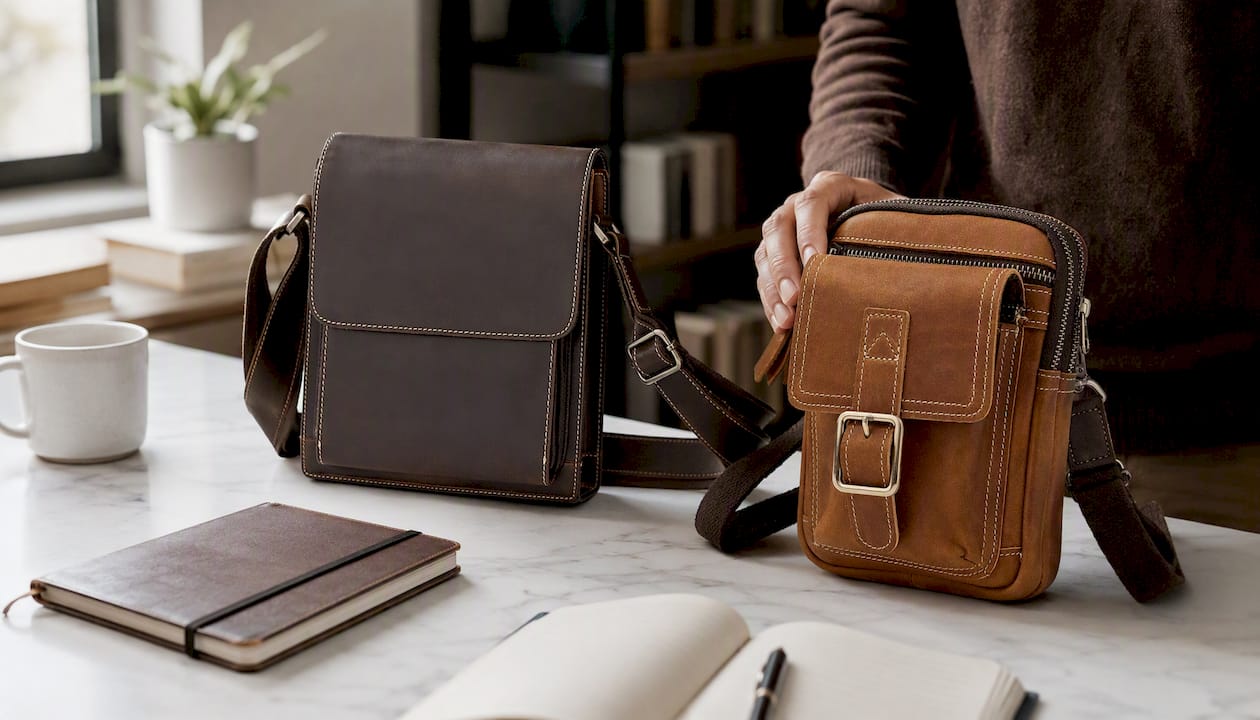
Grainmarkleather offers handcrafted options in both grades. The Top Grain Leather Crossbody Bag — The Scholar is built from top-grain crazy horse leather with heavy-duty stitching and a one-year warranty. For buyers considering a genuine leather option, the Genuine Leather Crossbody Bag is available with the same construction standards. Each product page lists the hide grade, finishing details, and care guidance. Personalization through leather embossing is available on select pieces for buyers who want a custom mark on their goods.
Useful sources
- Full-Grain vs Top-Grain Leather Comparison — Holdform — Covers the quality spectrum within top-grain and how correction degree affects performance.
- Leather Grades Guide — Selvane — Explains stain resistance and maintenance differences between grades.
- Grades of Leather Explained — Grainmarkleather — Grainmarkleather’s own grade hierarchy reference for buyers comparing full-grain, top-grain, and genuine options.