Best Minimalist Leather Wallet for Style-Conscious Buyers
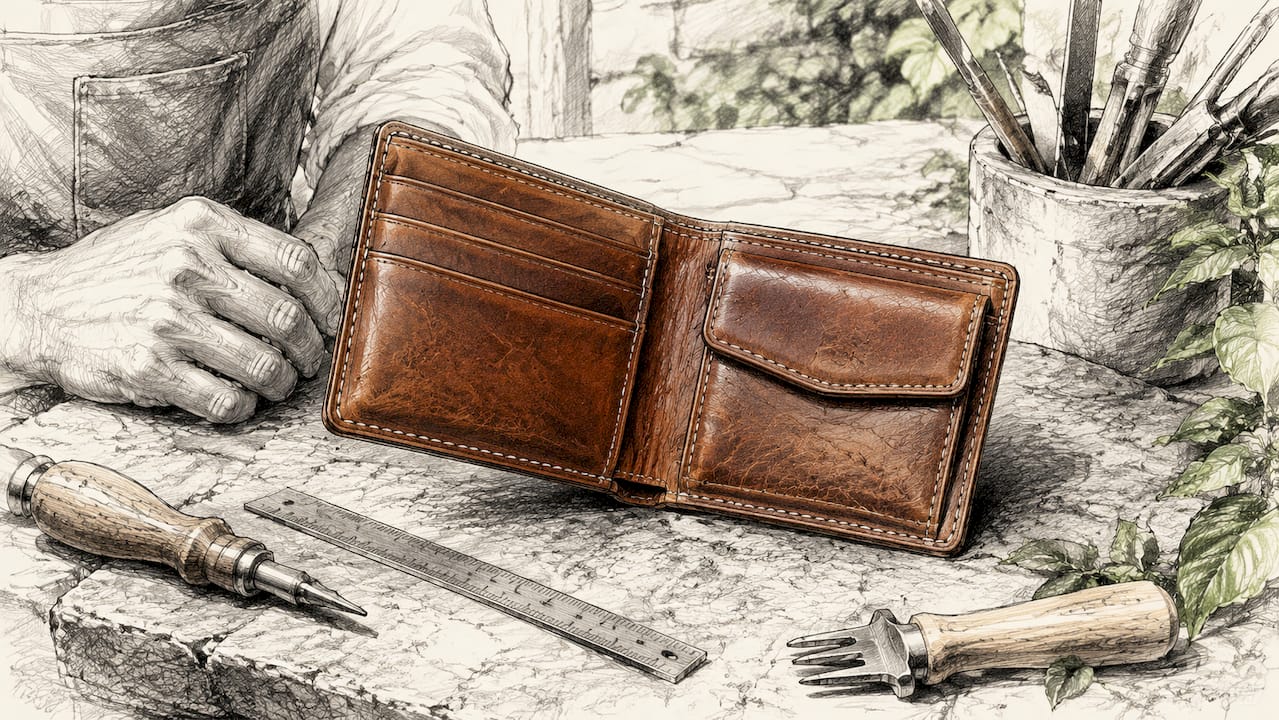
The Slim Vintage Leather Bifold Wallet with RFID Protection from Grainmarkleather is the best minimalist leather wallet for buyers who want full-grain leather, a slim front-pocket profile, and practical card capacity in one handcrafted piece. It carries several cards, includes optional RFID shielding, and comes with a one-year warranty.
Quick picks by carry type:
- Best handcrafted full-grain pick: Slim Vintage Leather Bifold Wallet with RFID Protection — slim bifold, full-grain leather, customizable
- Best for ID access: Slim Leather Bifold Wallet with RFID and ID Windows — adds a clear ID window without adding bulk
- Best for travelers: Vintage Leather Bifold Wallet with Zipper and RFID Protection — zippered compartment secures cash and coins
- Best classic styling: Classic Vintage Leather Bifold Wallet — traditional bifold layout, full-grain leather, heavy-duty stitching
- Best for coin carry: Vintage Leather Bifold Wallet with RFID and Coin Pocket — adds a coin pocket while keeping a mostly slim profile
Leather Working Group (LWG) certification is the most reliable third-party signal for responsible full-grain leather sourcing. None of the picks below are mass-market; all are handcrafted with full-grain leather and carry Grainmarkleather’s one-year warranty.
Table of Contents
- How do the top minimalist leather wallets compare?
- Ranked reviews: which slim leather wallet fits your carry?
- How do you choose the right minimalist leather wallet?
- How do you keep a minimalist leather wallet in good condition?
- Key Takeaways
- What handcrafted full-grain leather actually delivers
- Grainmarkleather’s handcrafted wallets: the full-grain option for daily carry
How do the top minimalist leather wallets compare?
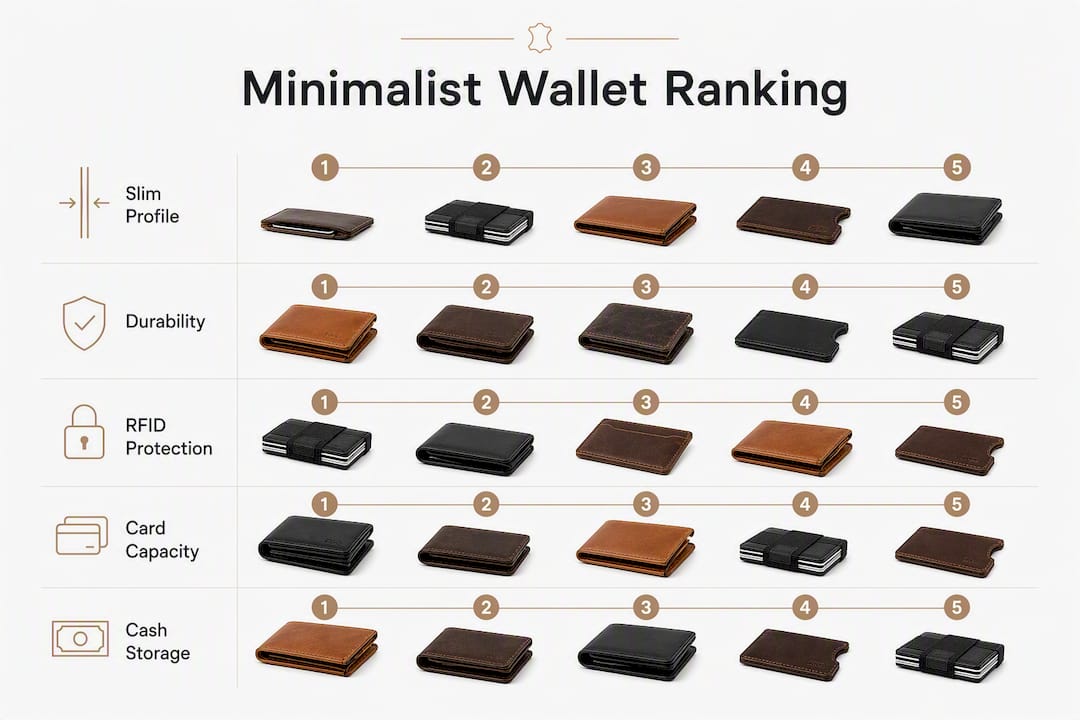
The table below covers the five shortlisted wallets across every dimension that affects daily carry. Thickness and card count are the two axes that trade off most directly against each other.
| Wallet | Best for | Material | Card capacity | Cash capacity | RFID | Design | Warranty |
|---|---|---|---|---|---|---|---|
| Slim Vintage Leather Bifold with RFID | Front-pocket carry, moderate cards + cash | Full-grain leather | 6–8 cards | Folded bills | Yes | Slim bifold | 1 year |
| Slim Bifold with RFID and ID Windows | Quick ID access, slim profile | Full-grain leather | 6–8 cards | Folded bills | Yes | Slim bifold with ID window | 1 year |
| Bifold with Zipper and RFID | Travel, cash and coin security | Full-grain leather | 6–8 cards | Folded bills + coins | Yes | Vintage bifold with zipper | 1 year |
| Classic Vintage Bifold | Traditional styling, reduced bulk | Full-grain leather | 6–8 cards | Folded bills | No | Classic bifold | 1 year |
| Bifold with RFID and Coin Pocket | Occasional coin carry | Full-grain leather | 6–8 cards | Folded bills + coins | Yes | Vintage bifold with coin pocket | 1 year |
A thinner loaded profile means fewer cards. If you carry a moderate number of cards daily, any of these wallets will stay genuinely slim. Loading many cards causes the bifold format to show increased thickness. All five carry Grainmarkleather’s one-year warranty; price bands are not publicly listed per product but sit within the handcrafted leather accessories range.
Ranked reviews: which slim leather wallet fits your carry?
Forbes Vetted and Wirecutter both rank slim profile and material durability as the two primary selection criteria across top minimalist wallets. The five picks below are ordered by fit for the article’s core audience: style-conscious buyers who want handcrafted full-grain leather in a front-pocket form.
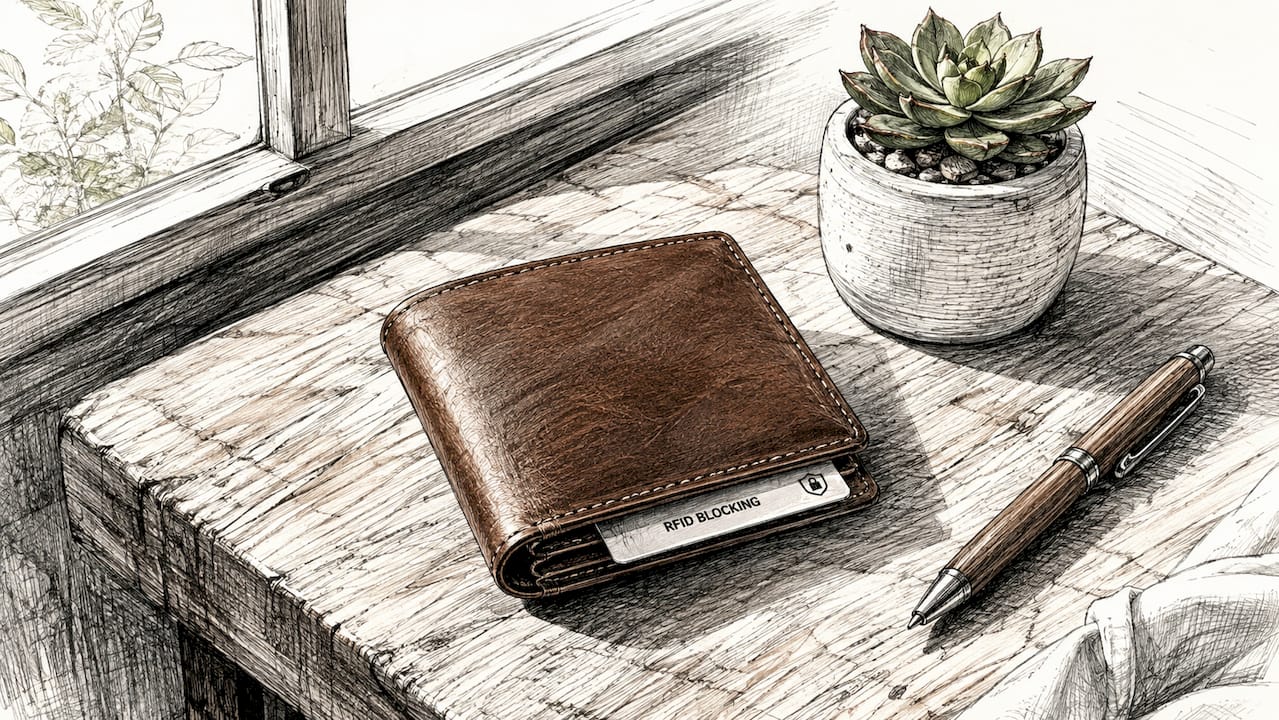
1. Slim Vintage Leather Bifold Wallet with RFID Protection
The top pick for buyers who want a handcrafted full-grain leather bifold that stays genuinely slim. The crazy horse full-grain leather develops a patina with use, the RFID lining shields contactless cards, and the wallet accepts customization. Card capacity sits at 6–8 cards with space for folded bills.
Pros:
- Full-grain leather with natural patina development
- Optional RFID protection and personalization
- One-year warranty with heavy-duty stitching
Cons:
- No ID window
- Coin carry requires a separate pouch
Best for: front-pocket carry with moderate card and cash needs.
2. Slim Leather Bifold Wallet with RFID and ID Windows
This option adds a clear ID window to the slim bifold format. The profile stays close to the base model, making it a practical choice for buyers who show ID regularly — at a gym, office, or airport — without wanting to pull the card from a slot each time.
Pros:
- Clear ID window for quick access
- RFID shielding included
- Full-grain leather construction
Cons:
- ID window adds a small amount of thickness when occupied
- No coin pocket
Best for: buyers who need fast ID access without sacrificing a slim carry.
3. Vintage Leather Bifold Wallet with Zipper and RFID Protection
The zipper compartment is the differentiator here. Cash, receipts, or a spare key sit behind a secure closure rather than loose in a bill slot. Wirecutter notes that some card cases trade cash capacity for extreme thinness; this wallet takes the opposite approach, prioritizing security over minimum thickness.
Pros:
- Zippered compartment for cash and small items
- RFID protection
- Durable vintage finish on full-grain leather
Cons:
- Slightly thicker than a pure bifold due to zipper hardware
- Heavier than the base slim bifold
Best for: travelers and anyone who wants a more secure cash compartment.
4. Classic Vintage Leather Bifold Wallet
The most straightforward option in the lineup. No zipper, no ID window, no RFID lining. The classic bifold layout in full-grain leather with heavy-duty stitching suits buyers who want to reduce wallet bulk without adding features they will not use. Category roundups consistently distinguish full-grain leather for its patina and repairability over top-grain or bonded alternatives.
Pros:
- Clean, traditional bifold layout
- Full-grain leather with heavy-duty stitching
- No unnecessary hardware adds to the slim profile
Cons:
- No RFID protection
- No coin or ID compartment
Best for: traditionalists who want handcrafted materials and reduced bulk.
5. Vintage Leather Bifold Wallet with RFID and Coin Pocket
Adding a coin pocket to a bifold always increases the loaded thickness. This wallet manages the trade-off reasonably well: the coin pocket sits on the exterior and keeps the card slots unaffected. RFID shielding is included. For buyers who occasionally carry a few coins but do not want a separate coin purse, it is a practical compromise.
Pros:
- Coin pocket plus RFID protection
- Full-grain leather in a vintage finish
- One-year warranty
Cons:
- Coin pocket adds visible bulk when loaded
- Not the slimmest option in the lineup
Best for: users who sometimes carry coins but want a mostly slim wallet.
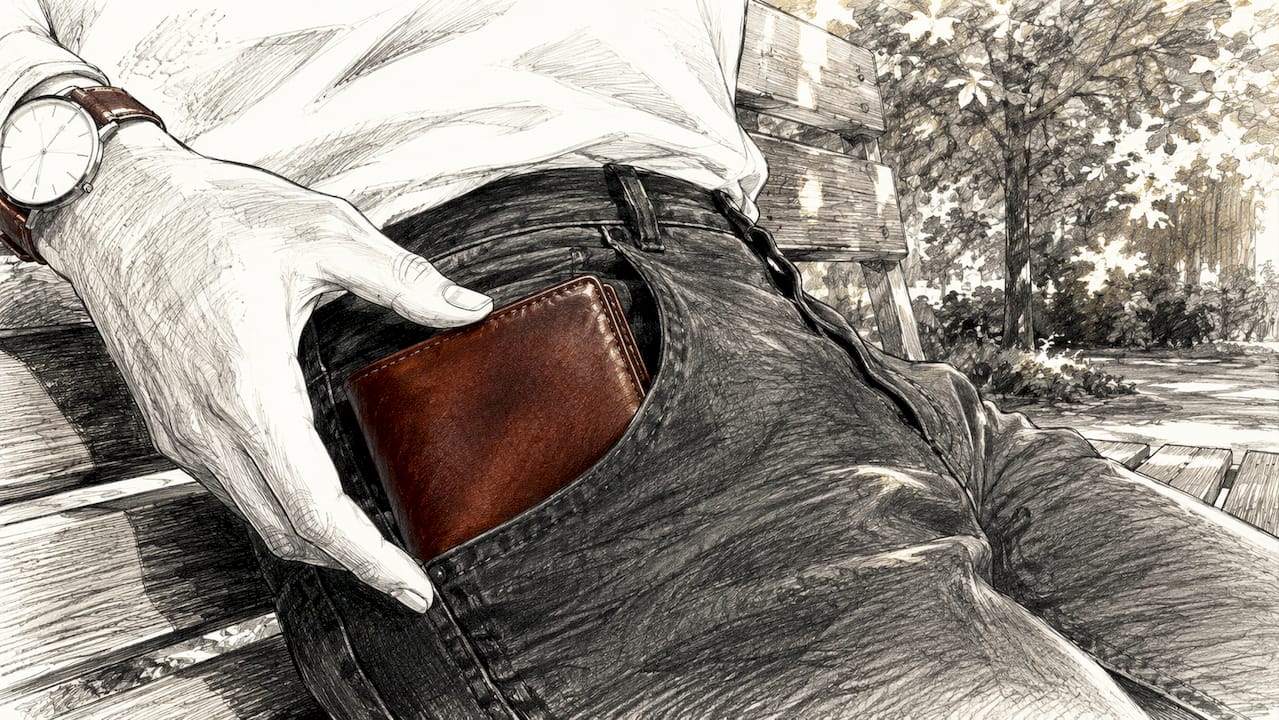
Pro Tip: If the choice between a bifold and a cardholder is close, count your daily cards first. Four cards or fewer and a flat cardholder will be noticeably thinner in a front pocket. Five or more and a slim bifold gives you the cash slot without a meaningful thickness penalty.
How do you choose the right minimalist leather wallet?
The single most important decision is matching your card and cash habits to the wallet’s capacity and thickness. A wallet that holds 12 cards is not minimalist in practice if you fill every slot.
Decision checklist:
- Card count: Count only the cards you carry daily, not the ones you might need. Most buyers land at 4–6.
- Cash habits: Folded bills fit any bifold; coins need a dedicated pocket or a separate carry.
- Pocket type: Front-pocket carry rewards the thinnest profile. Back-pocket carry tolerates a slightly thicker wallet.
- Closure preference: Open bifold, zipper, or snap closure each affect thickness and access speed.
- RFID needs: If you carry contactless credit cards or a transit card, RFID shielding is worth having.
- Leather type: Full-grain leather is the only grade that develops a patina and can be conditioned over years of use. Avoid vague claims like “genuine leather,” which typically describes a lower-grade split hide.
- Craftsmanship indicators: Saddle stitching and clean edge finishing predict durability. Independent reviewers note that packaging, hardware, and edge finishing are small but meaningful quality signals.
Red flags when buying online:
- Vague leather descriptions (“genuine leather,” “PU leather,” “leather-like”)
- No dimensions listed for the loaded wallet
- No warranty or an unclear return policy
- Chemical odor noted in reviews — Wirecutter flags persistent chemical odor as a disqualifier across leather goods
- Uneven or loose stitching visible in product photos
Questions to ask before purchasing:
- What are the loaded dimensions (with 6 cards)?
- Is the tannery LWG-certified for environmental and worker safety standards?
- What is the repair or replacement policy after the warranty period?
For a broader look at wallet styles and form factors, the leather wallet types guide covers bifolds, trifolds, cardholders, and money clips with use-case comparisons.
How these picks were selected
The shortlist is based on editor review synthesis, published third-party testing from Consumer Reports, Forbes Vetted, and Wirecutter, plus product specifications from Grainmarkleather’s own product pages.
| Metric | Why it matters |
|---|---|
| Leather type and sourcing | Full-grain leather ages better and can be conditioned; LWG certification signals responsible sourcing |
| Loaded thickness | Determines front-pocket comfort; thinner is better for most buyers |
| Card capacity | Must match daily carry habits, not maximum possible load |
| Edge finishing and stitching | Predicts long-term durability and patina quality |
| RFID protection | Relevant for contactless cards and transit passes |
| Warranty and return policy | One-year warranty is the standard for handcrafted leather goods |
| Price band | Compared within the handcrafted leather accessories category |
Consumer Reports measures dimensions and weight across slim wallets and notes that metal cardholders can hold many cards but may sacrifice leather feel and pocket comfort. That trade-off shaped the decision to prioritize full-grain leather bifolds over metal or hybrid options for this audience.
How do you keep a minimalist leather wallet in good condition?
Full-grain leather wallets last longer than mass-market alternatives, but they do require basic maintenance. The break-in period is real: a new full-grain leather bifold will feel stiff for the first few weeks of carry. That stiffness eases as the leather conforms to your card load and body heat.
Conditioning. Apply a thin coat of leather conditioner every 3–6 months, or when the surface starts to look dry. Products like Leather Honey or Bickmore Bick 4 work well on crazy horse and vegetable-tanned full-grain leather. Avoid silicone-based sprays, which can clog the leather’s pores and dull the patina.
Moisture. If the wallet gets wet, blot it dry with a clean cloth and let it air-dry away from direct heat. A hair dryer or radiator will cause the leather to crack at the fold lines.
Overstuffing. The fastest way to shorten a slim wallet’s life is to carry more cards than the design allows. Overstuffing stretches the stitching at the card pockets and distorts the bifold spine. Keep the load at or below the stated capacity.
Storage. When not in use for extended periods, store the wallet flat or in a dust bag. Avoid leaving it in direct sunlight, which fades the surface and dries the leather faster than normal use.
Patina. The darkening and surface variation that develops with use is a feature of full-grain leather, not a defect. It reflects the natural oils from your hands and the specific way you carry the wallet. For more on leather grades and conditioning, the best leather for wallets guide covers full-grain versus top-grain in detail.
Key Takeaways
The best minimalist leather wallet for style-conscious buyers combines full-grain leather, a slim bifold profile, and a one-year warranty — all present in Grainmarkleather’s handcrafted lineup.
| Point | Details |
|---|---|
| Match capacity to carry habits | Count your daily cards before choosing; 4–6 cards keeps any slim bifold genuinely thin. |
| Full-grain leather is the right grade | It develops patina, can be conditioned, and outlasts top-grain or bonded alternatives. |
| RFID protection is worth having | Any wallet carrying contactless cards or a transit pass benefits from RFID shielding. |
| Condition every 3–6 months | A thin coat of leather conditioner prevents cracking at fold lines and maintains the patina. |
| Grainmarkleather’s wallets | The Slim Vintage Leather Bifold with RFID is the recommended handcrafted pick, backed by a one-year warranty and customization options. |
What handcrafted full-grain leather actually delivers
Most slim wallets on the market are made from top-grain or corrected-grain leather — sanded smooth and coated to hide imperfections. The surface looks consistent out of the box, but it does not age the same way. Full-grain leather keeps the hide’s natural surface intact, which means it develops a patina specific to how you carry it. That is not a marketing claim; it is a structural difference in how the leather is processed.
The practical implication for a minimalist wallet is repairability. A full-grain leather bifold with saddle stitching can have a broken thread replaced without replacing the wallet. A bonded or coated leather wallet typically cannot be repaired in the same way once the surface delaminates.
Break-in behavior is worth setting expectations around. A new handcrafted bifold will resist opening fully for the first week or two. The card pockets will feel tight. That resistance is the leather conforming to use, not a defect. By week three, the wallet will open and close with less effort and the card slots will have relaxed to a comfortable fit.
The stitching detail matters more than it looks. Heavy-duty saddle stitching uses two needles and a single thread looped through each hole, so if one stitch breaks, the seam does not unravel. Machine-stitched wallets use a lock stitch that can run if a single thread snaps. On a wallet that opens and closes hundreds of times a year, that difference compounds over time.
Grainmarkleather’s handcrafted wallets: the full-grain option for daily carry
Grainmarkleather’s wallets and cardholders collection covers the full range of minimalist carry options: slim bifolds with and without RFID, ID window variants, zippered travel bifolds, and coin pocket options. Every wallet is handcrafted in full-grain leather with heavy-duty stitching and carries a one-year warranty.
The Slim Vintage Leather Bifold Wallet with RFID Protection is the specific pick for buyers who want the thinnest daily carry with RFID shielding and personalization. Customization options include laser engraving. Shipping is available globally, and the one-year warranty covers manufacturing defects. For buyers who want to extend their leather carry beyond a wallet, the Personalized Full Grain Leather Traveler Backpack and the Crazy Horse Leather Watch & Sunglasses Case are built to the same construction standard. Browse the full wallet lineup and check current product dimensions on the wallets and cardholders page before purchasing.
Sources and further reading
The claims and comparisons in this article draw on the following published sources. Check each product page for current dimensions, pricing, and warranty terms before purchasing.
| Source | Relevance |
|---|---|
| Forbes Vetted: Best Wallets for Men | Material quality rankings, LWG certification guidance, and habit-change research |
| Wirecutter: Best Slim Wallets | Full-grain leather cardholder picks, chemical odor red flags, and cash capacity trade-offs |
| Consumer Reports: Best Slim Wallets | Measured dimensions, weight, and card capacity across slim wallet categories |
| WERD: Best Slim Wallets for Men | Material comparison: full-grain vs. vegetable-tanned vs. aluminum and carbon fiber |
| All the Wallets: Best Minimalist Wallets | Edge finishing and packaging as quality and durability signals |
| Grainmarkleather: Our Materials | Full-grain leather sourcing, construction details, and warranty terms |
On LWG certification: The Leather Working Group audits tanneries for environmental impact, water use, and worker safety. Asking a brand whether its tannery holds LWG certification is a straightforward way to verify responsible sourcing before purchase. For sustainable and cruelty-free alternatives to cowhide leather, this guide to selecting cruelty-free wallets covers the main material options and what to look for on a product page.