Leather Wallet Types: A Complete Style Guide for 2026
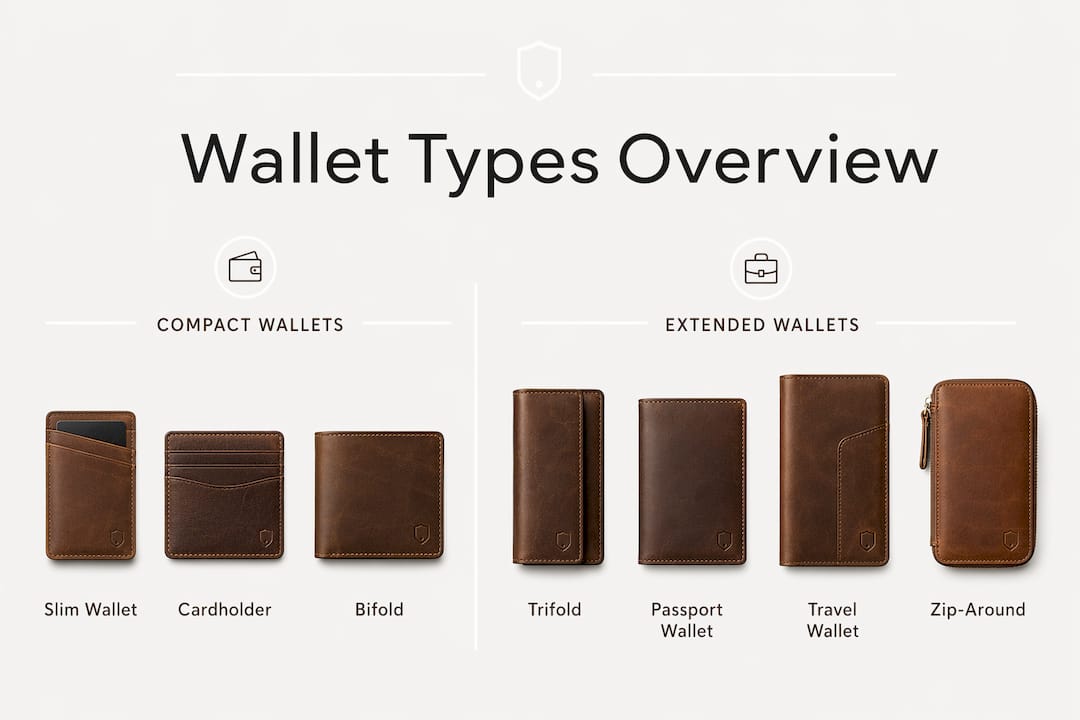
The main leather wallet types are bifold, trifold, slim, cardholder, passport, and travel wallets. Each serves a different carrying need. Bifolds balance capacity and slim profile for daily use. Trifolds hold more but add bulk. Slim wallets and cardholders suit minimalist carry. Passport and travel wallets prioritize security and organization on the road.
At a glance:
- Bifold wallets — fold once, two equal panels, the most common everyday style
- Trifold wallets — fold twice, more card slots, thicker profile
- Slim wallets and cardholders — minimal cards only, front-pocket friendly
- Passport wallets — sized to hold a passport plus travel documents
- Travel wallets — larger organizers for boarding passes, currencies, and cards
- Zip-around wallets — full zipper closure, maximum security and capacity
What are the main leather wallet types and how do they differ?
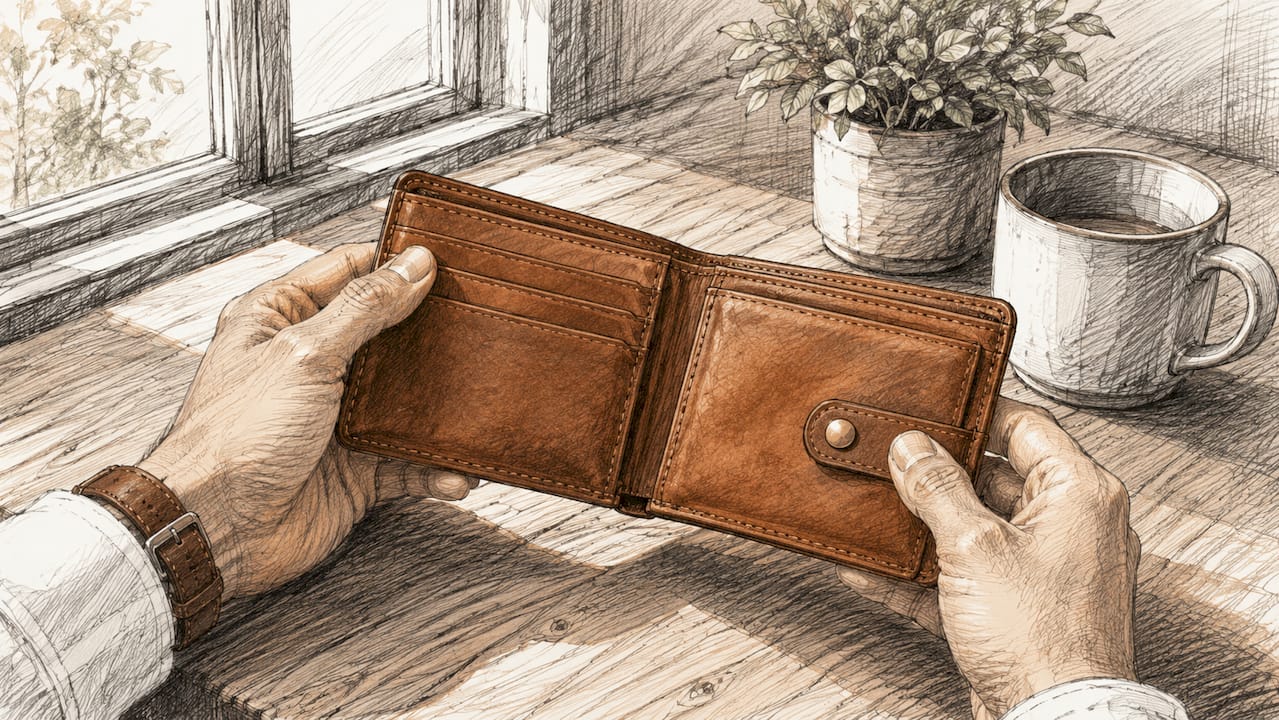
Bifold wallets are the most popular leather wallet style because they balance card capacity with a slim form factor. They fold once down the center, typically offering multiple card slots, a cash compartment, and sometimes an ID window. Most fit comfortably in a front or back pocket without adding bulk.
Trifold wallets fold twice, creating three panels. That extra fold adds card slots and often a coin pocket, which suits anyone who regularly carries cash in multiple currencies or needs to organize loyalty cards alongside payment cards. The trade-off is thickness. A fully loaded trifold sits noticeably higher in a back pocket than a bifold.
Slim wallets and cardholders strip the design down to the minimum. Most hold three to six cards and a few folded bills, nothing more. They work well for people who rely primarily on contactless payments and rarely carry cash. Front-pocket carry is the intended use, which also reduces pickpocket risk. If you follow minimalist fashion principles, a slim cardholder is the natural wallet equivalent.
Passport wallets are sized specifically to hold a standard passport booklet alongside travel documents, boarding passes, and a handful of cards. They are not everyday carry items. Their value is in keeping travel documents together in one place, often with a dedicated slot for local currency and a pen loop for customs forms.

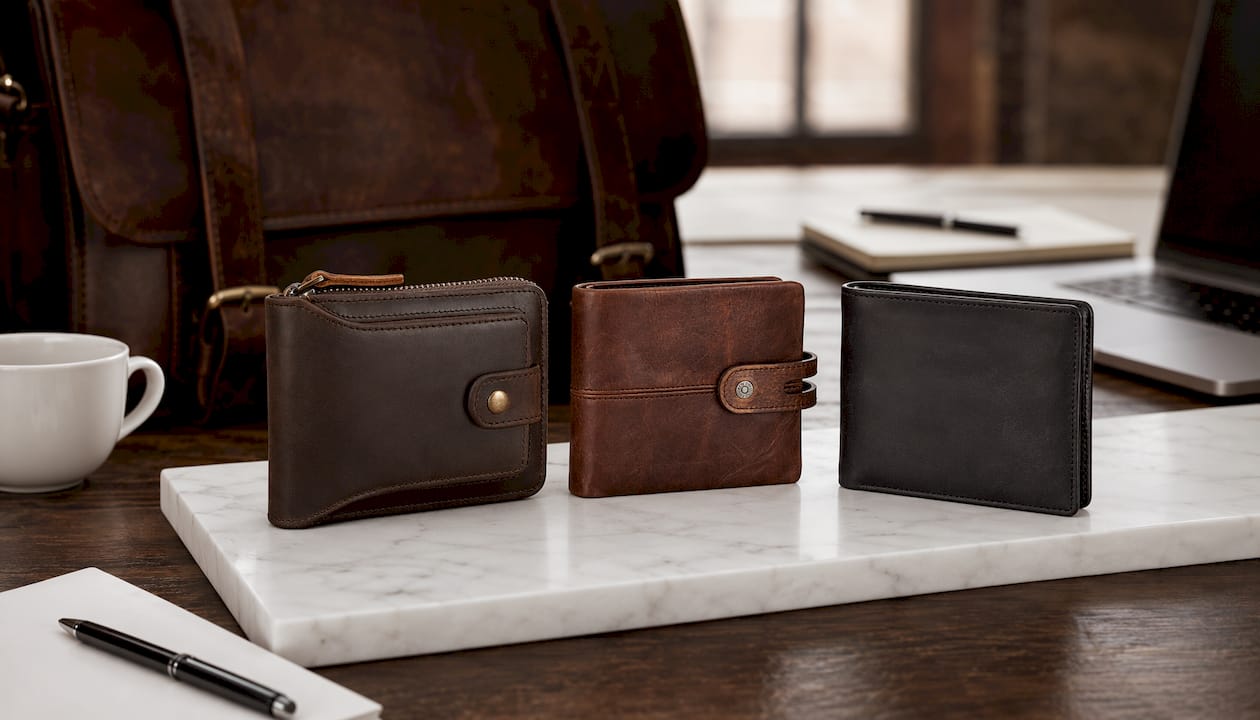
Travel wallets are the largest category. They function as portable document organizers, with room for multiple passports, travel insurance cards, foreign currency, and receipts. Many include a wrist strap or neck cord for hands-free carry through airports. The Vintage Leather Bifold with Zipper and RFID Protection from Grainmarkleather bridges the everyday and travel categories, combining a zipper closure with RFID-blocking in a full-grain leather bifold format.
Zip-around wallets use a continuous zipper that runs around three sides of the wallet. This closure style offers the most secure containment, making it a practical choice for travel or for anyone who carries coins. The zipper does add some bulk compared to an open-top bifold, but it prevents cards and cash from falling out in a bag.
Closure types and security features
Closure type affects both security and daily convenience. Three main options appear across leather wallet types:
- Open top (no closure) — the standard on most bifolds and cardholders; fastest access, no mechanism to wear out
- Snap closure — a metal or magnetic snap keeps the wallet shut; adds a small layer of security without much bulk
- Zipper closure — the most secure option; common on travel wallets and zip-around styles; adds slight thickness
RFID-blocking linings protect contactless card data from unauthorized scanning. Some wallets incorporate this protection without adding bulk, using a thin metallic layer bonded to the interior lining. For everyday urban carry, RFID protection is a practical feature rather than a luxury add-on. The Grainmarkleather Slim Vintage Leather Bifold with RFID Protection includes this lining in a pocket-friendly profile.
What leather grades actually mean for wallet quality
Not all leather is equal, and the grade determines how a wallet ages, how long it lasts, and how it feels from day one. The table below covers the five main grades.
| Leather grade | Durability | Surface | Best use |
|---|---|---|---|
| Full-grain | 10+ years with proper care | Unaltered, natural markings visible | Premium everyday wallets |
| Top-grain | 10 years | Sanded and buffed, uniform finish | Quality wallets with a refined look |
| Split-grain | 3 years | Lower hide layers, often embossed | Mid-range, budget-conscious buyers |
| Genuine leather | 1–3 years | Lowest usable layers, prone to wear | Avoid when durability matters |
| Bonded leather | Under 1 year | Scraps and adhesive, peels quickly | Avoid entirely |
Full-grain leather is the top of the hierarchy. The surface is untouched, so natural grain markings, pores, and slight variations remain visible. Those imperfections are actually a quality signal: they confirm the leather came from the strongest part of the hide. Full-grain leather wallets can last 10 or more years with proper care, developing a rich patina that reflects individual use patterns over time.
Top-grain leather has its surface lightly sanded to remove blemishes, giving it a cleaner, more uniform look. It is thinner than full-grain but still durable, and with consistent conditioning it can approach full-grain longevity. Most mid-to-high-end wallets use top-grain when full-grain is not specified.
Bonded leather sits at the bottom. It is made from shredded leather scraps and adhesive, pressed into sheets. Wallets labeled “PU leather,” “100% leather,” or simply “real leather” without specifying the grade are often bonded or split-grain. Avoid wallets labeled with those vague terms when durability is the priority.
Maintenance by leather type
- Full-grain and top-grain: Clean with a dry or slightly damp cloth; condition every three to six months with a leather conditioner to prevent drying and cracking
- Split-grain: Condition more frequently; avoid prolonged moisture exposure, which accelerates surface breakdown
- Suede (a split-grain variant): Use a suede brush for dry cleaning; avoid water and standard leather conditioners
How to choose the right leather wallet for your needs
The right wallet depends on what you carry daily, not on what looks good in a product photo. Work through these four criteria before deciding.
-
Count your cards. If you carry three to five cards, a slim cardholder or bifold handles that comfortably. Six to ten cards points toward a standard bifold or trifold. More than ten suggests a zip-around or travel wallet.
-
Decide on cash. Cardholders and slim wallets hold a few folded bills at most. If you regularly carry cash, a bifold with a dedicated bill compartment is the practical choice. Coin users need a zip pocket or a dedicated coin pouch.
-
Factor in travel frequency. Occasional travelers do fine with a standard bifold that has RFID protection. Frequent international travelers benefit from a passport wallet or travel organizer that keeps documents consolidated. The Grainmarkleather Vintage Leather Bifold with RFID and Coin Pocket covers both daily carry and light travel needs in one piece.
-
Match the wallet to your pocket. Front-pocket carry favors slim profiles under 8mm thick when empty. Back-pocket carry tolerates a standard bifold. Jacket or bag carry opens up trifolds and zip-arounds without the comfort penalty.
Choosing the right style also means matching wallet type to lifestyle: minimalists prefer slim wallets or cardholders, while travelers favor passport or travel wallets with added compartments.
Pro Tip: Before buying, empty your current wallet and count only the cards and cash you actually used in the past two weeks. Most people carry four to six items regularly. That count, not the total contents of your wallet, should determine the size you choose.
Why handcrafted wallets hold up longer
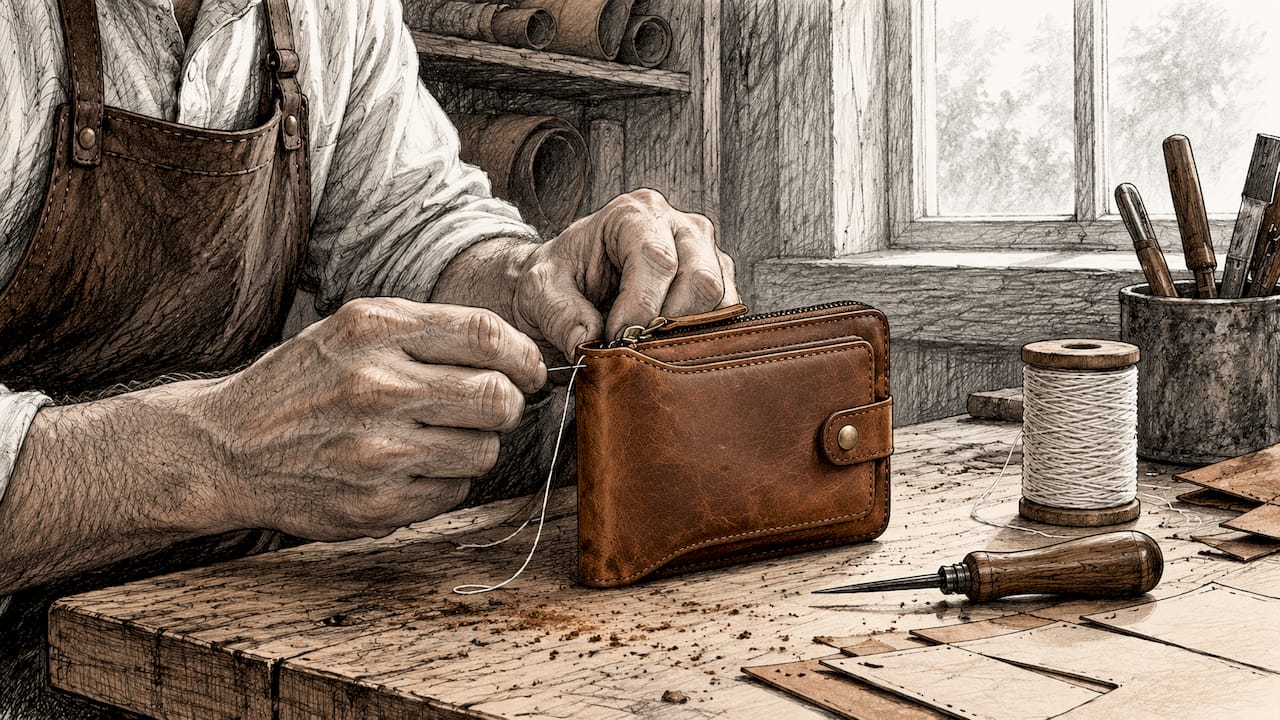
The difference between a handcrafted wallet and a mass-produced one shows up first in the stitching. Tight, straight, and consistent seams are a direct indicator of craftsmanship quality. Loose or uneven stitching is one of the most common failure points in lower-cost wallets, where speed of production takes priority over seam integrity.
Full-grain leather ages like a living material. It adapts its shape to the user and develops a unique patina over time, a visible record of how the wallet has been carried and used. That patina is not wear. It is the leather reaching its final, most personal form.
Handcrafted wallets, by definition, involve more time per unit. That time goes into selecting hides, cutting panels consistently, and setting each stitch with attention to tension and alignment. The result is a wallet that holds its structure under daily stress rather than softening and losing shape within months.
Grainmarkleather builds each wallet with full-grain leather and heavy-duty stitching, backed by a one-year warranty. The Classic Vintage Leather Bifold is a direct example of that approach: hand-cut panels, consistent seams, and a leather grade that improves with use rather than degrading.
Key Takeaways
Full-grain leather, precise stitching, and the right wallet format for your daily carry are the three factors that determine whether a leather wallet lasts a decade or a year.
| Point | Details |
|---|---|
| Full-grain leather lasts longest | Full-grain wallets can last 10+ years with proper care, outperforming all lower grades. |
| Bifolds suit most daily needs | They balance card capacity and slim profile, making them the most practical everyday style. |
| Stitching quality predicts longevity | Tight, consistent seams are the primary craftsmanship signal; loose stitching is the most common failure point. |
| RFID protection adds real value | Wallets with RFID-blocking linings protect contactless card data without adding meaningful bulk. |
| Match size to actual carry habits | Count only the cards and cash used in the past two weeks to determine the right wallet format. |