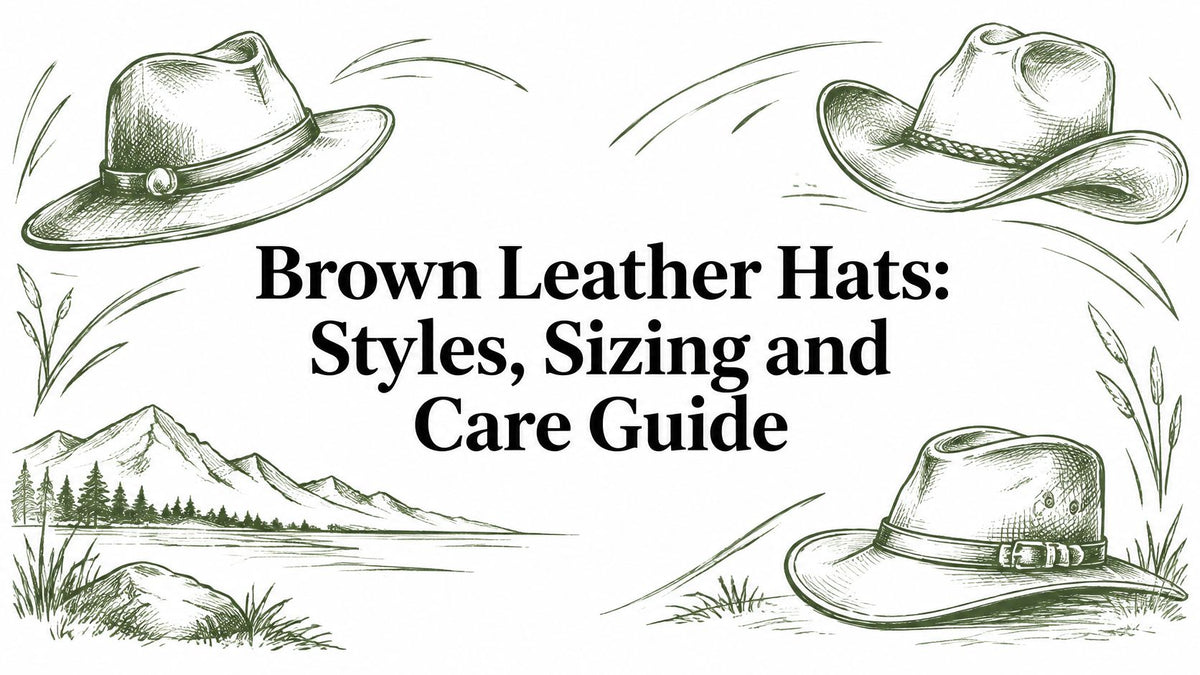
Brown Leather Hats: Styles, Sizing and Care Guide
Does a brown leather hat that looks right in the mirror still make sense when you're sweating through a humid afternoon or caught in sudden rain? Most buying advice stops at the silhouette, but climate, construction and fit determine whether you'll enjoy wearing it.
Brown leather hats can work for city dressing, travel and outdoor use, but they aren't interchangeable. A firm Western brim, a soft bucket and a suede flat cap ask different things of their owner. Choose for the weather and wear you expect, then refine the shape and colour.
Table of Contents
- Brown Leather Hat Styles at a Glance
- Choosing a Shape That Suits Your Face and Build
- Leather Finishes and Construction That Hold Shape
- Finding the Right Size for a Leather Hat
- How Sun and Heat Change Brown Leather
- Caring for Brown Leather Hats in Rain and Sweat
- Pairing Brown Leather Hats With Men's Outfits
- Choose Your Brown Leather Hat With Confidence
Brown Leather Hat Styles at a Glance
Brown leather hat styles compared
| Style | Brim | Crown | Best for |
|---|---|---|---|
| Fedora | Medium, snapped | Pinched, with a center dent | Office and smart casual |
| Western or cowboy hat | Wide, curled up at the sides | High and tall | Ranch work, festivals and rugged looks |
| Outback hat | Wide and flat | Medium, pinched at the front | Outdoor work, travel and sun cover |
| Trilby | Narrow and short | Low and flat on top | City wear and dressier outfits |
| Flat cap | Short peak, no full brim | Low and close to the head | Casual and countryside wear |
| Bucket hat | Short brim all round | Soft and unstructured | Warm-weather styling and streetwear |
Treat these descriptions as typical silhouettes, not manufacturing specifications. A maker may call a narrow-brimmed fedora a trilby, or give an outback hat a strongly curved brim. Judge the actual profile rather than trusting the product name alone.
Match the silhouette to its job
For outdoor wear, start with the Western and outback shapes. Look at where the brim casts shade, particularly beside the ears and behind the neck. A sharply upturned brim may look distinctive while leaving more skin exposed than a flatter one.
For commuting and casual tailoring, a fedora offers a more defined outline, while a flat cap stays visually compact. A leather bucket suits relaxed clothing, but a summer-looking shape doesn't make leather a cooling material. Consider the lining, ventilation and weight before choosing it for hot weather.
Brown's connection with Western headwear has a layered history. The Texas Historical Commission's account in Texas Highways traces the lineage from Mongolian horsemen's broad-brimmed hats in the 13th century, through Spanish headwear in the 15th and 16th centuries and Mexican vaquero sombreros, to cattle work in the 19th-century American Southwest. Brown complements those ranch and outdoor associations, although cowboy hats also come in felt and straw.
If you're comparing silhouettes across differently styled collections, you can browse women's hats at Bridle Up Hope Shop for another view of brim proportions and outfit combinations. Use the shapes as inspiration, then shortlist styles that suit clothes you already wear.
Choosing a Shape That Suits Your Face and Build
Balance the face and shoulders rather than following a rigid face-shape rule. A hat should look connected to your overall outline, not like a separate object perched above it. Crown height, brim spread and the angle at which you wear it all affect that balance.
A long or narrow face often benefits from a broader brim because it adds horizontal emphasis. A rounder face can work well with a defined crown and a medium brim, creating a clearer vertical line. These are starting points for comparison, not restrictions on what you're allowed to wear.
Compare proportions in a full-length mirror
Try a lower crown if a tall one makes your head dominate your frame. Shorter wearers may find a compact fedora or flat cap easier to balance, while taller or broader wearers can often accommodate a higher Western crown and wider brim. Your coat matters too: substantial shoulders can visually support more hat than a close-fitting knit.
Use these visible checks:
- Brim spread: Start with a brim that stays within your shoulder outline when viewed from the front. Go wider deliberately, rather than by accident.
- Crown position: Set the crown level before experimenting with a tilt. A backward tilt can disguise a poor fit.
- Eye clearance: Keep the front brim roughly a finger's width above your eyebrows as a practical starting position.
- Side profile: Check whether the crown looks balanced above your forehead and whether the brim obscures your view.
Don't assess a structured leather hat by squeezing it hard. Lightly support the brim and touch the crown to see whether the intended shape returns. A soft bucket is supposed to flex; a structured fedora shouldn't collapse under ordinary handling.
Mirror test: Wear the jacket you expect to pair with the hat. A close-up photograph of your face won't show whether the brim balances your shoulders.
Finally, move rather than posing. Turn your head, look down and walk across the room. If you keep adjusting the brim to see comfortably, choose a different shape instead of planning to tolerate it.
Leather Finishes and Construction That Hold Shape
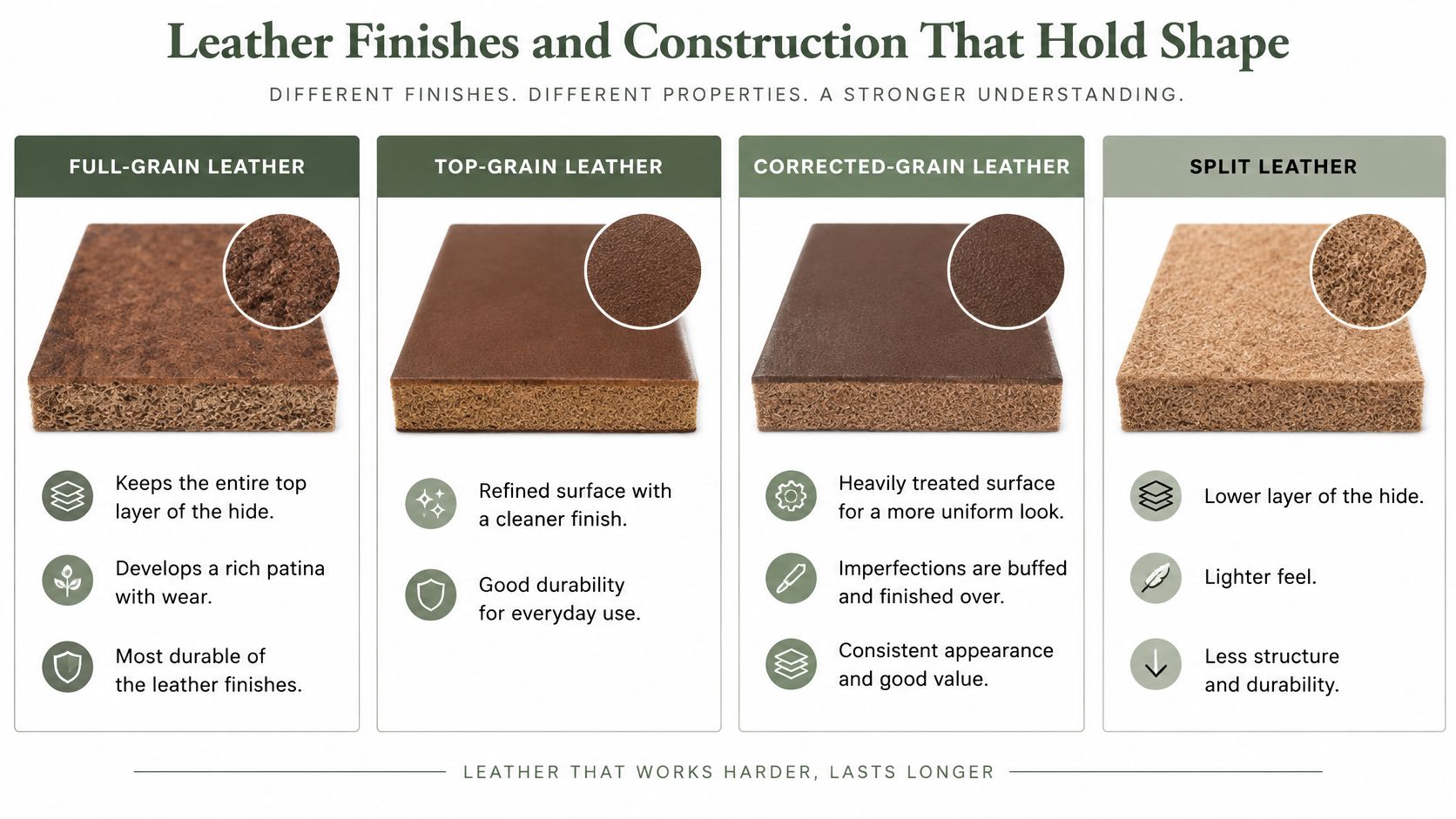
Leather grade, surface finish and tanning method describe different things. Full-grain identifies the retained grain surface; suede describes a napped surface; vegetable tanning describes how the hide was tanned. They shouldn't be treated as competing labels on a single quality scale.
Understand the material trade-offs
Full-grain leather retains the natural grain surface, including visible markings. It can develop an attractive patina, but the label alone doesn't establish whether a hat will hold its shape. Hide selection, finish and construction still matter.
Top-grain leather generally has a refined surface for a more uniform appearance. Corrected-grain leather receives more surface treatment, which can suit someone who prefers consistent colour and texture over visible natural variation.
Split leather comes from a lower layer of the hide and may need supporting construction to achieve a firm silhouette. Don't assume that “genuine leather” means split leather, or that it specifies thickness or quality. It's too broad a description to settle the buying decision.
Suede and nubuck have velvety surfaces, but they aren't identical materials. Both need care that preserves the nap rather than a cream that flattens or darkens it. Likewise, understanding Crazy Horse leather helps distinguish a waxed, characterful appearance from a smooth, uniform finish.
Inspect the structure beneath the surface
Vegetable-tanned leather can be dampened, formed over a block and dried into a stable shape. The Leather Patterns hat-making guide explains how forming, crown assembly, sweatbands and brim-edge reinforcement contribute to a finished hat. That combination matters more than thickness alone.
Carry these checks into a shop:
- Formed crown: Look for an intentional, balanced shape without accidental folds around the base.
- Brim edge: Inspect a stitched welt or other reinforcement for secure attachment and an even outline.
- Sweatband attachment: Check that stitching is secure and raw crown seams don't rub against your head.
- Lower-crown support: Ask whether a reed or similar reinforcement stabilises the base.
- Seam tension: Reject puckering, loose loops or stitches that appear to cut into the leather.
An unlined hat can still be well made, and a thick lining can conceal untidy assembly. Turn the hat over and inspect what you can see. Buy the material and construction, not just the shade name.
Finding the Right Size for a Leather Hat
A leather hat that feels fine in a cool shop can press harder after a hot, sweaty walk. Moisture at the sweatband changes the contact, so the same circumference can feel secure one hour and tight the next. Start with the measurement, then judge how that size will behave in heat and rain.
Head circumference in centimetres and inches
| Head circumference (cm) | Head circumference (in, approximately) |
|---|---|
| 55 | 21.65 |
| 56 | 22.05 |
| 57 | 22.44 |
| 58 | 22.83 |
| 59 | 23.23 |
| 60 | 23.62 |
| 61 | 24 |
| 62 | 24.41 |
The inch figures are conversions from the centimetre measurements, rounded for comparison. A generic letter size is not universal. Use the maker's chart to select the corresponding US size for that hat. The sweatband and interior shape also change how a nominal size feels once the leather warms and takes on moisture.
Measure where the hat will sit
The tape works like a belt: it has to sit on the line the hat will use, not around the widest part of the skull you can find. Use a soft dressmaker's tape, not a rigid metal tape. If you don't have one, wrap non-stretch cord around your head, mark the meeting point and measure it against a ruler. The 2ndShotMVP hat sizing guide can help you check tape placement.
- Position the tape: Place it about a finger's width above your eyebrows and ears, along the line where you want the sweatband to sit.
- Level the back: Use a mirror or ask someone to check that the tape hasn't slipped upward.
- Keep gentle contact: Pull it snugly without compressing your skin or hair.
- Repeat the measurement: Record the circumference in centimetres and confirm it before ordering.
Thick hair, a damp scalp after exercise, or a fresh haircut can move the reading. Measure again after a substantial change in hairstyle, and prefer a day that resembles how you will wear the hat.
Choose comfort rather than hoped-for stretching
Leather may soften and give with wear. A painfully tight hat will not become the right size on its own. Pressure at the forehead or temples can indicate an incompatible head shape as well as insufficient circumference. A sweatband cushions contact. It can't correct every fit problem, and a sweat-soaked or rain-wet band can feel smaller before the leather has eased at all.
A loose hat that slides forward isn't a comfortable alternative. In wet weather it can creep down over the brow. Ask about removable sizing inserts for a small adjustment, or have a hatter assess the sweatband. A leatherworker familiar with hats may replace a band, but don't trim it yourself. Cutting can damage its attachment without meaningfully increasing the crown opening.
Before buying, check the individual maker's chart and choose the size that stays secure without leaving a pressure ring.
How Sun and Heat Change Brown Leather
A brown hat left in strong sunlight can develop a pale crown, a warmer-looking brim or uneven reddish patches. The change may be most noticeable when you compare exposed surfaces with leather hidden beneath the hatband. Natural ageing and uneven weather damage aren't the same thing.
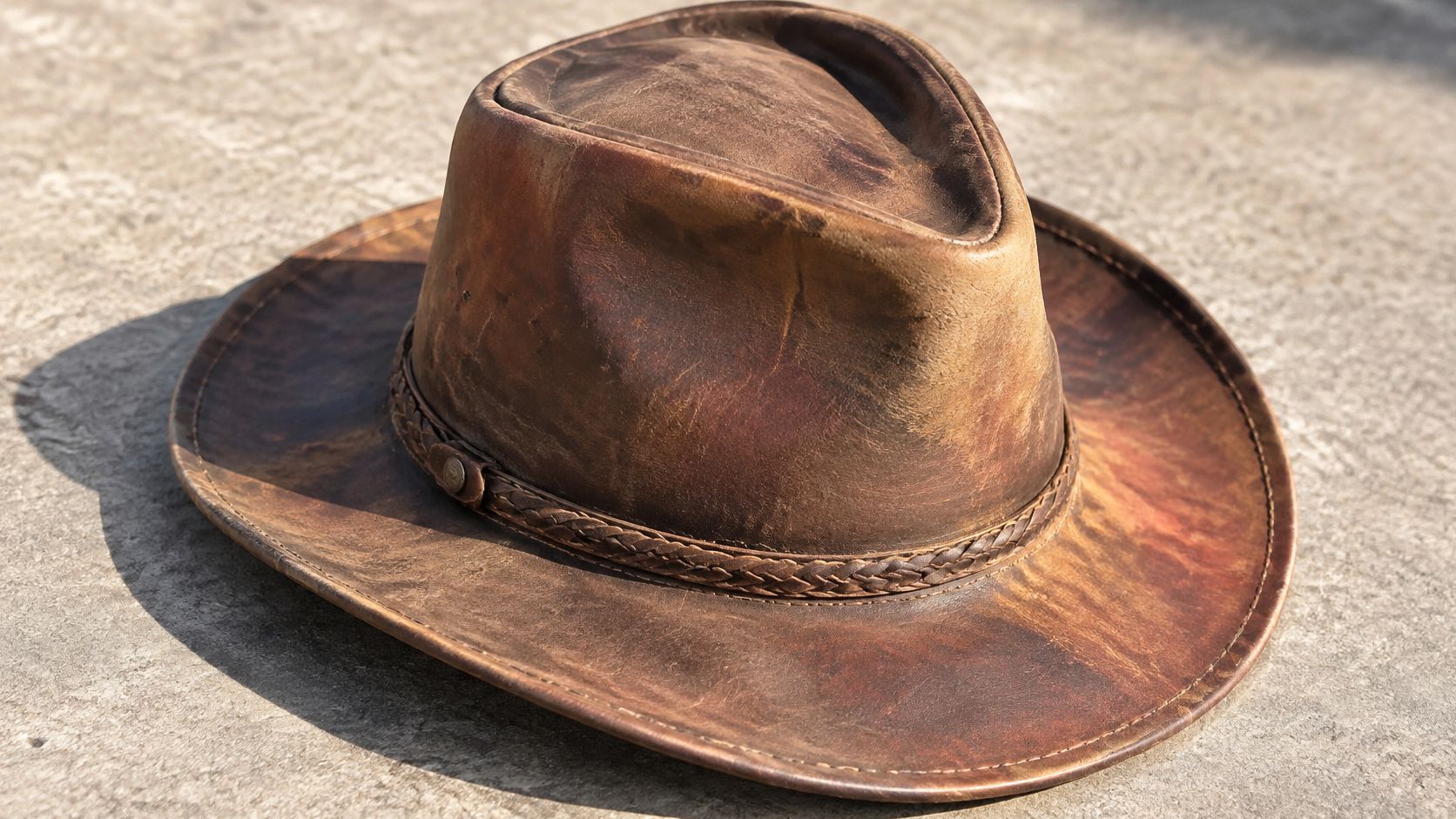
Light can alter the compounds responsible for leather's colour. In vegetable-tanned leather, oxidation of tanning compounds can shift the appearance toward lighter, redder or yellower tones. Heat and moisture make exposure conditions more demanding, so a colour name such as chocolate or cognac says little about how evenly the finished hat will age.
Ask about the finished leather
The useful question isn't whether brown leather fades. It's how the particular finish performs under the conditions you expect.
- Request lightfastness information: Ask for testing on the finished leather, not a general assurance about the hide.
- Compare components: Ask whether the crown, brim and sweatband were assessed for colour consistency and transfer.
- Inspect in daylight: Compare the brim edge with the crown, looking for unexpected patchiness rather than intentional tonal variation.
Colour retention and colour transfer are separate concerns. The ASTM leather standards programme includes distinct testing for crocking and colour transfer. A surface can look richly coloured yet still transfer dye during rubbing or wet contact, so ask about both when pale clothing is part of your wardrobe.
Store it between wears, not in the sun
Choose a shaded, ventilated storage position with support suited to the crown. Avoid window ledges, radiators and hot vehicle interiors. Don't seal a still-damp hat in plastic or force it onto an oversized support that stretches the opening.
Patina should come from normal use, not from leaving the hat on a dashboard.
If a patch appears suddenly, establish whether it's fading, moisture or a deposit before treating it. A guide to removing stains from leather can help you distinguish cleaning problems from colour change. Scrubbing a faded area won't restore its original pigment and may make the contrast worse.
Caring for Brown Leather Hats in Rain and Sweat
| Symptom | Likely cause | Fix |
|---|---|---|
| Dark water spots after light drizzle | Water absorbed into untreated leather | Blot with a dry cloth and air-dry at room temperature away from heat |
| Crusty white marks on the sweatband | Dried salt from sweat | Wipe with a barely damp cloth, dry fully, then condition compatible leather |
| Stiff, cracked brim | Soaking followed by rapid drying or heat exposure | Support the shape, dry slowly and seek professional assessment for cracks |
| Stains after cleaning with household products | Cleaner damaged or stripped the finish | Stop using it; patch-test a compatible leather cleaner before further treatment |
| Lost crown shape after soaking | Saturation distorted the leather | Take to a professional for reforming |
Advice that permits brief rain exposure doesn't mean a leather hat is waterproof. The leather-care document hosted by eBay highlights the risks of soaking, sweat salt, household cleaners and heat. Exposure level and surface finish determine the sensible response.
Use a blot, dry and assess routine
- Blot rather than rub: Lift surface rain with a clean, absorbent cloth. For fresh sweat on a compatible finished-leather sweatband, use a separate barely damp cloth without wetting the crown.
- Dry with support: Leave the hat in moving room air, away from direct heat. Preserve its existing outline without stretching or aggressively bending wet leather.
- Treat only after drying: If compatible smooth leather feels dry, apply a small amount of suitable conditioner to a concealed test area first. Conditioning won't close cracks or replace stripped finish.
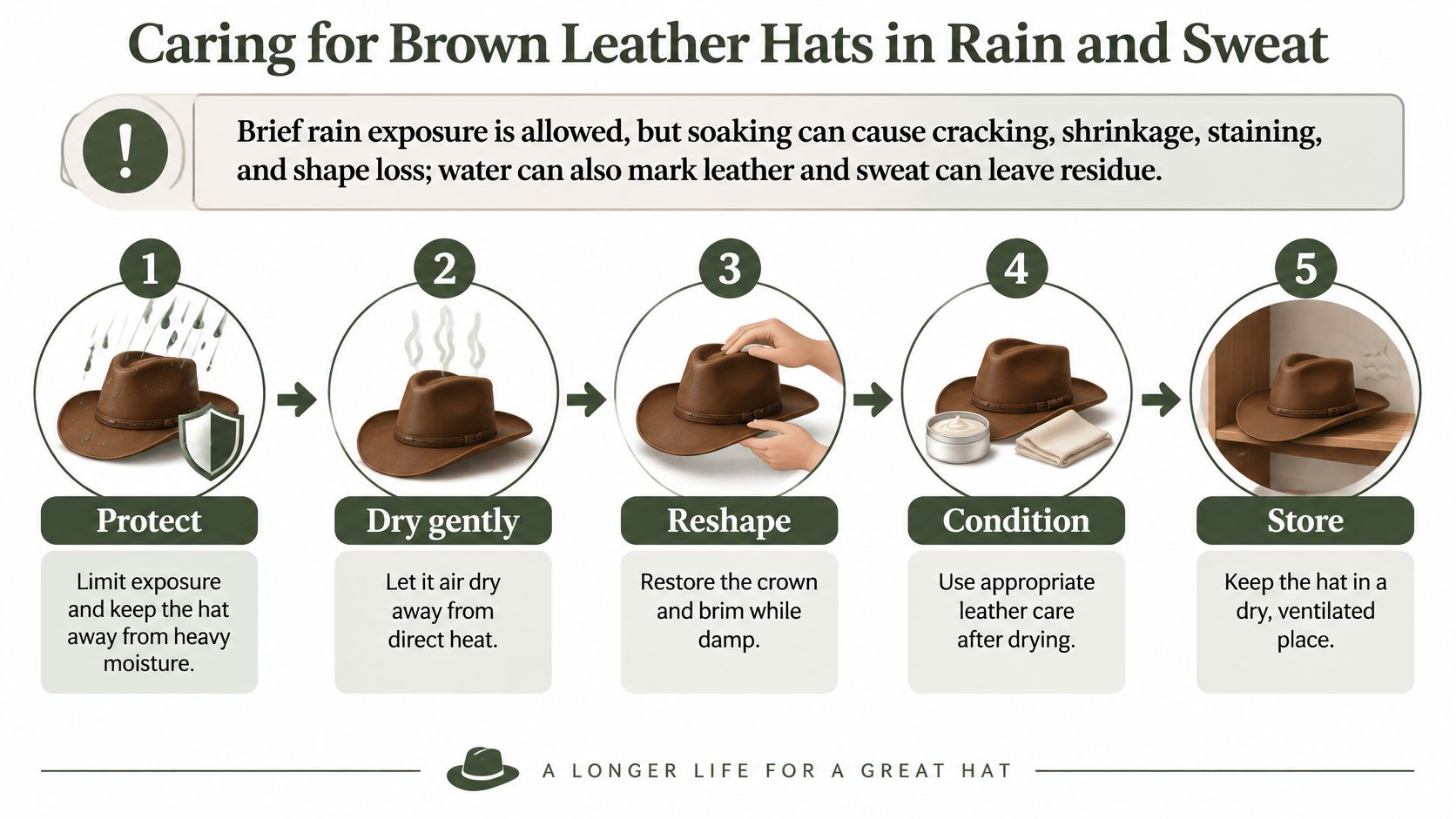
For smooth finished leather, a restrained wipe may be appropriate. Suede needs a suede brush and nap-compatible products, while untreated leather can darken from even modest moisture. Don't apply smooth-leather conditioner across either surface without confirming compatibility.
Dried salt needs gentle removal rather than heavy scrubbing. Keep moisture local to the sweatband, and let it dry completely before deciding whether further care is needed. The practical guide to conditioning leather helps with product selection and controlled application.
Adjust the routine to your climate
After sweaty days, inspect and wipe the band rather than waiting for a crust to form. In humid weather, rotate hats and avoid consecutive wears if the interior still feels damp. In a rainy climate, carry an alternative instead of expecting a leather hat to handle prolonged downpours.
Stop home treatment if the crown remains distorted, staining spreads or the leather has cracked. A hatter experienced in leather reforming can assess what's recoverable without further soaking.
Pairing Brown Leather Hats With Men's Outfits
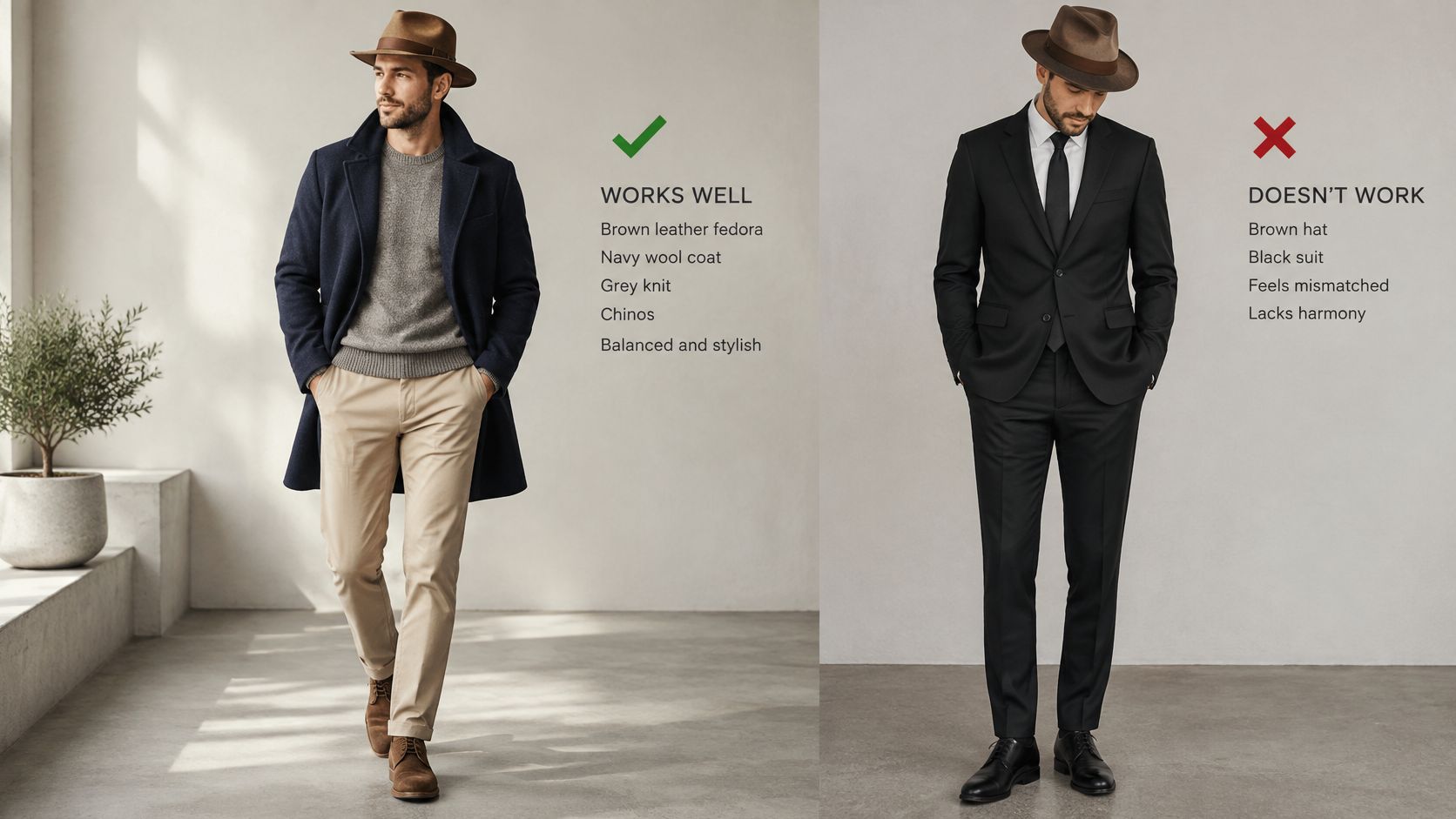
Smart casual. A brown leather fedora or restrained trilby works with a navy or grey wool coat, chinos and a knit. Keep the rest of the outfit relatively quiet so the leather texture remains intentional rather than theatrical. A black business suit is a harder pairing, especially when the hat has a distressed finish or rugged band.
Weekend outdoors. A dark brown or cognac outback hat pairs naturally with a waxed jacket, denim and boots. A leather bucket gives the same materials a more relaxed direction. Choose the hat for the day's conditions, not just because the jacket looks weather-ready.
Coordinate colour without building a costume
- Relate the browns: Echo the hat in your shoes or belt without demanding an exact match.
- Control warm tones: Cognac stands out against navy and charcoal; darker chocolate is quieter beside tweed or olive.
- Keep hardware coherent: Similar metal tones on a hatband, belt and bag reduce visual clutter.
- Limit competing textures: A heavily distressed hat needs less competition from elaborate stitching, buckles and patterned layers.
Country and heritage dressing. A chocolate flat cap works with tweed, wool trousers and brown leather shoes. A Western hat makes a stronger statement, so use simpler outerwear if you don't want a fully Western outfit. Let the silhouette provide the reference instead of adding every associated accessory.
Travel. A mid-brown hat can accompany dark jeans or chinos and a simple knit. Try it with the actual jacket and bag you'll carry, since bulky shoulder straps and a high collar may interfere with a broad brim. Don't assume a structured leather hat can be crushed into luggage unless the maker explicitly describes it as packable.
Coordinate the level of formality before coordinating the exact shade of brown.
The same principle applies when selecting leather accessories for men. Avoid combining overtly sporty details with a formal hat shape without a clear reason, and be cautious with an oversized brim above very slim clothing. A coherent outline usually matters more than perfectly matched accessories.
Choose Your Brown Leather Hat With Confidence
Choose the hat whose compromises suit your life, not the one with the strongest durability claim. For a price reference, American Hat Makers listed its Bomber Brown leather hat at $163 in 2026. That's a product benchmark, not a market average or a dividing line between good and poor hats.
A cheaper hat may use a different hide, simpler reinforcement or a less elaborate finish. A more expensive one should offer a clear explanation of what you're paying for, whether that's hide selection, shaping or assembly. Price alone doesn't answer those questions.
Pay for the features you'll use
For frequent heat or rain exposure, prioritise a suitable finish and a practical sweatband over decorative details. For dressier wear, put more weight on crown proportion, brim balance and a clean surface. If the seller can't identify the material or explain its care, reconsider the purchase.
Before paying, resolve the questions that product photographs can't answer:
- Material identity: What leather and surface treatment are used?
- Construction: How are the brim edge and sweatband attached?
- Exposure performance: Is finished-leather lightfastness or colour-transfer information available?
- Fit adjustment: What options exist if the circumference fits but the head shape doesn't?
At Grainmark Leather, we use Crazy Horse leather and hand-select our hides. That emphasis on material selection is relevant whenever you compare leather goods, but no material label replaces an inspection of the finished object. Our guide to full-grain leather lifespan offers further context for judging long-term ownership.
Make the purchase practical: measure your head, use the chosen maker's chart, confirm the fit arrangements and order the appropriate size. Prepare a shaded storage spot before the first wear so the hat has somewhere suitable to return to.
At Grainmark Leather, we offer full-grain leather bags, cases and everyday carry pieces for work and travel. Visit our collection to choose a practical companion for your brown leather hat, from a work bag to protective eyewear storage, with the same attention to material, construction and daily use.