
Vintage Desk Blotters: A Collector's Guide
A modern desk can be perfectly efficient and still feel strangely inhospitable. Your laptop sits on a hard surface, the keyboard occupies the central zone, and every task seems to begin and end with a glowing rectangle. Add a vintage desk blotter, and the character of the workspace changes immediately. It creates a defined writing area, softens the contact between hand and desk, and gives analogue work a place of its own.
The challenge is choosing the right piece. A fragile antique may be historically important but poorly suited to a desk used for video calls, charging cables, and a computer mouse. A modern full-grain leather alternative may lack a maker's mark, yet offer the durability and consistent surface that daily work demands. The best choice depends on whether you're collecting, writing, working, displaying, or combining all four.
Table of Contents
- The Return of Tactile Desk Accessories
- From Mass Office Staple to Rare Artifact
- Materials and Structural Designs
- Authentication and Restoration Techniques
- Styling a Modern Workspace
- Sourcing Collectible Pieces
- Building a Lasting Desk Legacy
The Return of Tactile Desk Accessories
A remote professional might begin with a practical upgrade, perhaps a better lamp or a more comfortable chair, then notice that the desk still feels visually flat. A pen, notebook, and leather surface introduce a different kind of interaction. The hand feels texture before it reaches the page, and the blotter separates deliberate writing from the constant movement of a computer workstation.
That appeal explains why vintage desk blotters now attract both stationery collectors and people furnishing contemporary home offices. They're not merely decorative pads. Historically, a blotter absorbed excess ink and protected the desktop, while the surrounding frame or backing gave the accessory enough structure for repeated use. Today, even when the absorbent function is no longer essential, the object still provides a tactile writing surface, a visual anchor, and a small ritual before or after screen-based work.
Practical rule: Choose a blotter for the work you actually do, not only for the period it represents.
A collector may prefer worn leather, a faded advertising panel, or an unusual frame. Someone who writes with a fountain pen every day may care more about replaceable blotting material and a surface that won't catch a nib. A hybrid worker who moves between handwritten notes and a laptop needs enough stability for the computer while preserving a comfortable area for paper.
The same principle applies to surrounding accessories. A coordinated set of pen storage, a notebook, and a desk pad can make a workspace feel intentional without turning it into a museum display. Readers comparing complementary pieces may find useful ideas when they browse corporate desk gift ideas, especially when selecting practical objects with a more personal character.
A brown leather mouse pad can also help define the technology zone beside an older blotter. The brown mouse pad guide is useful for considering color, scale, and how leather accessories can sit together without making the desk look overdecorated. The goal isn't to reproduce an old office exactly. It's to preserve the feeling of a considered desk while allowing modern tools to work properly.
From Mass Office Staple to Rare Artifact
The desk blotter only makes sense when viewed through the writing technology that created the demand for it. Blotting paper was patented for desktop advertising in 1885, and historical records describe blotters as “universally common” in American homes and offices during the first half of the twentieth century. The accessory was practical, but it also offered a convenient surface for calendars, business messages, illustrations, and promotional information. The McLean County Museum of History's blotters collection documents this broader office and advertising context.
The technology of writing then changed the category. Fountain and dip pens left wet ink that needed to be managed, so a blotter could save a page, a sleeve, or a polished desktop. The rise of the ballpoint pen in the 1940s and 1950s reduced that need, and one historical account notes that blotters continued to appear on desks for another 20 to 30 years, with many still in use until around the 1970s. Those dates come from the same historical account, and they help explain why a once-routine object became unfamiliar to later generations.
Why scarcity changes the collecting equation
Tiffany Studios illustrates the difference between an ordinary office accessory and a documented collectible. Tiffany produced desk blotters only from about 1902 to 1920, and surviving examples are documented at fewer than 120 worldwide. Records cited from the Tiffany Archives indicate that production peaked between 1907 and 1912, averaging 42 units per year. Those figures are reported by the Tiffany desk blotter record at GrailHuntR, and they give collectors a reason to treat authentic examples as scarce decorative and office-history artifacts rather than common desk equipment.
Scarcity alone doesn't make every old blotter valuable. Condition, design, documented ownership, material quality, and the survival of original components all affect desirability. A rare piece with a warped frame and a replaced surface may appeal to a specialist, while a less celebrated maker's intact blotter may be much more satisfying for daily writing.
Read the object as office history
The historical record also explains why construction matters. A blotter wasn't an arbitrary leather rectangle placed beneath a pen. It answered a specific problem created by liquid ink, and its form evolved as writing habits changed.
That history makes advertising impressions, calendars, handles, and replacement layers meaningful. They show how an object moved between utility, branding, and personal desk culture. A small vintage blotter can therefore document not just craftsmanship, but the habits of the office that used it.
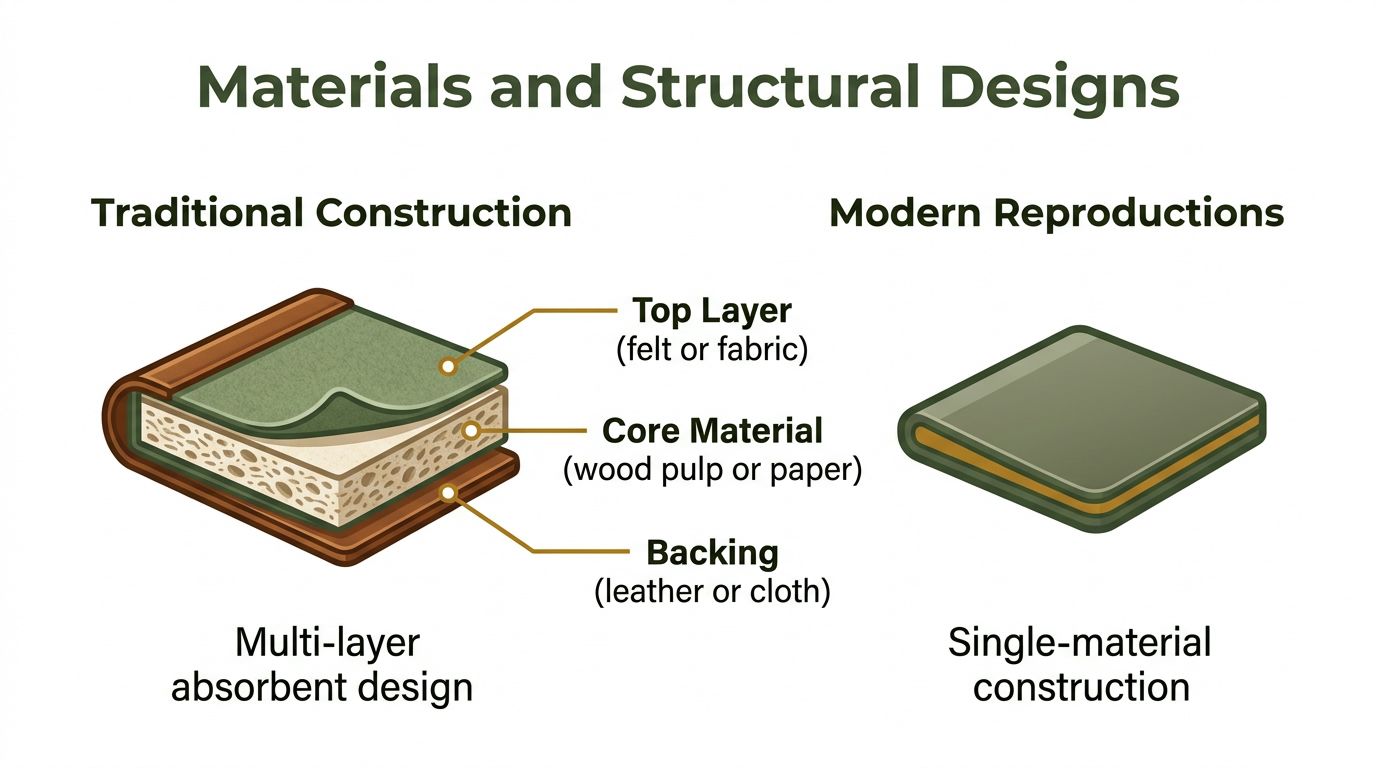
For a collector, that distinction is part of the pleasure. A period writing accessory carries evidence of a vanished workflow. A modern reproduction can still be beautiful and useful, but it should be judged by present-day performance rather than mistaken for an original historical construction. A related vintage leather tally book offers a useful comparison in spirit, because its appeal also depends on the relationship between material, hand use, and visible age.
Materials and Structural Designs
A genuine vintage desk blotter is usually a hybrid object, not a single sheet of material. Historical examples commonly used a rigid frame with a replaceable blotting-paper insert. The frame held the writing surface flat, while the absorbent layer performed the job that modern desk pads often imitate only visually.
Museum-documented examples from the 1930s used wood and Bakelite and included a removable handle so the paper could be changed. The New Zealand Parliament's exhibition on historic office desks shows why this arrangement was technically sensible. The paper absorbed excess ink, the structural body protected the desktop, and the replaceable component allowed the accessory to keep working over time.
Compare the main material choices
| Material or construction | What works well | Where it falls short |
|---|---|---|
| Antique leather and frame | Strong visual character, historical interest, visible patina | May be brittle, uneven, stained, or difficult to use with modern peripherals |
| Wood and early plastic components | Distinctive period design and structural rigidity | Can split, warp, craze, or lose original hardware |
| Modern full-grain leather | Comfortable writing surface, repairable wear, adaptable daily use | Usually lacks historical provenance and may not reproduce period construction |
| Glass | Easy to wipe and visually clean | Hard, cold, reflective, and unforgiving beneath a wrist or keyboard |
| Felt or fabric | Quiet contact, soft feel, and approachable cost | Can collect dust, compress, fray, or resist precise mouse movement |
| Cork or plastic | Lightweight and practical for active workspaces | Often contributes less visual depth and develops a different kind of wear |
The most important distinction is between patina and deterioration. Patina changes color and sheen while leaving the material stable. Deterioration includes cracking, delamination, powdering finishes, loose hardware, and edges that lift from the substrate. A darkened leather surface may be healthy. A pale, stiff surface with a network of cracks needs protection before use.
Match the surface to your workflow
For handwriting with a fountain pen, a slightly yielding surface is usually more comfortable than glass or hard plastic. For a mouse, however, very soft leather, heavy grain, or a glossy finish can produce inconsistent tracking. Test the actual mouse on the intended working area rather than assuming that every leather surface will behave alike.
A vintage blotter also needs enough structural stability for a laptop or keyboard. If the frame rocks, the leather curls upward, or the insert shifts whenever you write, the object belongs in a display role unless you're prepared to modify the setup around it. Don't glue original components merely to make an antique convenient. That may solve a short-term annoyance while reducing its historical integrity.
Modern vegetable-tanned leather offers another path. It develops color and surface character through handling, and this guide to vegetable-tanned leather helps explain why the tanning method affects aging, touch, and maintenance. For daily hybrid work, a well-made modern leather blotter is often the sensible tool, while the antique remains available for slow writing, display, or occasional use.
Authentication and Restoration Techniques
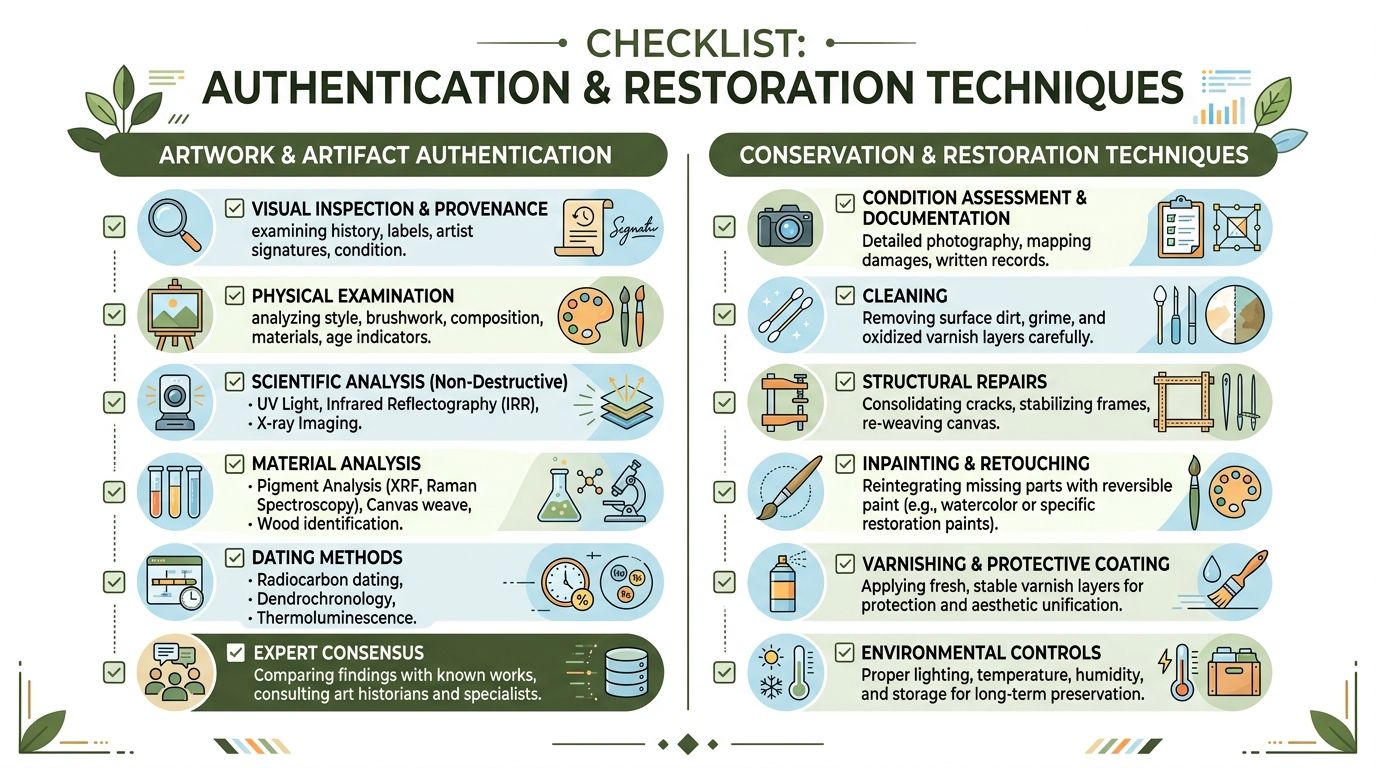
Authentication begins with the object in front of you, not with the seller's title. Listings often use “antique,” “vintage,” and “style” loosely, so examine the construction, wear, dimensions, hardware, and underside before deciding what you're buying. A convincing age claim should be supported by several consistent details rather than a single darkened surface.
Inspect before you clean
Start with photographs in natural light. Request close views of the maker's mark, corners, underside, fasteners, insert channel, and any printed or embossed panel. Look for wear that makes sense. A handle should show contact where hands held it, and a blotting surface should show use in the area where a writer would place the nib or page. Randomly applied stain, uniform artificial distressing, or fresh-looking hardware beside heavily aged leather deserves caution.
Use this inspection sequence:
- Record the structure. Note whether the surface is fixed, removable, stitched, nailed, or held in a channel. Original construction is more informative than a seller's description.
- Separate age from damage. Scuffs and softened edges may be acceptable. Active flaking, brittle bends, severe odor, and lifting layers can make the piece unsuitable for use.
- Check marks without polishing them. Maker stamps and impressed lettering can disappear under aggressive cleaning or overconditioning.
- Ask for provenance carefully. A family story can add context, but it isn't the same as a receipt, catalogue reference, or documented chain of ownership.
- Price restoration before purchase. Replacement paper is one problem. A warped frame, missing handle, or detached backing may require a conservator.
Preservation rule: If cleaning changes the color dramatically, removes an impression, or makes an old finish glossy, it has gone too far.
For broader collecting practice, the same habit of examining typography, paper, printing, and condition is useful when spotting fake film posters UK. The objects differ, but authentication still depends on consistent material evidence rather than attractive storytelling.
Use the least aggressive treatment
Dust a stable blotter with a soft, dry brush or a clean microfiber cloth. Don't soak the surface, use household spray, or apply saddle soap automatically. Older leather may carry finishes, dyes, embossing, adhesive, or ink that react unpredictably to moisture and solvents.
If the leather is sound, test any neutral conditioner on an unseen edge first and wait before treating the visible area. Apply a very small amount with a soft cloth, work gently, and stop if the surface becomes tacky or noticeably darker. You're trying to keep the material flexible, not feed it until it feels oily.
For wood or Bakelite components, dry dusting is the safest starting point. Keep water away from joints and insert channels. If a frame has opened, a handle is loose, or a paper layer is bonded to a fragile surface, consult a conservator instead of forcing it flat.
Control use and storage
Keep the blotter away from direct sun, radiators, damp exterior walls, and tightly sealed plastic wrapping. Store it flat with clean, acid-free support and avoid stacking heavy objects on a frame that already shows distortion. For display, use a stable surface that supports the full underside rather than balancing the piece on raised corners.
A vintage desk blotter should be considered stable, usable, or display-only. That simple classification prevents the common mistake of treating every attractive antique as a daily tool. If the object passes inspection, use a separate replaceable insert or protective writing sheet so the original surface doesn't absorb every mark of contemporary work.
For additional guidance on handling aged leather, the worn leather bag care and restoration guide provides useful principles about restraint, testing, and gradual maintenance.
Styling a Modern Workspace
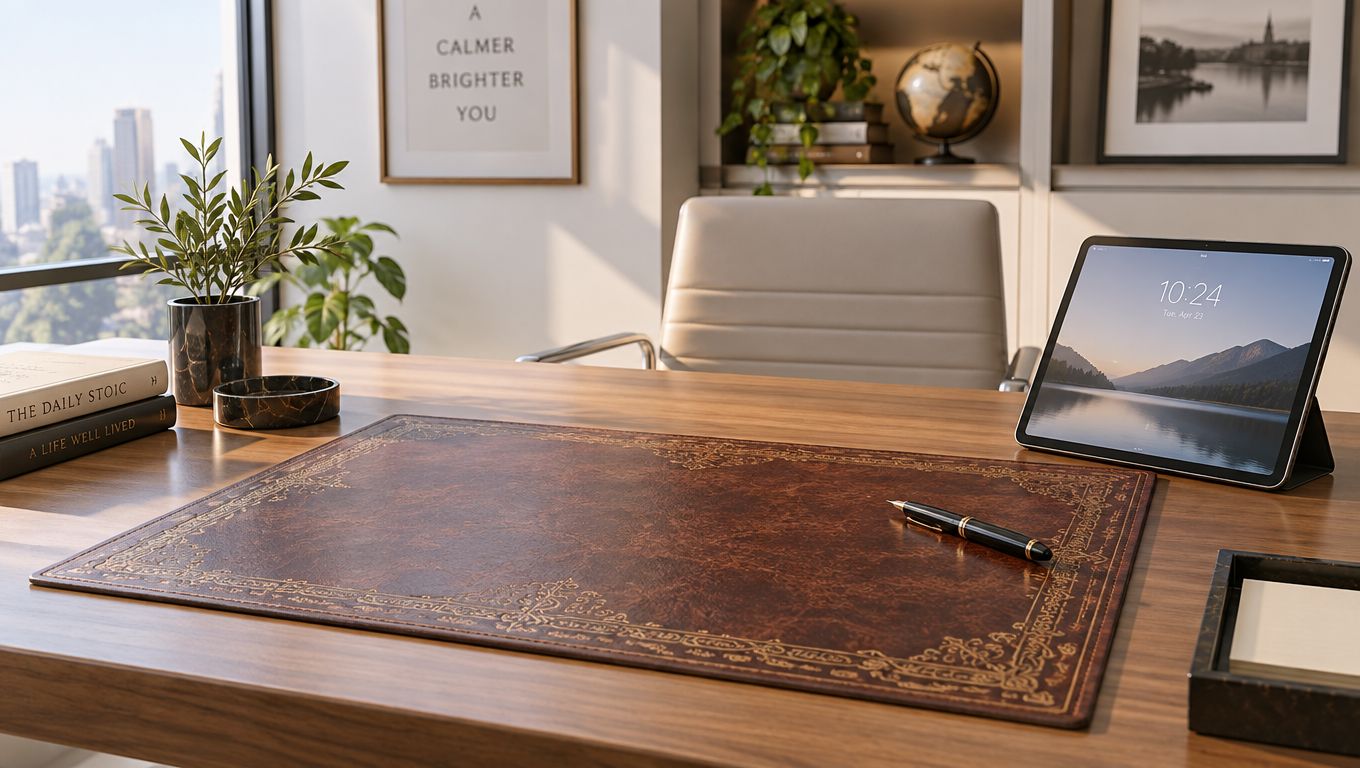
The successful modern desk doesn't force every object to look old. It gives older materials enough room to register while allowing current tools to remain convenient. A vintage desk blotter can sit beneath a notebook and fountain pen, with the laptop placed behind it or slightly to one side. That arrangement preserves a dedicated writing zone without asking the antique surface to carry every device.
A 2025 guide describes a resurgence of desk blotters associated with reducing screen dependence and adding vintage character, while a luxury desk-accessory market report places blotters in the niche “Others” segment, which held 12.6% of market share in 2025. Those claims appear in the desk blotter guide from The Small Tools. The useful takeaway isn't that every buyer needs an antique. It's that tactile accessories now have a role in workspaces built around screens.
Build around zones, not decoration
Divide the surface by activity. Put the blotter where you write, the keyboard where your wrists rest, and the mouse on a tested tracking surface. Keep charging cables and frequently used devices from crossing the central writing area. This makes the desk feel calmer because each object has a job.
A glossy antique leather surface may look exceptional but work poorly beneath a mouse. A small blotter may be perfect for correspondence yet too cramped for a laptop and notebook together. A delicate embossed panel can also suffer from repeated wrist friction, especially if the leather has already become dry.
Use a simple decision table:
| Your priority | Better choice |
|---|---|
| Historical display | Original antique with intact marks and minimal intervention |
| Fountain-pen writing | Stable blotter with a replaceable absorbent layer |
| Mouse and keyboard work | Durable modern leather, felt, or a dedicated peripheral pad |
| Mixed use | Antique blotter for writing, separate modern surface for technology |
| Frequent rearrangement | Lightweight reproduction that can move without stressing old joints |
The surrounding pieces should support, not compete with, the blotter. A restrained pen holder, a single notebook, and one small object with visual weight are usually enough. The desktop pen holder collection offers a useful reference for thinking about pen storage as part of the desk's working layout rather than as an isolated ornament.
Let contrast do the work
Dark leather against pale paper creates a clear writing area. Warm wood can make a black keyboard feel less severe. Brass, glass, and ceramic can add contrast, but too many reflective surfaces make an already screen-heavy desk feel busier.
I prefer one visibly aged item surrounded by newer, quieter tools. That approach respects the blotter's history without pretending that a 1930s surface was designed for a wireless mouse, mechanical keyboard, or charging dock. The best hybrid arrangement lets the antique provide atmosphere while a modern accessory absorbs the wear that would otherwise fall on it.
Sourcing Collectible Pieces
Finding a good vintage desk blotter is less about searching for the oldest listing and more about matching evidence to intended use. Estate sales, specialist antique dealers, stationery auctions, architectural salvage sellers, and general marketplaces can all produce worthwhile finds. Each venue has a different balance of context, price, photography, and return protection.
Online listings require a slower read than their polished photographs suggest. Search for the object by construction as well as name. Terms such as leather desk blotter, rocking ink blotter, desk set, Bakelite blotter, advertising blotter, and replacement blotting paper can reveal pieces that sellers haven't categorized consistently.
Ask questions that expose condition
Before buying, request the details that photographs often hide:
- Measure the usable surface. Ask for the outer dimensions and the actual writing area, because thick borders can reduce workspace.
- Confirm what's included. Find out whether the handle, insert, backing, fasteners, and original paper are present.
- Ask about odors and storage. Smoke, mildew, and damp storage can remain in leather and paper even when the surface looks attractive.
- Request underside photographs. The back often reveals repairs, replaced cloth, adhesive, and structural separation.
- Clarify returns. A blotter can look flat in a photograph and arrive curled, unstable, or much darker in person.
- Ask for provenance without demanding a dramatic story. A simple previous-owner account is useful when it aligns with the object's construction and wear.
A seller who can answer specific questions usually makes evaluation easier. A seller who relies entirely on phrases such as “rare,” “museum quality,” or “one of a kind” without showing marks and structure gives you less to work with.
Distinguish a bargain from a project
A faded finish isn't automatically a defect. Minor edge wear, surface scratches, and softened corners may be exactly what makes a vintage piece appealing. Structural faults are different. Missing components, delaminated layers, severe warping, and leather that cracks when gently flexed can turn a low purchase price into an expensive conservation project.
Current listings also show a clear split between collectible antique or vintage pieces and functional reproductions. One marketplace page reports 128 antique and vintage leather desk blotters in stock, with an average price around $1,295. Those figures are from the desk blotter market guide at TopTenReviewed, and they should be treated as a snapshot of that listing environment, not a universal valuation formula.
The price of an antique reflects more than material. Maker reputation, documented scarcity, intact design, condition, and provenance can matter more than the amount of leather used. Conversely, a modern reproduction may deliver better value for a professional who needs dependable daily protection rather than historical significance.
Buy for the role
If the piece will sit in a display cabinet, prioritize originality and condition. If it will support regular writing, prioritize stability, replaceability, and a surface that can accept honest use without irreversible harm. If you want both, buy a historically interesting blotter for occasional writing and keep a durable modern pad in the technology zone.
A coherent desk can also borrow visual cues from adjacent furniture styles. Looking at examples of mid-century modern furniture can help you judge proportions, wood tones, and how a period accessory might sit naturally in a room without creating a theatrical period set.
Building a Lasting Desk Legacy
A desk blotter earns its place by doing more than protecting a surface. It shapes how you approach writing, gives small tools a visual home, and records use through changes in color and texture. That function can belong to an antique, a modern leather reproduction, or a combination of both.
Collectors should resist using provenance as a substitute for condition. A celebrated maker's damaged piece may be better preserved as a display object, while an unremarkable but stable blotter may become the one you reach for every morning. Historical importance and practical suitability are separate judgments.
The most reliable decision rules are straightforward:
- Choose an antique when its construction, marks, and condition matter more than convenience.
- Choose modern leather when the surface must tolerate regular keyboard, notebook, and mouse activity.
- Use a separate technology pad when an original blotter is too delicate, slick, small, or unstable.
- Restore conservatively, especially around embossing, printed panels, finishes, and original hardware.
- Store every piece in a way that supports its structure and limits exposure to damaging light, heat, and moisture.
A thoughtful workspace doesn't need to reject technology to feel personal. It needs objects that make room for attention. Vintage desk blotters do that particularly well because they connect a vanished writing habit with the physical routines that still matter, taking notes, signing documents, planning work, and pausing long enough to think on paper.
If you're looking to build that balance into your own desk, Grainmark Leather offers full-grain leather writing accessories, pen storage, cases, and everyday carry pieces suited to a tactile workspace. Visit Grainmark Leather to find durable companions for a vintage desk blotter, whether you're furnishing a modern office or choosing a practical gift for a stationery collector.