
Article: Shaving Kit for Men with Bag: 2026 Essentials

Shaving Kit for Men with Bag: 2026 Essentials
A complete travel shaving kit needs just five core items: a cartridge or safety razor, travel-sized cream or gel, a brush or direct-apply method, aftershave or balm, and a dedicated waterproof-leather toiletry bag with separate dry and wet compartments. The right setup keeps the routine compact, protects the blade, and stops moisture and leaked products from turning your luggage into a cleanup job.
You're standing in a hotel bathroom after a long journey, ready to shave before a meeting. The razor is loose, the cream has leaked onto a shirt, and the damp brush has left the inside of the bag smelling stale. A larger toiletry bag wouldn't have solved that failure. Better organization would have.
A shaving kit for men with bag works when every item has a designated place and every wet item has a controlled path from use to drying. Capacity matters, but compartmentalized design matters more.
Table of Contents
- What Makes a Complete Travel Shaving Kit
- Choosing the Right Razor for Your Travel Style
- Selecting Grooming Products That Travel Well
- Picking a Quality Leather Toiletry Bag
- Packing for Airport Security and Everyday Use
- Maintaining Your Shaving Kit and Leather Bag
What Makes a Complete Travel Shaving Kit
A common travel failure appears during unpacking. The razor has been pushed against a bottle, the brush is still damp, and the aftershave has rolled into the corner of the case. Nothing is necessarily expensive, yet the whole setup feels unreliable because the bag treats dry tools, wet equipment, and liquids as one undivided load.
The fix starts with five coordinated categories: the razor, blade management, shaving cream or gel, an application method, and aftershave. A cartridge razor may need only a protective cap, while a safety razor needs separate handling for its detachable blade. Cream needs leak control, the brush needs airflow, and balm belongs somewhere it won't be crushed by the razor.
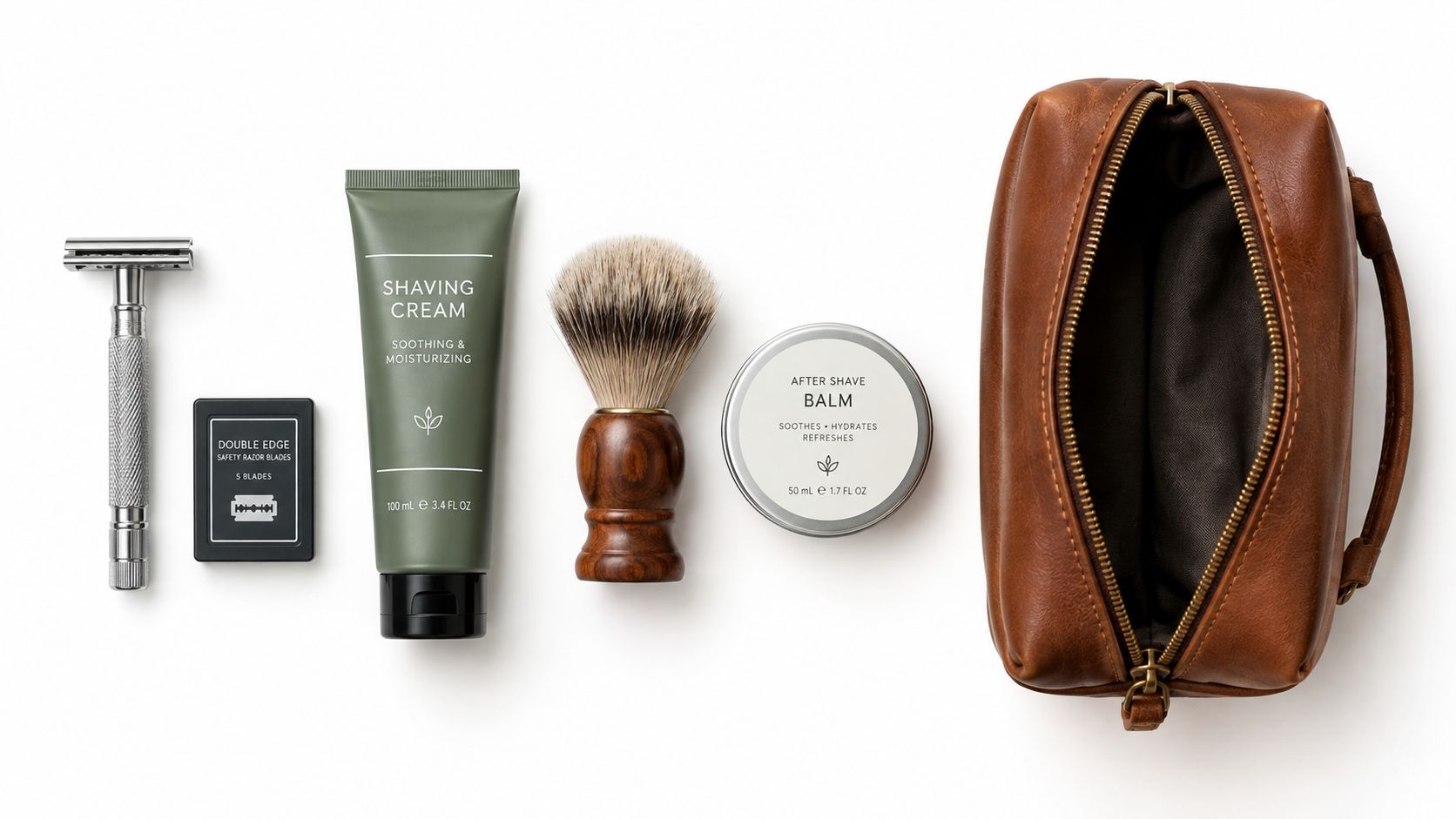
Five items, five jobs
Razor: Choose the tool that matches your skin, speed, and travel route. A cartridge is simple, a safety razor offers more control but creates blade-packing complications, and an electric shaver removes loose-blade concerns at the cost of charging equipment.
Blade management: Spare blades should never float beside leather, glass, or electrical devices. A rigid sleeve or secure blade container protects both the blade and everything around it.
Cream or gel: A tube is usually easier to contain than a glass jar. Aerosol products can work for carry-on travel only within the applicable liquid restrictions, so the container needs deliberate placement.
Application method: A brush adds lathering control but also introduces a damp item. Direct application reduces drying demands and may suit short hotel routines better.
Aftershave: A balm in a squeeze tube is easier to protect than a fragile bottle. It also gives irritated skin a gentler post-shave option than a strong splash.
For broader beard-care routines, it can help to find your beard grooming kit before deciding which tools belong in a travel-only setup. The important distinction is that a beard kit may include styling and trimming products, while a shaving kit must prioritize blade safety, wet-item control, and fast access.
Practical rule: A bag that separates damp equipment from dry accessories is more useful than a bag that merely holds more products.
The history of the modern men's shaving kit supports this system-based view. Safety-razor development reached a major milestone in 1876, when Frederick and Otto Kampfe patented a single-edge safety razor. King Camp Gillette developed the disposable double-edged blade concept in 1895, obtained a working patentable model by 1901, and began commercial production in 1903. The history of shaving shows how portability and replaceable consumables shaped the kit format that travelers still use today.
A useful bag should make the intended workflow obvious. The dry compartment holds the clean razor handle, spare products, and towel. The wet area handles the recently used razor or brush until it can be rinsed, wiped, and aired. This is the practical difference between a coordinated kit and a pouch full of grooming objects. For more ideas about organized travel storage, see this guide to a men's toiletry bag for travel.
Choosing the Right Razor for Your Travel Style
The best travel razor depends less on shaving tradition than on how much friction you can tolerate. A cartridge razor suits a rushed airport-to-hotel schedule. A safety razor rewards a deliberate routine but requires careful blade planning. An electric shaver avoids loose blades entirely, though it brings a charger and usually a larger body.
| Razor Type | Travel Friction | Cost Per Shave | Blade Life | Airport Compliance |
|---|---|---|---|---|
| Cartridge razor | Low | Higher over time than replaceable double-edge systems | Replace cartridge as performance declines | Cartridge razors are permitted in carry-on baggage |
| Safety razor | Moderate to high | Lower consumable cost | Replace detachable blade as needed, generally after 5–7 shaves for disposable blades or blades, depending on use | Handle may travel in carry-on baggage, but the blade must be removed |
| Electric shaver | Moderate | Depends on replacement heads and charging needs | Replace cutting components according to manufacturer guidance | No loose razor blade issue, but the device and charger add bulk |
Cartridge razors for low-friction travel
A cartridge razor is the straightforward choice for carry-on travelers who want a fast inspection and an uncomplicated morning. Cap the cartridge, keep it away from loose liquids, and place it in a retention loop rather than letting it slide around the main compartment.
The trade-off is ongoing replacement logistics. You'll generally pay more for the disposable shaving head than for loose double-edge blades, but the convenience can be worth it when you're crossing airports or shaving in unfamiliar bathrooms.
Safety razors for control and economy
A safety razor can deliver a precise shave with a compact handle, but the assembled razor and the blade must be treated as separate objects during air travel. TSA safety-razor guidance allows the handle in carry-on luggage when the blade is removed. Loose razor blades and non-cartridge razor blades aren't permitted in carry-on baggage.
That distinction causes avoidable delays. Pack the handle in the carry-on module, place spare double-edge blades in checked baggage, or buy them after arrival. A rigid blade sleeve prevents sharp edges from contacting the bag lining, leather, bottles, or electrical components.
Electric shavers for zero loose-blade handling
An electric shaver is useful when security uncertainty matters more than a traditional wet shave. It eliminates disposable blades, but you still need to account for charging, cleaning, battery condition, and the shape of the device. A compact travel model can work well for short trips, while a larger unit may defeat the purpose of a small shaving bag.
Skin sensitivity also affects the decision. A manual razor gives you direct control over pressure and direction, while an electric device may reduce the need for lather and water. Neither system removes technique from the equation. Pressing too hard or repeatedly shaving the same area can still create irritation.
Selecting Grooming Products That Travel Well
A good travel product earns its space by solving a specific problem without creating another. Cream that gives a comfortable shave but leaks into the lining isn't practical. A luxurious brush that stays damp in a closed pouch can compromise the whole kit.
Start with the product format, not the scent. Aerosol shaving cream can be convenient, but it needs airport-compliant container sizing. A tube is easier to squeeze into a leak-resistant pocket and usually takes less room than a jar. A solid shaving soap avoids liquid concerns, though it needs a dry container and a brush or wetting method that suits the formulation.
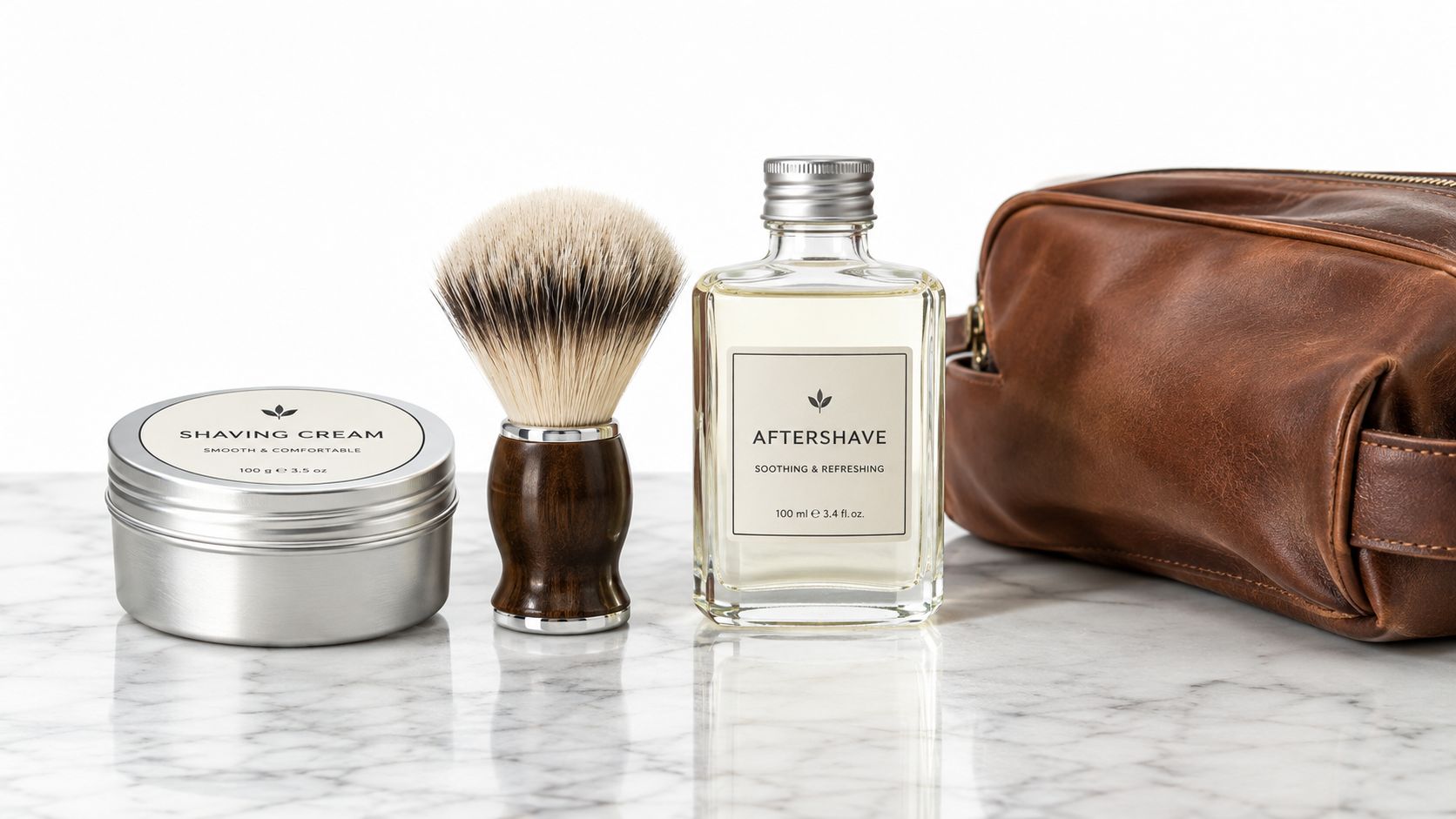
Build around the morning routine
For a fast shave, choose a moisturizing cream or gel that applies directly from a tube. For a more traditional routine, use a compact synthetic brush. Synthetic bristles dry predictably, resist crushing, and are generally easier to clean on the road than a brush that needs careful shaping after every use.
A badger-hair brush can offer a familiar lathering feel, but pack it with the bristles protected from pressure. Never close a damp brush inside a sealed leather compartment. Shake out excess water, towel-blot it, and give it airflow before final storage.
Pre-shave oil is optional rather than automatic. It can help when your beard is coarse or your skin reacts badly to direct blade contact, but it adds another bottle and another surface that can make the razor slippery. Carry it when you already know it improves your routine, not because a complete kit supposedly needs every category.
Choose aftershave for containment
An alcohol-free balm in a squeeze tube is the easiest travel option for skin that feels dry or irritated after shaving. A solid stick is even simpler to contain. Traditional splash products can feel refreshing, but glass bottles and loose caps create more risk in a moving bag.
Keep aftershave outside the wet razor zone. A bottle that looks sealed at home can loosen after repeated handling, and a damp razor can transfer residue onto the container. Wipe the exterior before packing it into the dry product compartment.
A small, washable pouch can also separate the brush, oil, or balm from the main kit. This guide to leather drawstring pouches is useful when you want a secondary container for small grooming items rather than one oversized case.
The most reliable product lineup is deliberately modest:
- Razor preparation: One cream, gel, or solid shaving product that you already trust.
- Application: A compact synthetic brush or direct-apply cream.
- Skin comfort: One balm or aftershave format that won't leak.
- Optional protection: Pre-shave oil only when your skin or beard benefits from it.
- Containment: Caps, screw tops, and leak-resistant pockets checked before departure.
The right combination preserves the quality of the shave without turning the bag into a miniature bathroom cabinet.
Picking a Quality Leather Toiletry Bag
A premium exterior doesn't automatically make a toiletry bag suitable for wet storage. Leather durability and moisture management are separate design questions, and the second one is often ignored because a bag looks impressive on a shelf.
Assess the bag while imagining it full. The opening should let you reach the razor without removing every bottle. The base should remain stable when the bag is set beside a sink. Interior walls should prevent the razor from rubbing against glass, and a wipe-clean or removable liner should give damp equipment somewhere safer to wait.
Material is only the beginning
Full-grain leather can develop character through travel, but it still needs protection from standing water, shaving foam, and repeated condensation. Look for firm stitching, reinforced stress points, dependable zippers, and a lining that can be wiped rather than one that absorbs every spill.
The best architecture separates functions rather than enlarging the main cavity. A dry zone can hold cream, balm, spare cartridge heads, and the clean brush. A wet or ventilated zone should hold a recently rinsed razor for a short period, not become permanent storage for wet tools.

Evaluate the bag by its failure points
A bag can be attractive and still fail in predictable ways. Watch for a narrow zipper opening, an unprotected interior, weak seams near the handle, and a single deep pocket where every item collides. A collapsible shape may appear spacious but become difficult to organize once the razor, brush, and bottles are inside.
Use this inspection list before buying:
- Zipper path: It should open widely enough to expose the contents without forcing the teeth.
- Interior finish: The lining should tolerate wiping and should not snag a blade guard or brush.
- Compartment logic: Separate dry products from damp equipment and keep sharp objects restrained.
- Carry method: A hang loop helps in compact bathrooms, while a low-profile shape may suit a packed briefcase better.
- Base stability: The bag should stand or lie flat without tipping bottles into the razor.
- Maintenance access: A removable or easily cleaned inner section is more useful than decorative extra pockets.
A leather dopp-style bag suits a traveler who wants a compact, structured case. A hanging format works better when counter space is limited. A fabric or nylon bag may dry faster and weigh less, but it can offer less protection against a sharp blade or a bottle pressing into the lining.
For a more detailed set of criteria, consult this guide to the best leather toiletry bag for men. The central test remains practical: can you identify where the razor goes before you pack it, and can you isolate that razor after you use it?
Grainmark Leather offers full-grain leather toiletry bags intended for men's travel and daily carry, including formats suited to a shaving setup. Treat the brand as one option among structured leather cases, and compare its dimensions, lining, opening, and wet-item provisions with the routine you typically carry.
Packing for Airport Security and Everyday Use
Airport security rewards separation. A kit that passes cleanly has a carry-on module for permitted items and a checked-baggage module for anything that cannot travel in the cabin. Mixing both groups in one pouch increases the chance that an inspector has to empty the entire case.
The safety-razor handle is not the same thing as an assembled safety razor. The handle can go in carry-on baggage when the blade is removed, while loose double-edge blades belong in checked baggage. Cartridge razors can travel in carry-on luggage, and electric shavers avoid the loose-blade issue, although they still need space and charging support.
Use a two-module packing method
- Identify the razor: Decide whether you're carrying a cartridge razor, a safety-razor handle, or an electric shaver.
- Secure the cutting component: Remove a safety-razor blade and place it in checked baggage. Cap a cartridge razor.
- Control liquids: TSA permits aerosol shaving cream in carry-on baggage when each container is 3.4 oz/100 ml or smaller, according to its shaving-cream guidance. Keep tubes and aerosols accessible for inspection.
- Separate checked items: Put loose double-edge blades, oversized liquid bottles, and a sealed blade-disposal container in checked baggage where applicable.
- Protect the bag: Use a rigid razor sleeve, elastic retention loop, or separate inner case so sharp edges cannot contact leather, bottles, or charging cables.
International rules vary by aviation authority. If you're crossing jurisdictions, check the departure airport's current guidance before leaving home, especially when a guide to connecting flights is part of your itinerary.
Handle moisture after the shave
The security arrangement doesn't solve the wet-item problem at the hotel. After shaving, rinse the razor thoroughly, shake off water, and wipe the handle and head. Place it in a ventilated or washable inner pouch while it finishes drying, keeping the blade away from leather and dry accessories.
Don't seal the entire bag immediately. Leave it open in the bathroom or room until the razor and brush are dry, then return them to their assigned compartments. This short-term containment method protects the case without pretending that a closed toiletry bag is a drying cabinet.
Before every flight: Handle separate, blade removed, liquids accessible, cartridge capped, spare blades out of carry-on, and damp tools dried before the bag is closed.
If you use a safety razor, keep spare blades in a dedicated checked-baggage container rather than the main shaving compartment. That small change prevents a screening search from becoming a full unpacking exercise.
Maintaining Your Shaving Kit and Leather Bag
Maintenance begins immediately after use. Rinse lather from the razor, remove excess water, and let the head dry before closing the case. Dermatologists recommend wetting facial hair, applying moisturizing shaving cream or gel, shaving in the direction of growth, rinsing the blade after every stroke, and storing the razor in a dry location. The American Academy of Dermatology shaving guidance also advises short strokes, no more than two passes over one area for people prone to bumps, and avoiding skin stretching.
Disposable razors or blades should generally be replaced after 5–7 shaves, as noted by the AAD guidance. A razor left on a wet sink or in a shower is more exposed to bacterial growth and faster blade deterioration, so drying is part of performance, not an optional finishing touch.
Leather and fabric need different care
Full-grain leather benefits from occasional cleaning with a suitable leather cleaner and light conditioning when the surface begins to feel dry. Keep conditioner away from the lining, zipper teeth, and any area that must remain grippy. This practical guide explains how to condition leather without treating heavy product application as a substitute for moisture control.
Fabric or nylon cases can often tolerate more direct washing, but they may retain odor if the interior stays damp. Empty the bag after every trip, wipe residue from the lining, and leave all compartments open to air. For persistent odor, use a material-safe antimicrobial product only after checking the manufacturer's care instructions, then allow the case to dry completely.
A simple care rhythm keeps the system dependable:
- After every shave: Rinse, wipe, and air-dry the razor and brush before closing the bag.
- After every trip: Empty the case, inspect the zipper and lining, and remove any dried cream or hair.
- Each month: Check blade guards, caps, seams, and the condition of bottles and tubes.
- Once a year: Clean and condition the leather as needed, replace worn retention loops, and reassess whether the compartments still match your routine.
Never use the leather bag as a wet-storage container. A ventilated inner pouch can hold a damp razor temporarily, but the main case should remain open until the contents are dry. That distinction prevents the most common hygiene failure in an otherwise well-built shaving kit.
Choose a leather toiletry bag with a layout that separates your razor, liquids, brush, and damp equipment instead of merely adding capacity. Visit Grainmark Leather to compare its men's leather travel organizers and choose a case that fits your airport routine, grooming tools, and drying needs.

