Padfolio Leather Personalized: How to Choose the Right One
You're walking into the meeting with a phone in one hand, loose pages in the other, and a pen that keeps disappearing into your bag. That's usually the moment people decide they want a padfolio leather personalized enough to look polished, but practical enough to carry the papers they use.
A good padfolio does three jobs at once. It protects notes, keeps documents flat, and gives you a clean surface when the table is crowded or the chair is too small for a laptop bag. Add personalization, and it becomes either a sharp professional tool or a permanent mark you'll have to live with for years.
The hard part is that most shopping pages stop at the surface. They show the leather, mention a monogram, and leave out the decisions that matter in daily use, like whether you need letter or A4, whether the refill system matches your habits, and whether the interior is organized for a real workday or just looks good in photos. Those choices matter because the global leather padfolio market was valued at $1.2 billion in 2025 and is projected to reach $1.7 billion by 2034, with a 4.2% CAGR over the forecast period, according to the market report on the category (Marketintelo report). Online stores held 41.2% of revenue, about $494.4 million in 2025, North America led with 32.8% of global revenue, and genuine leather accounted for 42.8% of the material segment, or roughly $513.6 million in 2025 (Marketintelo report). That's a real professional-accessories market, not a novelty shelf.
Table of Contents
- Walking Into a Client Meeting Prepared
- What a Padfolio Is
- Matching Paper Format to How You Work
- Interior Organization That Sees Real Use
- Personalization Methods and How They Age
- When You Should Skip the Monogram
- Matching the Padfolio to Your Work Life
- Choosing Well and Living With It
Walking Into a Client Meeting Prepared
The scene is familiar. You're at the conference table, your notebook is bent, your pen is loose, and the contract pages you meant to review are folded into a jacket pocket. The person across from you notices all of that before you've said a word.
A personalized leather padfolio fixes that first impression fast. It gives you one place for the pad, a second place for papers, and a third place for the pen you'll otherwise lose in transit. It removes small friction points that add up during client work, interviews, sales calls, and court appearances.
Why the physical format matters
Leather goods are judged by hand as much as by eye. A padfolio should close cleanly, sit flat when opened, and hold its shape without flaring at the edges. If it slumps on the table, the whole piece feels cheaper than it should.
Buyers are also checking the details before they commit. Online stores account for a large share of revenue, and North America leads the category, which fits a product that people compare carefully before ordering (Marketintelo report). That shopping pattern makes sense, because a padfolio is one of those accessories where a small design decision changes daily utility.
A quality folio also signals that you've thought about the meeting itself. Not in a flashy way, just in a way that says you won't be hunting for loose paper while someone else is speaking.
What this guide helps you sort out
The choices are simple, but they're easy to miss:
- Paper size fit. If the interior doesn't match your paper, you'll fight curl, movement, and awkward edges.
- Material and weight. A folio that's too light can feel flimsy, while one that's too heavy becomes annoying in a carry-on.
- Personalization type. A monogram can look refined or dated, depending on how it's done and where it sits.
- Internal layout. The best cover in the world is still a bad buy if the inside wastes space.
Practical rule: Buy for the work you do most often, not the meeting you hope to have once a year.
Leather portfolio case basics help if you want a broader sense of the category, but the decision starts with how you take notes and what size paper you use every week.
What a Padfolio Is
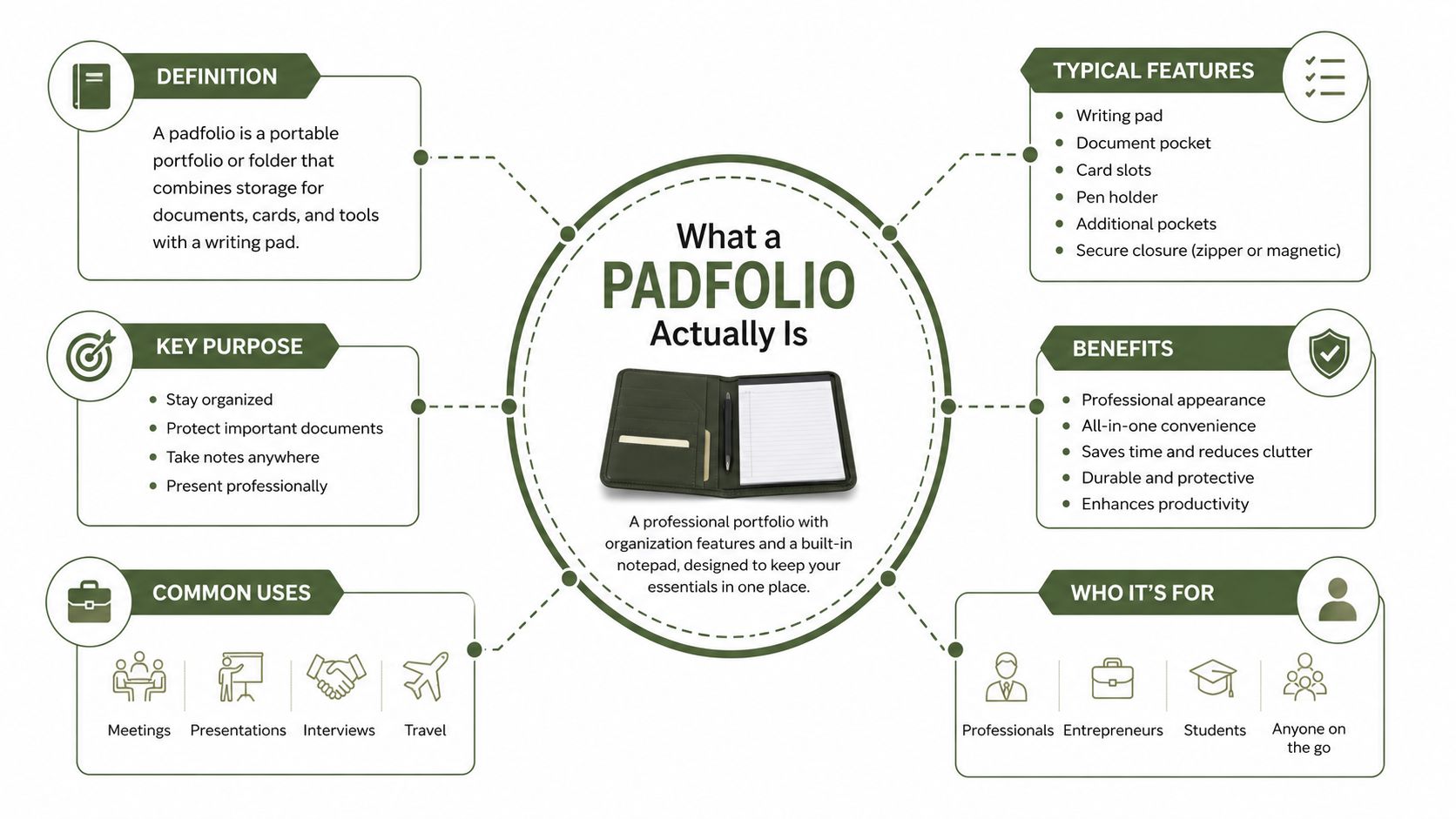
A padfolio is a slim leather carrier built around a writing pad, document pockets, and a folding cover. In use, it gives you a flat surface for notes and a controlled place for the papers you need in front of you. That makes it useful for meetings, interviews, and travel days where you want paper organized without carrying a full briefcase.
The parts that matter
The outside is the cover, usually leather, sometimes zippered, sometimes open. Inside, you'll typically find a spine or center panel that holds the pad, plus pockets for papers, cards, and a pen loop. Some versions add a gusset, which gives the interior a little expansion room, while slimmer versions stay close to the shape of the pad itself.
Those details change how the folio wears in daily use. A zip closure keeps loose sheets contained, but it can add bulk and make quick access slower. An open design stays lighter and easier to handle, though it gives up some protection when the folio is tossed in a bag.
A notebook cover usually holds one refillable insert and little else. A laptop sleeve protects electronics, but it does not organize paper well. A ring-bound organizer goes the other direction, with more structure but more bulk, which is fine if you need tabs and indexed pages, less useful if you want something elegant and flat.
For a broader sense of the category, a leather portfolio case overview shows how the format is meant to keep business paper neat on the table. Buyers often focus on the finish and skip the parts that affect everyday use.
What the object should do in your hand
If you hold a good padfolio, it should feel like a firm cover over a pad, not like a pouch stuffed with extras. The interior should grip the pad without distorting it, and the pockets should stay out of the way when you're writing. If the pen loop blocks the page edge, or if the pocket edge catches your hand, the design has already failed.
A padfolio should disappear during use. You notice it when you open it, then forget about it until you need it again.
The difference between a good one and a merely decorative one is whether the structure supports the way you work. If it looks tidy but forces paper to buckle, it's the wrong tool. A useful padfolio stays flat, keeps pages aligned, and lets you swap refills without fighting the cover.
Matching Paper Format to How You Work
Paper format is where many buyers get trapped by pretty photos. The outside can look identical, while the inside either fits your notes naturally or fights them every day. The main split is still letter versus A4, with universal or flexible interiors sitting in the middle.
Letter and A4 are not interchangeable
U.S. offices commonly use letter-sized paper, while the UK government still defines A4 as the standard business paper size. That isn't a small regional quirk, it affects every refill you buy and every document you slip into the folio. If your daily paperwork is A4 and the padfolio is built for letter, the top and bottom edges won't behave the same way, and you'll notice it as soon as you start writing.
On the other hand, a North American professional who travels internationally may want a folio that handles both formats or at least accommodates a pad system with easy refills. The point isn't to own every size. It's to avoid a setup that breaks when you land in another market or start working with clients who standardize differently.
Practical rule: Match the folio to the paper you replace most often, not the paper that looks neatest in a product photo.
How the formats behave in real use
Letter-size folios usually feel familiar in the U.S. and Canada. They're easy to refill, easy to source, and comfortable for meeting notes, project outlines, and legal pads. A4 folios make more sense if you work across Europe, the UK, or any environment where that size is the default.
Universal designs try to solve the problem by giving you a little more room or by using a pad system that can flex. They can work well for travel, but only if the interior supports the paper you use. A sloppy universal fit is worse than a clear letter-only or A4-only build, because it leaves you with the appearance of flexibility without the comfort of a true fit.
A good buyer asks a simple question before checkout. What paper do I refill, what paper do I carry, and what paper do my clients hand me? If those answers don't line up with the interior, the folio will annoy you by week two.
Letter vs A4 vs Universal Padfolios at a Glance
| Format | Best For | Refill Sourcing | Travel Friendly |
|---|---|---|---|
| Letter | U.S.-based professionals, legal pads, common business notes | Easy in North American office supply channels | Strong for domestic travel |
| A4 | UK, EU, and global professionals using standard business paper | Easier where A4 is the norm | Strong for international use |
| Universal | Buyers who switch paper systems or travel often | Depends on the pad mechanism and local refill availability | Useful if the fit is truly flexible |
The complete refillable notebook buyer's guide is a helpful companion if your workflow includes recurring refills rather than a single fixed pad.
Interior Organization That Sees Real Use
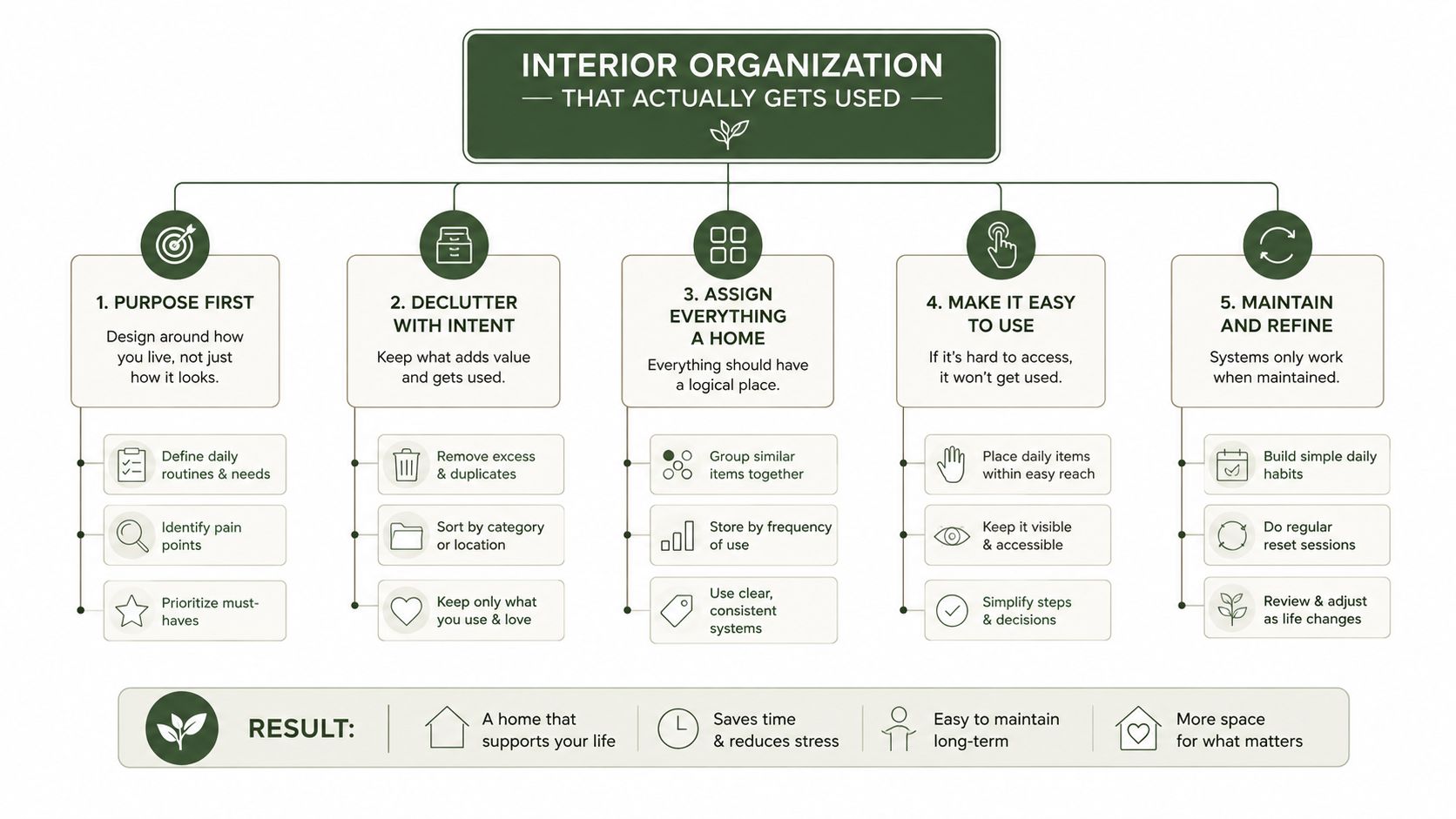
A padfolio spends its worst moments in motion, when you are standing in a hallway, taking a call, or reaching for a note with one hand. Interior layout matters because it decides whether paper, cards, and devices stay easy to grab or turn into clutter.
A functional baseline
A usable padfolio holds a writing pad securely, leaves room for one pen, and includes a pocket for active documents. That setup covers note-taking, interviews, and short meetings without adding bulk you do not need. Once a folio drops below that, it starts behaving like a leather shell with a pad forced inside it.
A step up from that baseline is a layout that can handle paper plus a tablet or thin laptop workflow, as long as the thickness stays under control. If the interior swells, the writing surface becomes unstable and the folio stops lying flat. People notice that fast, then leave it in the car or on the desk because it is awkward to carry.
Travel-heavy users may need a third level of storage for business cards, charging cables, receipts, or extra stationery. That can work, but only if the pockets are spaced with some discipline. Too many compartments turn into clutter, and clutter slows the folio down compared with a simple folder and notebook.
What usually gets overhyped
Pen loops only help if they fit the pen you carry. Card slots matter for people who exchange cards often, but they are unnecessary for plenty of professionals. Zipped sections can be useful, though they often add thickness before they add value.
Here is the part product pages usually skip. Stitched-in pockets feel cleaner and more permanent, while slip-in pockets can be more flexible if you swap inserts often. The trade-off is straightforward. Stitched pockets tend to age in a more predictable way, while slip-in layouts can loosen if they keep getting overloaded.
If you want a broader sense of office carry choices, the top office supplies to stay organized guide is a practical way to compare a padfolio with other desk and bag tools without treating every organizer as the same thing.
What holds up after a year
A lined interior with solid stitching ages better than a pocket layout that looks busy but puts pressure on the seams. Product specifications for custom leather padfolios often pair 1.5 lb to 24 oz total weight with suede or pigskin linings, industrial polyester thread, and engraving options, and that combination makes sense mechanically because stronger thread and lined interiors reduce seam stress and document scuffing over time (Oowee Products). That is not luxury language, it is a wear pattern issue.
Business card holder options are worth comparing if your card carry is separate from your note carry. Keeping those functions apart often makes both pieces more usable.
Personalization Methods and How They Age
Personalization is where a lot of buyers overpay for the wrong effect. A monogram can make a folio feel more intentional, but it can also make the piece harder to reuse, harder to gift again, and less neutral in professional settings.
The main methods
Blind embossing presses the letters into the leather without color. It's subtle, formal, and usually the easiest to live with long term because it doesn't fight the texture of the material. Foil stamping adds a metallic or colored finish, which can look sharp on day one but depends more on style and placement. Laser engraving creates a crisp mark that works well on some hides and some branding styles, especially when the goal is a modern or minimal look. Printed transfers are the least durable-looking of the group in daily business carry, because they tend to read more like decoration than structure.
The method matters more than the word itself. A short set of initials near a corner usually feels professional, while a long name spread across the front can feel heavy-handed. Fonts matter too. Serif styles skew traditional, while cleaner sans-serif marks often suit modern interiors and corporate gifting better.
Where the mark belongs
Placement changes everything. Centered marks read louder, especially on a slim cover. Lower-corner placement usually feels quieter and gives the folio a longer visual life, because the eye doesn't land on the personalization first.
The embossed leather logo guide is useful if you're trying to separate a tasteful mark from one that feels like a product sample. The principle is simple, the more the mark respects the proportions of the cover, the longer it stays relevant.
A note for gift buyers. A personalized padfolio can feel thoughtful, but only if the recipient's style already supports it. A conservative office may welcome a discreet monogram. A highly branded or minimalist workplace may not.
Personalization works best when it disappears into the object, not when it competes with it.
When You Should Skip the Monogram
A monogram isn't automatically an upgrade. Sometimes it locks the folio into one name, one role, or one style choice that won't age well with the rest of someone's career.
That matters for resale, but it matters more for use. If you're changing firms, shifting industries, or buying for someone whose preferences lean minimal, a permanent mark can narrow the item's usefulness. A removable nameplate or a discreet interior stamp keeps the exterior clean and preserves flexibility.
A broader question sits behind that choice. The guide to reinventing how you work remotely is a useful reminder that workflows change, and accessories should be able to change with them. A folio that stays neutral has a better chance of surviving those changes.
Personalization is also less appealing when a corporate dress code is strict. A loud monogram can look out of place in a room where every other accessory is black, brown, or unmarked. In those settings, the most professional choice is often the quietest one.
The 2024 Global Gift Cards study found 52% of consumers prefer personalized gifting experiences, which shows that customization has real appeal (Gallery Leather). But that preference doesn't mean every daily-use business accessory should be permanently engraved. The smarter question is whether the mark helps the object stay useful five years from now.
If you're unsure, skip the monogram and keep the leather clean. A good padfolio already carries enough presence on its own.
Matching the Padfolio to Your Work Life
A consultant usually wants a slim folio that fits A4 or a flexible paper system, because cross-border meetings rarely respect one standard. The priority is clean transport and quick access, not a lot of extra bulk.
A lawyer needs a different balance. Paper stays central, organization matters, and the folio has to look composed on a desk or in court. A more structured interior with reliable document retention makes sense there, especially if notes and pleadings travel together.
A frequent traveler should think first about closure and refill availability. Zippered or more secure closures help when the folio moves in and out of luggage, and the refill system has to be easy to source in multiple places.
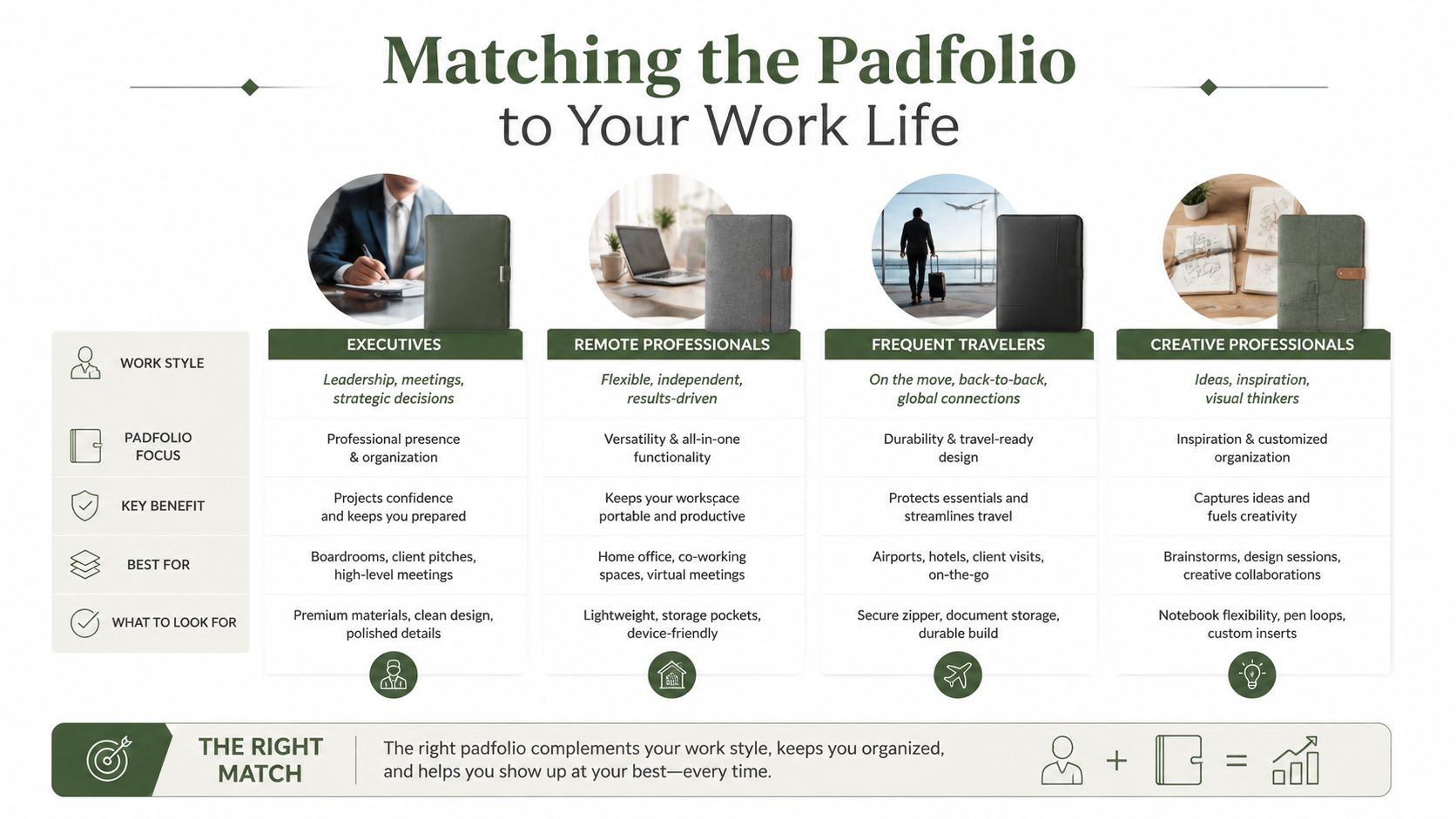
A gift buyer has the hardest job. The right choice depends on whether the recipient values subtle personalization, whether they use letter or A4, and whether they want a piece that feels formal or casual. A clean, unmarked padfolio is safer than a bold monogram when you don't know the recipient's style well.
Grainmark Leather's Classic A4 Leather Portfolio Case fits this discussion because it sits directly in the A4 portfolio category, which makes it relevant for buyers who want a business paper case rather than a loose folder. That kind of product is most useful when the format and the work style line up.
Choosing Well and Living With It
The best buying checklist is short. What paper do you use most, how much interior organization do you need, how visible should the personalization be, and will the piece still suit your work in two years? If any of those answers are uncertain, choose the simpler version.
Full-grain leather usually improves with handling if the construction is solid. The surface softens, the edges gain character, and the folio starts to look more like a working object than a display piece. That only happens when the stitching, lining, and fit are right from the start.
If you want the leather to age well, care matters. How to condition leather is worth reading before you start treating a new folio like it's indestructible. A little maintenance keeps the cover supple and helps the personalization stay visually balanced as the surface matures.
A good padfolio doesn't stay new forever. It stays useful, then develops the kind of wear that tells you it earned its place.
Choose the version that matches your paper, your carry habit, and your tolerance for visible branding. That's the difference between a padfolio you admire and one you use.
Grainmark Leather offers full-grain leather cases and portfolio-style carry pieces that fit real work routines, including options relevant to A4 document use and personalized gifting. If you're comparing a padfolio leather personalized for daily meetings or a gift that needs to stay professional over time, visit Grainmark Leather and review the portfolio collection with your paper size and personalization preferences in mind.