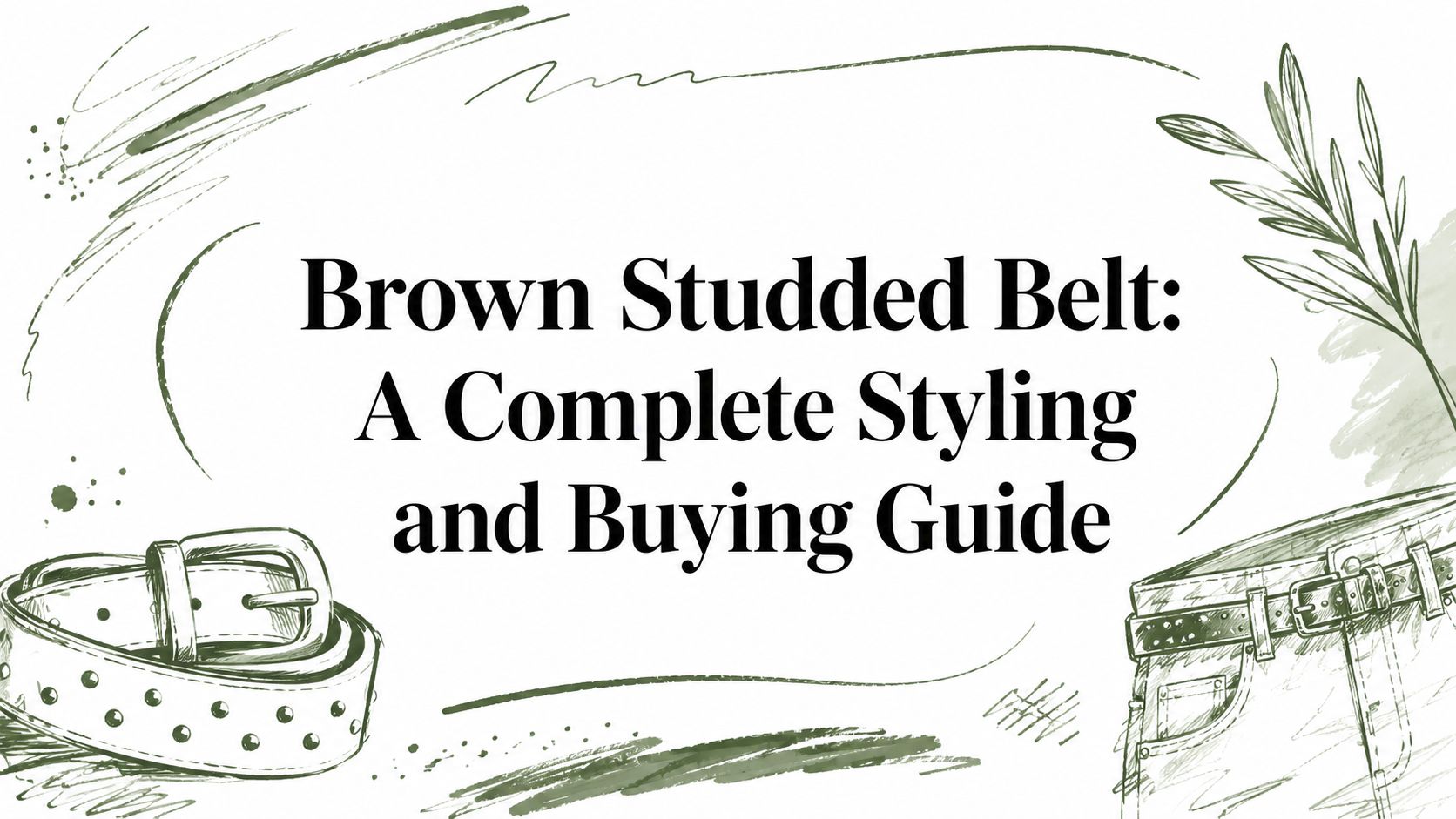
Brown Studded Belt: A Complete Styling and Buying Guide
You've found a brown studded belt that looks excellent in product photos. The leather has the right warmth, the studs add personality, and the buckle appears substantial. Then you try it with your own jeans or chinos and discover the key questions: Will the hardware hold? Is the width right for the belt loops? Will the studs catch on clothing, and is the belt built for daily wear or occasional styling?
A good brown studded belt isn't judged by decoration alone. Leather selection, edge finishing, rivet geometry, buckle material, belt length, and stud placement all determine whether it becomes a dependable wardrobe piece or a short-lived novelty. The style has enough versatility to work beyond punk-inspired outfits, but only when the construction and proportions are chosen with care.
Table of Contents
- Why Brown Studded Belts Deserve a Second Look
- Understanding Leather Quality and Hardware Materials
- Construction Details That Determine Durability
- Getting the Right Size and Proportion
- Styling Brown Studded Belts Across Different Outfits
- Evaluating Value and Long-Term Investment
- Your Brown Studded Belt Buying Checklist
Why Brown Studded Belts Deserve a Second Look
A customer once brought in a brown studded belt bought for a concert and asked whether it could work with ordinary clothes. The answer depended less on the studs than on their scale and spacing. Small, evenly placed hardware on rich brown leather can sit comfortably with denim, boots, or a casual blazer. Oversized spikes, a very bright buckle, and dense decoration create a much louder result that needs the rest of the outfit to stay restrained.
St المعassistant to=none 天天中彩票中奖 codeWinvalid Studded belts have a deeper history than their punk reputation suggests. Earlier rockers and bikers were already hand-studding belts and jackets by the 1950s and 1960s, while punk musicians and fans made the accessory recognizable in the late 1970s and early 1980s as a way to personalize leather and project rebellion, as documented in this history of the studded belt. The result is a style that evolved through several subcultural eras rather than appearing as a single fixed trend.
Why brown changes the styling equation
Black leather pushes an outfit toward sharper contrast. Brown is more forgiving. Chocolate, chestnut, tobacco, and cognac tones can connect naturally with blue denim, olive trousers, cream knitwear, tan boots, and warm metal jewelry. That makes a brown studded belt useful when you want edge without the harder visual effect of black leather and silver hardware.
Contemporary versions also favor smaller studs, mixed-metal details, and cleaner silhouettes instead of the heaviest punk treatment. A narrow line of brass-toned studs can look intentional with a tucked shirt and blazer, while a more rugged belt suits jeans and engineer boots. The accessory still makes a statement, but its success comes from controlled contrast.
The broader leather belt category is mature and internationally distributed. A 2026 estimate values the leather belts market at USD 8.59 billion, with a projection of USD 14.45 billion by 2033 and a 7.7% CAGR, according to The Insight Partners' leather belts market analysis. That context matters because today's brown studded belt belongs to a broad leather accessory market, not only a niche alternative-fashion category.
Understanding Leather Quality and Hardware Materials
Start with the strap, because attractive hardware can't compensate for weak leather. Full-grain leather retains the natural top grain and usually offers the best foundation for a belt that will flex, support hardware, and develop character. “Genuine leather” is a broad grade description, not a guarantee of premium construction, so ask what part of the hide forms the visible and load-bearing layers.

What to inspect on the leather
Look closely at the cut edge. A cleanly painted or burnished edge should feel smooth, with no loose fibers, bubbling finish, or visible separation between layers. Check the fold around the buckle as well. That area receives repeated bending and pulling, so uneven stitching, crushed leather, or a thin folded cover signals a likely weak point.
Product descriptions should identify the leather construction clearly. If the listing only says “leather look,” “PU,” or “leather style,” treat the belt as a fashion accessory rather than a long-term leather good. For a broader explanation of grades and terminology, this guide to leather grades is useful, while buyers comparing manufacturing standards can also review these bespoke footwear sourcing tips.
Hardware deserves equal scrutiny
For regular exposure to moisture and sweat, stainless steel and solid brass are stronger choices than plated zinc. Stainless steel contains at least 18% chromium, which helps it resist corrosion, and hardware guidance identifies it as a preferred material for high-stress and all-weather leather applications, as discussed in this leathercraft hardware discussion. Brass is also naturally corrosion-resistant, though it will gradually develop patina.
A plated finish may look excellent at first, but scratches and friction can expose the underlying metal. Look for material details, a solid-feeling buckle, clean plating, and hardware that doesn't wobble on its attachment. A belt intended for daily use should have more than attractive surface treatment.
Construction Details That Determine Durability
The most revealing part of a studded belt is often hidden on the underside. Studs and rivets must hold through repeated bending, pulling, and sideways movement. A decorative layout can look balanced on a flat product image yet fail quickly if the posts are poorly sized or the setting is incomplete.
Rivet geometry and post length
Leathercraft guidance recommends leaving only about 3 mm, or 1/8 inch, of post beyond the material stack before setting. Many single-cap and double-cap rivets tolerate roughly 1/8 to 3/16 inch above the leather after setting, while larger-headed rivets help reduce pull-through under repeated loading, according to this quality belt hardware discussion.
That tolerance matters. Too little post can produce a weak clinch, while too much can encourage spinning or poor seating. A thick belt blank, lining, and decorative layer may require longer posts than a single-layer strap. If a maker uses the same hardware specification across visibly different belt thicknesses, that's a reason to ask questions.
Studs should sit firmly without sharp prongs protruding toward your body or clothing. On the underside, look for cleanly folded or properly set attachments rather than crooked legs, loose washers, or metal points that can scratch skin.
Flexibility and load paths
Stud density also affects how a belt bends. A concentrated panel near the buckle can add visual weight without preventing the strap from flexing at the waist. Hardware distributed continuously around the belt creates a stiffer section, especially when the leather is thick and the studs are large.
Practical rule: A durable studded belt balances decoration with uninterrupted flex zones around the holes, buckle fold, and the area that wraps behind the body.
The buckle attachment, belt loop, tip, and eyelets deserve attention as well. Stitched edges and reinforced holes usually handle repeated use better than raw punched openings. For a deeper look at how leather changes through wear, see this guide to the full-grain leather lifespan. Creative belt styling can still remain practical, and Pandemonium Millinery's belt creativity offers useful perspective on treating the belt as part of the outfit's composition rather than an afterthought.
Getting the Right Size and Proportion
A belt can be beautifully made and still look wrong if its width or length fights the clothing. Start with the trousers you'll wear most often. A 1.25-inch width suits dress pants and smarter casual trousers, while a 1.5-inch width works naturally with jeans and larger belt loops, as reflected in this sizing infographic and practical belt size styling advice.

Choose length by where you'll wear it
Measure around the place where the belt will sit, either at the waist or lower on the hips. Don't rely on your trouser label alone, because rise, fabric thickness, and layering change the actual measurement. The belt should close comfortably without forcing the leather into a sharp bend, and the tail should pass through the keeper without leaving an excessive loop.
The infographic's practical rule is to choose a belt 2 to 3 inches longer than your waist size. If you alternate between high-waisted trousers and low-rise denim, measure both positions and choose the size that gives the intended fit rather than assuming one belt length will serve every outfit.
Match the hardware to your proportions
A broad frame can carry a wider strap and larger buckle without the belt dominating the outfit. A smaller frame often looks more balanced with a narrower belt, modest studs, and a buckle that doesn't extend far beyond the strap. This isn't a rigid body-type rule. It's a visual proportion check.
Stud density matters in the same way. Sparse studs leave more brown leather visible and create a quieter result. Closely packed studs become the focal point, so keep other accessories simple. For further context on coordinating practical men's accessories, review this guide to leather accessories for men.
Styling Brown Studded Belts Across Different Outfits
A brown studded belt works best when it occupies a clear role. With denim, it can reinforce a rugged, Western, or alternative direction. With tailoring, it should act as a controlled accent rather than compete with the jacket, shirt, or tie.

Casual denim
Pair a medium-brown belt with blue jeans, a tucked or half-tucked cotton shirt, and brown leather boots. Brass or muted antique hardware warms the combination, while silver-toned studs create more contrast. Keep the shirt relatively plain if the belt has a dense pattern.
Dark denim gives the belt a cleaner foundation. With faded denim, a distressed brown strap can look coherent, but an overly polished belt may create an awkward mismatch. Match the leather's finish to the clothing's attitude.
Smart-casual combinations
For chinos and a casual blazer, choose a slimmer strap with smaller studs. A chocolate-brown belt works with navy, charcoal, cream, olive, and muted blue, while cognac leather brings more visible warmth. Wear it with suede loafers, leather derbies, or clean ankle boots, keeping the shoe tone within the same general family rather than demanding an exact match.
A studded belt can also sharpen a simple knitwear outfit. The restraint comes from choosing one statement detail. If the belt is ornate, skip a large pendant, highly decorated watch strap, or aggressively embellished footwear. Those combinations compete instead of coordinating.
Street and Western influences
Baggy denim, overshirts, western shirts, and chore jackets can support a broader belt and more visible hardware. A tooled or patterned strap adds texture, while a plain brown strap with a compact stud line feels more contemporary. Those considering a stronger metal accent can compare the visual language of Western silver belts, but the key is balance.
The belt should echo at least one other element, such as boot leather, a watch strap, or warm metal jewelry. It doesn't need to match perfectly. It needs to look intentionally related.
Evaluating Value and Long-Term Investment
Paying more makes sense when the extra cost buys construction, not just more decoration. A plain full-grain belt with strong edges and a reliable buckle may outlast a heavily embellished belt made from thin bonded layers. A premium brown studded belt earns its place when the leather, attachment method, finishing, and replaceable components all support regular wear.
What higher quality should provide
Inspect these points before treating a higher price as justified:
- Leather substance: The strap should feel dense and resilient, not papery or overly soft at the buckle fold.
- Edge treatment: Edges should be sealed, even, and free from cracking or loose fibers.
- Hardware attachment: Studs should sit flush, with no exposed sharp points or movement.
- Buckle serviceability: A replaceable buckle or accessible attachment can extend the belt's useful life.
- Hole reinforcement: Reinforced eyelets or careful finishing reduce stretching around the fastening points.
- Surface consistency: Brown dye should look intentional, whether smooth and uniform or visibly hand-finished.
Brown leather changes with handling, light, oils, and conditioning. A good hide can develop a richer patina, but neglect can leave it dry, stained, or distorted. Studs add maintenance work because dust collects around their bases and metal can mark nearby surfaces if the belt is dragged across furniture.
Where cheaper options still work
A budget belt can be reasonable for occasional wear, costume styling, or a short-term experiment with the look. It becomes poor value when the buckle loosens, the finish flakes, the holes stretch, or the strap delaminates after ordinary use. The comparison isn't just cheap versus expensive. It's replaceable fashion item versus durable leather good.
Use a suitable leather conditioner sparingly and test it on an inconspicuous area first. This practical guide to conditioning leather can help you avoid over-conditioning, darkening, or softening the strap excessively. Store the belt rolled loosely or hung, never crushed under heavy items.
Your Brown Studded Belt Buying Checklist
The right purchase combines material, construction, fit, and actual wardrobe use. Don't begin with the stud shape. Begin with the job the belt must perform. A daily denim belt needs different proportions from a narrow smart-casual accent, even if both use brown leather and metal hardware.

Use this checklist in a shop or while reviewing product photos:
- Verify the leather. Look for full-grain construction when longevity matters. Examine the edge, buckle fold, tip, and underside rather than trusting a polished front photograph.
- Check the hardware. Prefer stainless steel or solid brass for demanding wear. Make sure studs sit securely, the buckle feels stable, and no sharp attachment points can reach your clothing or skin.
- Confirm the fit. Measure where you'll wear the belt, then choose a length that leaves a practical tail without forcing the strap into an awkward bend. Match the width to your trouser loops.
- Assess versatility. Ask whether the belt works with at least several outfits you already own. A restrained stud pattern can move from denim to smart casual more easily than oversized, densely packed hardware.
- Inspect the stress points. Check the holes, loop, buckle attachment, and tip. These areas reveal whether the maker designed for repeated flexing or only for a strong first impression.
- Plan for care. Consider where dust will collect around the studs, how the brown finish will age, and whether the buckle or hardware can be cleaned without damaging the leather.
A brown studded belt is worth buying when its visual character and physical construction agree. Choose the leather first, verify the hardware, measure for the clothes you wear, and select decoration that supports your proportions instead of overwhelming them.
Grainmark Leather offers full-grain leather bags, cases, and small goods designed for daily carry, travel, and specialist storage, with classic finishes and personalization available on selected products. Visit Grainmark Leather to explore durable leather pieces that apply the same attention to material quality and long-term use discussed in this guide.