What Is Crazy Horse Leather and Why Do We Use It?
Products made from crazy horse leather are not meant to stay uniform or pristine. They are meant to remain reliable under daily handling, repeated stress, and long-term wear.
That is why this leather is used in items that are expected to last for decades rather than seasons.
This type of leather is made from full-grain cowhide and treated with natural waxes that allow the surface to change over time instead of breaking down.
Rather than resisting marks, bends, and friction, crazy horse leather responds to them.
The result is a material that becomes visually richer, structurally softer, and more personal the longer it is used.
What Is Crazy Horse Leather?

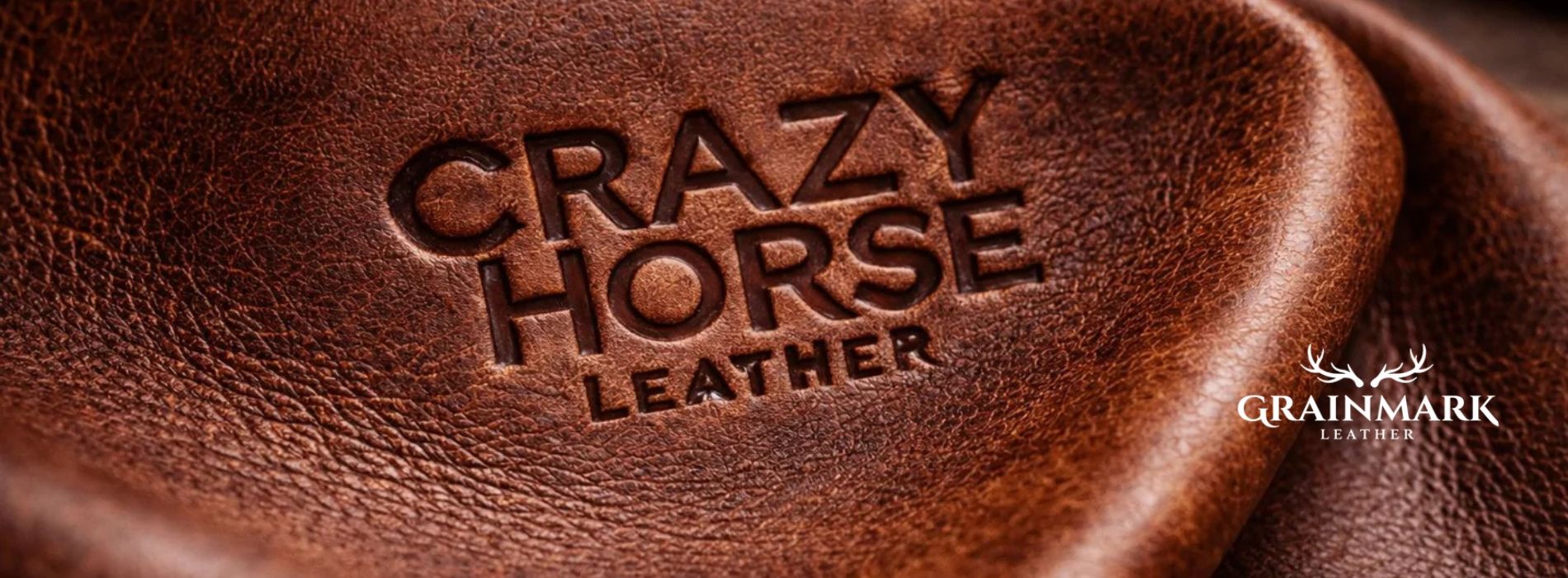
Crazy horse leather is a type of full-grain cowhide leather that retains the entire top layer of the hide and is finished with a heavy infusion of natural waxes or oils.
The surface is left intentionally untreated beyond waxing. Nothing is sanded, corrected, or artificially smoothed.
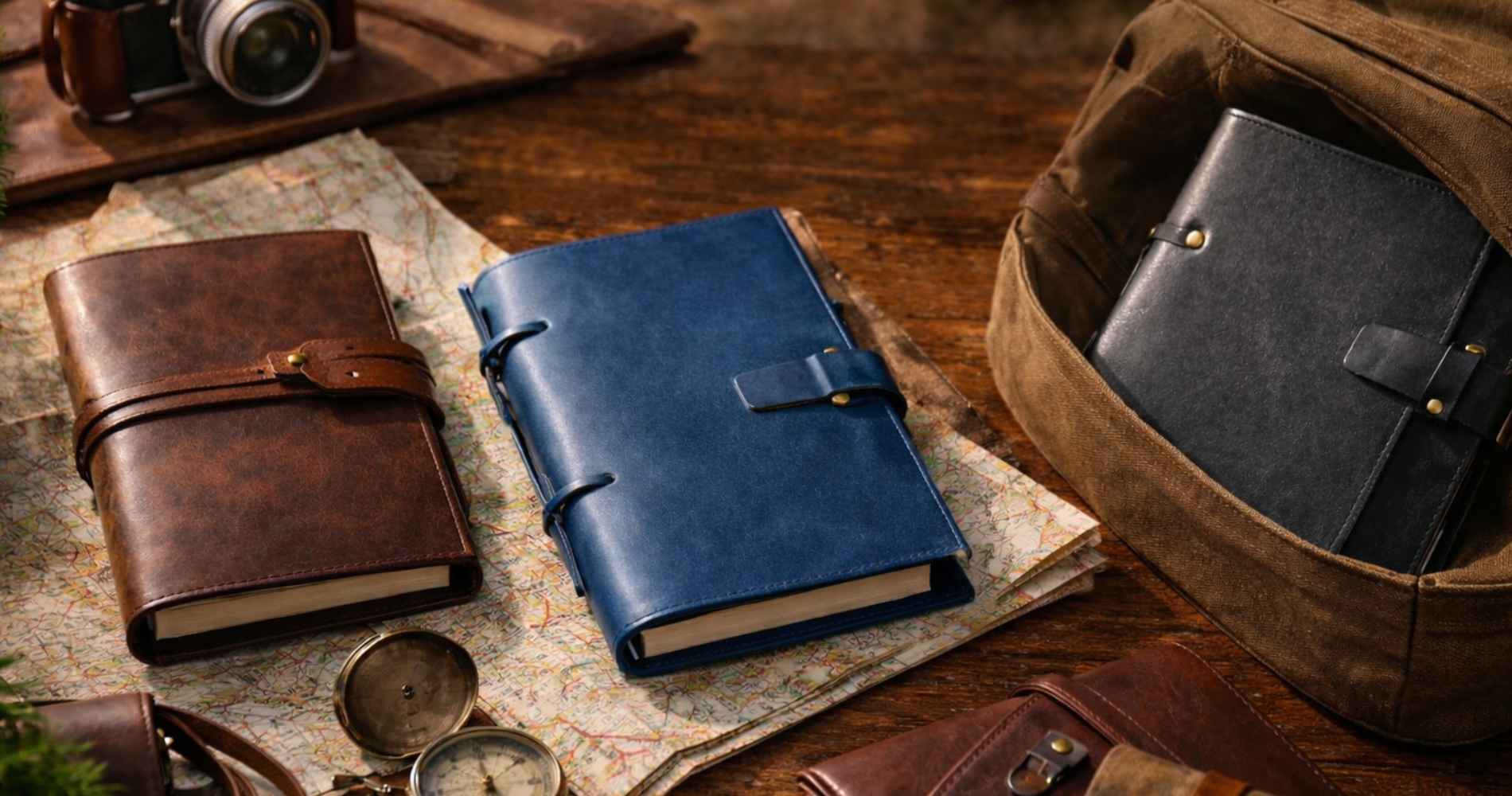
This construction matters in real use. Items that are bent, folded, or handled repeatedly, such as our products like wallets, notebook covers, pen cases, travel pouches, etc, depend on the grain layer to maintain shape and flexibility over time. Removing that layer, as is done with corrected or genuine leather, weakens the hide permanently.
When crazy horse leather is bent, scratched, or rubbed, the wax inside the fibers shifts. This creates lighter or darker areas on the surface.
The effect is temporary and self-adjusting. It is not surface damage.
This behavior is known as crazy horse leather patina, and it is the defining visual characteristic of the material.
Why Is It Called Crazy Horse Leather?
Despite the name, crazy horse leather is not horse leather.
The term comes from its historical use in horse saddlery, where leather had to:
- Hold shape under high, uneven loads
- Resist sweat and moisture
- Remain flexible after years of movement
- Be repairable and reconditionable
The word crazy refers to the leather’s ability to withstand aggressive use without failing, not to its origin.
So when people ask why it's called crazy horse leather, the correct answer is functional history, not animal source.
How Crazy Horse Leather Is Made?
Crazy horse leather is made through a straightforward process that focuses on long-term durability rather than surface appearance.
We start with thick, mature cowhides, preserve the full grain, and apply natural waxes that penetrate the fibers instead of sitting on the surface.
Each step affects how the leather responds to bending, pressure, and everyday handling.
The goal is not a flawless finish, but a material that holds its shape, stays flexible, and ages predictably with use.
Choosing the Right Hide Thickness
We start by selecting thick, mature cowhides, because this is where durability is decided. Fully developed hides have a dense collagen fiber structure that can handle heavy wax treatment without losing stability. Thinnerhides simply do not behave the same way once waxed. They soften too quickly, lose definition, and eventually deform.
In our leather wallets, the hide thickness directly affects how the piece holds up in real life. Wallets are bent, compressed, and rubbed every single day inside pockets.
Classic Vintage Leather Bifold Wallet

When the hide is too thin, the fold line stretches and breaks down over time. With properly thick, full-grain hides, the wallet keeps its shape, and the fold stays stable even after years of daily use.
That is why our crazy horse leather wallets do not collapse or curl as they age. The structure is built into the material itself, not added later through padding or reinforcement.
Why the Grain Layer Is Left Intact
Once we select the hide, we leave the grain layer completely intact. We do not sand it, buff it, or correct it for appearance. This layer contains the strongest and tightest fiber network in the hide, and removing it permanently weakens the leather.
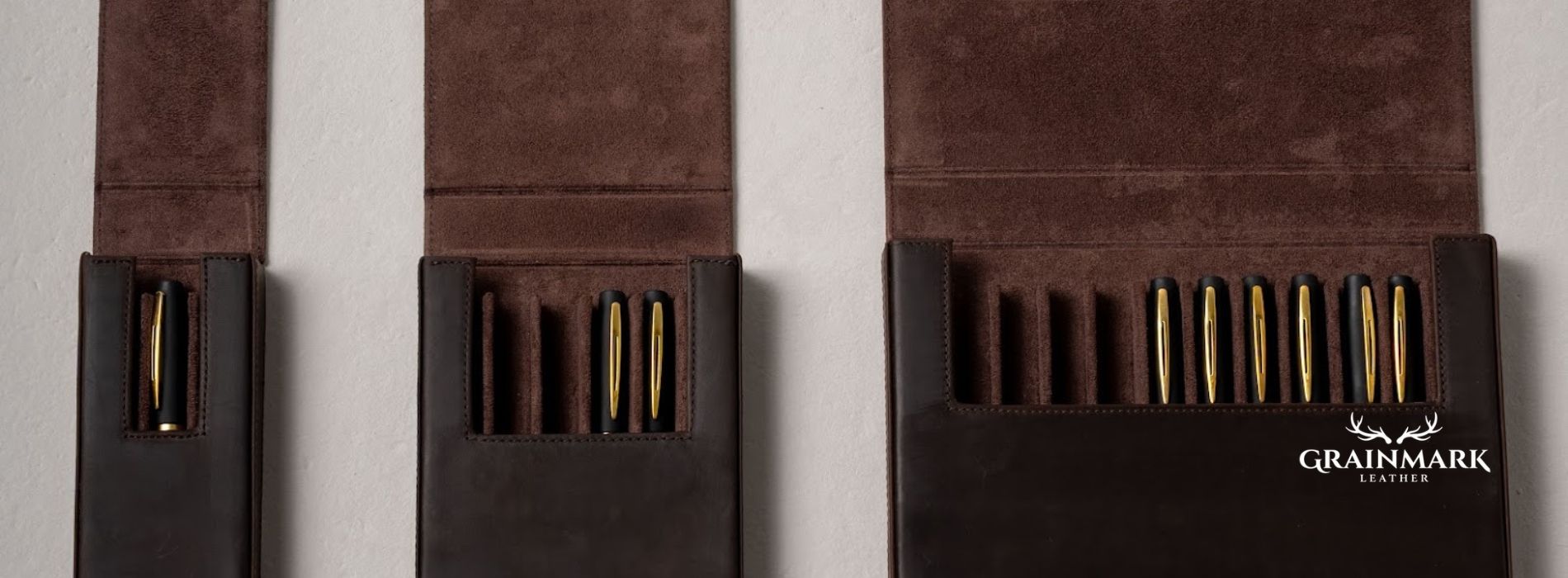
This matters a lot in products like leather pencil cases. Whether a case is made to carry one pen, three pens, six pens, or a full twelve, like in our crazy horse leather pencil case collection, the leather is constantly flexing in the same places.
The Hide - Full Grain Leather Pen Case

Cases are opened and closed repeatedly, flattened inside bags, and pressed against hard objects like pen barrels and clips.
When the grain layer is intact, the leather can flex repeatedly without fibers separating or tearing.
Corrected leather cannot do this. Sanding removes the grain’s natural memory, which is why corrected pieces often crack along seams.
With full-grain crazy horse leather, our pencil cases soften gradually with use while staying strong where it counts.
How Tanning Affects Bag Structure
Before waxing, we use vegetable tanning or combination tanning to stabilize the hide. This step determines how the leather reacts to weight, movement, and long-term load.
In our leather bags, the tanning choice directly affects how the bag holds up over time. Vegetable tanning keeps the fibers firm enough to resist sagging, while combination tanning adds flexibility where stress is unavoidable, such as around handles and strap attachments.
The Range - Full Grain Leather Backpack

When tanning is done poorly, bags stretch under weight and never recover their shape. With properly tanned crazy horse leather, the load is distributed across the grain layer, allowing our bags to be carried daily without permanent deformation. They can be found in our offer in red, black, or brown colors.
Why Wax Matters in Everyday Flexing
Wax infusion is the most important step in the process. We work heated natural waxes and oils into the surface until they penetrate the grain layer and move into the fiber structure.
In our crazy horse leather eyewear cases , this matters because the same areas flex over and over again. Without wax, fibers dry out and crack.
The Dusty Road - 3-Slot Full Grain Leather Eyewear Organiser

With wax present, fibers slide against each other instead of breaking. When scuffs appear, they are not damage. They are simply areas where the wax has shifted.
This is why our cases show color variation at flex points instead of surface failure. The leather adapts. The structure stays intact.
How Crazy Horse Leather Is Made?
Crazy horse leather is made through a straightforward process that focuses on long-term durability rather than surface appearance.
We start with thick, mature cowhides, preserve the full grain, and apply natural waxes that penetrate the fibers instead of sitting on the surface.
Each step affects how the leather responds to bending, pressure, and everyday handling.
The goal is not a flawless finish, but a material that holds its shape, stays flexible, and ages predictably with use.
How Wax Movement Prevents Cracking Over Time
After infusion, the wax does not harden into a surface coating. It remains mobile within the leather fibers.
Belts bend and straighten constantly, especially around buckle holes. As the belt moves, the wax redistributes instead of the surface cracking.
Over time, the belt darkens evenly and becomes smoother along its length rather than splitting or flaking.
This self-adjusting behavior simply does not exist in sealed or corrected leathers, where surface coatings break under repeated tension. With crazy horse leather, the surface responds instead of failing.
How Crazy Horse Leather Behaves Over Time
Unlike coated or corrected leathers, crazy horse leather does not deteriorate through surface failure. It does not peel, crack, or flake as the years pass. Instead, it records use in a controlled and predictable way.
Every fold, touch, and point of friction slightly alters the distribution of wax within the grain layer. What looks like wear is actually a structural response.
This behavior is intentional. Crazy horse leather is finished to remain open and reactive rather than sealed and static. As a result, time improves its appearance instead of exposing its weaknesses.
Crazy Horse Patina Explained
Patina is often misunderstood as discoloration or aging damage. In reality, crazy horse leather patina is controlled surface evolution, driven by physical interaction rather than chemical breakdown.
Several forces contribute to this process:
- Friction, which redistributes wax within the grain
- Heat, especially from hands and body contact
- Pressure, caused by bending, sitting, or load-bearing
- Oil transfer, mainly from skin and clothing
What Actually Changes Over Time
Areas that are frequently touched or bent become darker and smoother, while protected areas retain their original tone. The surface gains visual depth rather than shine.
Over months and years, the leather:
- Darkens in high-contact zones
- Shows lighter pull-up marks at flex points
- Becomes smoother where friction is consistent
- Retains a matte finish instead of developing gloss
Crazy Horse Leather vs Full Grain Leather

Crazy horse leather is a specialized type of full-grain cowhide that is treated with natural waxes to change how the surface behaves over time.
While standard full-grain leather is usually left untreated or lightly sealed to preserve a more uniform appearance, crazy horse leather is designed to show wear, develop contrast, and form a visible patina as it is used.
Both are durable materials, but crazy horse leather is intended for items that benefit from a more rugged, lived-in look and added surface protection.
Key differences:
- Crazy horse leather is wax-treated, while standard full-grain leather is usually untreated or lightly finished
- Crazy horse leather develops a strong, high-contrast patina, while standard full-grain leather ages more evenly
- Scratches on crazy horse leather are visible but often blend over time, while scratches on standard full-grain leather tend to remain.
- Crazy horse leather has moderate water resistance due to wax, while standard full-grain leather absorbs moisture more easily
- Crazy horse leather emphasizes character and use, while standard full-grain leather emphasizes a cleaner, more consistent finish
If you want it even shorter , more technical, or more buyer-focused, I can adjust it precisely.
Crazy Horse Leather vs Genuine Leather
| Feature | Crazy Horse Leather | Genuine Leather |
|---|---|---|
| Hide layer | Full top grain | Lower split layers |
| Structural strength | Very high | Low to moderate |
| Aging behavior | Improves with use | Degrades with use |
| Wax content | High | None |
| Repairability | Excellent | Poor |
| Expected lifespan | 15 to 30 years | 2 to 5 years |
Genuine leather is a category label, not a quality guarantee. It is typically made from split layers that lack the dense fiber structure of the grain. Without wax or surface reinforcement, these fibers dry out, weaken, and eventually fail.
Crazy Horse leather does not belong in the same performance class. Structurally and behaviorally, it is closer to traditional saddlery leather than to consumer-grade genuine leather.

Is It Waterproof?
No leather is fully waterproof, and crazy horse leather is no exception.
It is water-resistant, not waterproof.
The wax slows moisture penetration, buying time rather than creating a barrier. Short exposure to rain or spills usually results in temporary darkening rather than damage. Prolonged exposure allows water to enter the fibers.
When this happens:
- The surface may darken unevenly
- Water spots can appear
- The leather must be dried slowly at room temperature
This behavior is normal and reversible. Once dry, light conditioning redistributes the wax and restores visual balance.
Care Over the Long Term
Crazy Horse leather care is intentionally minimal. The material is designed to regulate itself through wax migration and fiber flexibility.
What to Do
Use a dry or lightly damp cloth to remove dust or surface dirt. Allow scratches and marks to blend naturally through handling. Apply a leather wax or conditioner once or twice per year, depending on use and environment.
What Not to Do
Avoid chemical cleaners, solvents, and alcohol-based products. Do not over-condition, as excess product clogs the grain and flattens contrast. Never polish crazy horse leather like dress leather. High-gloss products interfere with patina development.
Over-treating the leather does more harm than neglect.
Frequently Asked Questions
Does Crazy Horse Leather Smell Different From Other Leathers? ▾
Yes, slightly. Crazy horse leather often has a more noticeable natural leather scent because it is minimally finished and heavily waxed rather than sealed with synthetic coatings. The smell typically softens over time as excess surface wax dissipates and the leather absorbs environmental oils.
Can It Be Repaired if It Gets Damaged? ▾
Yes. One of the practical advantages of crazy horse leather is repairability. Because the grain layer is intact and not sealed under coatings, surface damage can often be improved with gentle heat, wax redistribution, or light conditioning. Deep cuts can be stitched or patched without causing peeling or finish separation.
How Does Crazy Horse Leather Stretch Over Time? ▾
Minimal stretching can occur, but it is controlled. The dense fiber structure of full-grain cowhide resists permanent deformation better than split or corrected leathers. When stretching does occur, it usually stabilizes early and does not continue progressively under normal use.
Is This Suitable for Hot or Humid Climates? ▾
Yes, but with realistic expectations. The wax treatment helps regulate moisture absorption, but in very hot or humid environments, the leather may darken faster due to increased oil and heat exposure. This does not damage the leather and often accelerates patina development rather than causing deterioration.
Does It Require a Break-In Period? ▾
Yes. Crazy horse leather is typically firmer when new due to hide thickness and wax saturation. As it is handled and flexed, the fibers relax, and the wax redistributes. This break-in phase results in improved flexibility without loss of structure.
Will Crazy Horse Leather Transfer Color Onto Clothing? ▾
Light color transfer can occur when the leather is new, especially with darker finishes and heavy wax content. This is temporary. Once excess surface wax settles and the leather is used, color transfer typically stops. Wearing light-colored clothing against brand-new leather should be done cautiously during early use.
Is Crazy Horse Leather Eco-Friendly? ▾
It is more environmentally responsible than heavily corrected or bonded leathers, but it is not impact-free. Vegetable tanning and minimal surface coatings reduce chemical load, and long product lifespan lowers replacement frequency. However, leather remains an animal-derived material with inherent environmental costs.
Can This Crazy Horse Leather Be Dyed a Different Color Later? ▾
Re-dyeing is possible but limited. Because the leather already contains wax, dyes may not absorb evenly without stripping the surface, which can compromise patina behavior. Color changes are best achieved through wax tinting rather than full re-dyeing.
Why Does It Feel Dry Compared to Other Leathers? ▾
The surface often feels dry or matte because the wax is embedded within the fibers rather than sitting on top. This dry touch is intentional and helps prevent greasy buildup, excessive shine, and surface sealing that would interfere with aging behavior.
Final Thoughts
Crazy horse leather exists for a specific reason. It is not designed to look flawless, uniform, or untouched. It is designed to remain structurally sound while showing exactly how it has been used.
Every step in its production supports that goal. Thick, mature cowhide provides fiber density. Full-grain preservation maintains structural integrity. Vegetable or combination tanning stabilizes the leather under load and movement.