How to Store Fountain Pens Properly - Cases, Pouches, and Leak Prevention
An everyday ballpoint pen can be tossed into a pocket with keys, dropped into a desk drawer, or left floating at the bottom of a heavy work bag without a second thought.
A fountain pen demands a different level of respect. It is an investment in fine engineering, a tool for deliberate writing, and an object with delicate components.
The polished acrylic, precious resin, or lacquered metal of a fine barrel can be scratched by the slightest friction. More importantly, the internal ink delivery system relies on a precise balance of fluid dynamics and air pressure.
When a pen moves around constantly, sits half-closed, or gets crushed into a crowded bag, you end up with a messy cleanup.
At Grainmark Leather, we build our collection around the actual habits of writers and collectors.
Proper storage is not just about keeping a desk tidy. It is about protecting your tools from impact, preventing ink evaporation, and avoiding unexpected leaks.
This guide covers the essential mechanics of fountain pen storage, how to choose the right gear for your daily carry, and how to keep everything performing perfectly.
Start With The Number Of Pens You Carry
Fountain pen storage has to scale with the actual size of your daily setup. A single pen needs elegant isolation, a small rotation requires strict physical separation, and a larger collection needs proper structural support.
The right case must always prevent pens from rubbing against other objects, shield the cap and barrel from external pressure, and provide enough physical space so you never have to force a pen into place.
One Fountain Pen

For the person who travels with just a single favorite writer, a dedicated single-slot sleeve is the cleanest and most efficient option.
This setup provides a protective barrier without adding unnecessary bulk to a tailored jacket pocket, a slim brief, or a notebook cover.
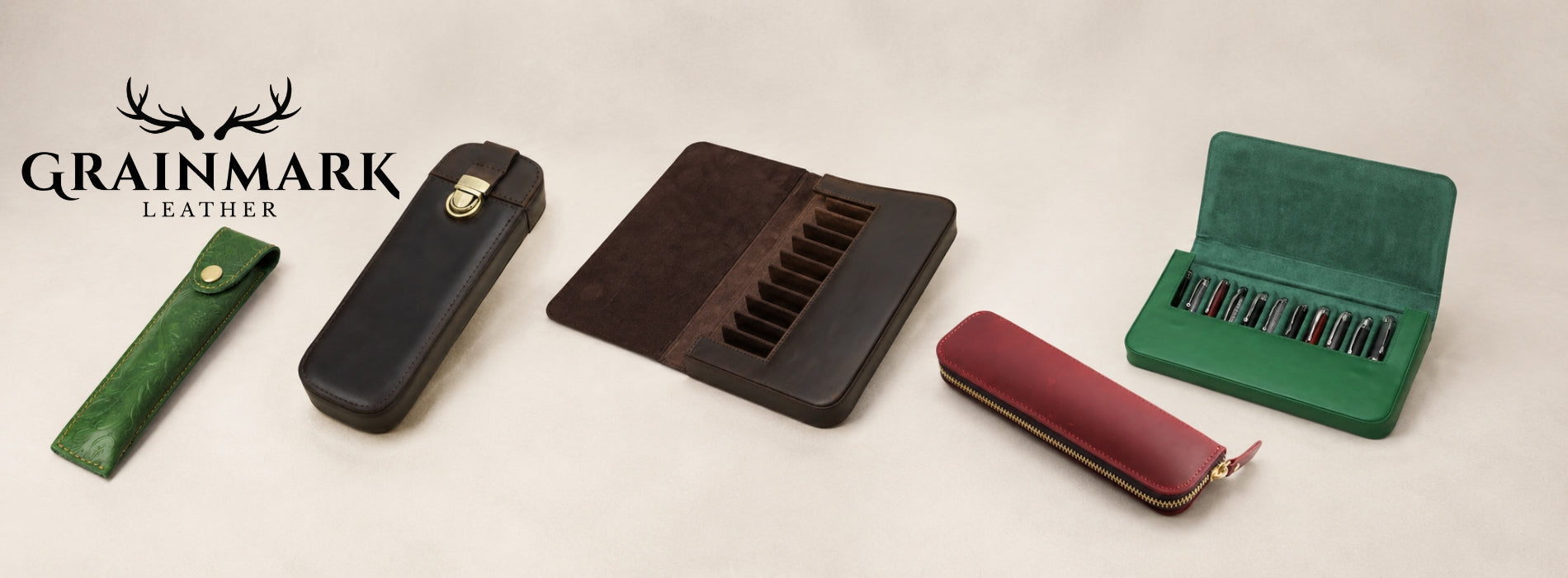
The Note, Full Grain Leather Single Pen Case is patterned with a slim 17 × 3.5 cm profile and weighs only 28 g.
It features a secure snap-button flap and a soft, non-abrasive interior. It is spacious enough to accommodate either a standard everyday carry or an oversized fountain pen, ensuring it stays completely isolated from coins, keys, or the sharp wire spirals of notebooks.
A Small Pen Rotation
Many enthusiasts prefer carrying a small ecosystem of writing tools.
This usually means a selection of two or three instruments, such as a fine-nib fountain pen for daily notes, a broader nib filled with a distinct accent ink, and a mechanical pencil or rollerball for editing drafts.
Placing two or three loose pens into a single open compartment allows them to collide with every step you take.
Look for storage with individual interior slots or rigid walls.

The Leather 3-Slot Pen Case and our 3 Slot Hard Pen Case, Brass Closure, Removable Tray are built specifically for this middle ground.
They keep your tools stationary and physically isolated from one another without forcing you to carry a large case.
Several Fountain Pens
Once your daily rotation grows past three pens, storage serves a dual purpose. It must protect your instruments during transit, and it must keep your collection organized on your desk.
A dedicated multi-slot case helps you see at a glance which pens are currently inked, which ones are clean, and which choices fit your writing task for the day.

The Leather 12-Slot Pen Case is built for serious collectors and features secure, individual slot dividers, a plush suede lining, a magnetic closure, and reliable YKK zippers.
The fold-open layout turns the travel case into an accessible desktop display tray.
Crucially, the internal channels are cut wider and deeper to handle large-profile fountain pens, including popular oversized models like the TWSBI Vac700, Lamy AL-Star, Pilot Custom 823, and Pelikan M800, preventing them from crowding each other.
Case, Pouch, Or Pen Box: Choosing Your Storage Style
Choosing between a structured case, a soft pouch, a zippered folder, or a rigid desk box depends entirely on how your pens are used and where they are going.
| Storage Type | Best Used For | What to Avoid |
|---|---|---|
| Structured Case | Commuting, crowded bags, oversized or delicate pens | Overstuffing slots with mismatched accessories |
| Soft Pouch | Casual pens, pencils, markers, and quick access | Mixing fine acrylic pens directly with metal items |
| Zipper Case | Mobile writers who need a fully flat layout | Forcing the zipper closed when over-capacity |
| Desk Pen Box | Permanent home or office storage and display | Travel use or mobile bag carry |
When To Use A Case?
A structured case is the safest choice when your writing tools need maximum physical protection. It is ideal for pens carried in deep bags, stored in sliding desk drawers, or packed for travel.
A case provides rigid boundaries that absorb external impacts and prevent your bag from crushing the delicate caps or barrels inside.
When To Use A Pouch?
Pouches offer excellent flexibility for more durable stationery, including wooden pencils, drawing markers, rulers, and everyday utility pens.
A soft leather pouch works well for a fountain pen only if the pen is durable, capped securely, and has enough physical breathing room inside.
You must avoid treating a pouch as a generic catch-all pocket. Mixing a fine fountain pen in an open pouch with loose metal objects like charging plugs, flash drives, or keys will inevitably cause deep scratches.
When To Use A Zipper Case?
A zipper case offers an excellent balance of security and immediate accessibility. It is preferred by writers who like to lay their case completely flat on a coffee shop table or a library desk.

The Fjord, Full Grain Leather Zipper Pen Case utilizes a clamshell-style zip, a protective suede interior, solid brass hardware, and internal elastic straps to anchor your tools.
While it is listed for four pens, keep in mind that oversized barrels take up extra dimensional space. It performs best as a curated, lean selection of daily favorites rather than a case packed tightly to its absolute physical limits.
When To Use A Pen Box?
A traditional pen box is designed strictly for stationery storage. It is meant to sit flat on a desk, a credenza, or a shelf, offering quick access and a clear view of your collection.

The Birch, 12-Slot Genuine Vegetable Leather Pen Box fulfills this desk-first role perfectly. It gives your collection a permanent, elegant home while keeping your pens safe from dust, rolling off the desk, or accidental spills.
How To Store Fountain Pens At Home?
When you are at home, leaving pens lying loose on a desk or dropped upright into a casual pencil cup can cause long-term performance issues.
Proper residential storage keeps your collection organized and ready to write at a moment's notice.
- Always Cap Your Pens: Never leave a fountain pen uncapped when you step away from your desk. The liquid ink inside the feed will dry out within minutes, causing frustrating hard starts the next time you put nib to paper.
- Control Your Orientation: For long-term home storage, horizontal orientation is generally best. Storing an inked pen completely flat keeps the feed saturated without letting ink flood the cap. If you notice a pen flows too heavily, store it nib-up. Avoid storing inked pens nib-down, as gravity will slowly pull ink into the cap, creating a messy surprise when you uncap it.
- Avoid Environmental Hazards: Keep your storage cases and boxes away from direct sunlight, radiators, or humid environments. Excessive heat expands the air inside a pen reservoir, which forces ink out of the feed. Direct sunlight can also fade or discolor vintage celluloid and modern ebonite barrels over time.
How To Carry Fountain Pens In A Bag?

Bags present the highest risk of damage to writing instruments due to constant movement, shifting weight, and temperature changes.
Before you place a fountain pen into a briefcase, backpack, or tote bag, take a few seconds to run through this quick checklist:
- Check the Threading: Double-check that the cap is fully threaded or firmly snapped onto the barrel. A cap that is only half-closed can easily work itself loose under the vibration of walking.
- Inspect the Grip Section: Ensure the grip section is clean and dry. Residual ink left from a recent bottle fill can transfer to the inside of your leather case if it is not wiped away beforehand.
- Guard Against External Pressure: Position your pen case in a dedicated compartment where heavy laptops, books, or water bottles will not press directly against it. Even thick leather can only flex so far before underlying structural pressure transfers to the items inside.
How To Prevent Fountain Pen Leaks In Storage?
A premium leather case is excellent at controlling movement, isolating finishes, and absorbing external shocks.
However, no case can magically fix a leaking pen. True leak prevention depends on proper pen maintenance before the instrument ever goes into its slot.
- The Altitude and Temperature Rule: Air expands when it gets warm or when atmospheric pressure drops, such as during a flight or a drive through high-altitude areas. This expanding pocket of air inside your ink cartridge or converter acts like a piston, pushing the liquid ink out through the nib. To prevent this, always store and travel with your inked pens pointing nib-up. This allows the expanding air to escape safely without pushing ink out ahead of it.
- Manage Your Ink Volume: A fountain pen is most likely to leak or burp ink when the reservoir is nearly empty, because a large volume of air expands much faster than liquid. If you are about to travel, either fill your pen completely to minimize the air volume or clean it out entirely.
- Clean the Feed Regularly: Dried ink crusting inside the feed channels can disrupt the delicate balance of surface tension and airflow, leading to unexpected leaks. Flush your pens with clean water between ink changes, or at least once every few weeks for pens in constant rotation.
How To Care For Your Leather Pen Case?

Just like the fine writing instruments they protect, full-grain leather cases require minimal but regular care to remain functional and beautiful for decades.
Cleaning the Exterior
Dust your leather case periodically with a clean, dry microfiber cloth to remove surface grit.
For light smudges or dirt, use a cloth that is barely damp with lukewarm water. Allow the leather to dry naturally at room temperature.
Never use hair dryers, radiators, or direct sunlight to speed up drying, as high heat cracks the leather fibers. Avoid household cleaners, alcohol-based wipes, or bleach, which strip away natural oils and ruin the finish.
Managing the Interior Lining
Open your case fully and gently tap it upside down to shake out any loose paper fibers, dust, or pocket lint.
For suede or microfiber linings, a small, soft-bristled brush can clean out the channels gently.
If you experience an accidental ink leak inside the case, act quickly. Blot the wet ink immediately with a dry paper towel without rubbing it deeper into the lining.
While permanent fountain pen inks can be incredibly difficult to remove completely from raw suede, a gentle, specialized leather cleaner can mitigate the damage.
The best approach remains prevention: always ensure your pen caps are secured before putting them away.
FAQs
How to stop ink from getting inside a pen case? ▾
Check the pen before storage. The cap should be closed, the grip should be clean, and the nib area should not be wet from a recent fill. A case protects the pen, but it cannot protect the lining from an uncapped pen, a loose cap, or ink left on the outside of the section.
How to store empty fountain pens? ▾
Clean the pen first, then let every part dry before storage. Do not close a pen while moisture is still trapped inside the cap or barrel. Once dry, keep it capped and stored in a case, box, or drawer space where it will not get scratched.
How to store fountain pen cartridges? ▾
Keep cartridges away from heat, sunlight, and sharp objects. Store them in a small pouch, drawer, or case pocket where they will not get crushed. Before carrying cartridges in a bag, make sure they are not loose beside keys, plugs, or metal accessories.
Should fountain pens be stored full or empty? ▾
For daily use, an inked pen can stay capped and stored properly. For longer storage, clean it first and store it empty. Ink left sitting for too long can dry inside the feed, make the pen harder to start, and create more cleaning work later.
Is a pen pouch safe for fountain pens? ▾
A pouch is safe only when the pen has enough room and is not rubbing against other objects. For polished, expensive, oversized, or freshly filled pens, a divided case is safer because each pen has its own space.
Bottom Line
Fountain pen storage comes down to three basic concepts: precise fit, absolute physical separation, and controlling movement.
A single daily favorite thrives in a slim sleeve, a small everyday selection requires divided pockets, and a growing collection deserves the deep, protective channels of a dedicated tray or desk box.
At Grainmark Leather, we design our products to respect those exact differences. By pairing your collection with the proper storage habits, you ensure your finest writing instruments remain protected, organized, and perfectly ready for the next time you sit down to write.